

Emoji Architecture: A building facade inspired by emojis
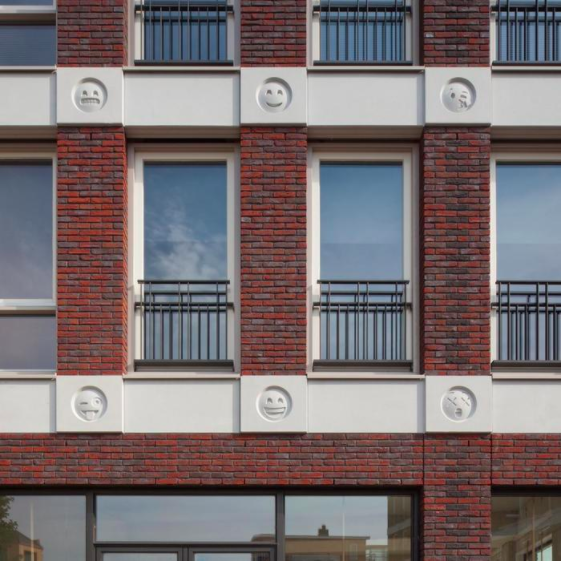
From nature to fashion, historical eclecticism to familial roots, architecture has long drawn inspiration from any number of countless sources. Add to that list today’s digital world. Yes, emojis, the ever-expanding, omnipresent graphical form of communication that perfectly embody the concept that a picture says a thousand words have now made it into the world of architecture and design. Changiz Tehrani from Dutch firm, Attika Architekten, designed a building with 22 different emojis emblazoned in white concrete on its facade that mark the top of each floor on one side of the building.

The use of emojis, which have quickly gained acceptance in popular culture and become irreverent, was designed to be a modern nod to the gargoyles used as adornments in buildings of yesteryear. Additionally, the decorative circles have been employed as a time capsule of sorts. “In classical architecture they used heads of the king or whatever, and they put that on the façade,” Tehrani explained to The Verge. “So we were thinking, what can we use as an ornament so when you look at this building in 10 or 20 years you can say ‘hey this is from that year!’”
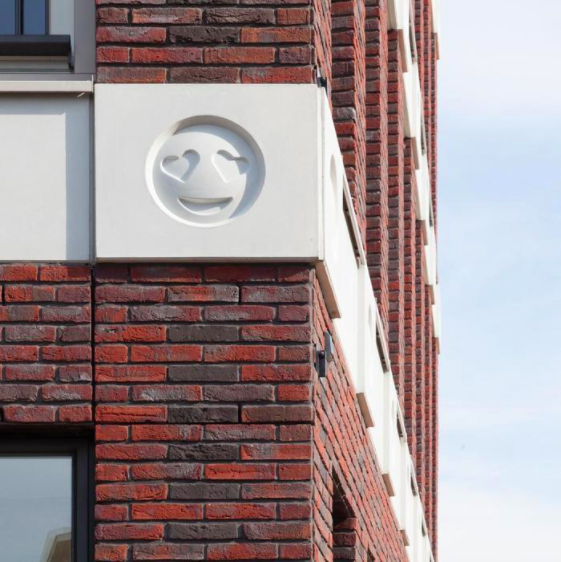
Construction of the four storey, mixed-use building was completed in 2015 and includes retail shops on the first floor and residential living spaces above. It is located on the edge of the Amersfoort town square that is also home to a theater, library, and a school. Describing the presence of his design in the town square, Tehrani explains “There’s all these young people there, and emoji is a thing of now. The students sit in the square and have lunch and they take pictures. They like it. And with our architecture we always like to put in small details that makes the project a little bit more than a boring building.”
The design of the emojis was inspired by the popular messaging app, WhatsApp and only faces were chosen to adorn the building as they were the most expressive and familiar emojis. Attika Architekten then designed and converted them into a 3D model. Molds of the designs were then created by the construction company involved in the project.
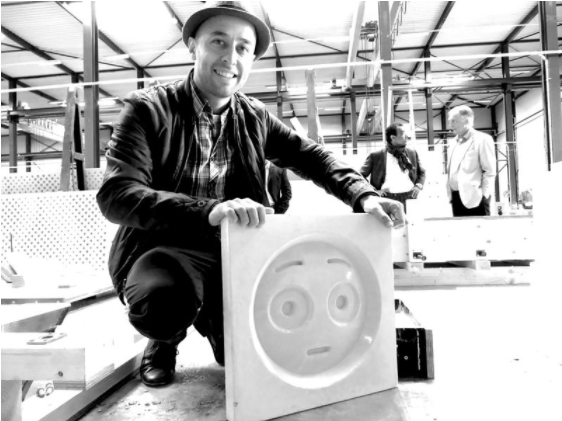
Reaction to the use of emojis in the architectural design has been overwhelmingly positive. Tehrani responds to criticism that the design will quickly become dated or is a gimmick by countering that architectural immortality is impossible, and that architects should have fun with their designs and embrace contemporariness. “If you look at history, people always think ‘Oh this is timeless,’ or ‘This will stay forever,’ and they’re always wrong. So maybe we won’t use emoji in 10 years — that’s fine. It’s still from our time.”
For what it is worth, the team at Modelo is excited to see architectural design push forward. And, if that is through the use of emojis, then we say, ‘Let’s do it!’ In fact, I think I might go work on making a Modelo emoji…as they say in the classics, watch this space 🙂