

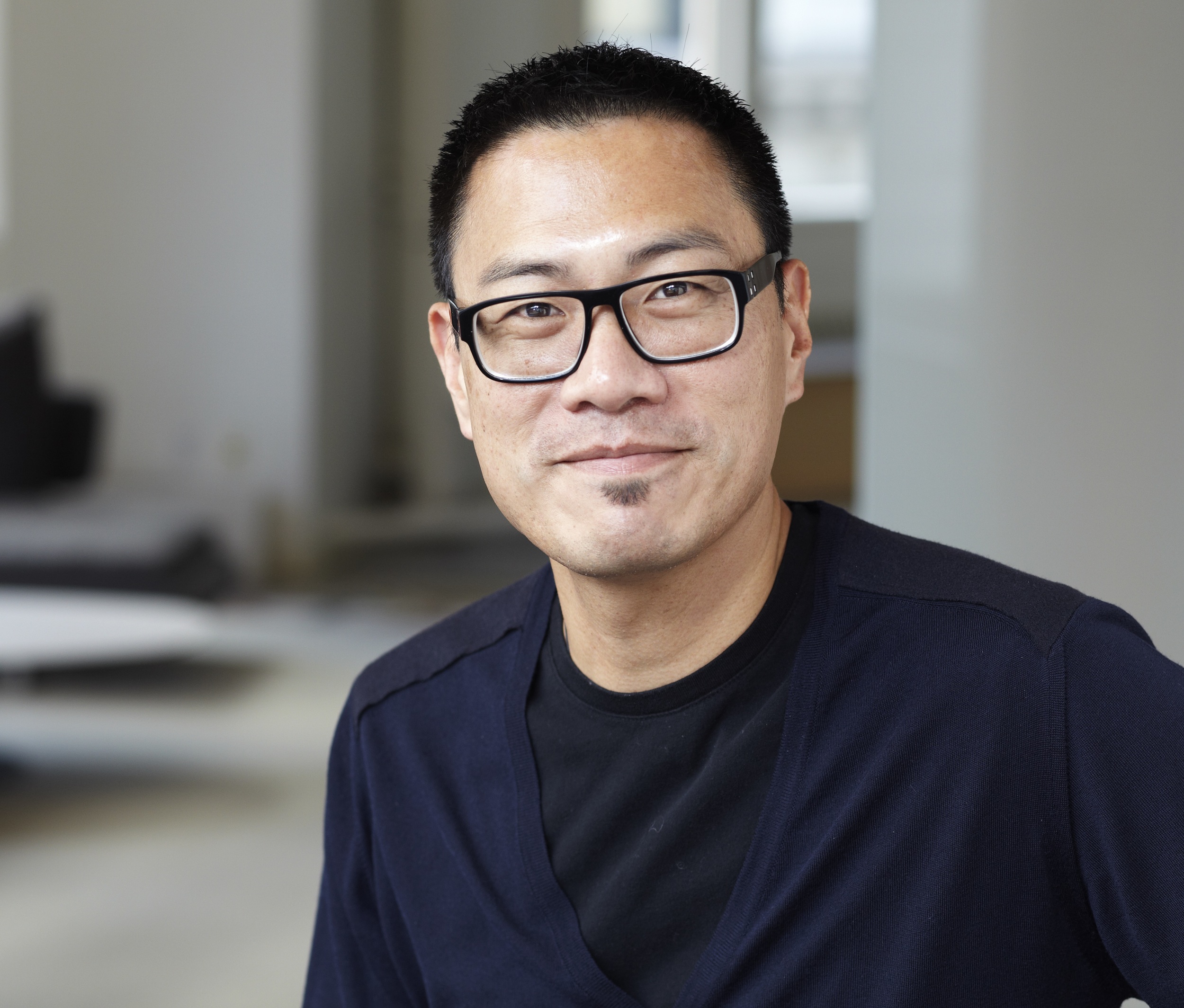
Hao Ko of Gensler
Hao Ko is Design Director and Principal at the widely recognized leading collaborative design firm, Gensler. Hao is grounded by the belief that the fundamental role of architecture is to elevate the human spirit and he strives to design beautiful places — ones that are inspirational for life and work and that impact people for the better. He carries this design-first, people-centric approach into his leadership roles as both a Design Director and Studio Director in Gensler’s San Francisco office. Always pursuing a high level of both craft and performance in his buildings, Hao was recognized by the American Institute of Architects in 2012 with the Young Architects Award. Additionally, he’s a contributor to organizations such as SPUR and Greenbuild and to publications such as Fast Company. He is an alumnus of UC Berkeley, where he graduated with Highest Honors, and the Harvard University Graduate School of Design. Recently, Modelo had the opportunity to learn more about Hao’s unique approach and design philosophy.

On becoming an architect
Like many in this profession, I’ve known I wanted to be an architect since childhood. My father is a physics professor and always prided himself on being a Renaissance man — a lover of both the sciences and the arts. He choose to pursue the sciences, while I chose the more artistic path.
Growing up and having parents who were very progressive allowed me to pursue my dreams. I grew up in a Chinese-American family where perhaps stereotypically most of my friends moved towards medicine or engineering. I knew from an early age that I loved art and I would spend evenings recreating stories on paper. That’s something inherent to architects — we are storytellers and our medium is space and form.
I was eight when I had to do a biography on a famous person. My father pointed me to I.M. Pei and that was the first time I understood what an architect was. I fell in love with the profession immediately. I’ve always had the desire to make a meaningful impact in people’s lives and for this reason, I believe one of the noblest professions is being a doctor. When I learned that architecture has a similar impact where designers are making a real, tangible difference to people’s lives, I was hooked. I always joke that my fear of blood was what got me off the medical track and into architecture!
Every day I come to work and I’m very aware of the responsibility that we have as stewards of the built environment. What we do lasts well beyond our lifetimes, yet when it’s done right, it can have such a positive impact on people. Conversely too, when it’s done poorly it clearly has just as negative an impact. But overall it’s the ability to make a difference to people that inspires me every day.
On discovering his voice as a designer
When I was in grade school, we had a project to design a 1400 square-foot single-family house. We had to draw ¼ scale plans and build a ¼ scale physical model. To this day, what I saw coming out of that class was still better than anything I ever saw in college or graduate school because it was such uninhibited work. There was a real innocence to the work. We knew enough to design a house but not enough to know the reality of what we couldn’t do. I am reminded everyday of the importance of this need to always push new ideas, no matter how crazy they may initially sound.
I did my undergraduate studies at Berkeley where I was mentored by Stanley Saitowitz and Yung Ho Chang and I worked with Rem Koolhas and Eric Owen Moss. During Grad school at Harvard’s Graduate School of Design, I studied under John and Patricia Patkau, Jaques Herzog and Pierre DeMeuron, and Geroge Baird and Jorge Silvetti. I’m a collage of these experiences and so fortunate to have learned from them. Architecture is all about a continuum of experiences and all architects have been influenced by generations of architects before them. I was lucky to have that experience with very talented architects and those experiences have formulated my own point of view about architecture and space, of the importance of intellectual rigor, and my love for the craft of building.
On how his role at Gensler has evolved
I started my career at Gensler almost 12 years ago as a young designer who was eager to make a difference. At the time, the firm did not have a deep portfolio of world-class buildings and I wanted to use my role as a project designer, and eventually design director, to help push the practice forward by instilling a strong design culture and dialogue and move the bar of design upward by immersing myself in project work. This meant living out of suitcases for most of this time traveling to where the opportunities lay, whether it be designing projects in lands as far away as China or India or closer to home in the US on the east coast, the South or the Midwest. My second day at Gensler was sitting down with a blank piece of paper working with our Shanghai team on the initial sketches and ideas for a competition that would later become the Shanghai Tower. And to think that in this short timespan, we have now recently completed the Tower at PNC Plaza — the first passively, naturally ventilated high-rise building in the US and aspires to be the world’s greenest — and are starting construction on NVIDIA’s new innovative headquarters project. With these projects, and many others like them in the firm, laying the foundation for the future of our architectural practice, I am very excited for what the possibilities and opportunities will be.
My role as a Design Principal has also evolved to include the additional role of Studio Director. We are organized in 30-person business units and almost two years ago I was tasked to help lead and build one of our architectural studios. What is rewarding for me is expanding my project responsibilities to grow the next generation of designers and architects that will help carry our practice into new realms and higher planes of greatness.
On specific principles he strives to adhere to
We’re always trying to challenge ourselves as designers through the work we do, to push the boundaries with critical thinking, fearless and bold ideas, and an attention to craft. A lot of times the client and the architect come to the table with a preconceived notion of what a project is going to need or what it should be. What we bring to the table is a spirit of curiosity and constant questioning, asking basic questions of clients usually starting with why. Why do we want to do this project? What is the fundamental driver for the project? Sometimes the goals are audacious and sometimes they are very modest, but they all must be powerful.
There always needs to be a kernel of a design idea, what we call a parti, and that’s what we try to consistently bring to our projects. Just like we ask our clients questions, we are relentlessly curious ourselves: How can we do something that can transform a person’s experience? How can we transform the way an organization works? And how does a building or the built environment’s material or exterior help form that? It can work at all scales and could be as simple as a small furniture piece that we’re doing or a hundred-story tower that we’re building in China that transforms the city.
We work with our clients to challenge ourselves to rethink problems and always look at our projects with a fresh set of eyes. It is not about coming to the table with a set solution but being brave enough to always start with a blank piece of paper.
On the NVIDIA Project
NVIDIA is a visual computing company in Silicon Valley. They make a lot of the graphic chips that run everything from your phone to your car. The project is a vision of the CEO and Founder to evolve and optimize how they work through the design of the building. Like many companies in Silicon Valley, NVIDIA started life in buildings that were not designed specifically for them. They leased office buildings that were more conventional and through time, they adapted these buildings to their needs. But as the company grew and the need for highly collaborative environments for larger teams increased, these existing building reached their limits on how adaptable they could be.
The big thesis for this project is designing a building that allows for 2500 people to collaborate together. While this number of people is not literally the number of people working on one team, it is about how this building helps define and augment a company culture and to support the evolution of how they get their work done. More and more we see that innovation is a result of the collaboration of people whether it be purposeful meeting or simply chance encounters. All of this points to a need of being aware of those other people. And this awareness is largely a visual one, so in our case with NVIDIA, we believe it is getting as many people as possible on as few floors possible. We have designed half a million square feet on two floors with these two floors infinitely connected to each other with an abundance of delightful interconnecting stairs. With only two floors, the work environment is also a transformational one designed around an iconic roof shape that maximizes the use of natural daylight in the workspace.
And at the center of the building, we have given this building a literal Heart, where all the shared program and amenities are located. The energy and life blood of the company feed through this space to help amplify NVIDIA’s culture and work.
On his aspirations for his team at Gensler
In the work that we do, we’re always striving to be at the forefront of design. Here in San Francisco, given this proximity to Silicon Valley and a lot of the transformative work that’s happening there, we’re at the epicenter of change. So my advice to my teams is similar to what many of the companies we work with say, “innovate or die.”
The speed at which this change is happening requires an urgency for us as designers not only to keep up for relevancy but to get ahead of the curve so we can help lead our clients. Technology has enabled our work to happen everywhere and at any time so designs for buildings and environments need to be even more thoughtful to support the continued blurring of life and work. Shaping the experiences of people and how they use these buildings is paramount to the work we will do in the future.
I am also deeply passionate and committed to continuing to build high-performance buildings. It is one thing to create beautifully designed spaces that look great, but it’s also our responsibility as architects to design buildings that perform well and make a positive impact on our environment.
For example, I hope we can use a project such as The Tower at PNC Plaza as a foundational project to help clients be as bold in their aspirations for their projects, to ask questions such as how can we create spaces that not only look great from the outside but are transformational in the way they work so the inside is an amazing place work live or work. How can we optimize natural daylight so people are more comfortable? Can we not be afraid of redefining the conventional building chassis so we can create a natural ventilation design that makes the interior space more comfortable?
Lastly, with the advances of building technology and construction, I am always asking how we can be smarter about how we put buildings together and continue to hone the craft of the execution of our buildings. Our buildings last a lot longer than our lifetimes so we want to make sure what we build not only functionally works but are simply beautiful.
On advice he would give his younger self
The best advice I could give myself would be to not take myself so seriously all the time. Architecture is not an easy profession and we’re always reminded of that, either in school or the workplace. It’s not the typical 9–5 job and you don’t turn the creativity on and off. Creativity is something that happens at all times of day and you never know when you may get that kernel of inspiration. There are so many times where I wake up in the middle of the night and think of something amazing and I’ll be up for the rest of the night thinking about it and drawing it up.
As an architect you do have to find a balance, though. It’s very easy for us to be totally consumed by ourselves and by our own profession. Design can be self-indulgent. There are architects who treat design as their own thing or an artistic endeavor that is driven by their own agendas. But I’m always reminded that you need to step away at times and be able to see the world and get inspired by what’s around you. Constantly engaging with people and knowing what makes them wake up in the morning is important to stay relevant. That’s why I got into architecture — to make a difference for people. It’d be very hard to make that difference if we were just at our desks all the time. Design is an introverted and personal endeavor and while it demands introspection, we also have to balance that with an external awareness too. We have to stay connected to and experience the broader world so that we’re always at the forefront.