

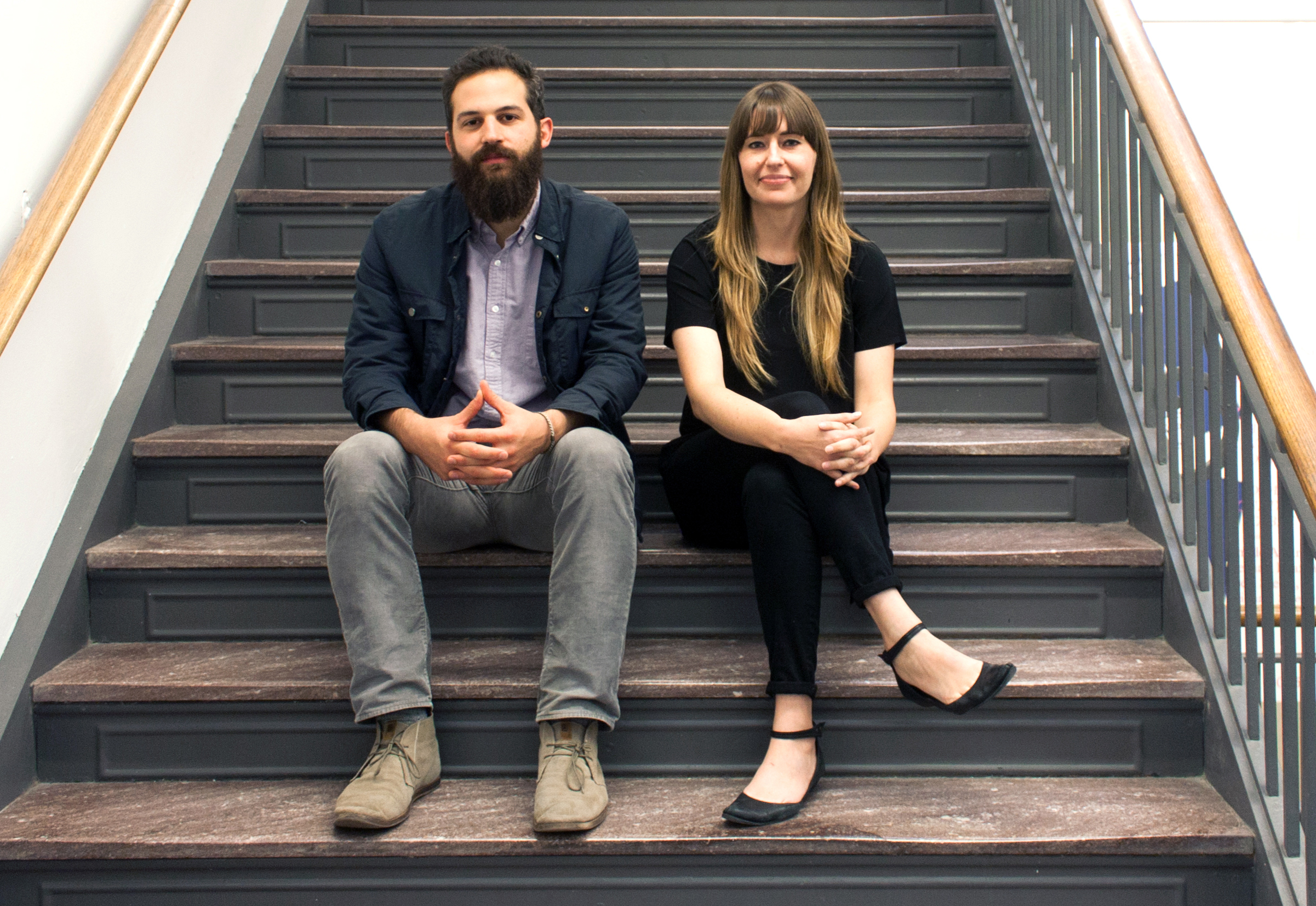
Molly Hunker & Greg Corso of SPORTS
 Greg Corso and Molly Hunker of SPORTS (Photograph courtesy of ©SPORTS)
SPORTS is the design collaboration of Greg Corso and Molly Hunker. Greg and Molly both received their Master of Architecture degrees from UCLA. They have taught at Woodbury University, UCLA, The University of Illinois at Chicago (UIC) and are both currently visiting faculty at Syracuse University School of Architecture. Recently, Modelo had the opportunity to learn more about their unique approach and design philosophy.

On starting the firm
Molly: The market crashed while we were in graduate school and there weren’t a lot of architecture jobs available when we graduated. As we were preparing for graduation, many of us had an interest in finding alternative possibilities to the conventional architecture job, since mostly those didn’t exist at the time anyway. That led us to start one of our installation projects, Life Will Kill You – the first SPORTS project. We started it as an independent study when we were still students. We just really wanted to build something and tried to be a little more entrepreneurial about it since we knew we couldn’t necessarily rely on getting the solid architecture job when we finished school.
Greg: I don’t know if it was simply the culture of the West Coast or Los Angeles, but we felt upon graduating that we should just start doing things, making stuff. That was the spirit there given the intersection of so many creative disciplines and transplants, so we went with it. After Life Will Kill You we just continued developing SPORTS projects simultaneously to working in offices. We both worked for artists straight out of graduate school and that probably also reinforced this idea and interest in producing work as quickly and consistently as possible.
On discovering their voices as designers
Molly: Like many people, we were influenced by those we studied with and worked for, but more than anything it was the coming of age as designers in the setting of Southern California. That entrepreneurial, making, experimentation culture has a long history there. That’s not something that’s just happening in architecture – it’s happening in the arts world, the film industry, etc. It’s where you can just make stuff happen like that. That was very influential to us in terms of how we tried to develop SPORTS as a practice.
Greg: Our approach and perhaps our sensibilities come from our background prior to architecture. Before graduate school, Molly was an artist and I was a cartoonist. So we came into architecture school with peripheral creative interests, which kept our design influences broad. We have a productive skepticism, and we look at a bunch of ways to solve problems and augment our instincts. Our process often appropriates ideas and intelligences from the periphery, from things that are running in parallel to the field.
Molly: That sensibility of borrowing from outside the discipline or redefining the territory of architecture to include many other types of design fields is something that we felt strongly at UCLA from our mentors and the way that they were working through their own design practices. It’s also super present in the way the LA design landscape functions – there’s not a clear delineation between capital A architecture and the many other design fields that exist there. It’s much more fluid than that. As we were developing our voices as designers, we felt encouraged to redefine the territory of architecture to include all of these external things we were interested in. And that’s still very much the way we work – we believe that architects have power to expand the discipline by looking at and learning from all kinds of stuff…
On the relationship between teaching and the practice
Greg: Teaching has changed the way we think about our work. When we first started SPORTS we relied on our design instincts and did not feel like we had to justify the work in any particular way. Whether it is how we situate our work within the classroom or how we engage our colleagues, we’ve had to unpack what it is that we do, and frame it within the academy. It has pushed us to consider the work in a different way, maybe more intellectually, and develop a new vocabulary for the work. It has been productive to have two parallel conversations happening regarding the same ideas, and then being able to synthesize those as we produce the next project.
Molly: I started teaching at Woodbury University – there was a familiarity and comfort to the conversation there at that time, and how our early SPORTS work might be situated within in. So when we got opportunities to teach at the University of Illinois at Chicago (UIC) and then later at Syracuse University, we were excited to see how the conversations at those different places might adulterate some of our training, and affect our work in particular ways. The conversations are, in fact, very different, and it has been incredibly valuable to the development of our work and how we situate it to be taken out of a familiar environment, where we were architecturally “raised”, and go into situations in which we feel a little more friction or difference.
On what makes SPORTS unique
Molly: In general, our works seeks to produce material and aesthetic freshness and we often find ourselves looking at some of the less pedigreed elements of our culture – things that are disregarded by the discipline but we see as being powerful in our everyday experiences. We are interested in how this can intersect contemporary design notions and ultimately develop something that resonates with people in a new way.
Greg: Our work intends to have a certain quality that balances rigor and research with amusement and delight. We like using color, form, and material effects in ways that allow the projects to be interesting but also accessible. I think the work attempts to be compelling and engage people in whatever way possible for a particular project.
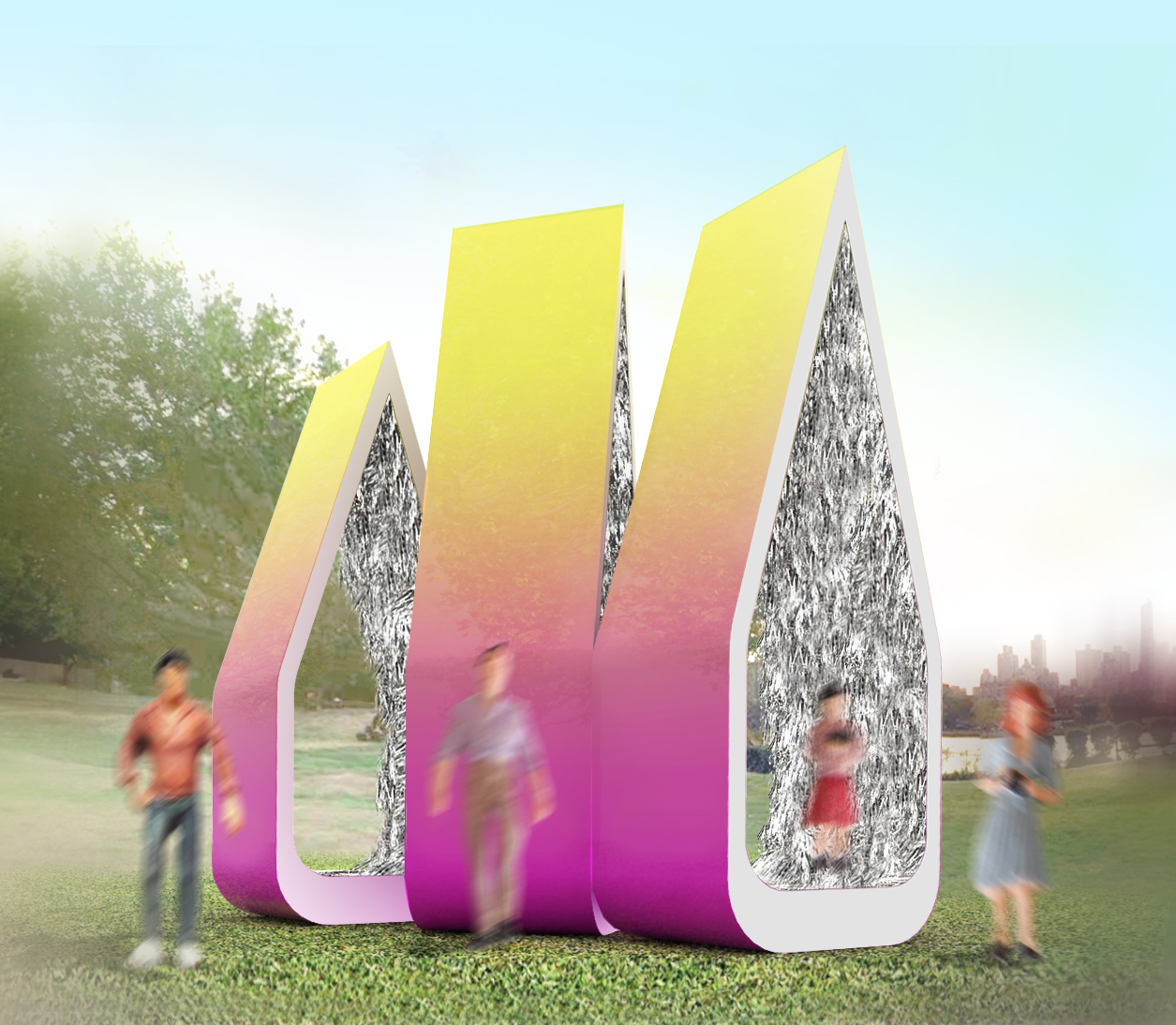 “Little Joy by SPORTS (© SPORTS)
On current projects
Greg: Some of the more recent projects have been less digitally driven than our earlier work, but they continue to try to find new ways of looking at familiar things. We did a proposal for a folly this year called Little Joy. Our interests were to negotiate the traditional folly’s place within architectural history and contemporary culture. While the traditional folly might be seen as an architectural object that decorates the natural landscape, we might understand the contemporary folly as analogous to the little trinkets that decorate our domestic landscape. We started to think of the folly as proto-knickknack. So we analyzed knickknacks, dissecting the collage of formal references, material qualities, and visual effects, and tried to understand their design DNA. What was interesting for us in this process was learning from things that really aren’t thought to have much intelligence in terms of design. Yet these are designed objects, and there is a real appeal to them.
Molly: Yes, people strongly respond to those objects – they collect them, they display them. So what are ways in which we can tap into that power architecturally? Incorporating those qualities into architecture might manifest itself as a kind of new architectural charm or other minor aesthetic condition that resonates with consumer culture in a similar way to consumer products. So we’re exploring ways in which we can hybridize this desire to collect the kitsch object with more contemporary notions of form, features, materiality, and visual effects.
Greg: On the note of effects, we have a lot of interest in how our designs can produce a particular kind of experience. We were just invited to submit a proposal for a rooftop pavilion in Florida. Our proposal, called Pop Thieves, is interested in producing a hazy atmosphere and blurry visual effects. The project is incredibly simple geometrically and the material is an off-the-shelf wire frame – but by multiplying that material system into total excess, it turns the dial up, and changes the experience for the users into something much more engaging.
On their dream projects
Greg: I might not frame it as our dream project, but rather an ideal client or situation in which to produce something. What really gets us stoked is working with people who believe in creative exploration, whether that’s being able to collaborate or just a total openness to ideas and interpretations of what a project might be. So program, scale and location don’t matter so much – it would be more about the situation. If you’re able to find someone that’s really able to work with you – I believe that makes for a dream project. That…or a gas station.
On the future of architecture in the next 5-10 years
Molly: It seems like an interesting moment right now – though maybe it always does. The question seems to be about how architecture redefines itself now that digital tools have total pervasiveness and they’re understood to be nothing more than that – a tool, that everyone is trained to use and should be as facile at as anyone else. For us, looking back to these everyday and ordinary concerns or ways in which normal people engage with things in different ways is one way that we’re thinking through our own trajectory. In our case, this might have to do with developing a relationship to material, craft, fabrication, or particular types of aesthetics. Many of our colleagues are looking at that process differently. So it’ll be interesting to see what comes of our collective pursuits.
Greg: What is understood as architecture right now is very broad, it has branched into so many areas and blurs into many disciplines. As always, I think architecture will continue to figure out how and to what extent it will participate in our general culture, politics, and day to day life.
On advice they would give themselves before starting
Greg: I’m not totally sure I have done enough to be giving out advice, so it would probably be the same thing I tell myself still, which is to keep your head down and keep working. Everyone I respect in every field and discipline has put in a ton of work and also didn’t sway with trends regardless of their ups and downs. I want to be able to work in a stimulating manner for a long time, and I don’t know another way to do that.
Molly: I’m thinking back to when we were still students. Not being able to rely on getting a normal architecture job when we finished grad school led us, and a lot of our classmates, to take an atypical route. And that was critical. We have some friends who started a co-op shop (KnowHow Shop in Highland Park) and some other friends who started a visualization company (Nephew in downtown LA). It was, and still is, super inspiring to see these folks going off on their own and fighting to do their own thing. So the advice, that we’re still telling ourselves, is to just keep working at doing your thing. This is probably not responsible advice in the beginning. But it’s amazing that there really are a lot of people out there who are interested and want to collaborate or support you, you just have to put yourself out there – that’s something that’s hard to believe in the beginning, but I think it’s worth the fight.