Design Manifestos: Tim Bosche of BSA LifeStructures | Modelo Blog Series

Design Manifestos: Tim Bosche of BSA LifeStructures

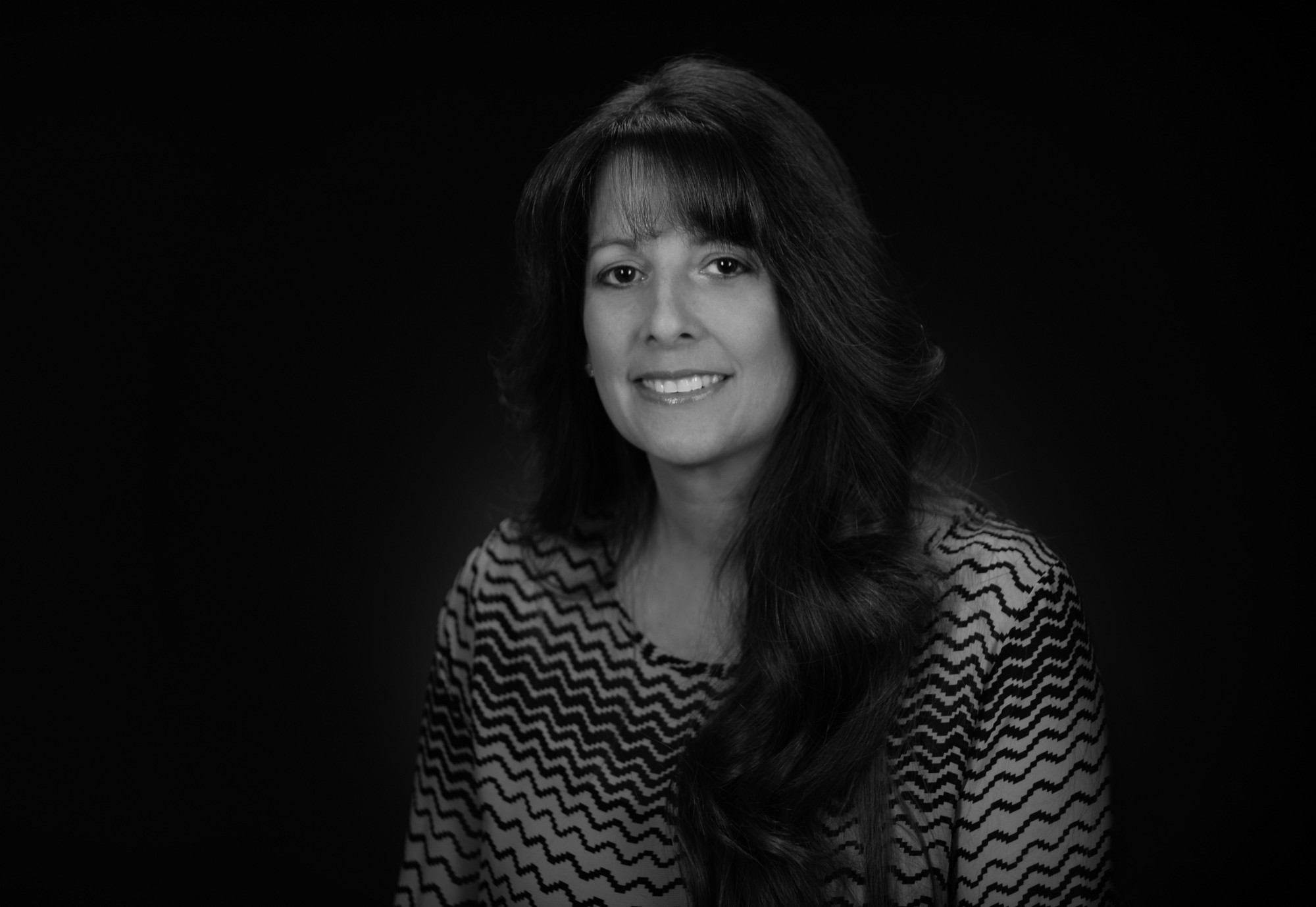
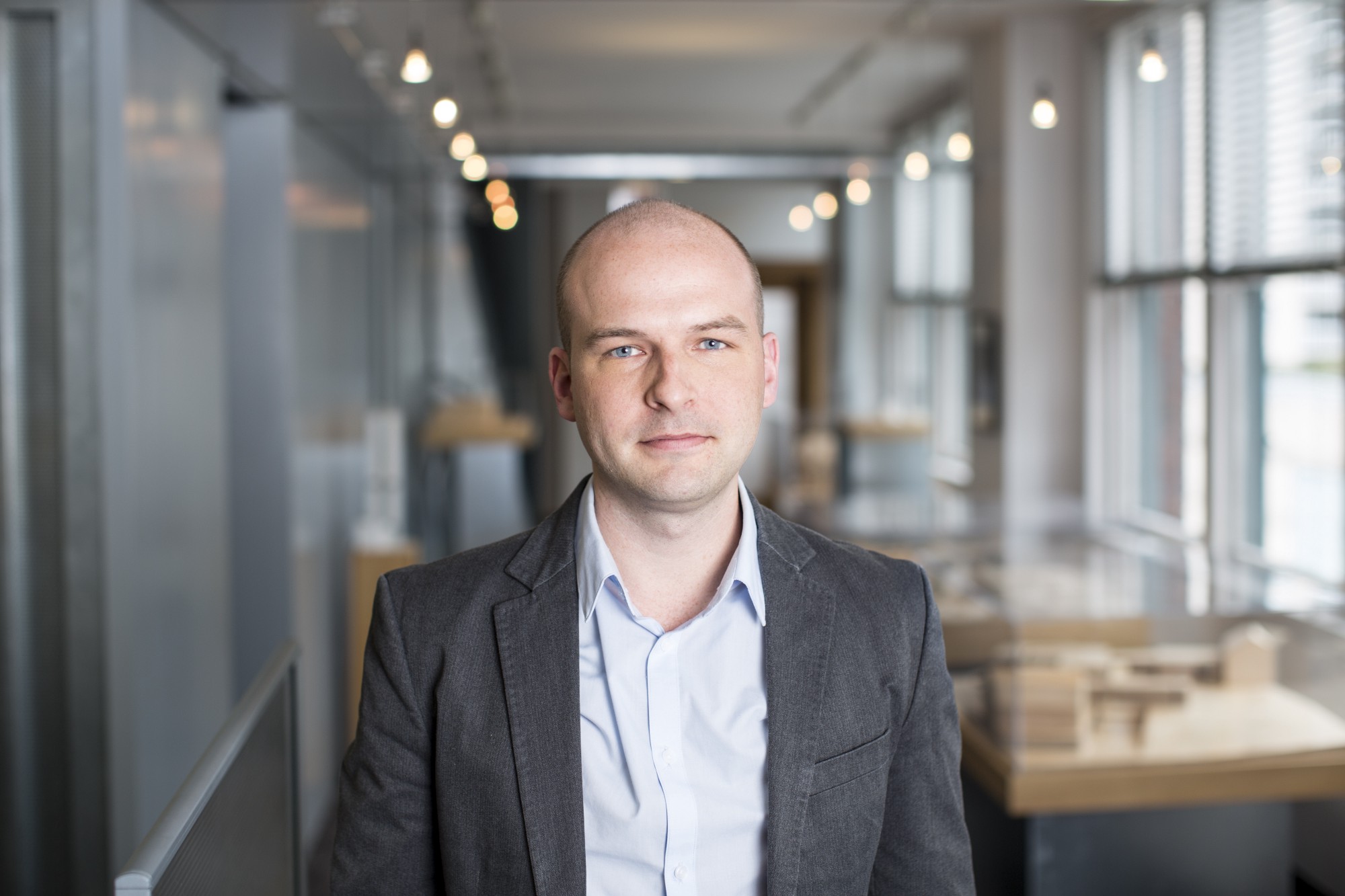
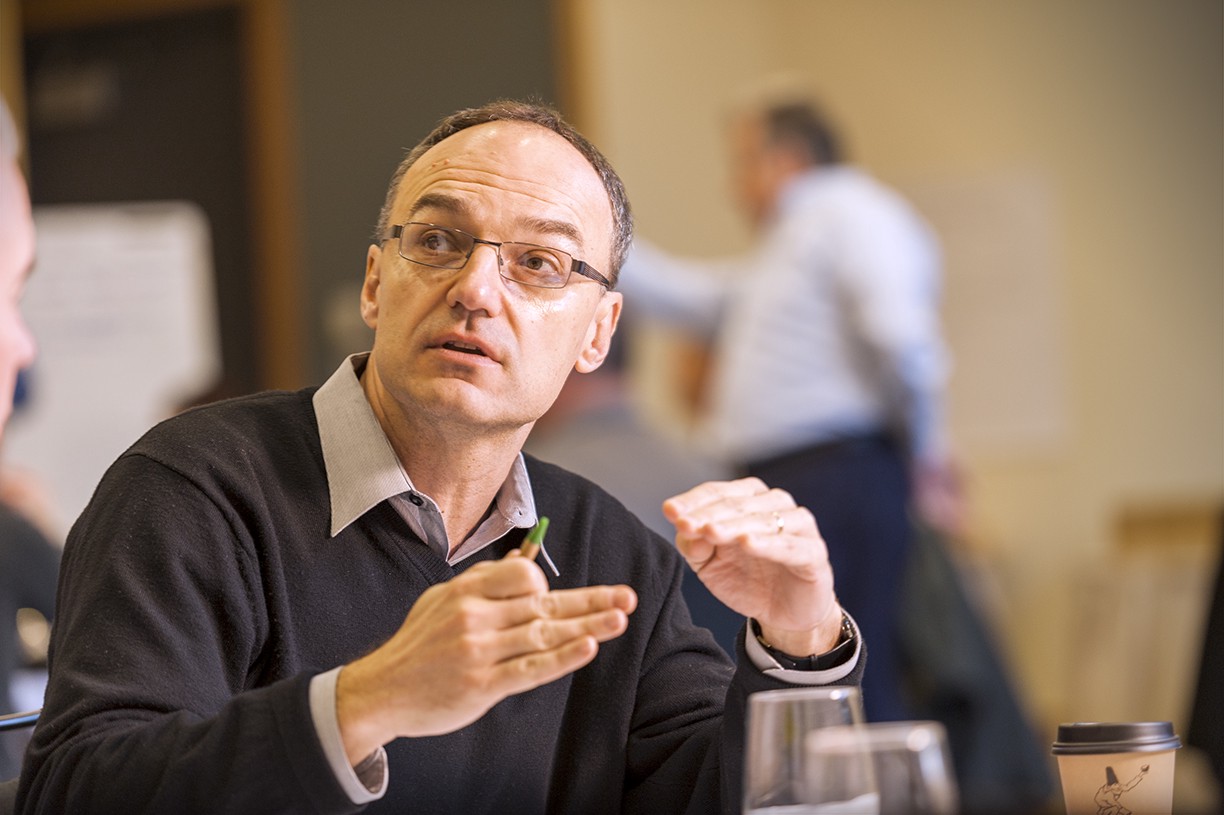
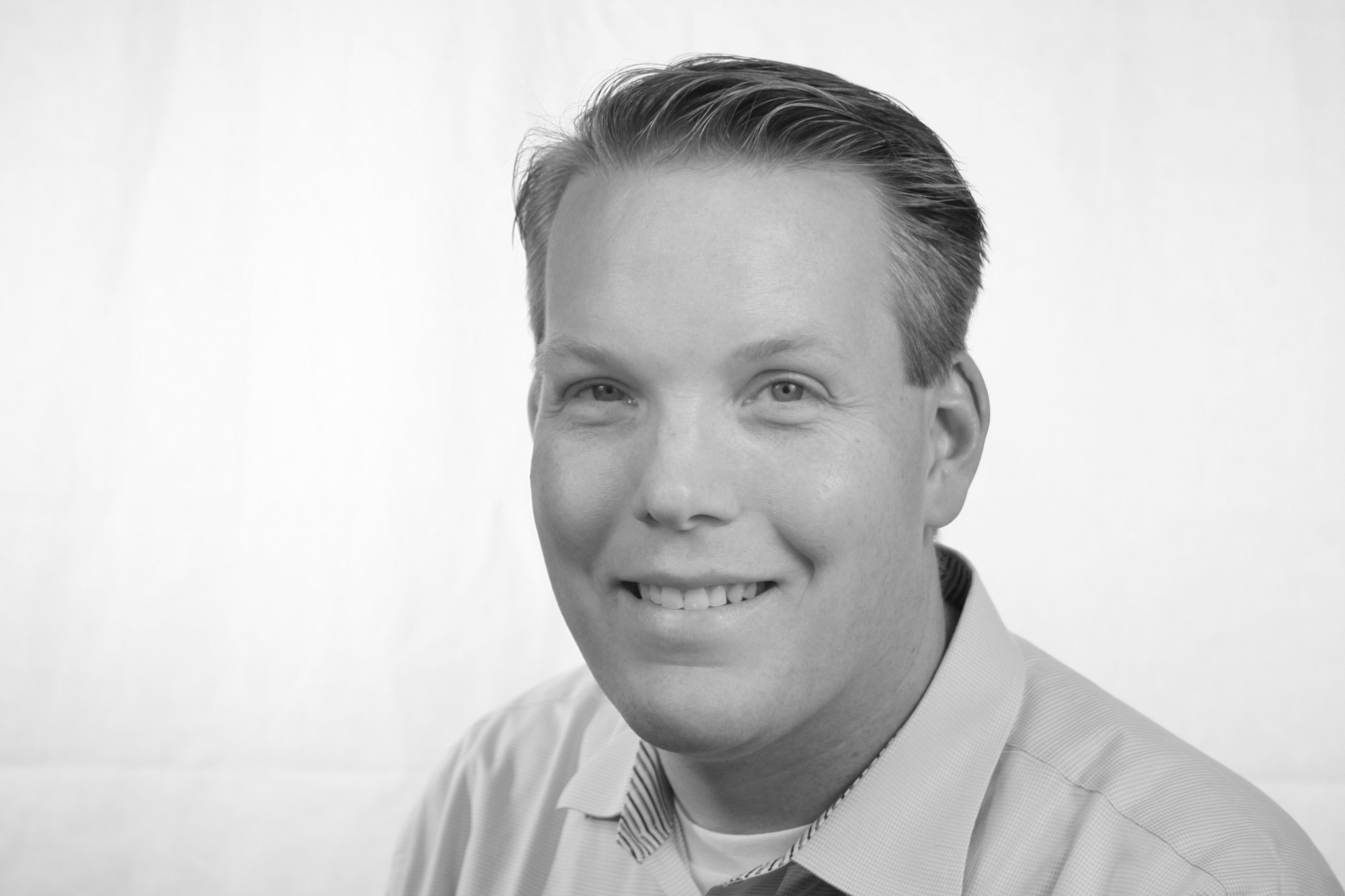
Tim Bosche (Photograph courtesy of BSA LifeStructures)

Tim Bosche is the Chief Design Officer at BSA LifeStructures, Inc. at the Saint Louis, Missouri office. He is a very adept and visual designer, and his specialty is in 3D modeling and communication. He fully understands the technical applications of integrating vision into stimulating architecture. Tim takes the aspirations and desires of a space and transforms them into a well thought-out, strategic vision for the project. He specializes in interior renovations, adapting existing spaces into new and better usage for Discovery, Healing and Learning Projects.

Tim uses an exploratory design process that focuses on identifying an organization’s goals. Those goals become the foundation for the project’s design. He works with clients to understand how the various components of design will impact the goals of the project. Modelo spent some time learning about Tim’s journey through the profession and about the collaborative design process at BSA LifeStructures.

On becoming an architect
From my earliest memories as a child, I had a strong interest in math and science. I was also captivated by art and music which brought out my creative side. I discovered the field of architecture as a profession that would provide me opportunities to explore while maintaining my love for problem-solving. The field of design has offered the best of both worlds to me, allowing me to create beautiful art through complex science.

On discovering his voice as a designer
The college environment provided a strong catalyst in developing my strengths in design. I graduated at a time when internet usage was growing and technology began to greatly impact our profession. After college, I quickly realized the power of the visualization skills I developed during my architecture studies. As I’ve grown in this profession, I’ve always been a visualization guy and an early adopter for the technology tools driving design. I recognized as a young professional that my role as a champion of visualization would connect me with important projects and clients, leveraging my value and developing my voice as a designer.
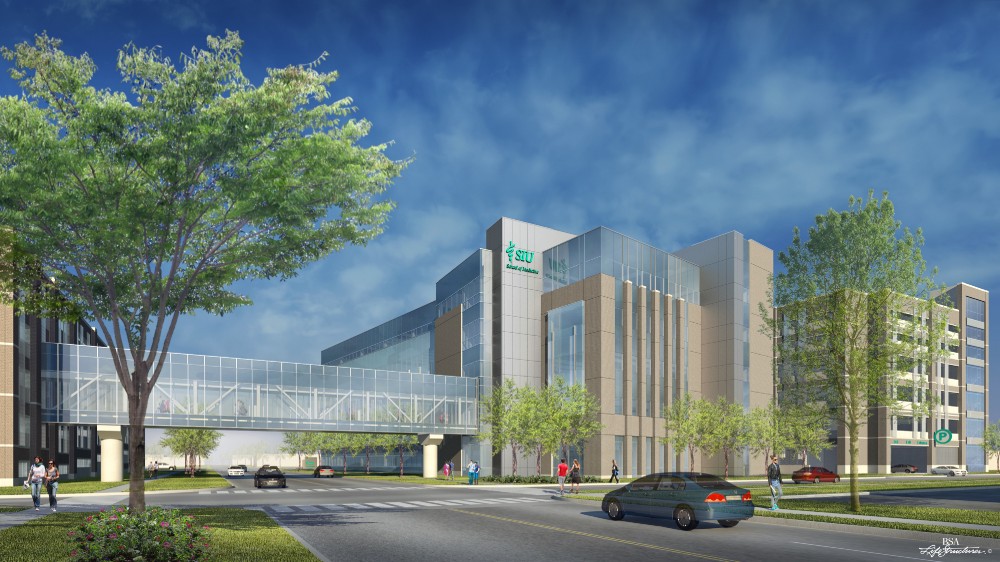
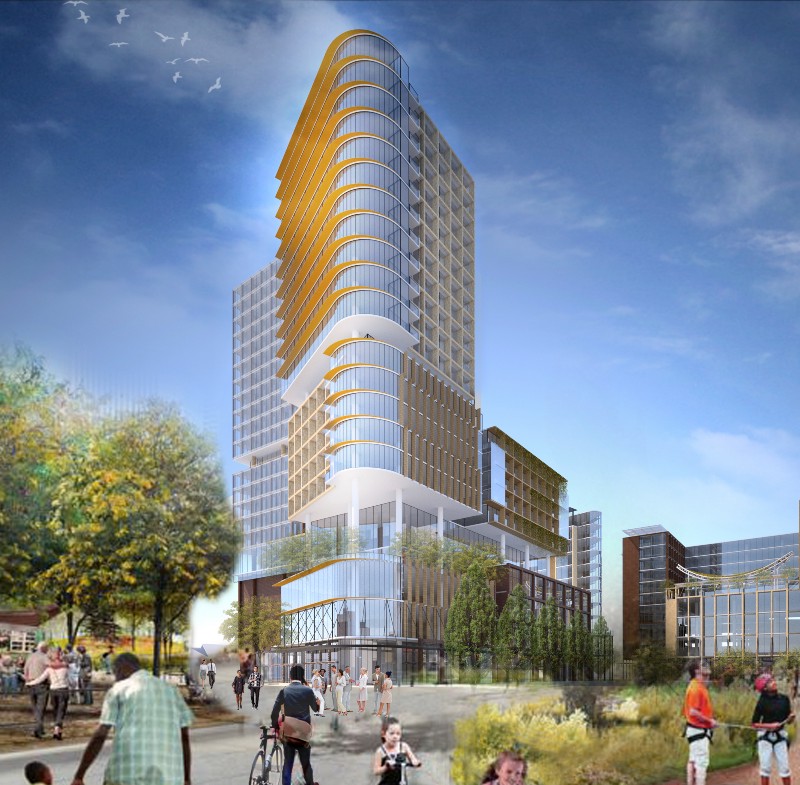
New Medical Office Building Springfield, Illinois (Rendering courtesy of BSA LifeStructures)

On joining BSA LifeStructures
I started my architectural career in smaller and medium-size firms. I saw an opportunity at BSA LifeStructures to bring my visualization skills to larger projects. BSA LifeStructures, as a multidisciplinary firm with focused markets, has provided opportunities for me to hone my skills within both the form and functional areas of design.

On the evolution of his role
I have always incorporated technology tools to enhance communication and engagement with clients. I find that larger design projects require a stronger focus on collaboration among design team members than smaller projects. With more consultants and stakeholders on larger projects, I’ve adopted some newer design communication tools that allow me to collaborate more efficiently and more effectively.

Technology, once tethered to the office, is now a mobile design tool. Our technology tools travel with us to design meetings, serving a vital role in the ways we engage and communicate with our clients.

On a recent project site, we incorporated an 86-inch display monitor and printer with dry erase boards. This design space served as an extension of our office…our mobile office. We set up a studio inside our client’s facility and were able to create virtual mockups onsite with 3D modeling. A rear projection screen was a key virtual feature, used to project headwalls for patient rooms and exam room spaces. Furniture was placed in front of the screen without casting any shadows. Clients and stakeholders interacted on-site with the design team, facilitating easy adjustments in the locations of furniture and equipment.

Technology allows us to focus on our process and the overall value we bring to design meetings. Clients now participate in our design process, which used to be more of a mysterious effort occurring away from them behind closed doors. We engage with our clients in a much more meaningful, transparent way with new tools of technology.
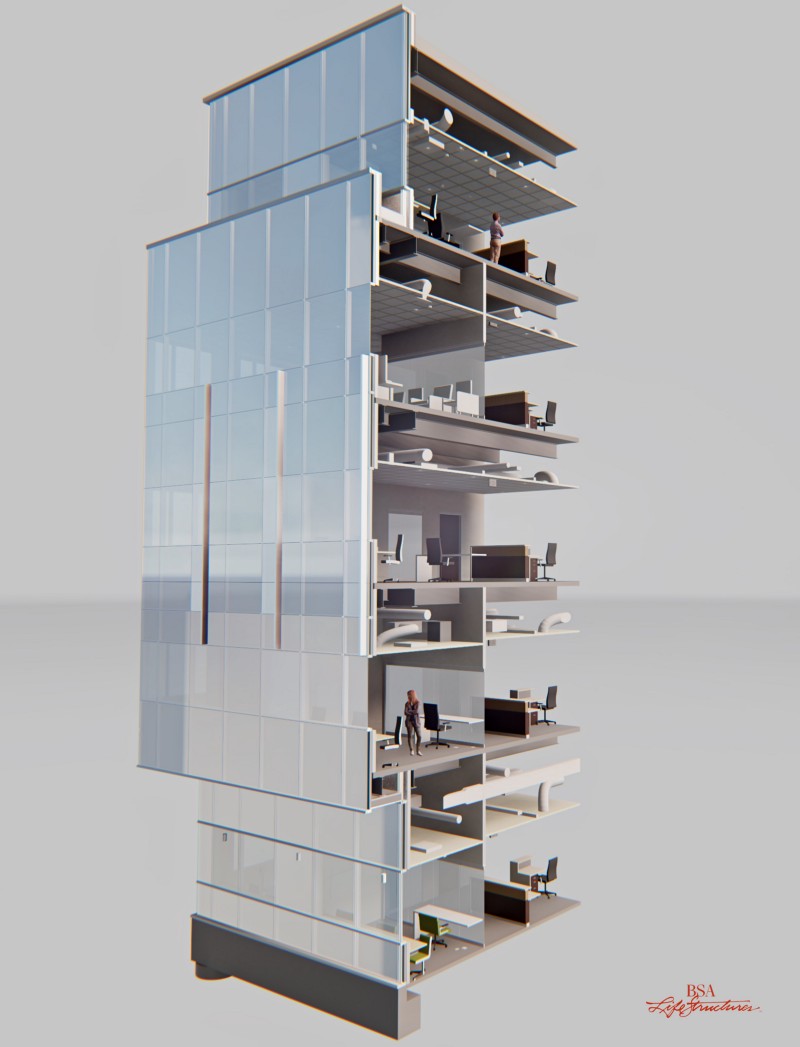
(Image courtesy of BSA LifeStructures)

On principles he strives to adhere to
The foundation of my design approach is rooted in our mission statement at BSA LifeStructures: “creating inspired solutions that improve lives.” We take a lot of pride in our mission. It’s important that we always keep improving and pushing the envelope to better serve our clients. Our firm has developed long-standing relationships with clients for decades. As our relationships with clients evolve, so do the tools that we use to develop solutions for them. Technology has had a phenomenal impact on the way we provide for our clients.

On his role at BSA LifeStructures
I’m the Chief Design Officer for BSA Lifestructures. My job is to focus on design leadership as we push forward new ideas and solutions. Consistency of design practice and culture is a vital aspect of my role, especially across our multiple offices. Our mission is achieved when an excellent, collaborative design process provides inspired solutions for our clients. My role is to ensure we maximize our efforts and incorporate the new tools of design and innovation effectively.

On recent projects that represent the firm’s unique approach
Our firm focuses primarily on three markets: healing, learning and discovery. Projects in these areas have complex needs and highly technical requirements. Such demanding work benefits from a comprehensive, full-service approach. I feel fortunate to be at a firm with such a deep bench of talented professionals as my colleagues. At BSA LifeStructures, architects, facility planners, engineers, laboratory planners, interior designers, operational planners and equipment planners collaborate on delivering complex solutions for our clients.

Operational planners, who are registered nurses, serve as important translators of design in our healthcare projects. These planners have walked our clients’ walk and are thought leaders who stay engaged with the evolving changes in the healthcare industry. Our clients have limited resources available, so every dollar must be maximized. Operational planners are a critical component of our healthcare design process through understanding and incorporating operational best practices in design. Healthcare facilities and spaces benefit greatly from incorporating improved processes and functionality.
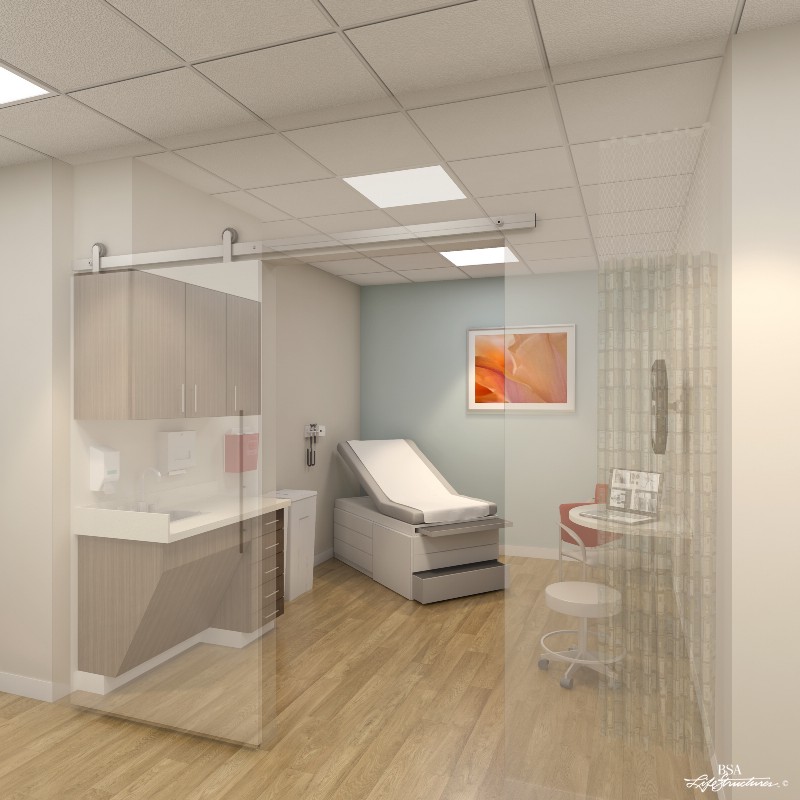
Exam Room (Rendering courtesy of BSA Lifestructures)

On his design toolkit
We use many different technology tools to develop solutions. You wouldn’t build a house with only a hammer. Our design approach is more than a collection of individual tools. It’s how those tools coordinate with each other and how the design team capitalizes on the strength of those tools.

When we first started with CAD drafting, we always drew two parallel lines and called it a wall, much like when we were hand drafting for a wall. Now 3D modeling is essential to the design process. It’s been rewarding to watch the development of BIM technology. We’re no longer drawing two parallel lines that represent a wall. Now, we draw virtual walls that shape space and contain embedded information. Our tools allow us to more effectively communicate that space and how it looks to our clients in real time. Offering our clients the ability to truly understand spaces before construction begins is a powerful advantage, resulting in better informed decisions by clients at the proper time during design.

As architects, we look at plans and visualizations on a daily basis. But our clients don’t necessarily understand these plans. The design tools we use, and more importantly how we use them, are critical to helping our clients understand the space and our design intent. In my world, a “LifeStructure” is not truly beautiful or effective without an understanding and realization of its function.

On the state of design software today
I’m excited now more than ever. We used to spend so much time tethered to the way we used to draw and how we used the computer to simulate the hand. Now that most designers have adopted a BIM approach and are more familiar and comfortable with the process, we’re seeing new ideas and smarter design.

About ten years ago, we relied solely on visualization experts in order to produce one rendering for a project. With the growth of visual technology, there’s been a new, more artistic style emerging from documents. Now almost every member of our design team is capable of producing powerful renderings that tell an understandable story to our clients. It’s empowering.
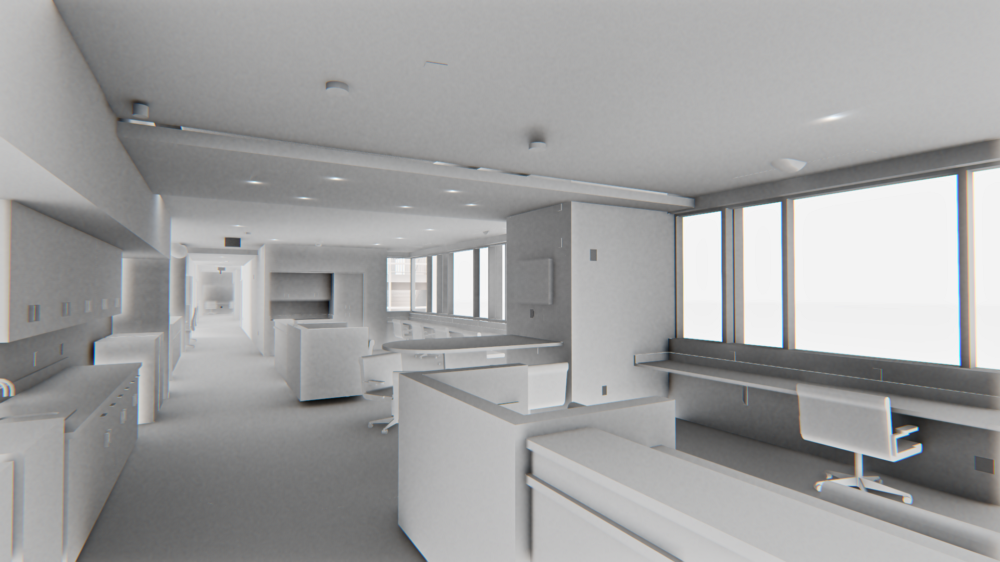
New Medical Office Building Springfield, Illinois (Rendering courtesy of BSA Lifestructures)

On the future of architecture in the next 5–10 years
The reshaping of the design process through technology requires all of us to collaborate more closely — architects, engineers and construction managers. Smart clients are requiring their design and construction consultants to collaborate at all levels. Change is rapid in our industry and we all need to successfully execute our design process in this fluid environment.

Sometimes it’s the owners who have adopted a software program for tracking construction changes during the CA process. Sometimes it’s the contractor that has a preferred software program. It’s fine that everyone’s a little different, but ultimately we need something more universal. Everyone wants to tighten their process, but if we get too rigid internally we won’t be able to work with others. You have to be adaptable on every project.

The demand for comprehensive use of BIM is growing. We’re seeing more sophisticated solutions from smarter design. Clients are requesting greater value from BIM models. Currently, BIM models provide documents for the contractor to build. Owners should be able to own that model ultimately for facility management purposes. Our usage of BIM needs to increase to provide greater value-added solutions for clients and owners.
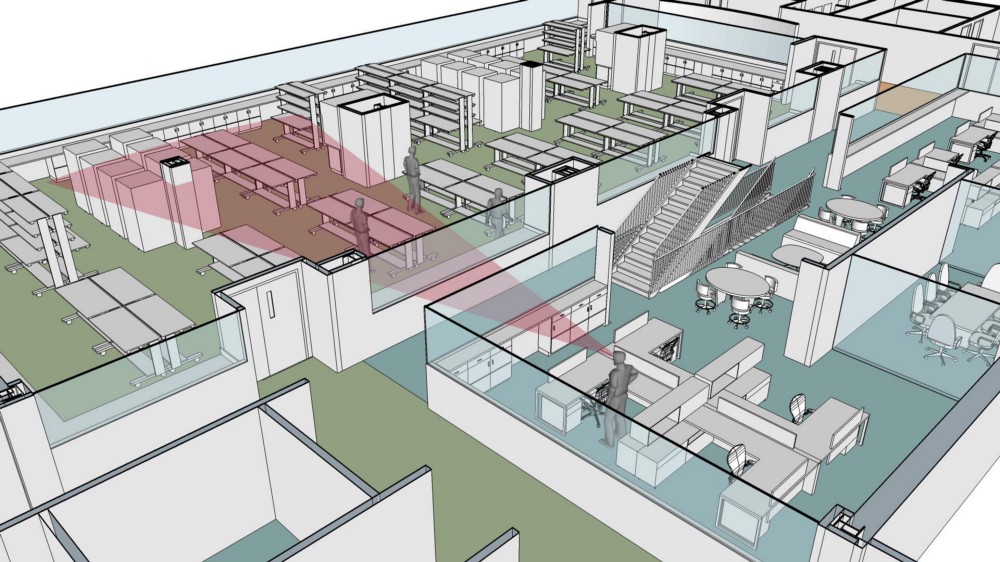
Conceptual Lab (Rendering courtesy of BSA Lifestructures)

On the future of BSA Lifestructures in the next 5–10 years
We’re placing greater emphasis on being strategic. We recently expanded our firm’s leadership circle to include people focused on futuristic thinking and innovation. We’re growing by adding offices and services, always looking to provide greater value and design to better serve our clients.

On advice he would give his younger self
Stay the course. Don’t be afraid of change and instead embrace it. When I first started, people would question some of the things I did. They thought my approach was much more difficult than the old-fashioned way.

Twenty years later, a lot of the same things I attempted back then have evolved and become commonplace. Technology has facilitated the efforts I undertook years ago. It’s almost like I’m at a point now where my contemporaries and I are being rewarded for our efforts. Many designers have shied away from the computer or technology, but I’m happy to say it will continue to shape and guide my approach to design.

Successful projects require strong collaboration, teaming, and managed strengths. They are rarely the result of one person’s effort. Connect and learn from others around you. Surround yourself with talented people, understand their strengths and develop a work ethic that can thrive in a collaborative environment.

Design Manifestos: John Osborne of Frankfurt-Short-Bruza Associates | Modelo Blog Series

Design Manifestos: John Osborne of Frankfurt-Short-Bruza Associates

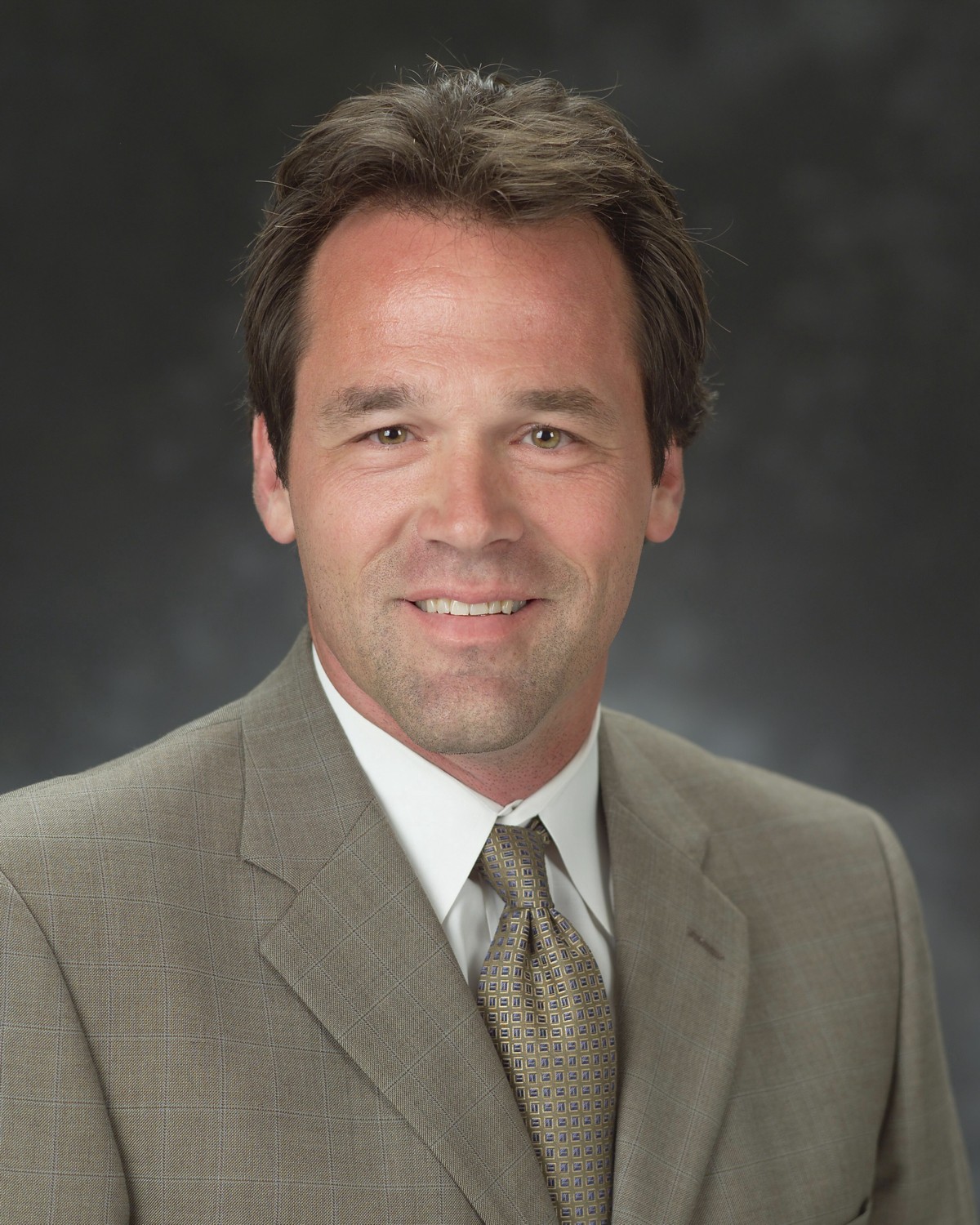
John Osborne (Photograph courtesy of Frankfurt-Short-Bruza Associates)

With nearly 30 years’ experience in design, FSB principal John Osborne is charged with supervising the company’s corporate market. John’s experience includes the design and supervision of a wide range of projects, encompassing everything from award-winning military facilities, to new corporate headquarters, to a new municipal public safety center. His ability to facilitate the design process and bring all project stakeholders to a unified consensus continues to play a key role in the success of FSB.

John graduated from Oklahoma State University’s prestigious architecture program in 1991. He is licensed in Oklahoma in both architecture and interior design. John has also served for several years as board member and past president of the AIA’s Central Oklahoma Chapter, a member of NCARB and is a LEED Accredited Professional. He serves on the Oklahoma State Art in Public Places Oversight Committee and other metro area civic committees and is a graduate of Leadership Oklahoma City. Modelo spent some time learning about John’s journey through the profession and about his current role at FSB.

On becoming an architect
I grew up in the construction industry. My dad has been a general contractor in California all of my life. I started working with him at age twelve, and quickly realized the tremendous satisfaction of creating and building something that was structurally sound, served a purpose and looked good (Firmitas, Utilitas, Venustas). I then took my first architecture class in 9th grade and I was hooked ever since.

Oklahoma State Capitol Renovation (Photograph by Greg Hursley Photography courtesy of Frankfurt-Short-Bruza Associates)

On discovering his voice as a designer 
I attended Oklahoma State University — School of Architecture from 1986–1991. We were then considered one of the top 3 architectural design schools in the country (based on national and international design competition results). It was there that I discovered what conceptual architectural design is about. Competing well in design competitions became my goal and, though others were likely more talented, I was fortunate enough to win several awards including the AIA School Gold Medal (“Top Ranked Graduate”).

In addition to some amazing faculty like John Bryant, Bob Heatly, Bob Wright and Jim Knight, I had other influences such as Frank Lloyd Wright and LeCorbusier that come to mind — it was their brilliant interpretations of creative problem solving which probably influenced/inspired my approach to design the most. To truly allow form to follow function, respect the site/context and to use light intentionally are always good design goals.

Oklahoma State Capitol Renovation (Rendering courtesy of Frankfurt-Short-Bruza Associates)

On joining Frankfurt-Short-Bruza Associates 
I first joined FSB in the summer of 1990. At that time, we had a great but small staff of 50 or 60 architects and engineers. But I could tell that the leadership was solid and they understood client-centered, quality-focused design. Today, we have around 150 employees, and the understanding has not waivered — which is evidenced by some client relationships that have spanned five decades.

My approach to design has evolved somewhat over the last 26 years. I have learned to place a higher value on pleasing the client than satisfying my own design passions. I pride myself on finding cost-effective, functional solutions that enhance operations, satisfy design objectives and contribute aesthetically to our built environment.
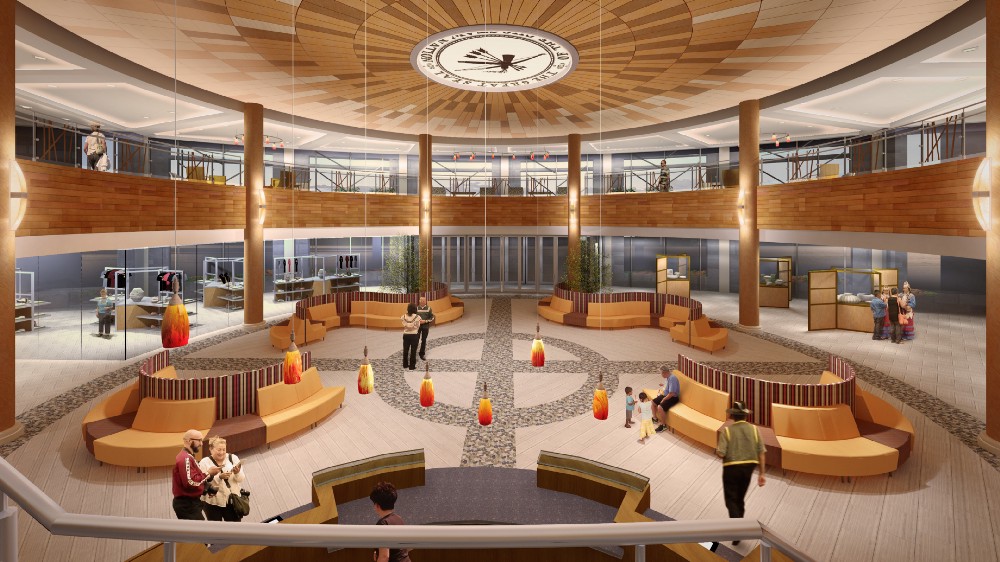
Choctaw Nation Headquarters Complex (Rendering courtesy of Frankfurt-Short-Bruza Associates)

On specific principles he strives to adhere to
1. Be a team player — Recognize that each employee/project member has different strengths and weaknesses and work accordingly. Embrace and seek design critiques from others and offer the same. Appreciate the value in others’ opinions/contributions.

2. Be quality-focused — You are primarily known by the work that you do! Focus on providing the best quality design, documentation and client services possible. Obviously, profitability is important, but I believe architecture firms have to choose what is going to be their “hedgehog concept” (great book by the way). I believe success will follow quality-driven firms, and conversely, failure will follow profit-driven greed.

3. Exceed clients’ expectations — It seems this used to be much easier. Clients’ expectations are being raised every year — in part, due to what I consider to be an improving standard of quality that architecture firms are required to produce to remain competitive. However, it is still my goal on every project to under-promise and over-deliver.

4. Do what makes sense — Worry less about short term personal goals or priorities, and ask yourself what is best for the project/client/firm. Sometimes this means working outside of your precise job description to help others in need. Don’t get caught up in fear-driven self-promotion.

These simple tenets apply to most all facets of business life, but can sometimes easily be overlooked.

On his role at Frankfurt-Short-Bruza Associates
I am currently principal in charge of the Corporate Market Sector, meaning I’m responsible for bringing in corporate projects. However, for 15 years prior to last year, I was FSB’s Director of the Design Department which included design architects and interior designers. Occasionally, I am asked to participate in design charrettes or offer critiques, which I am more than happy to do. I think architectural principals need to stay involved with projects and the design process to remain informed and relevant. Plus, no potential client wants to talk to a salesman — they might however listen to what unique challenges you solved on this project or that, and how that is relevant to their needs.

Choctaw Nation Headquarters Complex (Rendering courtesy of Frankfurt-Short-Bruza Associates)

On recent projects that represent the firm’s unique approach 
Our firm’s approach to design is consistent. We have several market sectors that we work in, but each project begins the same. First, develop a very good understanding of the client’s priorities, values, and objectives for the project. From there, the conceptual development of the design will be built upon a solid foundation. One unique thing that really helps our design process is having all in-house architects, interior designers, landscape architects, and engineers (structural/mechanical/electrical/fire protection/civil) in very close proximity (top 2 floors of the same building).

Some recent/current projects from our Native American, Civic and Federal market sectors:

1. Choctaw Nation Headquarters Complex: Under the leadership of fellow Principal, Jason Holuby AIA, this exciting project includes several new buildings on a 125 acre campus in Durant, OK. The buildings house services ranging from social services to healthcare to a 500,000 square feet administrative headquarters building. The Choctaw Nation leaders and members feel the resultant design is a successful reflection of their values, priorities and culture.

2. State Capitol Renovation: This project led by Principal Fred Schmidt, FAIA involves the preservation, restoration and rehabilitation of the historic fabric of the 400,000 square feet state capitol building in Oklahoma City, OK. Accessibility, security, life safety and other functional enhancements are part of the approximately $160,000,000 interior renovation — all of which fully respect the original design intent of this 100 year old structure designed by Solomon Andrew Layton.

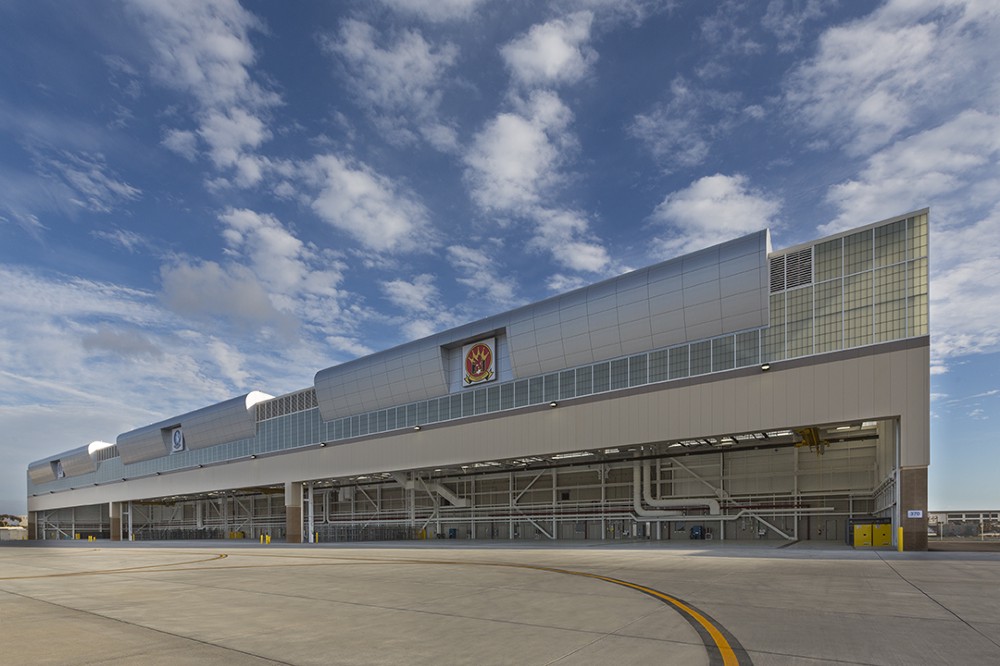
3. Aircraft Hangar at Naval Air Station North Island, Coronado Island: This project began with a large meeting with the design team and the Installation Commander. He clearly challenged FSB to develop a facility design that transcends its utilitarian purpose of helicopter hangar, and to create a building that is a “celebration of the birthplace of Naval aviation”. In response, I worked with our structural engineer and current Federal Market Principal, Gene Brown to arrive at a unique hangar design that met the challenge. The final design incorporates abstract aircraft references such as the airfoil shaped accent metal panel roofs over each of the three squadron airside entrances; and, aircraft tail/horizontal stabilizer references at each of the three landside entrances. This LEED Gold project was one of two hangar projects we did in San Diego, CA — the other was LEED Platinum.

Aircraft Hangar at Naval Air Station North Island, Coronado Island (Rendering courtesy of Frankfurt-Short-Bruza Associates)

On his design toolkit
Our firm uses the standard tools of the trade: Revit, Sketchup, 3D Studio/Viz and the Adobe graphics suite, etc. I, along with many others my age, have witnessed significant change in our industry with respect to tools. When I started, designs were communicated and studied through hand drawn graphics and hand built models. However, I would argue that the actual process of design has not really changed that much — only the tools that we use. The iterative non-linear process of conceptual design refinement has been aided by 3D software such as Sketchup and Revit. They may enable more options to be explored more quickly, but (one way or another) the exploration remains relevant and necessary for the design process.

On the state of design software today
The tools that we use are so powerful and the impressive results have led to increasingly higher expectations from our clients. Photorealistic renderings have become commonplace expectations even at SD or DD level design. We build databases now instead of chipboard models. I do believe that design is still design, and production is production. However, if the design tools that we use (like Revit) can more seamlessly apply to production efforts, that’s got to be good for the profession. The technology used in the architectural profession seems to be advancing exponentially. So, however one feels about the software used today will soon be irrelevant — tomorrow is sure to bring completely new software and/or hardware.

Aircraft Hangar at Naval Air Station North Island, Coronado Island (Photograph courtesy of Frankfurt-Short-Bruza Associates)

On the future of architecture in the next 5–10 years
It’s an exciting time to be an architect! The industry will likely only continue to implement more technologically advanced tools, but I expect the fundamental process of architectural design (creative problem solving) will likely remain as it has for hundreds of years.

On the future of the firm in the next 5–10 years
FSB has always been on the cutting edge of professional achievement and I expect that to continue. We hire great talent and implement mentorship, continuing education and professional development to stay current. We also try to demonstrate daily our guiding principles concerning character, teamwork, excellence and community.

On advice he would give his younger self
I was pretty fortunate in my career — I worked for only one other firm besides FSB and my own small practice for a short time. I was passionate about design and that carried me through a lot of challenges wherever I was. But, I suppose if I could talk to my younger self, I would encourage him to not worry about things out of his control. I would tell him to be passion/heart-driven, but to not get married before the age of 35.

To contact John via email: josborne@fsb-ae.com.

Design Manifestos: Melba Santos of MONOGRAM at BBGM | Modelo Blog Series

Design Manifestos: Melba Santos of MONOGRAM at BBGM

Melba Santos (Photograph courtesy of BBGM)

Melba Santos is a Senior Associate and MONOGRAM at BBGM Lead Interior Designer in Scottsdale, Arizona with more than 24 years of experience in all facets of interior design, including concept design, design development, contract documentation, FF&E and the planning and programming stages of a project.

Melba has an extensive background in hospitality, retail/mixed-use, convention centers, education and corporate sectors. She has a clear understanding of the administrative functionality of a hotel and the overall vision of how the pieces come together. Melba’s depth of experience, creative and collaborative nature and her strong sense of dedication to her clients’ needs will make her an asset on any project. Modelo spent some time learning about Melba’s journey through her career and about her current role.

On becoming a designer
As the daughter of a talented man who worked in the architectural field, art and design have always been a part of my life. My father introduced me to architecture growing up in Puerto Rico. I remember sitting by his drafting table and watching him use all of his drafting tools, which were so fascinating to me. It was the old way of developing design, the non-computerized approach, which I believe is still the best way to achieve unique, creative solutions today.

Over the years, my love of design grew and led me to the College of Architecture at the University of Florida, where I discovered the study of Interior Design. This field of study drew me in because it involved creating a balance of the macro level of the designed environment with the micro level which involves the details. I remember speaking to friends not in the field and realizing that I was embracing a very different way of thinking about the environment you live in and/or are surrounded by.

Pasea Resort & Spa (Photograph courtesy of MONOGRAM and BBGM)

On discovering her voice as a designer
After graduating, I worked in the International Retail/ Restaurant Mixed-Use field and was lucky enough to be provided opportunities to explore creative problem solving in a team environment. It was this exchange of ideas that led me to pursue a collaborative environment that included continual mentorship from colleagues in Architecture and Interior Design.
From my broad exposure to design came a focus on the Hospitality and Restaurant industry, which I consider the time when I discovered my voice. I was hired by MONOGRAM (BBGM) because of my ability to “tell a story” through design and every story is different which keeps me challenged and energized. I understand that Hospitality and Restaurant design requires an all-encompassing approach as well as balance of technical and creative solutions to achieve a homogenous end result that can be appreciated by any given Brand, Client or Visitor.

Being a painter, the discovery of things beyond physical grasp has always intrigued me. I try to imagine who a guest will be before he/she leaves their home and what the experience will be like for them when they enter a space I have collaborated on.

As a designer, I find influence in anything that inspires me. Fashion for instance has been one, specifically Carolina Herrera. It’s inspiring to me how she not only uses an architectural approach to sculpting shape and form but also marries that with her sensitivity pattern, texture and color to create something elegant or playful.

On specific principles she strives to adhere to
Every single project has its own goal, but all have the same interest of getting to know the client and the environmental/cultural influence. Being a curious person by nature is part of what drives me to painting and knowing my subject. I use that curiosity to first explore the programming aspect of a project and producing a spatial diagram that will develop into a master plan. Planning is always the catalyst to what is to come and how the visitor will experience the space, ultimately creating a backdrop for the journey to come.

My passion is in the storytelling that captures the audience and makes the visitor relate to that story through the design. Clients are always looking for the next big idea and this continually brings opportunities for exploration and discovery of new technologies in design that weave through the story. The focal point that anchors my concept is pivotal when developing the design and it immediately introduces the story and creates a sense of place.

Creating custom details is essential to the design. They bring forward the cultural influence but must also be efficient, functional and balance with the aesthetic. You must get into the users mind and try to anticipate how that individual will be using the environment to direct some of this without making them feel limited. The outcome can be completely different by a simple 1” decision or less in a detail. You must know your subject and understand what it takes for that specific piece of the puzzle to be successful. The visitor today has so many tools available that they depend on that we are designing real lifestyles and every corner of the hotel or restaurant environment must reflect this.

Toro Latin Restaurant and Rum Bar (Photograph courtesy of MONOGRAM and BBGM)

On her role at MONOGRAM at BBGM
As Design Director I provide the direction for the design and work closely with the team to assure that the design principles are carried through. It is my focus to not only influence the designs we are working on today but also influence the continual growth on design quality and innovative approaches for MONOGRAM.

Clients are always stating how the team at MONOGRAM is such a unit, easy to work with and this is so very true. We listen to our clients, making design and the client’s goal the key to our success. We work on projects that sometimes involve other firms and it is important that we bring forward the best design with a team approach to influence the projects in an unexpected and successful way.

On specific projects that represent the firm’s unique approach

PASEA RESORT & SPA

Planning

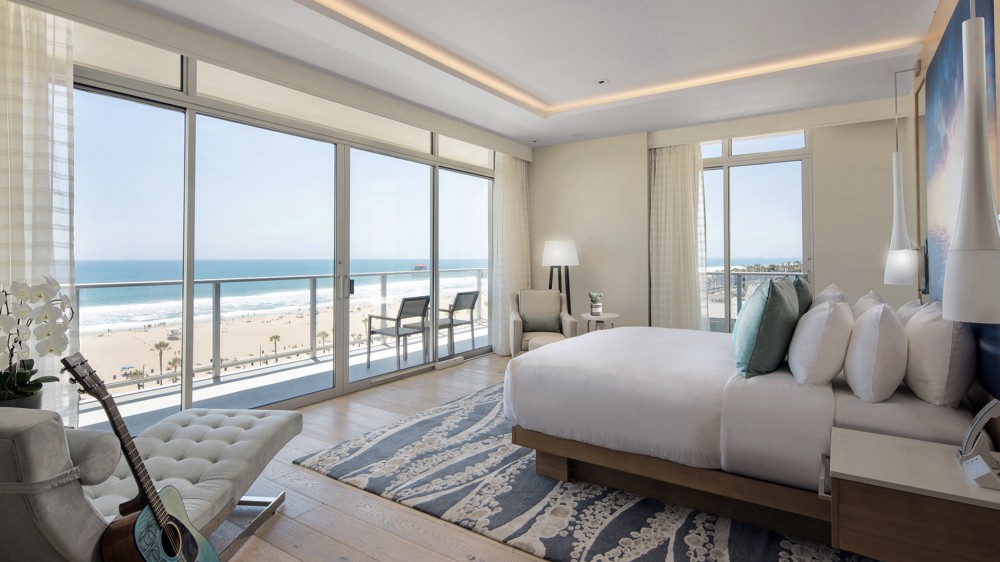
  • The strategic layout of the guestroom provide and immediate visual connection to the Surf City scene. As soon as you enter the contemporary beach foyer the space becomes a memorable and inspirational. A direct visual connection to the outdoor beach scene is achieved by: the strategically placed sliding barn door at the shower that provides an open outdoor feel and view of the ocean; linear ceiling planes that create and axis and guides you visually to the expansive beach view; furniture layouts that provides options and varied vanish points to experience the indoor/ outdoor connection.

Artwork

  • The large scale headboard artwork is the focal point of the guestroom and tells the story, layering water and the Surf City scene in a soft and soothing manner. The impact on the scale of the art and soothing colors create an immediate link to the locality.

Balance through details

  • Each guest room shows sensitivity in the details as the visitor would have in their own beach home when arriving into the foyer. The details provide convenience to the visitor but are subtle enough that they enhance the design and provide the layer of luxury.

TORO

Creating a lifestyle

  • A space created for the casual and upbeat lifestyle of a golfer. The ‘Rum Locker’ zone becomes the focal point and place where the visitor gathers. The impactful feature wall immediately tells the story of the large Rum collection available and introduces the restaurant casual feel.

Sculpting and Art

  • Architecturally bringing details of texture in the wood layering and the use of the metal panels makes the space feel balance and provides a sense of place that recalls the AZ desert. This is where the balance and artistic viewpoint takes places in strategically placing the patterns/textures to guide your through the space and outline each experience the visitor can be part of; the living room with a fireplace, the bar area, the food display area or dining area with an expansive view of the golf course and desert hills beyond.

MARRIOTT SPECTRUM

Sculpting and Art

  • Sculpting the space is directly correlated to the way the visitor will experience it’s every move and transitions from space to space. Strategic ways of guiding the visitor takes places as soon as you enter the lobby by the addition of the linear art which takes you to the elegant Greatroom and elevator areas.
  • At the MClub you are greeted by the story of the 4 Bison’s, well known to Irvine, in a playful and contemporary approach of a sculptural wall feature. The contemporary bison sculptures are on a backdrop of rustic wood planks, merging the old with the new.

Fashion

  • The use of geometric Ralph Lauren type patterns on the fabrics, rich leather textures and use of rich tones become the accessory in the space that make it approachable and comfortable.
  • It is about the journey from the Canyon to the Water’s edge. Each pattern and textural layer recalls the past and moves into the present with a contemporary approach to the design. It is the dichotomy on the materials that brings interest; warm wood, cold steel panels, the use of modern glass and rich leather details. Rustic wood/steel panels that recall the barns in the Irvine Canyon, as well as the playful rope chandelier / or modern glass bell shaped pendants with leather straps at the reception and colorful reflective water rugs tell the story of the growth of Irvine.

Technology

  • We create an extension of the lifestyle of the visitor by providing convenience outlets on multiple seating area types, including outdoor connection that become extension of the indoor and still provide the same convenience.
  • A custom beverage/bar area with wine and beer dispensers provide access to the visitor and gives that layer of exclusivity and luxury.
  • Lighting technology plays a big part of highlighting the materials in a more integrated way. The Architectural columns are highlighted with an integrated recessed linear light, accentuating the height and volume of the space.
  • Large 5’-0” long porcelain tiles are used at the lobby flooring. Tile manufacturers produce more tile options when it comes to sizes and shapes that allows for a contemporary look with a more simple and luxurious approach.

On her design toolkit
Like many companies, digital resources are part of how we work today; Revit, AutoCAD, Photoshop, InDesign, Bluebeam, etc. But I still believe in also using hand sketching to communicate with your clients. It is important to be able to be interactive and get the client involved.

As a firm we have learned through the years what works and the digital tools are an aid to examine, understand and visualize the design. But our experience in hospitality and past built projects are used to understand truly what the outcome will be and whether it will be successful. We continually work closely with manufacturers to learn the new technology, materials and innovative tools available that can influence the design and bring it to the future in hospitality. With the hotel brands and branded residences continually evolving, it is important to know the latest trends and what the future in technology is before it is even available in the market.

On the state of design software today
One of the ways we do communicate is with realistic renderings, these is a very successful tool to sell the design. We once had a client so surprised that he asked if we had built the space. We do have clients that prefer the hand sketch type renderings and we have also gone this route, It is always what best fits the project. Our toolkit is adaptable and it is the process and strategy that we follow that best fits the specific project.

Marriott Spectrum (Photograph courtesy of MONOGRAM and BBGM)

On the future of architecture in the next 5–10 years
As we see brands evolving and introducing desired solutions for incorporating technology into the design environment, there is a place for continued innovation in creating the built environment. Technology influence not only where we plug in but the textiles we use or the materials we create with. Technology based Form and function are very much linked in the hospitality design industry.
Hospitality is truly connected to how people live their daily lives. Our designs are a direct reflection of that individual’s lifestyle, which is directly correlated to how he/she will use the hotel or residential amenities. We already see brands evolving into this technology driven environment that accommodates the user but we will continue to see even further development in lifestyle; creating balance through the influence of health/fitness and social connection in the environment we design.

On the future of the firm in the next 5–10 years
Our design approach is continually evolving, design is not a static field, and it is influenced by so many environmental factors. We will continue to understand our user and how the hospitality environment becomes an extension of our lives. Design of Spaces are becoming more complex and we create environments that balance the need for the new, such as technology, but feel warm and comfortable for the user.

On advice she would give herself
Collaboration is so critical to your growth, this is a field that gathers so many disciplines. Always surround yourself with knowledgeable and experienced individuals that will influence and challenge you to grow and further your design abilities.

I am a great believer in mentorship and how it can influence every aspect of your life. In design, mentorship can influence the path you choose in your career, whether it is in a business aspect, design growth exploration or whatever field in Architecture you decide to pursue. It is so important to gather information from experienced colleagues and gain knowledge and perspective of the goals you want to achieve.

Pursue the field that you enjoy and excel in, but understand and be well rounded in all other aspects of that field.

5 Actually Good Examples of “Walls” | Modelo Blog Series

5 Actually Good Examples of “Walls”

If all this talk of building a wall has got you feeling like…

© Mauro Gatti

Then it’s time to take a breather and just appreciate these five beautiful examples of walls below.


  1. Exodus, or the Voluntary Prisoners of Architecture by Rem Koolhaas
© 2007 Artists Rights Society (ARS), New York / BEELDRECHT, Hoofddorp, NL

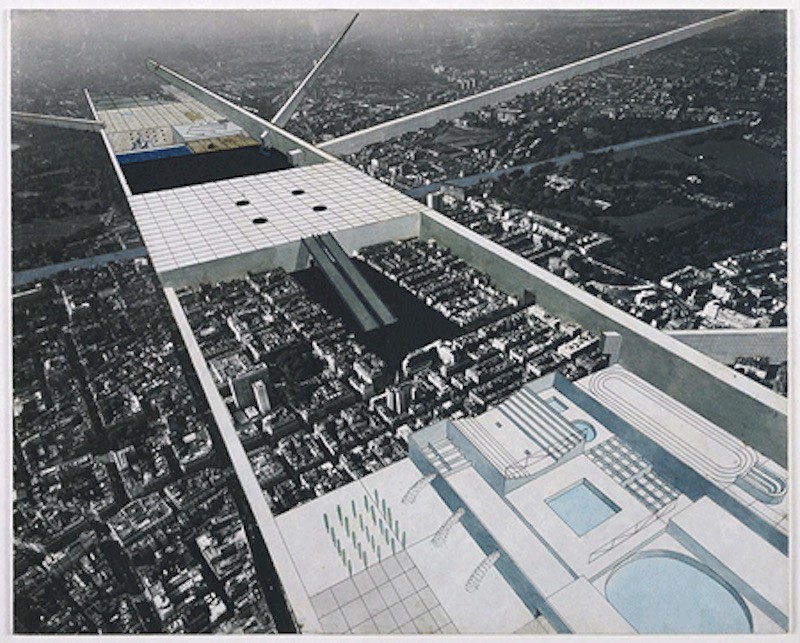
In this project, Koolhaas and his collaborators lampooned the modernist utopias of their predecessors, sarcastically describing the Berlin Wall as a masterpiece of design and proposing a walled city within London as a way to create a new urban culture, one which would lead inhabitants to leave the rest of the city to fall to ruins.

2. Wall House by John Hejduk, Thomas Muller/van Raimann Architekten & Otonomo Architecten

© Liao Yusheng

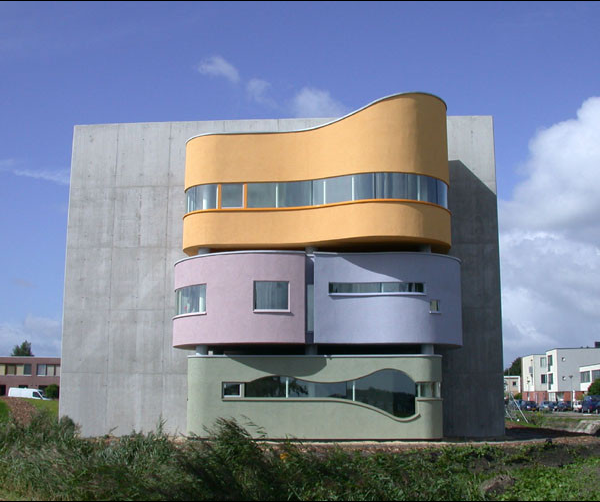
Wall House 2 is admired for it’s fusion of Surrealist sculpture, Cubist paintings and architecture, which reflect John Hejduk’s identity as an artist, poet, educator and architect. Inspiration for his work often came from Le Corbusier and Mies van der Rohe, where he learned to focus on the more flat dimensions of architectural form as well as the focus on pure volumes.

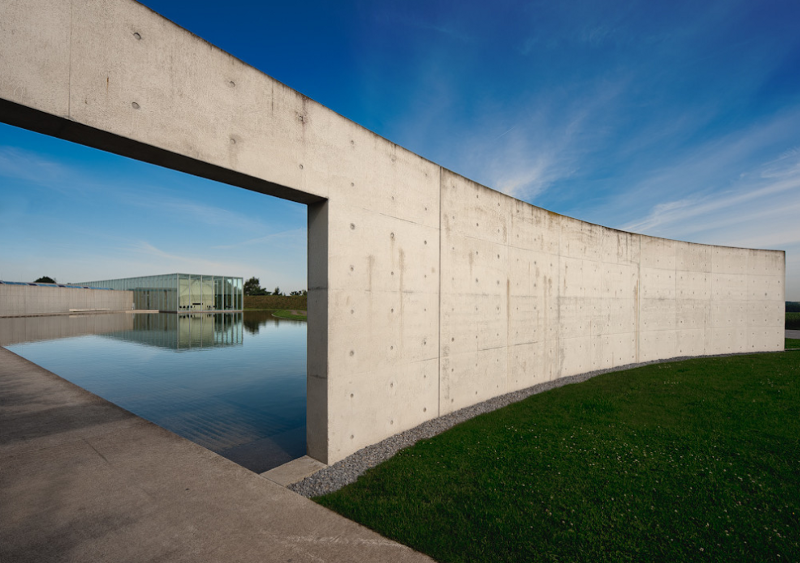
3. Koshino House by Tadao Ando

© Kazunori Fujimoto

Tadao Ando’s design for the Koshino House features two parallel concrete rectangular confines. The forms are partially buried into the sloping ground of a national park and become a compositional addition to the landscape. Placed carefully as to not disrupt the pre-existing trees on the site, the structure responds to the adjacent ecosystem while the concrete forms address a more general nature through a playful manipulation of light.

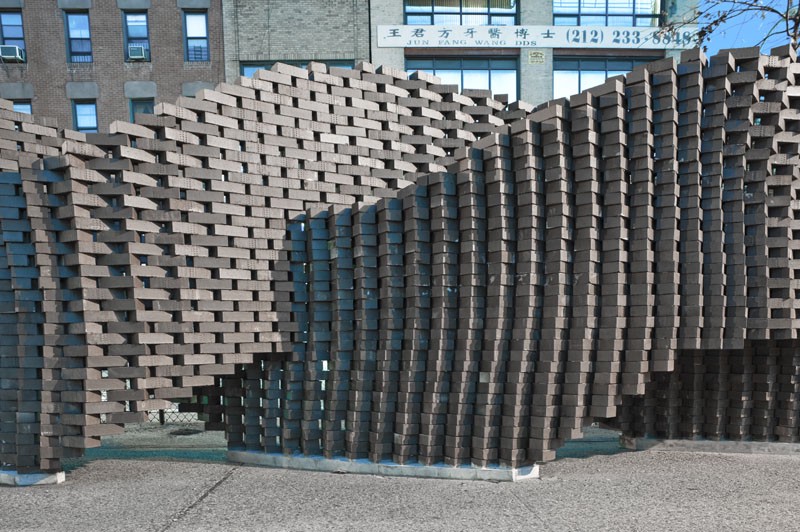
4. Pike Loop by Gramazio & Kohler

© Alan Tansey

Pike Loop is a 22m (72ft) long structure built from bricks, the most traditional building material widely present in New York. It was designed to be built on-site with an industrial robot from a movable truck trailer. More than seven thousand bricks aggregate to form an infinite loop that weaves along the pedestrian island.

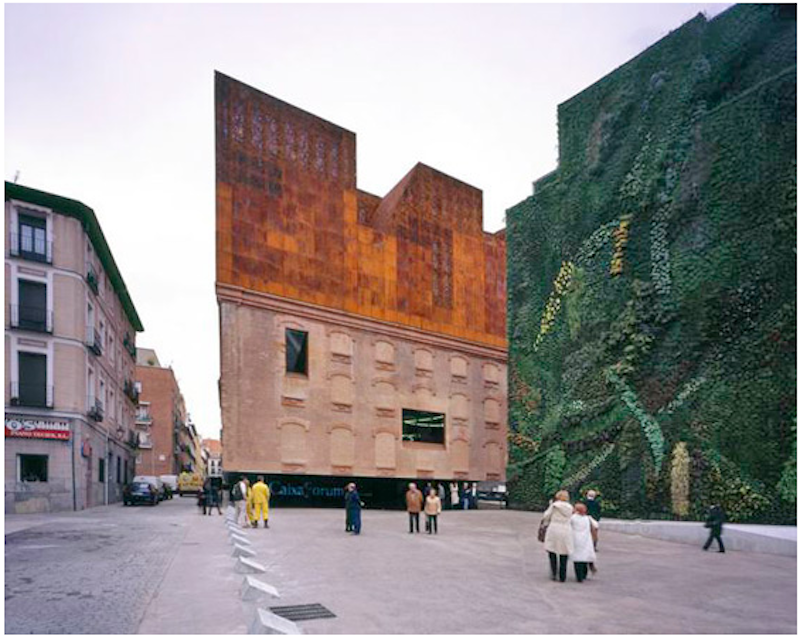
5. CaixaForum Renovation by Herzog & de Meuron

© Iñigo Bujedo-Aguirre

The CaixaForum is conceived as an urban magnet attracting not only art-lovers but all people of Madrid and from outside. The attraction will not only be CaixaForum’s cultural program, but also the building itself, insofar that its heavy mass, is detached from the ground in apparent defiance of the laws of gravity and, in a real sense, draws the visitors inside.

Design Manifestos: Matthew Gamache of Valerio Dewalt Train | Modelo Blog Series

Design Manifestos: Matthew Gamache of Valerio Dewalt Train

Matthew Gamache (Photograph by Romina Tonucci Courtesy of Valerio Dewalt Train)

Since joining Valerio Dewalt Train in Chicago, Illinois in 2007, Matthew Gamache has led visualization efforts and contributed to project conceptualization, schematic and design development. He has been assigned to some of the firm’s most significant projects, including the recently completed Rita Atkinson Residences at the University of California-San Diego and 220,000 SF of new construction at the University of Chicago Laboratory Schools. Most recently, he helped design and project manage Juniper Networks’ New Jersey Innovation Center, a collaborative tech venue for Juniper and its East Coast partners and clients. Modelo spent some time learning about Matthew’s journey through the profession and about the generalist culture of the firm.

On becoming an architect
I grew up in rural Minnesota, experiencing mostly vernacular architecture. By age eight or nine my parents took me to Marcel Breuer’s college chapel and campus at Saint John’s University in a remote part of the state. It was at Saint John’s that I first understood the possibilities of architecture. I saw the skill and beauty that Breuer brought to the landscape. His structurally heroic Alcuin Library, his sensually pleated abbey church, and the visionary bell tower that is more mast or ship’s sail billowing over the wooded hills.

On discovering his voice as a designer
Finding Breuer was the beginning of an ongoing obsession with architecture. I’m captivated by beautiful and compelling spaces and constantly inspired by the architecture of my adopted city: Mies, Goldberg, and Sullivan; Inland Steel; Lake Point Tower, Millennium Park and the Lakefront. Chicago is my home, a place where you can still fantasize about impossible futures for the great prairie by the Lake.

Adobe San Francisco, Lobby (Photograph by David Wakely courtesy of Valerio Dewalt Train)

On joining Valerio Dewalt Train
During grad school, I spent a weekend in Chicago and knew this is where I wanted to start my career. I flew to the City and interviewed at multiple offices. There was a lot of interesting work in town, but most of the offices were dreary. Everything was different at Valerio Dewalt Train. There was energy and excitement and bravery. The office was working on an installation at the Art Institute (something about the ambiguity of space), a high-end Michigan Avenue Flagship (with an amorphous wood wall), and a high rise apartment building in the South Loop. The work was diverse and interesting and, well, ambiguous and amorphous. After my interview I was told that I would spend two years working alongside Joe Valerio. Whatever he was sketching, I would be modeling.

My first two years (and the six more that followed) have been engaging and transformative. I’ve touched a hundred projects or more. In that time, I learned the ancient lessons of architecture: geometry, illusion, curiosity, and experimentation. I’ve also become better at listening to our clients and solving the “difficult whole.”

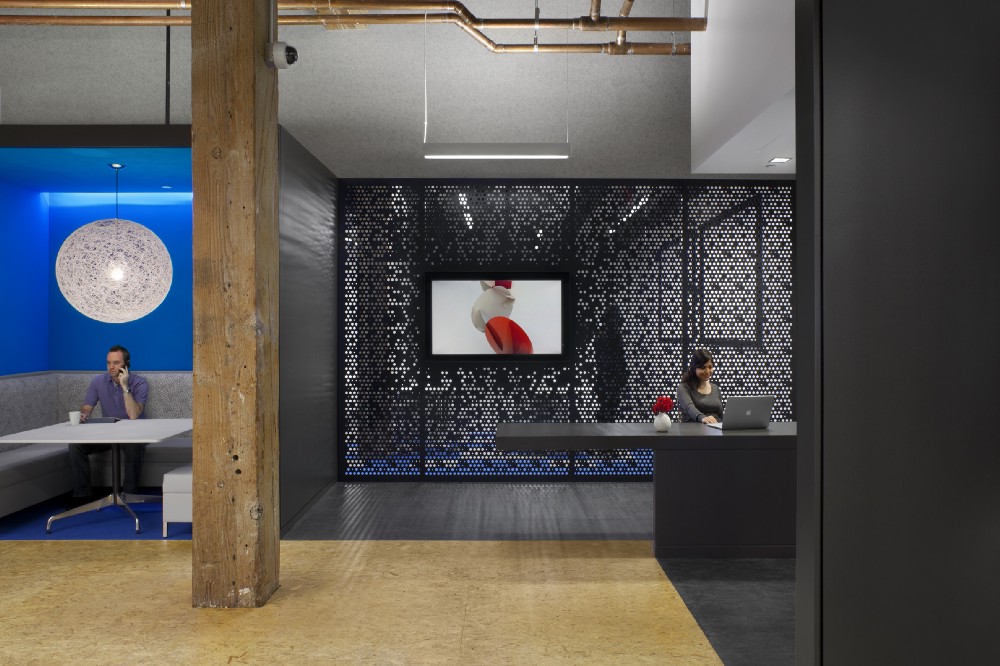
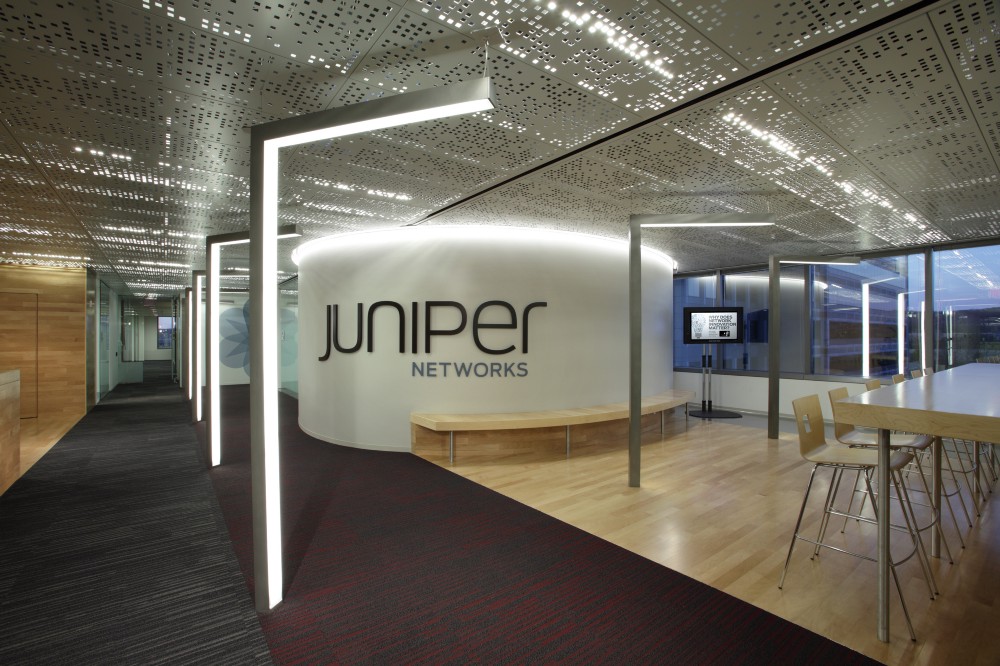
Juniper Networks, Openlab — New Jersey Center for Innovation (Photograph by Matt Wargo courtesy of Valerio Dewalt Train)

On specific principles he strives to adhere to
Valerio Dewalt Train is strongly focused on research. Our in-house brainstorming sessions usually include someone saying: “How do you know what you think you know?!” To which we go back and listen and research and study and experiment and posit all over again. It is an iterative process of learning and relearning, and sometimes unlearning. It is good design.

On his role at Valerio Dewalt Train
Valerio Dewalt Train has a generalist culture. This culture encourages each person in the firm to work at all scales and phases of a project. This is the breadth and diversity that makes architecture insatiable and forms an architect that is both curious and well-rounded. For this reason I hesitate to identify a specific role in the office. However, if pressed, over the last couple of years I’ve been leading the visualization efforts in the office. I’ve been working to improve the quality of concept drawings and renderings and studying ways to improve digital workflow.

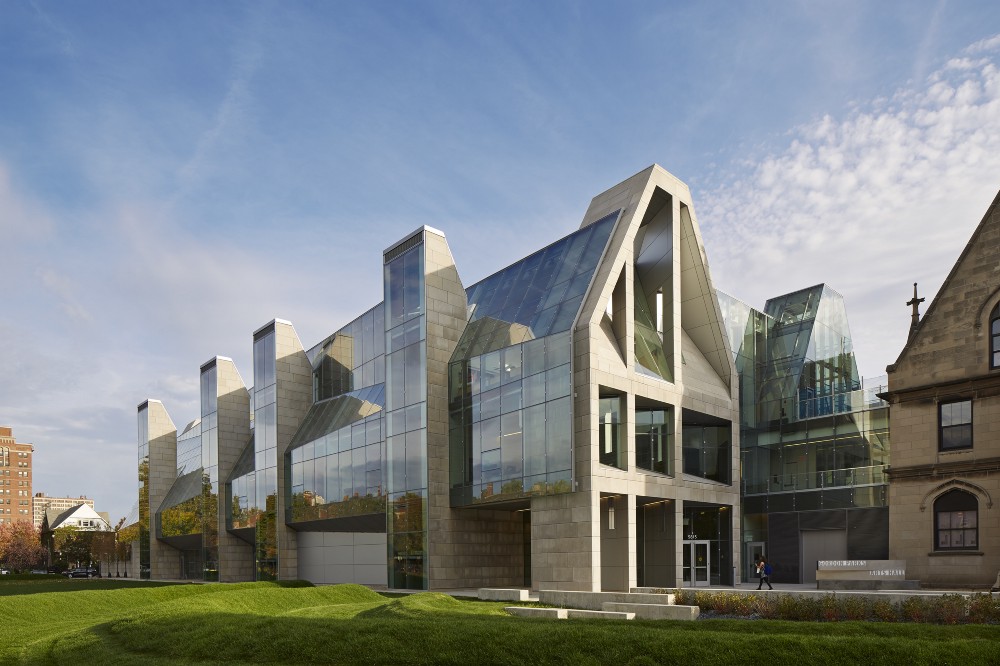
Gordon Parks Arts Hall, University of Chicago Laboratory Schools (Photograph by Steve Hall, Hedrich Blessing courtesy of Valerio Dewalt Train)

On recent projects that represent the firm’s unique approach
There are no preconceptions of what anything should be. We start each project the same way: What don’t we know and how do we begin to know it? I spent two years working on a large expansion of the University of Chicago Laboratory Schools. When we were initially hired, no one knew what the end deliverable would be. We spent a full year listening and studying, immersing ourselves in classes at the school, and traveling the country in search of best practices.

Another recent project for a large Silicon Valley tech company was similarly speculative. We were asked to reimagine workspace and were encouraged to be gutsy. The client’s unconventional approach allowed plenty of room to explore a range of ideas. We enjoy and excel at this sort of iterative, inquisitive, and experimental work. The project reminded us that the built-environment needs curious and tenacious design thinking.

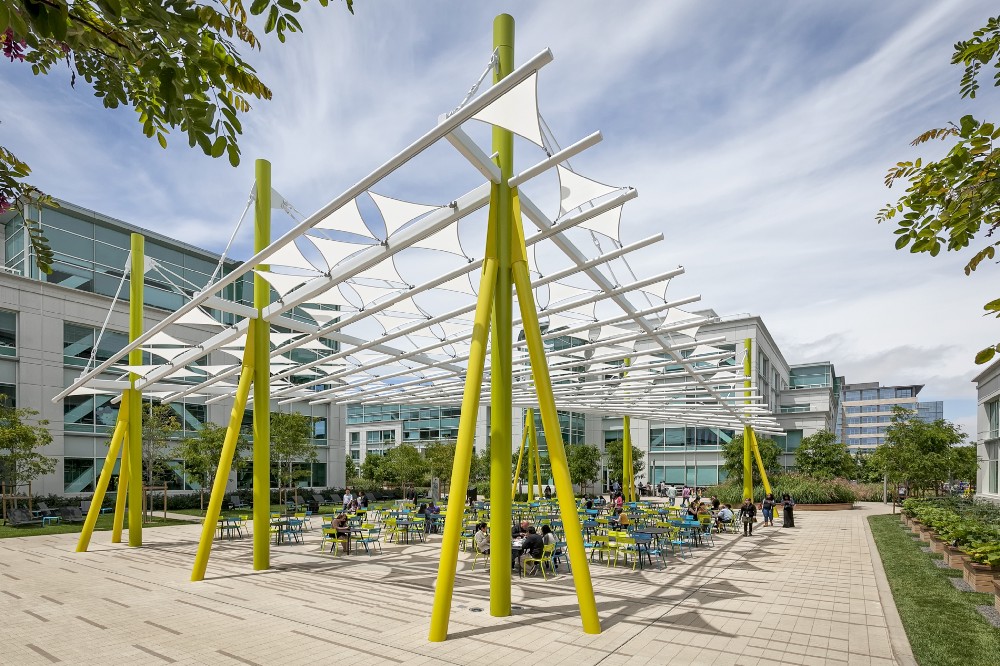
Tech Corners Campus, Outdoor Dining Space (Photograph by Marco Zechin courtesy of Valerio Dewalt Train)

On his design toolkit
I always start with pen and trace paper. It is facile and iterative. Once an idea begins to form and the idea is tested against our research and tested against other smart people (office collaboration), I generally move to digital modeling software. This allows me to scale accurately and study the idea from other vantages. Sometimes the 3D software reveals exciting surprises latent in the design idea. Sometimes the 3D software reveals how terrible the idea really is.

On the state of design software today
Design software is both stunning and frustrating. When I began my architectural training (about 15 years ago), design software felt like it was made for a different industry. It wasn’t intuitive or ‘designer-ly’. We took the software at hand and misused it, abused it, co-opted it for our own purposes. Today, design software is sophisticated and highly tuned to the profession. Its capacity to expand the possibilities are stunning, but we’ve all spent late nights wondering why we have been shackled to someone else’s obstinate script. Fortunately, I haven’t lost my willingness to misuse, abuse, and co-opt.

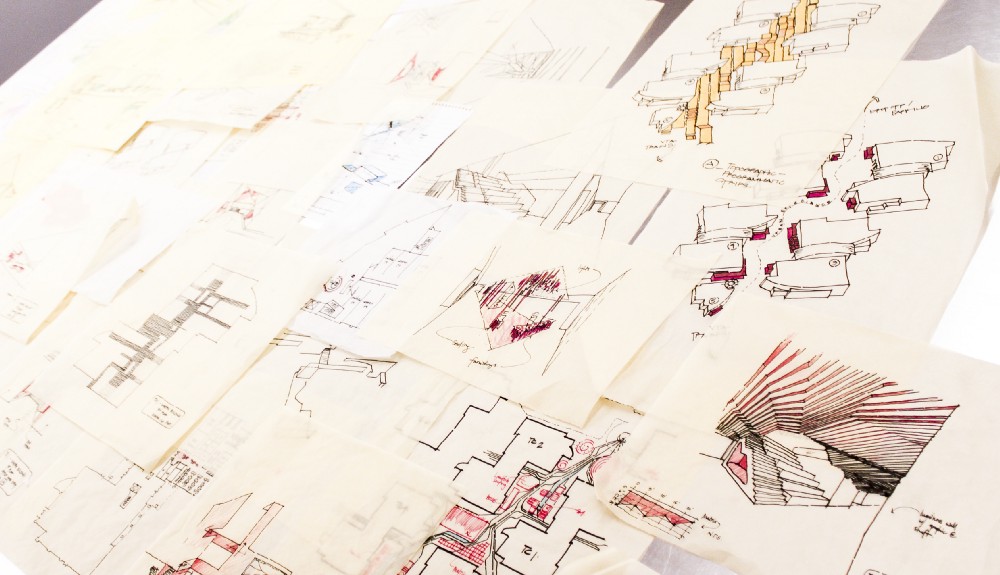
Hand sketches by Matt Gamache (courtesy of Matt Gamache)

On the future of architecture in the next 5–10 years
Architecture is often a product of its time. Its normative is to react to what is happening in culture and technology and industry. But in its best moments architecture is more. In its best moments, it critiques the present and anticipates the future. It is forward leaning and forward leading.

Lately, I’ve been thinking about the profession’s current reflex to solve our planet’s environmental crisis (an extremely important concern). However, we also need to pair our sustainability concerns with the social concerns. We’ve seen the rise of social and income inequality bringing a culture of polarization and isolation and segregation. We need to disrupt the paradigm. Bring design-thinking and design solutions out of expensive, privileged institutions to the streets of Chicago. We should anticipate a future where design-thinking is pervasive in our culture.

How do I think industry will change over the next 5–10 years? I think most people would respond to this question by reflecting on technology. But technology is always changing, and if something is always changing, isn’t that its status quo? To me the real change we should hope in our industry is the outflow of design knowledge and design thinking. Design has the power to imagine better futures, and impossible (?) trajectories. Not only for the built environment, but also for our polarized politics, for our public policy challenges, for disenfranchised minority and immigrant communities, for our segregated cities…

New development rendering by Matt Gamache (Courtesy of Valerio Dewalt Train)

On the future of the firm in the next 5–10 years
A few years ago we studied the Future of the Workplace. Then we studied The Future of Learning and The Future of Pleasure. Currently, our UW-Milwaukee summer interns are helping us consolidate that research into the The Future of the Future.

On advice he would give himself
I would tell myself to step confidently into the profession. I spent a lot of time in college wondering if architecture was truly as broad and exciting as I imagined. (An internship in college led me to believe the only thing after school was door hardware scheduling). In truth, this profession is intoxicating. It is research and exploration and experimentation. It is sketches and digital modeling, diagramming and storytelling. It is more than I could imagine then, and more than I can imagine now.

Design Manifestos: Ma Yansong of MAD Architects | Modelo Blog Series

Design Manifestos: Ma Yansong of MAD Architects

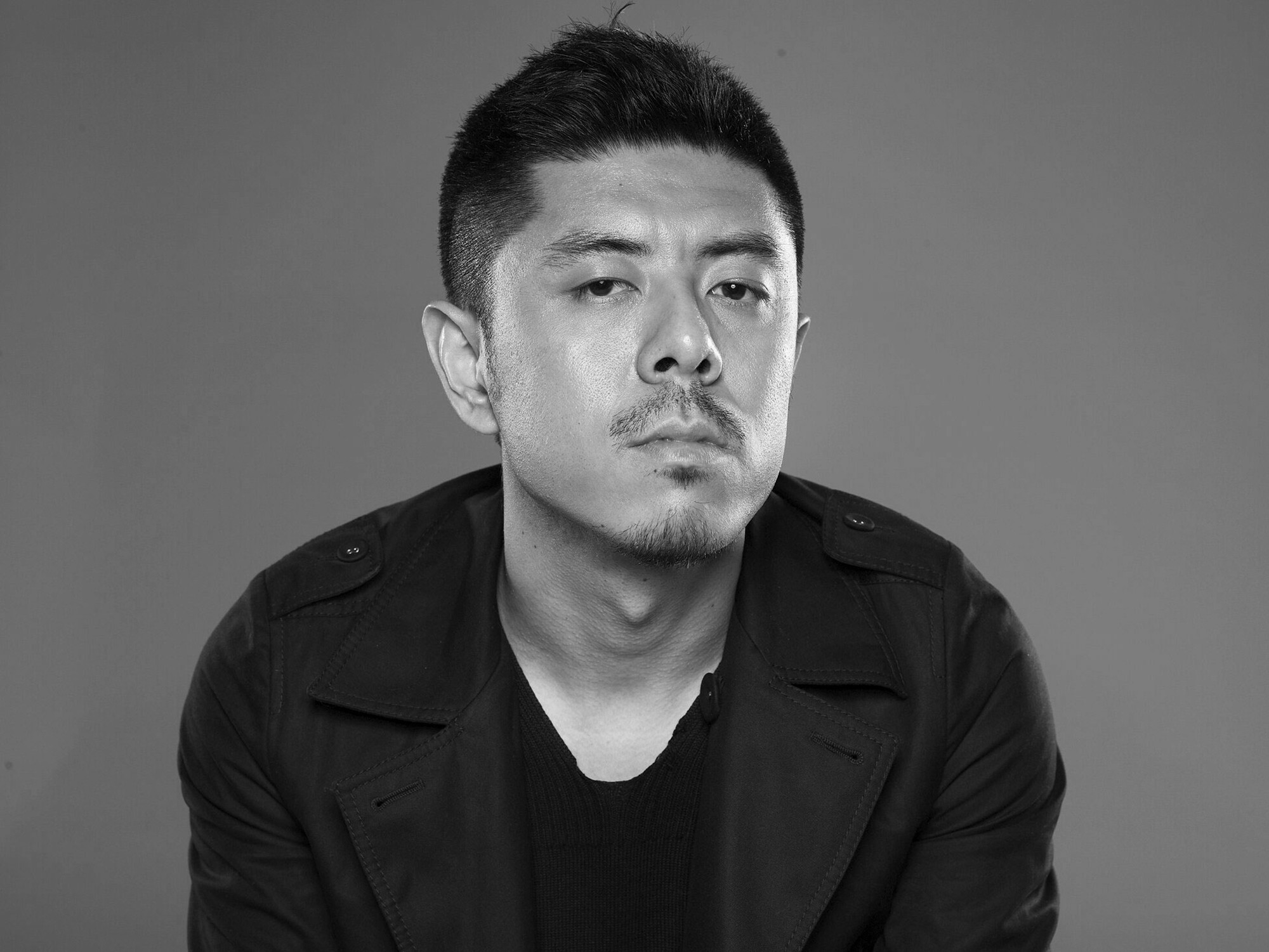
Ma Yansong (Photograph courtesy of MAD Architects)

Beijing-born architect Ma Yansong is recognized as an important voice in the new generation of architects. He is the first Chinese architect to win an overseas landmark-building project. As the Founder and Principal of MAD Architects, Ma leads design across various scales. In recent years, many of Ma’s designs follow his conception of the “Shanshui City”, which is his vision to create a new balance among society, the city and the environment through new forms of architecture.

Since designing the “Floating Island” in 2002, Ma has been exploring this idea through an international practice. In 2014, Ma was selected as the principal designer for Lucas Museum of Narrative Art in Chicago, which made him the first Chinese architect to design overseas culture landmark. Parallel to his design practice, he has also been exploring with the public the cultural values of cities and architecture through domestic and international solo exhibitions, publications and art works. Modelo spent some time learning about Ma’s design philosophy, journey through the profession and starting his own firm.

On becoming an architect
In the beginning, I wanted to become a filmmaker. When I applied to the film program, a professor at my school alternatively recommended that I study architecture, so I went into architecture instead of studying film.

On discovering his voice as a designer
Early on, I looked at many images from my generation. I read stories and was interested in the idea of narrative storytelling. When I started university, I didn’t know much about architecture so I flipped through a lot of magazines, looking at different and exciting images from all over the world. I thought that architecture could be interesting. It was clear that various people were doing different things during those times and it seemed there was no clear answer to what was right or wrong in architecture. Ultimately, the artistic part of architecture has always interested me.

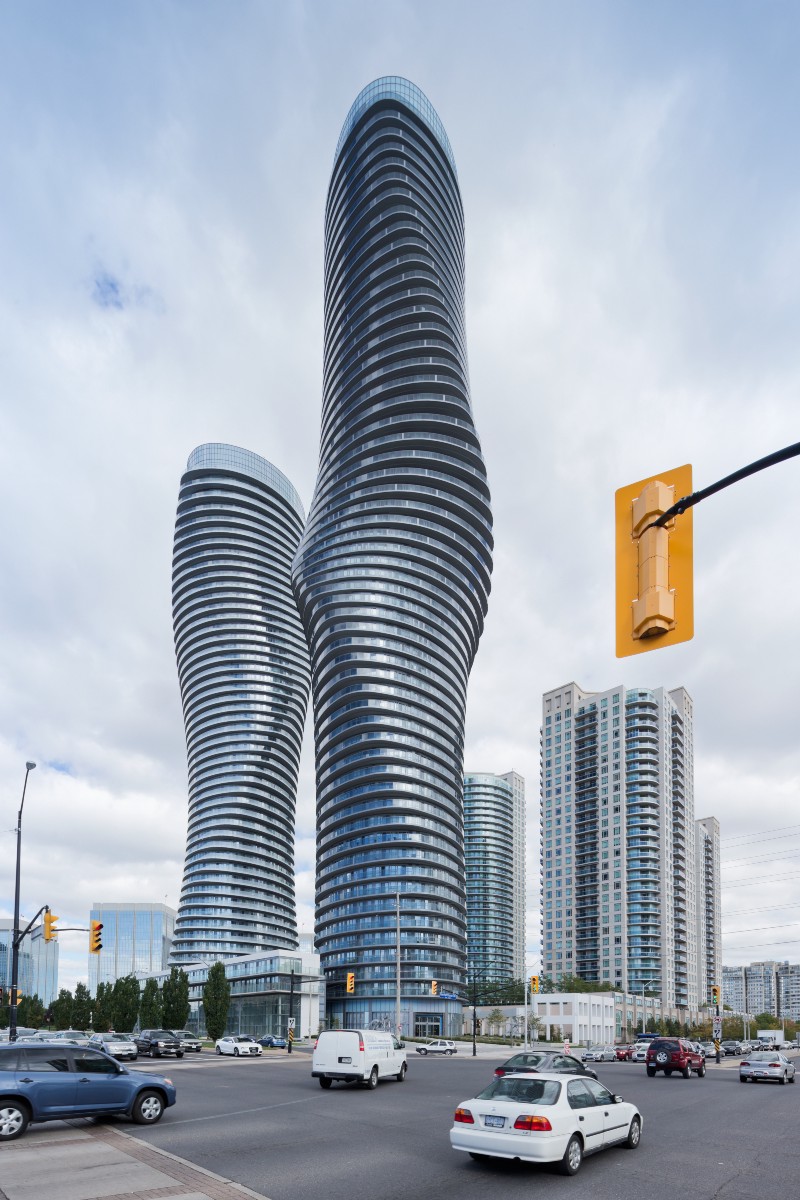
Absolute Towers (Photograph by Iwan Baan courtesy of MAD Architects)

On starting MAD Architects
I went to London and worked with Zaha Hadid on competitions in China. She was also my professor in school. After one year, I decided to do competitions on my own. I discovered many challenges and problems in my hometown and in that moment I decided to start my own firm.

On specific principles that he strives to adhere to
From the beginning I thought of architecture as a form of art and culture — this was one of reasons why I worked with Zaha Hadid because she introduced me to contemporary art. Early in my career, I tried to bring an artistic feeling to architecture. That’s really the intent and impression of what I think about: context, space, shapes, and landscape.

Now, our practice is almost twelve years old, and we’ve since discovered our design philosophy is about connecting to the landscape and nature with architecture. We call this “Shanshui City,” after the classical Chinese aesthetics. It’s also a nod to Chinese scientist Qian Xuesen, who first suggested this notion of a “Shanshui” city. It’s something that goes against modern architecture and it challenges the utility of modernism, which is now a mainstream idea.

We want to connect architecture to nature and create very emotional and spiritual spaces for everyday life.

Harbin Opera House (Photograph by Hufton+Crow courtesy of MAD Architects)

On his role at MAD Architects
I’m in charge of design, and MAD remains focused on who we are as we continue to grow globally. I consider myself very sensitive to art and culture, and I want to make architecture connected to emotions and feelings. That never changes.

On recent projects that represent the firm’s unique approach
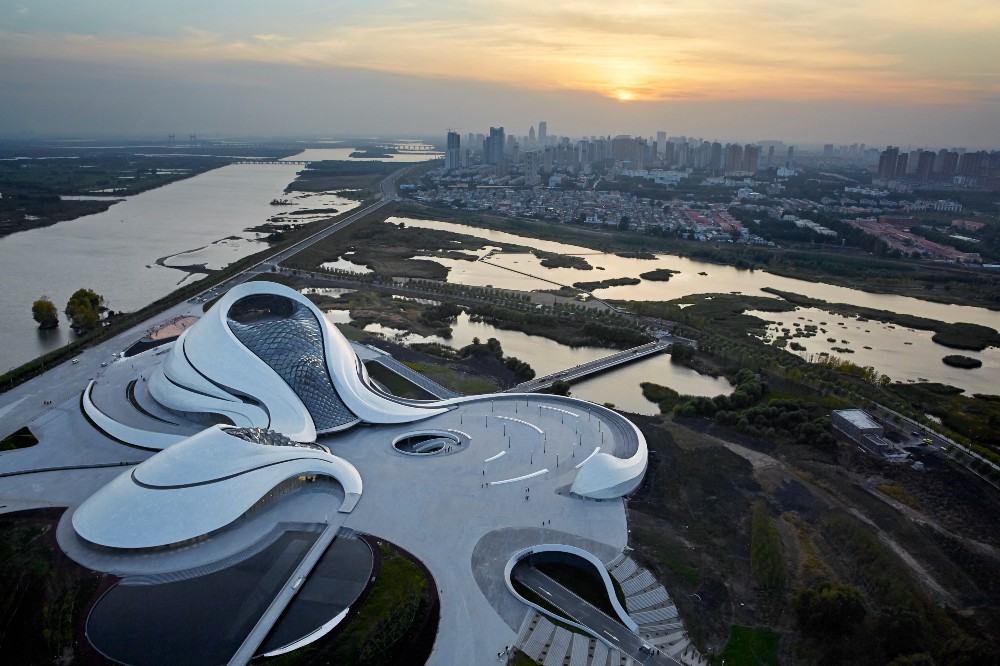
We just completed the Harbin Opera House last fall in China. We had been working on that project for the past six years. In the beginning, we wanted to blend the architecture into the surrounding landscape of Harbin, which is a very unique place and climate. We treated the architecture as part of the wetlands. It’s a place that the public can enjoy, from ice-fishermen to ticket holders, because everyone has access to nature and parks surrounding the opera house.

Recently, we have started several new projects outside of China. Right now we have a residential, mixed-use project in Beverly Hills, California that is currently under construction. This project also considers the local context in its architectural form. It looks like a village on a hill, and at the center is a garden courtyard for the residents.

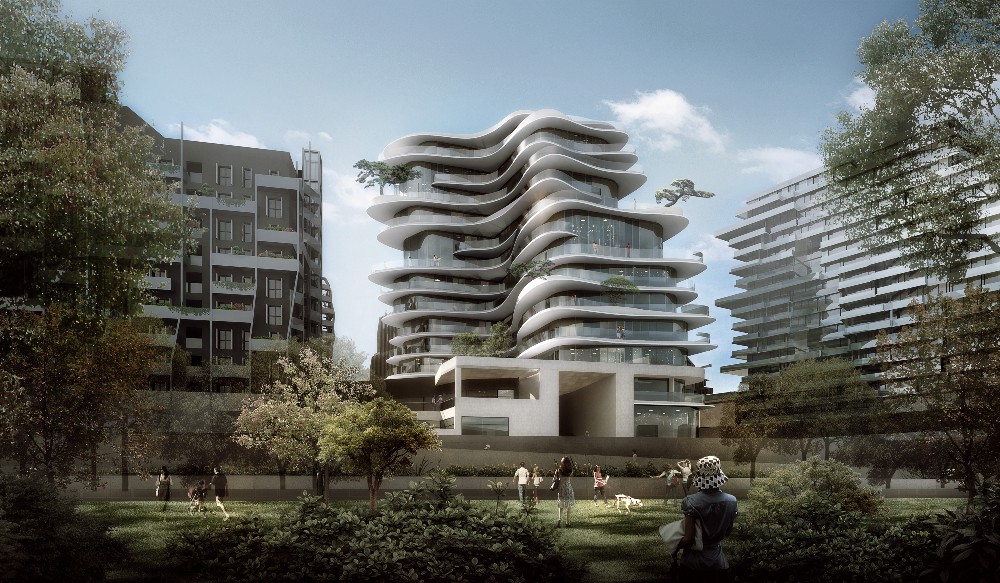
We also just started construction on another residential project in Paris, called UNIC, which faces Martin Luther King Park and is part of a large masterplan in the 17th arrondissement. When we designed UNIC, we worked very closely with the local government and neighborhood to understand the context and the site. The project shares a podium with a social-housing building, which means we wanted UNIC to be subtle in its design, its materials and shared spaces. The podium contains a new metro stop along with a kindergarten, amenities that are not solely exclusive to UNIC, but also to the community. Each floor plate in this project is slightly different and these differences create spaces that feel more organic, more natural.

We’re also going to finish several high rise buildings this year and early next year, such as Chaoyang Park Plaza and Nanjing Zendai Himalayas Center. Both projects are urban, mixed-use complexes that capture our Shanshui City philosophy and challenge the concept of typical, modern developments.

Since setting up an office in Los Angeles, we have gradually been working on more projects in the States, including the Lucas Museum. In our approach for each project we constantly ask, ‘How do you bring modern architecture into the future and connect humans with nature?’

UNIC (Rendering courtesy of MAD Architects)

On his design toolkit
In terms of process, I still sketch a lot. I think that’s an effective way to express my feelings. Somehow, I try to make the transformation from my brain, and my feelings, to the physical space more directly. I see buildings as space, and there has to be a human feeling tied to that space — it should be very emotional. Sketching is very important, but we also use all the same software that other offices are using these days. We mainly use software because I want the construction to be more accurate and more honest to what I sketch. I don’t use tools to create things, but I use them to realize things.

On the future of architecture in the next 5–10 years
Architecture should be more relaxed. It should be more about human life. If we’re talking about larger issues, architecture talks too much about capitalism, power, and technology. Everything can control our world. Humans create things and then are disappointed with them. We should trust our own feelings and emotions more. We should make them a priority. Imagine somebody wants to create a city in the first place, they imagine these three things: capitalism, power, and technology. The imagination, the dream, and all their beautiful qualities should be prioritized. We should never sacrifice them.

If we imagine a better environment, it must be very beautiful, natural, and human. I think architecture will eventually go in this direction. The younger generation is already realizing it! They’re more demanding of humanity and democracy. In my recent book, Shanshui City, I expressed that in the past, architecture was historically concerned with religion. In modern times, architecture has been about capitalism and power. The future of architecture should then be about humans and nature.

I hope it’s somewhat less professional. You see so many specialists and they don’t understand each other. It’s hard for them to understand the rare beauty in the world, it’s not about individual principles. For example, if we go to a classic garden, we are influenced and find inspiration. There’s a strong cultural philosophy understood by all about nature, and the thought put into the garden’s creation and realization.

Today, we’re not building truly cultural venues and we’re not building things that can connect to people’s emotions, because every profession is treated as a skill and tasked specifically on a project. In education, it’s too clear what one professional can do. In the future, this distinction should be more blurred, it should be about a cross-disciplinary approach that is open to other fields. Everyone in architecture knows that it’s about people and experience.

Chaoyang Park Plaza (Rendering courtesy of MAD Architects)

On the future of MAD Architects in the next 5–10 years
I see the Shanshui City book as a manifesto on architecture and a guide for the next chapter of MAD. Architects should consider a new ideal for a city of the future. We should gradually construct an urban environment that retains the convenience of the modern city, yet demonstrates an affinity for nature. This design ethos will continue to be present in my work.

Also, these days, I’ve been thinking more about making movies — mostly because they have a fantasy element and can tell a story. This narrative quality could potentially affect our physical reality and how people think or behave in everyday life. Architecture does similar things as films, in that architects imagine an ideal world, and then turn that vision into a reality people can experience and interact with architecture or understand space in a new way. We have a lot of discussions and debates with cultural figures on the future of architecture in this context. I believe that’s our plan, to make architecture part of the larger culture, accessible for everyone.

On advice he would give his younger self
I always give one suggestion: trust yourself — or rather, be yourself. The experience is something you can never escape from and you have to go through every step to discover that for yourself.

Design Manifestos: Keiko Tsuruta Cramer of WRT, LLC | Modelo Blog Series

Design Manifestos: Keiko Tsuruta Cramer of WRT, LLC

Keiko Tsuruta Cramer (Photograph courtesy of WRT)

Keiko Tsuruta Cramer is a Principal and Landscape Architect at WRT, LLC in Philadelphia, Pennsylvania. With nearly two decades of experience and degrees in landscape architecture, architecture, and engineering, she uses her interdisciplinary training to provide a unique perspective to her work. Her projects have included the Steelstacks Art & Cultural Campus and the Hoover-Mason Trestle in Bethlehem, PA, Crystal City A Placemaking Framework in Crystal City, VA, Philadelphia Holocaust Memorial in Philadelphia, PA for which she is Project landscape architect. In addition, Keiko maintains her architectural license in Japan, and has worked on numerous projects abroad including the Daiichi Mutual Life Insurance Office Landscape in Kanagawa, Japan, and SCBD Lot10 Development in Jakarta, Indonesia. Modelo spent some time learning about Keiko’s journey to becoming a landscape architect and about her current role at WRT.

On becoming an architect
I always wanted to become an architect, ever since the age of six years old. My father was an architect, and I grew up watching his sketching and drawing. All those different kinds of creative play never made me bored. My parents were very liberal in Japan back then, and they exposed me to different kinds of culture, arts, music, and food even though I was young. I simply thought being an architect was a cool job. So no one was surprised when I chose to attend architectural school and became an architect.

I loved being an architect and I still do. But then, my desire and curiosities constantly pushed the threshold from inside to outside, and beyond. After working for seven years, I took time off and came to the United States to study Landscape Architecture. My original plan was to return to Japan and continue pursuing my architectural career, but here I am. Landscape Architecture has become my primary focus. Being a landscape architect affords me the biggest opportunity to do all different types of projects with a variety of collaborations.

Daiichi Mutual Life Insurance Shinshokoen Project (Photograph Copyright holder © Hayato Wakabayashi courtesy of WRT)

On discovering her voice as a designer
I grew up in a house designed by my father and surrounded by mid-century modern influences. But his library was all about European architects including Corbusier, Mies, Scarpa and Aalto. When I stood in front of the Seagram Building by Mies in New York City for the first time, it validated my understanding of the power of “less is more,” while the dining experience at the Four Seasons Restaurant showed me how a seamless design can traverse multiple scales.

Though I have always had a fondness for a sophisticated and systematic approach to design, I cannot deny my distinctive preference for the warm, peaceful and personal design of Aalto’s Summer House. My influences stem from my collective and physical experiences in these designs. Context and materialism are always significant influences to my design voice, whatever the scale and type of the project may be.

On joining WRT
I studied at the University of Pennsylvania for my master’s degree, so I had always seen presences from WRT around school, but it was not on my radar when I graduated. I wanted to work in New York and was looking for a more intimate design experience in a smaller studio environment. I worked for Thomas Balsley Associates for a while, and then when I decided to stay in the U.S. and move back to Philadelphia, I went on interviews with both architectural and multidisciplinary firms.
Although my long-term goal was to go back to Architecture, I wanted to practice in the Landscape Architectural realm. I took an offer from WRT. Because of the firm’s heritage, the Landscape Architecture and Planning practice at WRT had more of a presence in our office back then, which attracted me more than firms that were dominated by the Architecture practice. WRT exposed me to different project types, scales, contexts and countries, from planning projects to built urban landscape. My understanding of materials and details from my architectural project experience also helped me to cross over disciplines easily and allowed me to provide more articulated details in landscape projects.

Continetal Bridge, Trinity Lakes (Photograph courtesy of WRT)

On specific principles she strives to adhere to
WRT has a long standing environmental philosophy, “for every site there is a solution that is most intrinsically suitable and which impacts nature least,” originated by Ian McHarg, co-founder of WRT. I think this is well said, but for me the “nature” includes both humans and communities. In my design process, it is very important for me to know the end user of the project as well as understand the community in which the project is located. The role of the Landscape Architect is getting more complex, especially in Urban Landscapes, which is my focus. It requires an understanding of the many layers of issues from social to environmental, and finding the right team of people to work with.

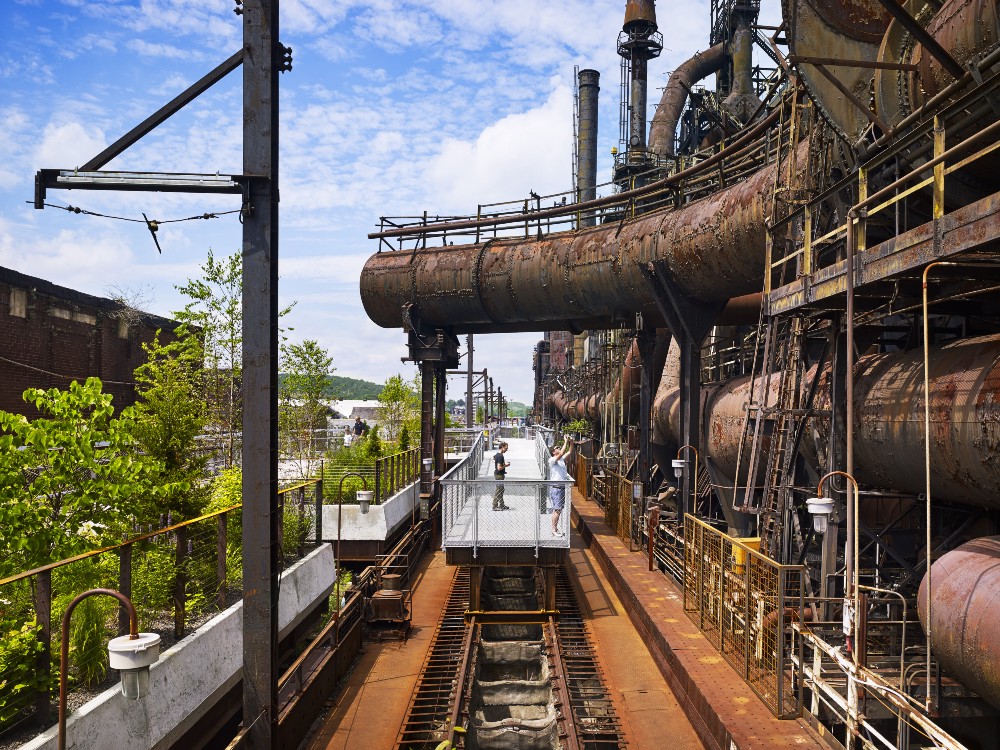
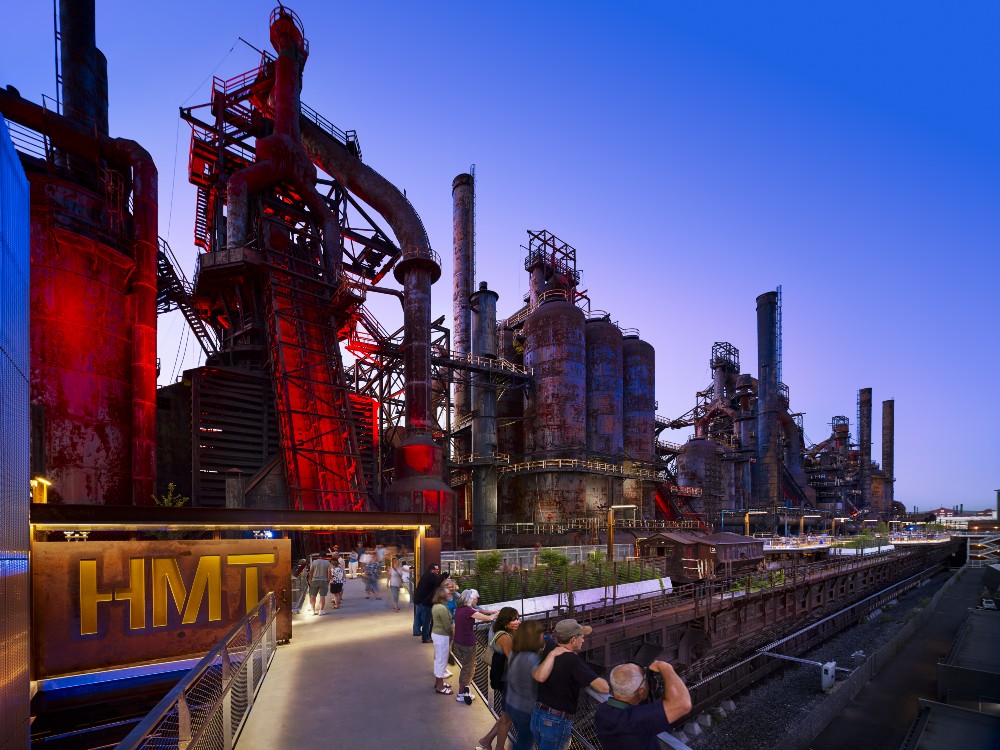
In that sense, we are like the composer of an orchestra and that is definitely the part I enjoy the most. Pragmatic and systematic approaches are always key principles of my designs. This is true for both my architectural projects and landscape architectural projects, but I view landscape almost as a skin or a tissue, a layer of systems, programs and policies that that are intertwined beneath the surface, they may not all be exposed, but their power is in their connectivity, and the ways in which they evolve over time, and sometimes in unpredictable manners. That’s another thing, the scale and timeline for landscape projects have a much larger and longer potential to change the context of the spaces in which we work. Like the SteelStacks Arts + Cultural Campus project in Bethlehem, PA. We won the competition in 2009, and just completed the third phase of the project in 2015, with plans for continued work.

It started as a campus landscape project, but projects such as the Levitt Pavilion and Hoover-Mason Trestle Park, have continued to evolve the site thanks to the engaging impact that the first phase (open space + pavilion) provided for the community and region. The Hoover-Mason Trestle Park is particularly special to me. Our design team had such a true collaborative spirit beyond WRT. The project not only accentuates the heritage of the site but the true transformation and preservation of the area created a powerful message of what design can do to revitalize communities. More than that, the experience of seeing people who used to work on the site all come back for the opening day of the project and tell own stories from back then with tearful eyes, that was an incredible honor and a truly rewarding moment for me as a designer.

On her role at WRT
My primary focus right now is building my practice within WRT’s platform. I am involved with everything from selecting the projects to hiring new team members. Hiring is particularly important to me. Our team is a tight ship and it is critical to have the right people on the team. I am also leading our re-branding task force, which is super fun but also super hard when you have so many different focuses and project types within one firm. WRT is embarking on a challenging but fascinating moment right now. As a firm with more than 50 years of experience and deep roots in the profession, we are reconsidering our brand and identity. Being elevated to a Principal within the firm during this transitional time has allowed me to be a part of reinterpreting the heritage and shaping our identity for the next 50+ years to come.

SteelStacks Arts and Cultural Campus (Photograph Copyright holder © Halkin Mason Photography courtesy of WRT)

On recent projects that represent WRT’s unique approach
Our natural collaborative style has almost become a “must” in all of our projects, and I mean “true“ collaboration. We work with other disciplines in a variety of team structures, sometimes as the prime and sometimes we are subs internally and externally. We maintain close relationships with many of our sub consultants too, through a constant exchange of information and dialogues, with and without projects. This constant communication gives our approach and collaborative style a richness and authenticity that enhances all of our work.

The SteelStacks project is one of the projects that represents the full potential of our culture, but more recently we went on an interview in Maine and I strategically brought all key personnel from our team. I needed everyone’s help and input from my team, because each professional has a specific role and skill. Our team included: Landscape Architect, Urban Designer, Public Engagement leader, Civil and Traffic engineer, Environmental graphic designer, and Urban Horticulturalist who all presented and spoke in the interview and we won! The same can be said with our team structure within WRT as well. I respect everyone’s contributions in any level and everyone on my team should have an ownership of the project. It has to be a two-way relationship even between principal and staff who just graduated from college. It is amazing what those younger professionals can bring to the table, not just digital skills, but some of them have the inspiring ability to think outside of the box and look at the project’s potential in many different ways. Another unique aspect in many of our projects is that the client is not the end-user, and post construction is a critical phase in some ways.

For example, the Daiichi-Mutual Life Insurance Campus project, we completed in 2011 in collaboration with Takenaka Corporation (my previous office in Japan!). At first, our client was not interested in doing anything for the campus, and just wanted to maintain infrastructure in a minimum way. After many conversations and endless sketches, our clients agreed to prioritize the space and create a little bit more fun, if we stayed in budget. Yes, the same budget. It was fortunate to work with a company like Takenaka, which is basically a large-scale design & build company, because we were able to strategically create earth forms by tweaking the construction method and logistics, by moving the same amount of cut and fill, cutting the same way but filling in a more strategically designed manner. The road alignment was already in the scope, following a curvature instead of a straight line. Simple and large undulations and infrastructural forms are tied back to the surrounding landscape to accentuate the unique character of the space.

Now, post-construction you can see kids spending more time in the campus after school, and the project has become a gateway for both the school and town. The space has now become a central cultural space in the town. We preserved beautiful cherry blossom trees to celebrate the start of the new school year every spring, festivals in the summer and many baseball games on the weekends. Recently, I heard great news that the Town of Daiichi has made a commitment to preserve the open space on the campus instead of developing it further. This is why we do what we do, to have a positive impact and influence on communities.

On her design toolkit
We use mixed media in our process, 3D modeling of course, but we still sketch in hand as well. 3D modeling is a huge part of our process, especially in the early stages of design and visualization, to understand a project’s scale and the complexity of a project’s conditions and requirements. 3D modeling definitely provides us more opportunities and a better understanding and ability to shape forms. Even during the shop drawing process, 3D modeling gives us much more precision in the creation and production of our designs and details.

On the state of design software today
I find it much more complex and exciting to see what design software can provide, but at same time, software can be very time-consuming. The level of precision sometimes scares me, especially when thinking about where it will stop, or where it should stop, when it comes to creating precise visualizations before a project is built. For example, 3D printers allow for the recreation of almost any form in any scale. There is a beauty in the ability that design software has today to create precise visual representations of unbuilt projects, however there is also a beauty in the collaborative and multi-media processes that we use to create our designs and communicate and our design philosophies. For me, I value a graphic representation that tells the narrative of the design, whether that is a precise visualization, or an atmospheric diagram that creates a richer collaborative process.

SteelStacks Arts and Cultural Campus (Photograph Copyright holder © Halkin Mason Photography courtesy of WRT)

On the future of architecture in the next 5–10 years
I can see that the definition of “Architectural” or “Landscape Architectural” will be more seamless and all disciplines are embraced much closer. However, Landscape Architecture will always be the critical method or system needed to recover the value that once existed, whether it remains or may have been lost. This requires interacting with policy on a deeper level, and our role needs to be more flexible to interface between a variety of platforms and programs, like resiliency. To address resiliency, we require larger administrations to be involved, ones that have the vision, knowledge and means to implement innovative ideas, even in small scales. This type of understanding and approach is in need of disruption within the Landscape Architectural profession in order to create an innovative future.

From my point of view, it will be very similar to what we are doing now. But the public’s perception and how the public defines “Landscape Architecture” should be evolved and different in the future. I can speculate that opportunities and how we approach design and the environment could be much different, more diverse and complex, and who we work with and how we work together also could be different. Landscape Architecture should serve as the interface that connects diverse challenges, a central communication device. The majority of my team has dual or multiple degrees and diverse backgrounds, and like myself, I have seen many architectural students and architects transfer themselves to Landscape Architecture as a primary career. I think Landscape Architecture is evolving to be more diverse and starting to define very specific challenges in much larger scales than architectural projects. This is a very exciting moment in time for both Architecture and Landscape Architecture.

On the future of WRT in the next 5–10 years
WRT recognizes that the industry is continuously evolving and changing. In order to stay relevant, we must continue to grow and challenge ourselves to adapt to the industries in which we work. The term “multidisciplinary” is not a magic word anymore. The very concept of collaboration allows anyone to bring a multidisciplinary approach to their work, however I think there is definitely an advantage to being a practice of many disciplines under the same umbrella if you have the right mindset.

Our teams are not just made internally. I always look for the best matches for each particular project, and sometimes that requires consultants from outside the firm. In my view, the success of WRT’s ability to evolve within our ever-changing profession lies in our ability to maintain the multidisciplinary character of the firm while growing the identities of each discipline, and our leadership.

On advice she would give her younger self
Advocate for your design. You are the only person who can stand behind your design unconditionally. Love it and live with it.

Design Manifestos: Greg Mottola of Bohlin Cywinski Jackson | Modelo Blog Series

Design Manifestos: Greg Mottola of Bohlin Cywinski Jackson

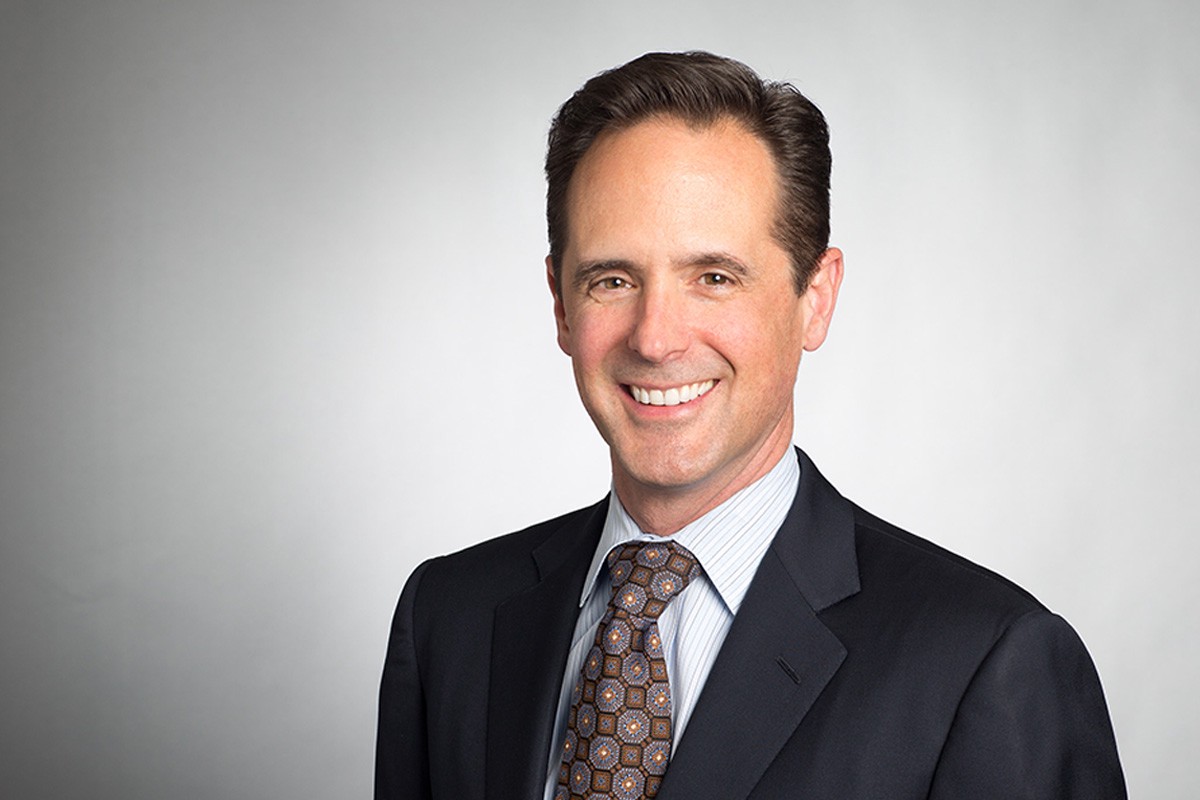
Gregory Mottola (Photograph by Joel Bear courtesy of Bohlin Cywinski Jackson)

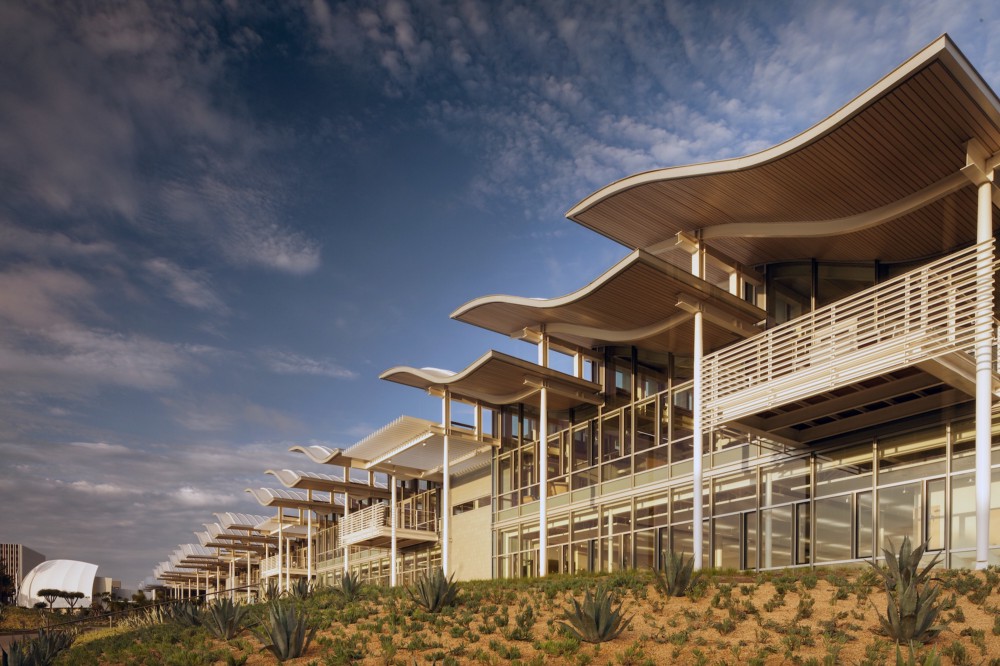
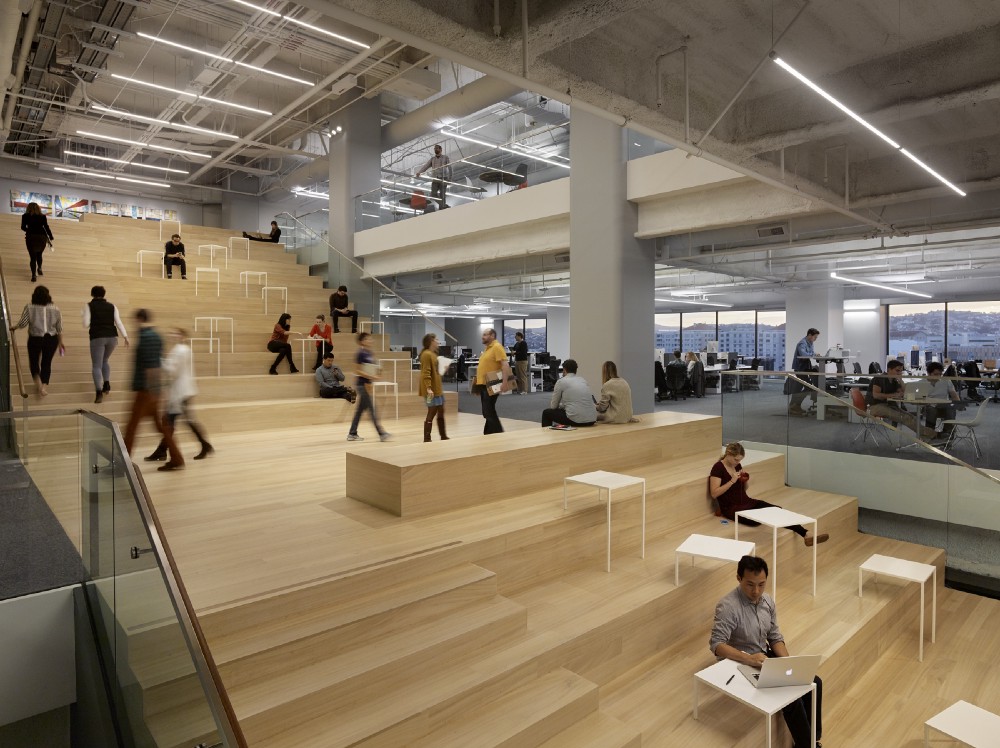
Gregory R. Mottola is a Principal in Bohlin Cywinski Jackson’s San Francisco, California office. As lead designer for a diverse group of award-winning commercial, workplace, hospitality, academic, and civic buildings, he possesses a deep understanding of how buildings can shape and transform their environment. This is exemplified in his work for the Newport Beach Civic Center and Park, the Lorry I. Lokey Graduate School of Business at Mills College, and for technology companies that includes Square and Adobe, Inc. Modelo spent some time learning about Greg’s current role at BCJ and his unique approach to design.

On becoming an architect
I was born in New York City in the late 1960s and as a child my family moved to the suburbs in Northern New Jersey, just outside of New York. It was a fairly rural area when I first moved there, but a lot of development happened over the first 15 years. A new subdivision was under construction across the street from where we lived, and as a kid I’d spend a lot of time exploring the construction site. I was fascinated by construction, building, and how you could create with these raw materials.

Neither of my parents were architects, so it was from my childhood experiences and observing the world around me that I developed my interest. We often went to museums in New York, and spending time in a big city made me aware of the built environment around me. It was that initial interest that guided me to think about going to architecture school.

I went to Carnegie Mellon in Pittsburgh, Pennsylvania, which has a great program that prepares you to become an architect and to understand the technical pieces of the profession. It also has a good conceptual design component too. It teaches the importance of ensuring the buildings you design also perform well.

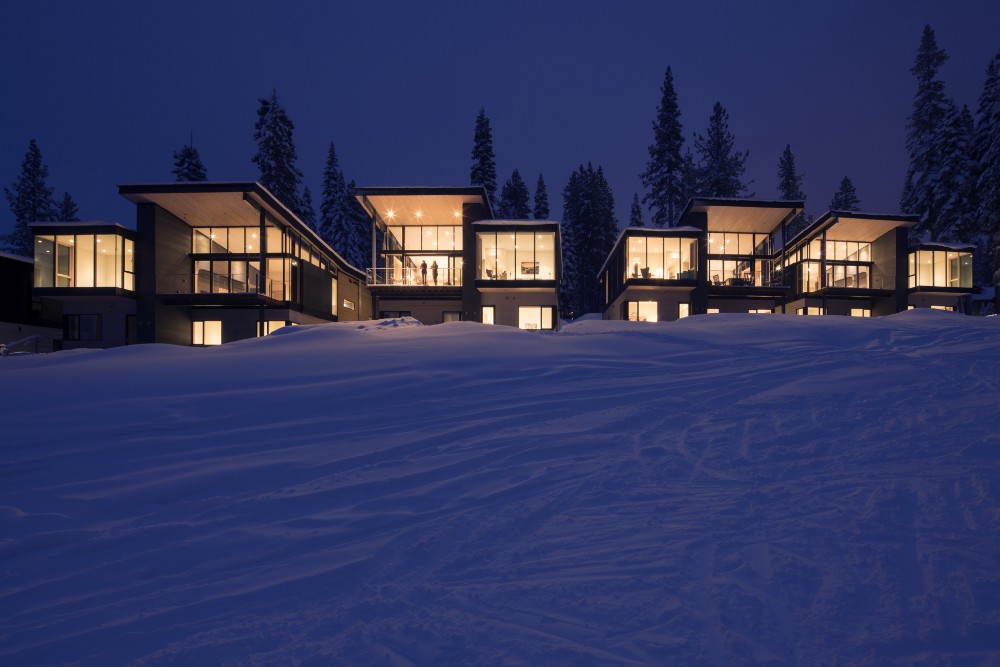
Stellar Residences (Photograph by Nic Lehoux courtesy of Bohlin Cywinski Jackson)

On discovering his voice as a designer 
I’m a Modernist at heart. I’ve been influenced a lot by the Modernists of the early and mid-twentieth century, such as Alvar Aalto and Sigurd Lewerentz. I also admire the work of Charles and Ray Eames, as well as Peter Zumthor. I learned about them in school, but even more once I started working at BCJ. When I graduated from Carnegie Mellon, it was 1991 and a pretty bad recession. A lot of folks who graduated with me didn’t get jobs in the profession, but I was one of the few who did. It was a great opportunity to get a full-time job with BCJ after I graduated. Our founding partner, Peter Bohlin, was and is a great mentor, helping to shape my views of architecture and design. He is just as much an influence on my work as the other Modernists I mentioned.

I’ve been with the firm for 26 years and have spent time in most of our offices. I started in Pittsburgh, working with Jon Jackson for about eight years after I graduated. My wife’s family and my family were all on the coast, so we had an interest in moving closer to them. I transferred to our Philadelphia office to work with Bernard Cywinski, another founding partner, for five years before Peter approached me in 2002 about moving to the West Coast to help grow and run our practice out here.

The following year we moved to the Bay Area. There were about a dozen people in the office at the time, including one of my partners, Karl Backus, and now we’re close to 60 people. Over the last 15 years we’ve seen the office grow in response to a variety of great design and project opportunities. Through many years of experience with BCJ, seeing it evolve and grow with every project, with each new generation, with change in ownership and leadership — it’s turned into this thriving place with a variety of design voices, and they all come from the tradition that Peter Bohlin established when he started the practice in 1965.

On how his approach has changed since he joined
The principles of how we think about design haven’t changed. If you look at some of our work you see it’s quite varied in how it’s conceived, designed and detailed. This is because we really try to design without preconception, we respond to the influences or circumstances of each project, and the design emerges from that. We like our buildings to have emotional power, to be moving. While buildings also need to function well and be beautifully designed, creating places that stir your heart is at the focus of our work.

What has most evolved for me since moving to California is trying to be much more open to different projects types that I might not have considered when I was younger. Now we think just as hard about interiors as we do the exteriors of a building. Experience with companies like Apple has allowed us to think about innovating the way we build and design, using new methods of construction, using materials in unexpected ways, like structural glass — technology that has been developed designing Apple’s retail stores. This has taught us how to research and develop extraordinary and unexpected ways of building and detailing, which also spills over into our other work, like residential projects.

Los Altos Residence (Photograph by Nic Lehoux courtesy of Bohlin Cywinski Jackson)

On his role at BCJ
I’m one of ten Principals charged with leading the practice. My primary focus these days is leading design and bringing in new work. We all wear many hats and we’re all responsible for ensuring the firm stays strong, is financially stable, and that we hire and retain good people. Those are the keys to the success of our practice. As a rule, we always focus on great design opportunities and bringing in good work. And lately, we’re really focusing on promoting our work, so that it’s more visible and seen by more people.

On recent projects that represent the firm’s unique approach
We’ve been designing a series of pretty interesting projects over the past 5–6 years, a variety of workplaces and headquarters for Bay Area companies, many who are interested in a well-designed space for their employees to work. It’s been interesting to see the trends in workplace design and how much of it has started in the Bay Area. Technology companies often need room for growth, flexibility, and highly collaborative environments for their people to do amazing work. Helping these companies make spaces that foster the culture they’re interested in is something we’ve been doing a lot of.

We’ve done great work for a company called Square, a financial services company that makes payments easy for small businesses and individuals. We designed their headquarters in the Mid-Market neighborhood and there have been a series of other projects that followed. There’s this interest in making great places for people to work, which also manifests itself in some public buildings we’ve designed.

Over the last few years we’ve done a great civic center project for the city of Newport Beach in Southern California. We designed their City Hall and took what was an inefficient and old style workplace and gave the staff and public a great new building. We designed the inside as well. It’s been remarkably transformative for them to collaborate and work with each other, and to deliver their services in a much more open and accessible way.

We recently worked with a developer, designing a multi-family housing project in Lake Tahoe for a resort at Northstar, which is just north of the lake. The client approached us and asked if we’d be able to apply some of the design elements of our custom single-family residences to a multi-unit design. We thought that would be an interesting challenge — to do something modern and nicely detailed, but on a much tighter budget for a developer trying to sell vacation homes to the Bay Area market — a lot of young, very sophisticated and intelligent folks who work in tech. The developer thought our insights from designing single-family homes for individuals would be helpful to them, and the units really turned out well.

Newport Beach Civic Center and Park (Photograph by Nic Lehoux courtesy of Bohlin Cywinski Jackson)

On his design toolkit
Our process generally starts with thorough research and understanding of the particular circumstances of the site. It usually starts with developing a series of conceptual ideas that are more about what the principle of the particular project should be. What are the big ideas relating to the program or the views or some particular feature of the site that are unique or noteworthy? And we let the design emerge around that.

Through collaborating with my colleagues and a lot of initial sketching, we start to develop very crude digital representations of those concepts. We often build study models early on to think about how the building might relate to its site or how the building massing might look and feel. Eventually that gets translated into a digital representation. We use a variety of software; some of our staff is fast with Rhino, some with SketchUp and some are stronger with Revit.

We do early conceptual 3D work in any one of those programs. We generally run everything into Revit and use that as our tool, starting robustly in early design development where the scheme has been settled and it’s now about figuring out how the building will be constructed. You use a tool like Revit as a way to not only do visualizations for clients to understand how spaces will feel, but also as a way to tightly coordinate the building. There’s definitely an upfront investment of time in building a good design model but it pays off later as adjustments and refinements are made, and everything comes together. It also creates an easier path in coordinating with our consultants and many of them are able to help us integrate all of the systems into the design pretty well using a tool like Revit.

SketchUp used during earlier design phases also allows me to walk a client through a space virtually and see what it’s going to feel like. There’s something about that that can be a very effective way to communicate ideas.

On the state of design software today
To me it’s all about ease of use and flexibility in using the right tool for the particular task at hand, not just using one particular platform. There’s room for a variety of tools and we want to be open to what’s new and developing. Revit has improved over time and is easier to use. It’s becoming the default for how we do our documentation for CDs. The way they’ve added improved ways to render right out of Revit has made for a nicer workflow.

Software is always a work in progress and I imagine it will continue to get better over time. We would love to see technology become more intuitive to use so people aren’t spending so much mental energy learning the software. Instead, the mental energy might be better reserved thinking about the design issues at hand.

Square, Inc. Headquarters (Photograph © Matthew Millman courtesy of Bohlin Cywinski Jackson)

On the future of architecture in the next 5–10 years
I would love to see the connection between design, documentation and fabrication start to merge. We’re beginning to this happen on some of our projects, where we’re designing something very special and custom and essentially doing the fabrication drawings. The software has become so powerful that you could basically hand over your model to a fabricator and they could make a more direct connection to the fabrication. This would be a big plus for our industry and would let us maintain control over design and help us partner better with the folks who actually make these things.

People are doing some incredible fabrication now that digital fabrication is getting more mainstream. I’ve seen glimpses of the way people start to use digital representation of documentation of design documents as a way to make few mistakes when you’re building. In other words, the contractor will be walking around with a tablet with everything right there or will have a virtual reality way to view the site that’s much more dynamic. I would see that as being a natural evolution to the process. Our industry in the United States is a little behind the times on this front, there seems to be a lot more integrated design-construction happening in places like in Europe and Japan. We hope that could happen in a more powerful way here in the future.

On the future of BCJ in the next 5–10 years
I’m hoping this merger of design and fabrication really takes hold, as I would like for us to be right there with it. I see it as a way for us to be providing a lot of value to our clients and being able to do more interesting and better work that way. Getting back to my initial reason for being in architecture, I’m always fascinated with how we build things. If we can have a more direct way to shape that or influence that, I’d be all for it. Not on every project, but on many of our projects, we are involved with some custom fabricated element. Whether it’s a feature wall or some piece of furniture or something where we get really involved with the person making it. It’d be great to blur that line even more and to be right there doing it with the craftspeople.
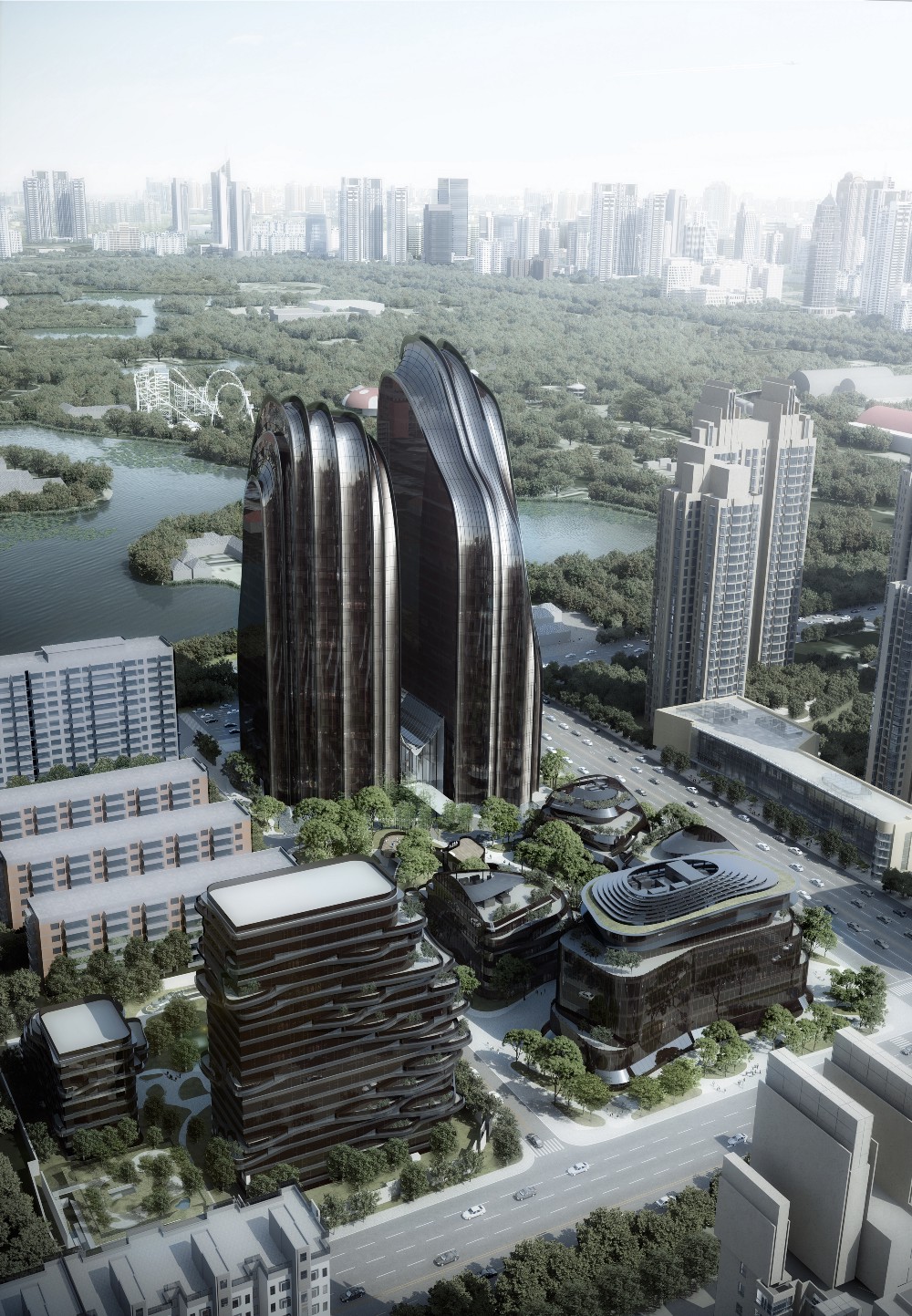
On advice he would give his younger self
There are several things I’ve learned through more experience. One is to choose your clients carefully. Look for people who share your values and views. Over time, you realize there are only so many years in a career and you want to work on things that are exceptional, fun, and learning opportunities. Don’t squander the time you have.

Another piece of advice is to be open-minded and not place limits on your work. Our practice thrives on being generalists — we’re not market-sector specialists. We think of ourselves as designers very broadly and if an opportunity comes along and we don’t necessarily have the exact expertise to do it, but it seems like an interesting opportunity to learn, we want to chase those things. It keeps us fresh, keeps us alive and passionate about what we do. So don’t be limited by your own perceptions of yourself.

Design Manifestos: David Marks of TEECOM | Modelo Blog Series

Design Manifestos: David Marks of TEECOM

David Marks (Photograph courtesy of TEECOM)

David Marks is the President and CEO of TEECOM, with offices in Oakland, California, the United Kingdom, Dallas, Texas and shortly Portland, Oregon. Believing that people are the key to a successful services business, David began early in his career surrounding himself with the best people, treating them like family, and giving them the tools necessary to do outstanding work for the firm’s clients. Today, those efforts have paid off. The San Francisco Business Times has ranked TEECOM as one of the top 100 fastest growing companies, as well as one of the top 20 best places to work. David has led by example to create a company where all employees work toward the same goal: integrating forward-thinking and innovative ideas and technology into architecture that is practical and aligns with the business objectives of the firm’s clients.

TEECOM is an integrated technology design company that forges the ultimate convergence of technology and experience. By creating the infrastructure solutions that make today’s buildings smart and social, the firm brings strategic thinking and innovative engineering to telecommunications, security, audiovisual, acoustics, virtual reality, wireless, network, VoIP, and other electronic systems. Modelo spent some time learning about David’s current role and the evolution of TEECOM.

On becoming an engineer
In high school, I enjoyed math and science, but I had no idea what I wanted to do. A computer science teacher suggested I explore engineering. I didn’t know what an engineer did, but I figured if it was math and science it sounded good. I went to the University of California, Berkeley and majored in electrical engineering and computer science, and absolutely hated the program.

I decided to leave school to pursue an internship at an engineering firm and do the things that an engineer does. My first project was the Moscone Convention Center Expansion in San Francisco. I was amazed. I had no idea that engineers designed buildings and that they worked with architects. I always loved buildings and marveled at how they were built. I fell in love with the profession and ended up going back and finishing my degree in electrical engineering at Cal Poly in San Luis Obispo.

On discovering his voice as an engineer
When you first start out in any profession, you’re not sure if your ideas and opinions are valid. Once you have more experiences where you have an idea and somebody else says it and everyone thinks it’s great, you start to trust yourself a little bit more.

One of the instrumental moments in my life was when I went to a senior engineer and asked why he designed something a certain way. His response was, ‘I don’t know I just copied it from someone else. I figured it was right.’ I was shocked because he was someone I respected and trusted for his knowledge. It taught me that not everyone in the industry who has an opinion about something knows why they believe it.

If you truly understand something, you understand all the properties and principles of it: the goals, why you’re designing it, how it works, and that fact overrides opinion. When you understand all of the fundamentals about your idea, you’re much more confident saying, ‘This is how it should be done. I know everyone does it this way but I’m doing it this way and it’s much better for these reasons.’ That is how we progress the industry.

Parkland Hospital (Photograph © 2015 Dan Schwalm: HDR courtesy of TEECOM)

On starting TEECOM
Ever since I was 16 and had my first job working at a Carl’s Jr. (a fast food restaurant) and then at a Best Products (a big box retailer), I believed that I could run a business. One of the things that I’m naturally good at is that I see a process or system and I know how to improve it. I started TEECOM because I saw what was being done in the industry by other professionals and I would ask them, why do you recommend that it be done that way? Or why are you recommending this solution over another? Usually they didn’t know. They repeated something that they had heard.

I took the time to ask why and learn the reasons and facts behind various design choices. I had a strong opinion and felt that I should share it. I knew I wanted to start my own company. I was growing the company that I was with, but not all of the owners saw a future in designing technology for buildings. I disagreed, so I left and started TEECOM in 1997. It was the perfect time to start a business because we had the whole Silicon Valley dot-com boom and the first round of Internet companies. There was so much work.

On the evolution of his approach
When you start out doing something, you’re exposed to one specific task, whether it’s to design a building or a system. As you do it over and over again, you start to see how it could be done better or how it relates to something else. TEECOM started out just doing IT infrastructure engineering. We looked at all the systems attached to that — the network, audiovisual systems, security systems, acoustics related to audiovisual performance, or project management. We found that the industry was lacking in good engineering and project management.
Over the years, we continue to add services where there was a need. That’s probably true of many different businesses. You have an initial idea of what you want to do and a service or product that you want to develop, but then you find that in order to control the end user’s experience with that product or service, you have to control more of the process. So you expand and do more things that deliver a more integrated and higher-level result.

When we talk to clients, we don’t really talk about IT infrastructure or displays or card access readers. We talk about what problems they’re having, how we can better connect their people internally to an office or organization, with the outside world, their clients, how to keep them safe from a physical security but also electronic security standpoint. We figure out how to deliver it. That’s what clients want. They don’t necessarily want the end product or service, they want the experience. They want someone to handle it, take over and deliver it whether they know to ask for it or not. Over the years we’ve grown to deliver experiences rather than services.
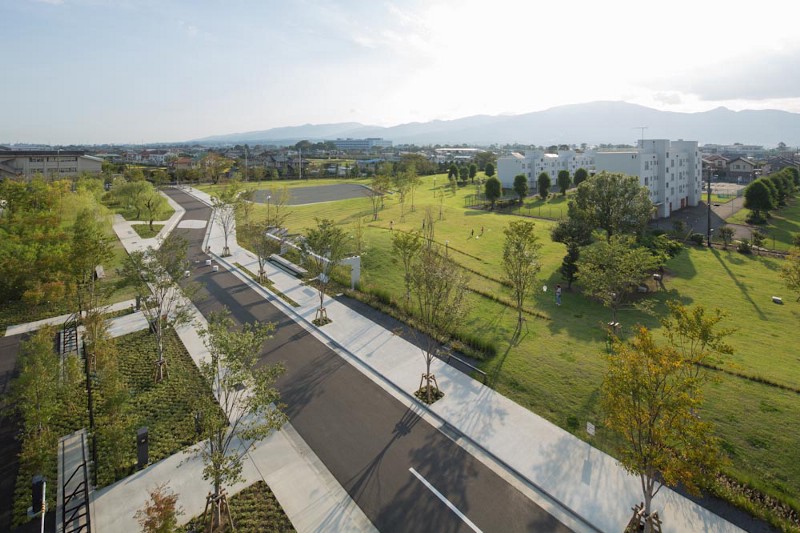
Cal Academy (Photograph ©David Wakely Photography courtesy of TEECOM)

On specific principles he strives to adhere to
One of the things that bothers me is poor design. Poor design usually results from people not thinking about it in advance. That’s why you see pathways strapped to the outside of buildings or satellite antennas stuck to rooftops in plain view. It doesn’t need to be seen.

The best way to describe our design philosophy is that if it doesn’t need to be seen or heard, it shouldn’t be. Unless there’s a reason to see the cables, the pathways, the antennas or all the electronics that go into making something happen, it should be invisible to the user. The space should speak for itself.

On his role at TEECOM
Even though I’m the CEO, when I first started out I did engineering, interfaced with our clients, put together drawings, wrote specifications, spoke with contractors, walked jobsites, and did anything that needed doing. As the company grows, you have to learn to train other people to do what you do. My role became more about training people in engineering. Then as you start to pass 20–30 people, you find that you need people to lead specific aspects of the business.

You start to put a leadership team in place: someone who’s in charge of engineering, someone in charge of operations, someone in charge of business development and marketing and someone in charge of HR and finance. My job now is about making sure I have the right leadership in place. We’re about 85 people. We’ll probably be over 100 people by the end of the year. I haven’t walked a jobsite in a while. I don’t put together drawings anymore. In fact, the design tools that our staff uses have surpassed my abilities. I have never used Revit, which is a little uncomfortable for me because I was so hands-on.

My job now is about designing a business that’s scaled from $1 million a year in revenue to $10 million a year in revenue to over $20 million a year in revenue. In order to do that, you have to think about how to sustain a business that can deal with all of the challenges that come with having a lot of people with competing interests, ideas, goals, clients, and industries. How do you do what you did when you were small and it was easy on a much larger scale?

Palomar Hospital (Photograph ©John Linden courtesy of TEECOM)

On recent projects that represent TEECOM’s unique approach
We probably have 200–300 different building projects going on at one time. The California Academy of Sciences in Golden Gate Park is the first natural history museum, planetarium, aquarium, and research institute all housed in a single new building. We put every electronic system on a converged network. It was the first museum of its kind to operate that way, and probably one of the first buildings of its kind to operate anywhere that way.

The project won an award from InfoWorld for being one of the top 15 green IT projects in the world. That was the result of a great team, a great vision for the client and people who were willing to do things that hadn’t been done before.

The hospitals we work on are good examples. There’s somewhere between 120–150 different electronic systems in your typical hospital and the whole healthcare industry is in need of innovation. We’ve been fortunate enough to work on Palomar Hospital in San Diego, California; Parkland Hospital in Dallas, Texas; Stanford Hospital in Palo Alto, California; and UCSF Hospital in San Francisco, and we’ve been able to bring a different level of thought, envisioning, and integration that improves patient outcomes. I’m proud of that.

On the other spectrum, we build corporate offices for fortune 100 companies all over the world. We’re able to oversee and deliver design from San Francisco to New York to London to Tokyo to Melbourne. It’s nice to have the client come back to you and say ‘you’re delivering space and services better than we ever delivered ourselves internally. We never thought that an external partner could do that.’ It makes us feel good.

On the firm’s design toolkit
We use a lot of tools. AutoCAD and Revit are the two big ones from a design standpoint. Then there are all the collaboration tools like Slack for internal communications and Asana for project management. Office 365 because you still have to communicate with clients over email and put together Excel and Word documents. We also use Confluence, which is our internal knowledge management platform. We use Bluebeam for cloud markups of drawings and drawing management. Plangrid we use a lot out in the field.

When the latest software comes out we like to test it to determine if it improves the process. We’re always trying to stay on the cutting edge of what’s available. We even tend to develop our own software internally if we don’t like what’s out there. It takes all of that to deliver a better product.

UCSF Medical Center (Photograph ©Stantec courtesy of TEECOM)

On the state of software today
It could be a lot better. Twenty-five years ago while in school, my capstone project involved developing an interface for what was called ICADS, Intelligent Computer Aided Design Systems, which the architecture department at Cal Poly was developing. It already used 3D modeling and the concept of objects rather than drawing lines or symbology to represent a real world object.

It understood what a room was and what a window was, what electrical power was and heat loads were. It used these intelligent agents written in an artificial intelligence-based software called CLIPS that understood building codes, the UBC, the electrical code, local codes, and Title 24. It also understood cost. As you designed a building and chose materials, whether it was wood-framed or steel-framed or concrete, it would tell you that your window was too big or the cost was too high. It would resolve it for you and make suggestions on what you could do to meet code or a local ordinance or energy guideline.

If you wanted to reduce cost, it would give you the best ways to do it. We still don’t have anything like it in the industry. I follow Bret Victor and his pursuit in life is to better integrate the tools that we use to design things with the outcomes of those tools. The design process is too disjointed. You have to do a lot of iterative work and then look at the outcome and then go back and change it, and then look at the outcome again. You should be able to work in both domains. You should be able to look at the outcome and describe what you want to have happen in the outcome, and have the design tool make the necessary changes.

On the future of the AEC industry
The industry needs better design tools and better collaboration tools. I think the raw capability of the existing tools is fantastic, but they need to be easier to use so that people are comfortable using them. Regarding collaboration, it’s still frustrating when you have to travel to an architect’s office and sit in a room of 30 engineers and designers for three to four hours every week to talk about a project and everyone gets two to five minutes to talk. The rest of the time you’re listening or the discussion has nothing to do with what you’re involved in.

The technology exists to allow people to collaborate on specific issues electronically or virtually. We have to get out of this mode of everyone having to sit in the same room and go through this long drawn-out process to resolve issues. There’s value in being in the same room and getting to know people when you have to work together. You’re much more likely to answer my question or help me if you know me as a person rather than just a name on an email or a website. Use the face-to-face meeting time for building relationships and then use better electronic tools for collaborating remotely.

As designers, we have to focus on the client’s experience as we do on the product or the service that we deliver. If you think about any time that you go shopping or you have your car serviced or you eat at a restaurant, it’s more about the experience than about that product or service. You want people to demonstrate that they care about you. You want to feel good and enjoy the experience. People tend to get focused on the technical aspect of the design or the product and not the overall experience.

On advice he would give himself
I would tell myself to trust my instincts earlier. To speak up, rather than waiting, and to not be afraid to try new things. Early on, when you run an organization, you don’t want to make a mistake. You don’t want to do something that’s going to end your career and the business. You tend to play it safe. As you get older and wiser, you start to understand that your ideas, when based in fact and experience, are pretty good and it’s okay to buck the norm.

For example, offering unlimited personal time off or allowing people to work from home or wherever it is that they want. You can work from anywhere given today’s technology. Or putting a compensation plan in place that incentivizes behaviors like providing a great experience, generating repeat business, and delivering great design. All those things are possible. While it is highly uncommon to do a number of those things in the industry, it’s okay to be different. In fact, there are a lot of good things that come out of being different. When you have an idea or you’re trying to solve a problem and the solution may be unconventional, push yourself to take risks.

Design Manifestos: Boris Srdar of NAC Architecture | Modelo Blog Series

Design Manifestos: Boris Srdar of NAC Architecture

Boris Srdar (Photograph by J. Craig Sweat courtesy of NAC Architecture)

Boris Srdar FAIA, is a Principal at NAC Architecture’s Seattle, Washington office. He champions the advancement of design, infusing the design process with his vision and enthusiasm. He has been the lead designer on many projects that have received multiple national and international awards. His background in European urban design strongly influences his design approach. Boris holds a Bachelor of Architecture degree from the University of Zagreb and a Master of Design Studies degree from Harvard University. Modelo spent some time learning about how Boris discovered his voice as a designer and about how his unique approach has evolved over time.

On becoming an architect
Growing up in Croatia, when you reach tenth grade in high school you need to have some sense of what you would like to do. My sense was that my brain has artistic and technical qualities and I had the impression that architecture was something where you needed both sides. I thought architecture would suit me and that I would be good at it. In the beginning, this was basically all I knew about architecture.

When I was 16, I worked in an architectural practice during the summer, but as a high school student they only gave me pencil drawings to draw ink over for printing. That’s all you could do at a time when you don’t really know anything. I didn’t deepen my perception of what architecture is other than still having that vague intuition. I went to a math-focused high school for the last two years and then went to the architecture school in Zagreb, Croatia.

Cherry Crest Elementary School (Photograph by Benjamin Benschneider courtesy of NAC Architecture)

On discovering his voice as a designer
I started my education at the University of Zagreb at the School of Architecture. I had a fantastic teacher there, his name was Boris Magas and he came to school at the right moment for me. It was enlightening. The second great teacher I had was Raphael Moneo at Harvard Graduate School of Design (GSD) in Cambridge, Massachusetts. I feel fortunate that I attended during his last year as a chairman. These two teachers were great influences on my education.

When I was in my program in Zagreb I learned about Louis Khan thanks to Professor Magas who exposed us all to him in our theory class. I realized that there’s a more thoughtful way of thinking about architecture. Through Kahn’s work, I also learned about the importance of poetics in architecture.

In the late 1980s, I discovered the work of Alvaro Siza. This was before the internet, so often we were taught about publications, images and descriptions through magazines. In 1989 I saw a kindergarten designed by Siza in Berlin, Germany and that was a big learning moment for me. The key part is the power of quiet architecture with the surprise of discovery. This experience stayed with me throughout all of Siza’s projects I saw.

When I was at the GSD, I discovered the work of Louis Barragan. I saw the Emilio Ambasz book and that’s where I discovered his interaction of architecture and landscape. This influence has stayed with me through all of my travels in Japan and elsewhere. It kept growing on me in terms of the importance of experiential architecture.

I was able to organize traveling as field trips to see many buildings, which is important when growing as a designer. Even after graduating from the GSD, I was still working on my education and learning by myself with books and lectures.

Now looking back 26 years, it has been an exciting journey in the way I was thinking and crystallizing my thoughts. My design voice is a continuous evolution of things I learn intellectually and experientially, and not a combination of sudden twists or rapid changes or trends. At the time I arrived at the GSD, I was exceptionally inclined to think conceptually. This was something that was in my DNA. Since that time, my thinking has evolved into the whole spectrum of architectural thinking. Now I understand spatial flow more completely, even though it was important to me at that time.

Hazel Wolf K-8 (Rendering courtesy of NAC Architecture)

On Joining NAC Architecture
A colleague of mine from a former firm brought me to NAC Architecture in Seattle. They said they were looking for talented designers so I interviewed and that’s it. That was 19 years ago. Fairly early after I joined the firm, I had the opportunity to be a Design Leader on a project, but it came relatively late in my career (in my late 30s). Due to continuing my education, I was probably a little bit more mature as a designer when I got that opportunity. It was claimed as a success so I continued working as a Design Leader.

With every new project, I felt my ability to connect the conceptual and the physical kept improving. That was a fairly linear process. If I look back now, it’s important to note that wherever you start as a lead designer you can always grow. I had that opportunity. It was connected to the way I was finding my voice and I don’t think that my approach has changed. My approach in essence has evolved from the key premises that I learned in my earlier days. It just became stronger.

On principles he strives to adhere to
The principle that I’m trying to distill on every project I’m involved in is its conceptual specificity. What is the project’s context calling for? What is the DNA of what we are looking at? Some projects may call for an introvert response, while some may call for an extravert response. Conceptual specificity has the right idea for the project through process of discovery.

The goal of this kind of attitude is creating a site-specific sense of place. The best way I can describe it is through desired outcome; I sometimes call it grounding a project to the site. It doesn’t mean physically. For example, sometimes the solution of the building may be a “floater”, but it’s because something on the site is calling for such an approach. If we are successful, the desired outcome is establishing a meaningful dialogue with its environment, whether it’s urban or natural. This is my desired outcome on every project. It may seem generic, but it’s my essential guiding principle that led to a wide variety of design solutions.

Another essential guiding principle is establishing a relationship between architecture and the landscape. There are many different project types where this thinking is underlying and underpinning the concept. I’m not striving for any specific style or preconceived outcomes.

Mount Si High School (Rendering courtesy of NAC Architecture)

On his role at NAC Architecture
Since I was promoted as a Principal ten years ago, my focus has been on elevating the design quality. Now I have five key roles in the office. I work as Lead Designer on a diverse range of projects. I work as a Principal Designer where I mentor talented and capable project designers. I serve as design advisor to project teams with other project designers. I am a visiting critic at design charrettes in our other offices. And last but certainly not least, I select the projects to submit for design awards.

On recent projects that represent the firm’s unique approach
What is a unique approach? If we tried diligently to discover the right concept with these underpinning principles in mind, this could be considered a unique approach, as compared to the firms that do not go to that effort. In our case, a unique approach is in “walking the walk” of design inquiries with an open mind.

Personally, I approach every project as essential architecture by first considering the experiential qualities. I try to understand if there’s something universal about the place or what the place is calling for before I consider specifics of the project type.

So if you compare the six best elementary schools that NAC has designed in the last five years to the six best elementary schools of another firm, it would likely be hard to match the wide spectrum of our conceptual specificity. The project type is fairly narrow but it’s something that speaks to the process that has generated this outcome and our way of thinking.

Cherry Crest Elementary elevates an experiential quality and relationship between architecture and the heavily wooded landscape to a very high level. The Hazel Wolf E-STEM School is on a tight urban site in Seattle, Washington. Recently, it was awarded second place in the World Architecture News (WAN) Awards for the best future projects of the year in the educational category. If you compare it to the other five finalists, which are mostly higher education, you could see this is a very modest project in terms of its elaboration. It is the freshness of the conceptual specificity on that tight urban site that elevated the solution, making complete sense.

We are currently working on Mount Si High School. Because the site is in a flood zone, it’s a completely elevated campus, which allowed us the opportunity to design a unique indoor / outdoor experience.

Snohomish High School incorporates very sophisticated urban thinking towards the rejuvenation of an aged campus that ended up 50% modernized and 50% new. It was a difficult balance to achieve coherence and it was the conceptual urban design thinking that ultimately elevated the project.

The Kootenai and Ketchikan hospitals are trying to reconnect their users to their environment in very different ways, which is architecture and landscape interacting through different scales, scope and distances.

These six projects have very different outcomes and are different project types. There’s a certain way in thinking about architecture that has the underpinning guiding principle that results in these very specific concepts.

Riverview Elementary School (Photograph by Benjamin Benschneider courtesy of NAC Architecture)

On his design toolkit
One of the questions in this profession is how do we rejuvenate the process? We have been working on a rigorous ‘academic’ discovery process through multiple charrettes for 12 years in the Seattle office. We call it our genesis charrettes process, but it’s really the rigor of complete discovery pursuits. Some of the aspects of this process that are interesting are in the beginning when we are first discovering the project and the site. During this, you invite young architects who are outside of your project team, so they can participate in this process to infuse innovative ideas and try many possibilities.

Early on you want to be deliberate in exploring a multitude of options. The most radical option is a pursuit to open the thinking about the project. Nothing is off the table at the start. Sometimes the most radical options become the most logical solutions and everybody is excited about it because that’s what the project is calling for. This process is very challenging and requires everybody to elevate their design thinking. It has served us well. After every session, you feel excited because you’re still in a very conceptual phase with these five or six concepts that we will be studying for the next charrette.

We are not as strict about the tools we use because an important part of the process is the diagrams. For diagrams, we use a little bit of everything: hand sketching, markers or watercolors. The 3D printer comes into play in early testing and we have a wide variety of other tools to incorporate.

3D modeling is tied to the entire process in the office. In the early phase, I would consider it rapid 3D prototyping and testing of conceptual thinking. It works in-sync with the process when we’re trying to discover what’s needed. The second phase is representation and production, where we use 3D modeling heavily. Lastly, the efficiency and project knowledge with the 3D software and Revit becomes so powerful in terms of having more knowledge and information about the project. It’s the next level of overseeing efficiencies. In design tools, we use different software. On one project, interaction of textures is especially important so we’re using Grasshopper and Dynamo to elevate cladding textures and how they affect the rhythm and proportions of the physical resolution.

On the state of design software today
There are clearly great things about today’s design software and some that are still in progress, which is fine. These tools help us make more informed decisions early in the process with a bit more certainty, whether it’s conceptual in terms of forms, schematic design or space. It has worked reasonably well in that direction. Later in the process it helps us make more informed decisions as well.

One of the key questions is more philosophical. Does the software help us make better formal aesthetic outcomes or spatial experience? In other words, when can the software tell you there’s a good sense of spatial experience? It has more limitations in that regard. It’s our assessment that within five years the virtual reality will be completely mainstreamed and that will help clients who have a hard time visualizing the 3D space. It is in its early phase now but this will be a significant improvement. The state of software is appropriate, adequate and still a work in progress.

Wilson High School (Photograph by Benjamin Benschneider courtesy of NAC Architecture)

On disruption and innovation in the industry
What is the need for disruption? Right now, there is a need for thoughtfulness more than ever. There are other aspects of society where thoughtfulness may be needed more than ever, as well. With the right budget and right client you can build the Guggenheim museum and it’s not a barrier anymore. Technology has allowed for so many things. Now the question is what is the right thing to do?

More thoughtful evaluation and understanding of the building is needed. Even when projects get the best recognition, such as AIA national awards, there are some that stand out from the rest. I’m not sure if they are sufficiently understood and elevated as such. We need to re-discover essentials to engage the context in a more dynamic way for the long term experience. There’s a need to establish a dialogue with the surroundings in a more meaningful way. The most successful buildings in my opinion allow for a lasting, fulfilling engagement.

On how the industry will change in the next 5–10 years
In terms of high-level conceptual things, we’ll see the shortage of thinking time increase. That’s especially apparent during the boom of construction time at developer-driven projects. Many times there is pressure to shorten the schedules. We understand why that’s so, but the outcome is the decrease of thinking time. We are trying to figure out how to offset it in our process. It’s going to be harder for the profession to come up with projects that advance design thinking in a substantial way.

How can we keep creating projects with a large magnitude of influence in the profession? Design professions will be increasingly drawn into solving social and political issues that may not be only design issues to begin with. In the lack of the solutions from the political arena, there’s more pressure on architecture and design to come up with solutions. It’s increasing here in Seattle in schools and in society through societal issues, environmental concerns, or economic issues.

Fabrication options have been expanding in the last few years significantly with technology and that is going to curve up exponentially. Design-build will be more frequent as a mode of procurement. In the U.S. there’s this fear of nostalgia resulting with conservative architecture and hopefully this does not materialize.

On the future of NAC Architecture in the next 5–10 years
NAC will have to do some of the more pragmatic things to continue growing and evolving. Lately, we have been doing more design-build projects and many have been very successful. We will have to be involved in procurement more often. We’ll keep using technology, but we are looking for more deliberate ways in our firm to organize young folks who are wizards and see how they can deliberately and continuously maximize the use of software. The elevated part of technology is to advance the design process or creation. To that goal, we will have to continue to develop and reinvent our charrette process, which we have been doing for the last 12 years. It is now in a more mature phase, but we are always looking for ways to refresh it.

We’d like to establish purposeful design mentoring. There’s the realization that we need to mentor young folks differently than through the normal process. That’s going to be another diligent effort that I will personally lead so they can be ready for the role of lead designer as the opportunities arise.

On advice he would give his younger self
Have patience about success. Sometimes this is not apparent to young people. Even if it feels like you deserve some recognition and it doesn’t come, if you keep doing the right thing success will come. This is much easier to say now than it would have been to realize 25 years ago.

If you’re thinking of being an agent of change, be prepared that going upstream will take a lot of stamina. That goes for every profession I suppose. Everybody needs to keep evolving if they want to keep improving. For some of us that’s natural and something to look forward to but it is advice that I understand much more clearly now.

Creating something really good is often hard to do. When you’re young you may think that you can create something good and you can. But very few architects ever create the perfect project in any aspect. That is a blessing. You can generally be successful at trying to raise the bar at every next project and always strive for the better. It’s good aspirational and motivational awareness that if you want to create something really good, you need to work very hard at it and it’s not easy.