Design Manifestos: Keiko Tsuruta Cramer of WRT, LLC | Modelo Blog Series

Design Manifestos: Keiko Tsuruta Cramer of WRT, LLC
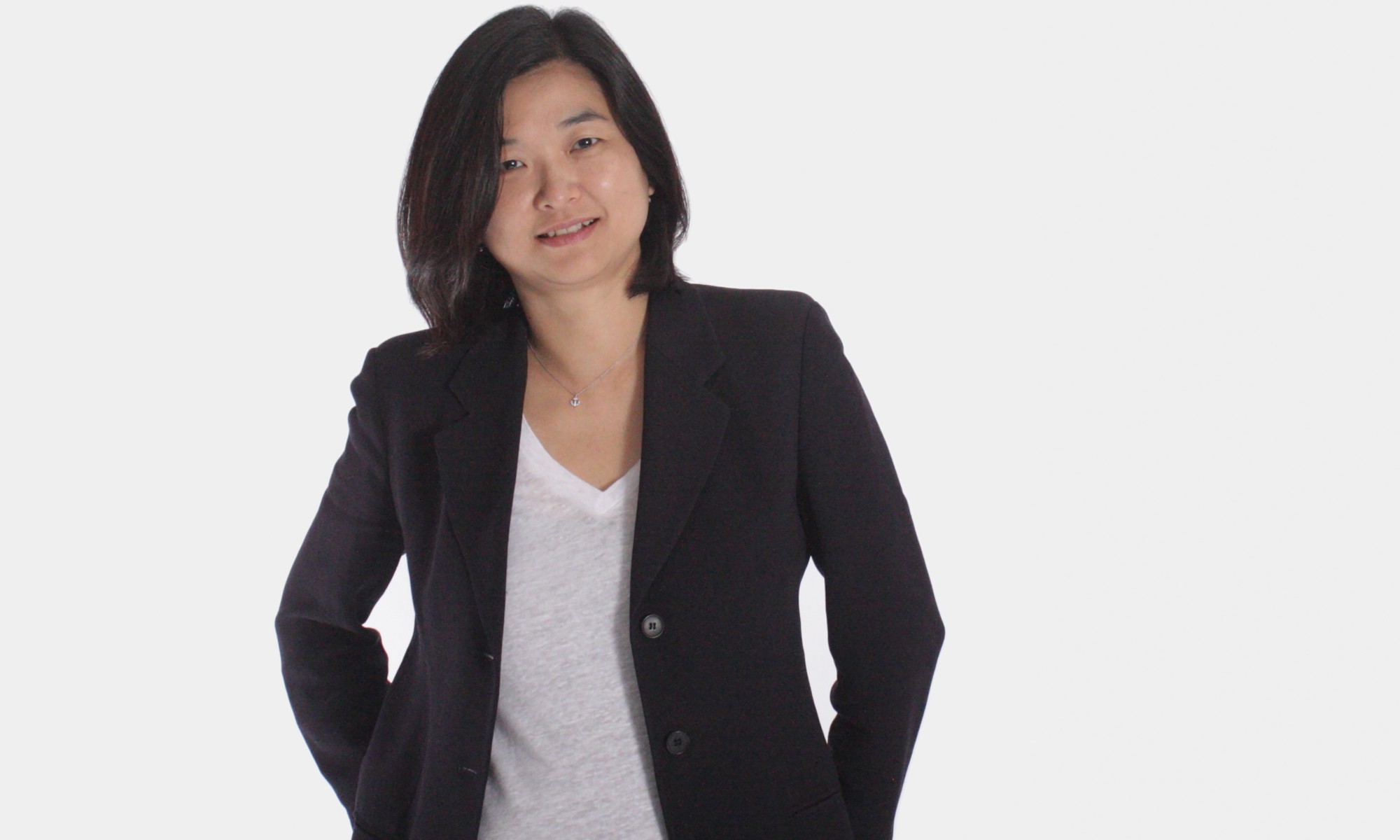
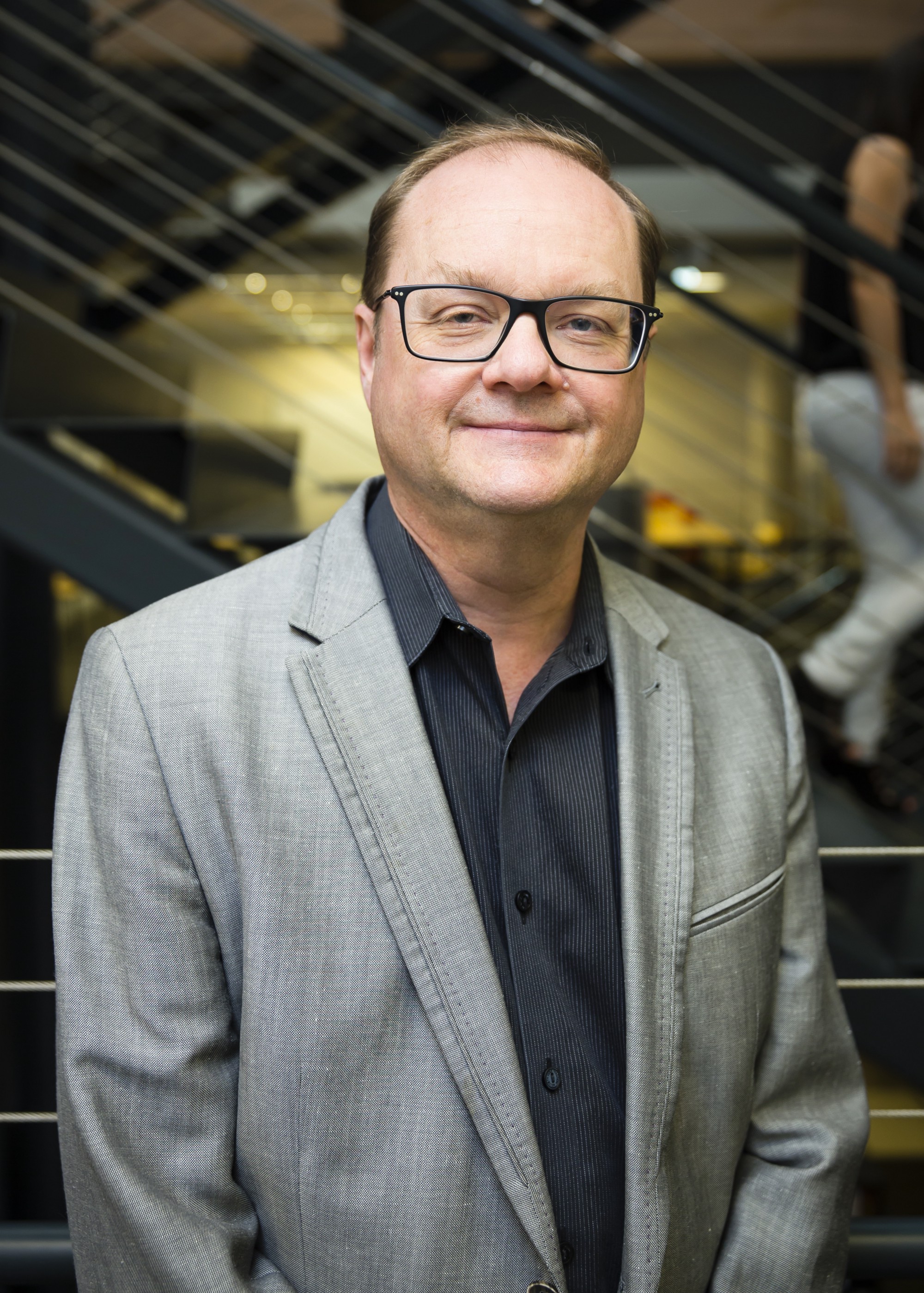
Keiko Tsuruta Cramer (Photograph courtesy of WRT)

Keiko Tsuruta Cramer is a Principal and Landscape Architect at WRT, LLC in Philadelphia, Pennsylvania. With nearly two decades of experience and degrees in landscape architecture, architecture, and engineering, she uses her interdisciplinary training to provide a unique perspective to her work. Her projects have included the Steelstacks Art & Cultural Campus and the Hoover-Mason Trestle in Bethlehem, PA, Crystal City A Placemaking Framework in Crystal City, VA, Philadelphia Holocaust Memorial in Philadelphia, PA for which she is Project landscape architect. In addition, Keiko maintains her architectural license in Japan, and has worked on numerous projects abroad including the Daiichi Mutual Life Insurance Office Landscape in Kanagawa, Japan, and SCBD Lot10 Development in Jakarta, Indonesia. Modelo spent some time learning about Keiko’s journey to becoming a landscape architect and about her current role at WRT.

On becoming an architect
I always wanted to become an architect, ever since the age of six years old. My father was an architect, and I grew up watching his sketching and drawing. All those different kinds of creative play never made me bored. My parents were very liberal in Japan back then, and they exposed me to different kinds of culture, arts, music, and food even though I was young. I simply thought being an architect was a cool job. So no one was surprised when I chose to attend architectural school and became an architect.

I loved being an architect and I still do. But then, my desire and curiosities constantly pushed the threshold from inside to outside, and beyond. After working for seven years, I took time off and came to the United States to study Landscape Architecture. My original plan was to return to Japan and continue pursuing my architectural career, but here I am. Landscape Architecture has become my primary focus. Being a landscape architect affords me the biggest opportunity to do all different types of projects with a variety of collaborations.
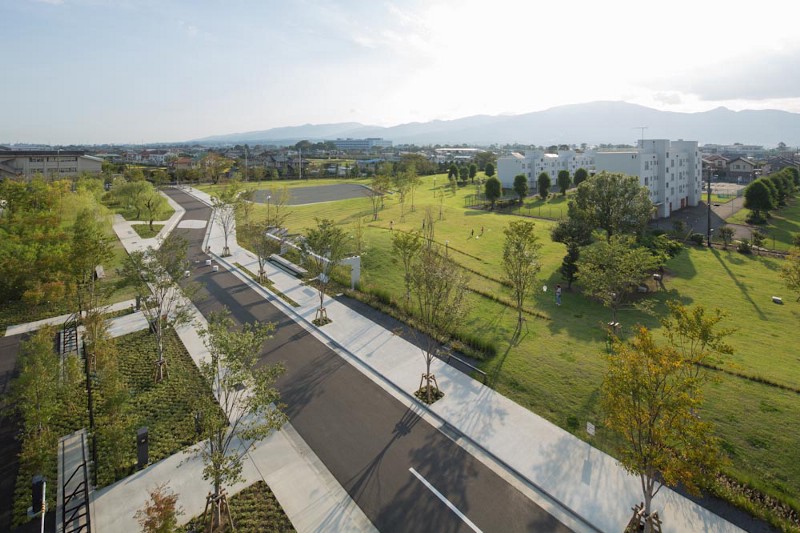
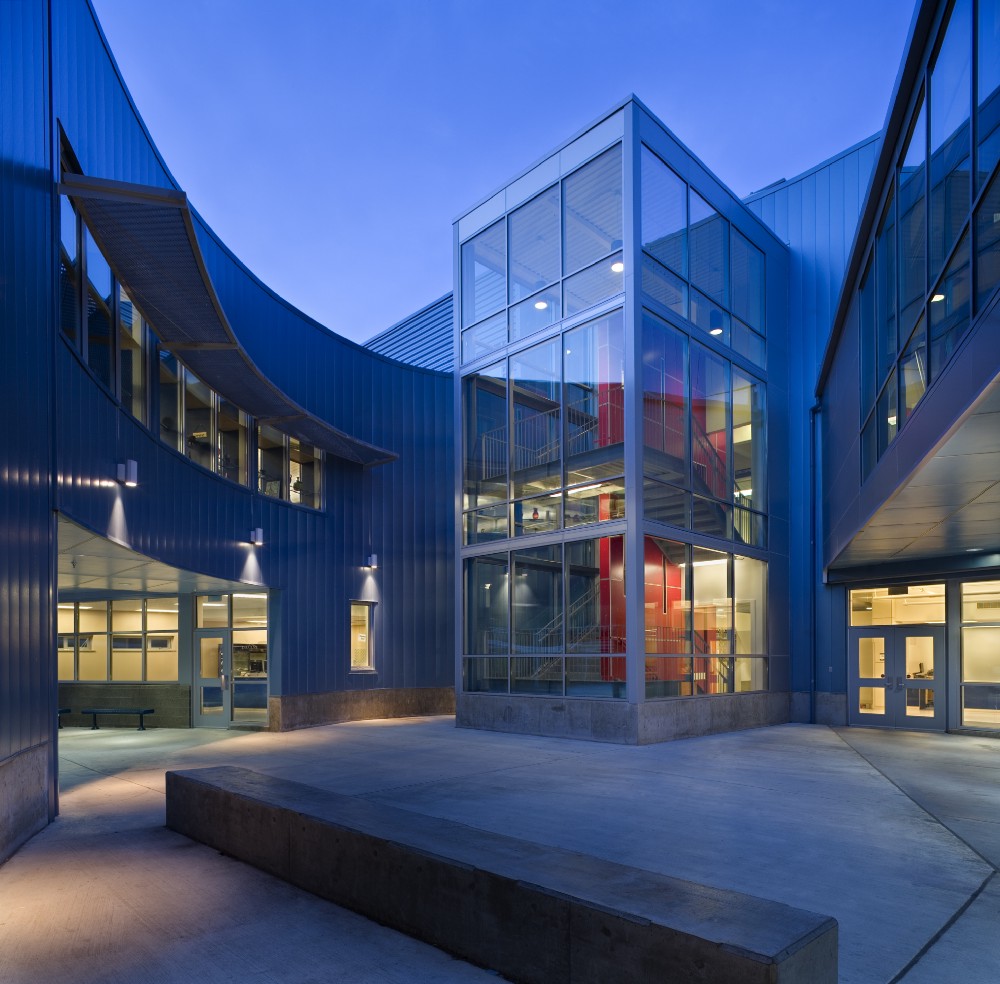
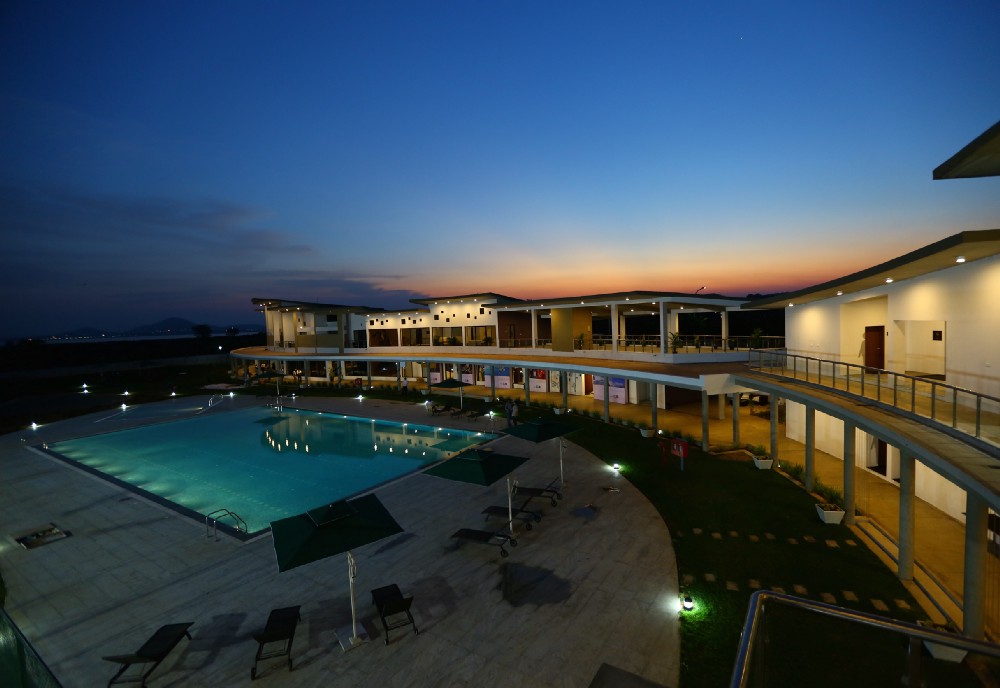
Daiichi Mutual Life Insurance Shinshokoen Project (Photograph Copyright holder © Hayato Wakabayashi courtesy of WRT)

On discovering her voice as a designer
I grew up in a house designed by my father and surrounded by mid-century modern influences. But his library was all about European architects including Corbusier, Mies, Scarpa and Aalto. When I stood in front of the Seagram Building by Mies in New York City for the first time, it validated my understanding of the power of “less is more,” while the dining experience at the Four Seasons Restaurant showed me how a seamless design can traverse multiple scales.

Though I have always had a fondness for a sophisticated and systematic approach to design, I cannot deny my distinctive preference for the warm, peaceful and personal design of Aalto’s Summer House. My influences stem from my collective and physical experiences in these designs. Context and materialism are always significant influences to my design voice, whatever the scale and type of the project may be.

On joining WRT
I studied at the University of Pennsylvania for my master’s degree, so I had always seen presences from WRT around school, but it was not on my radar when I graduated. I wanted to work in New York and was looking for a more intimate design experience in a smaller studio environment. I worked for Thomas Balsley Associates for a while, and then when I decided to stay in the U.S. and move back to Philadelphia, I went on interviews with both architectural and multidisciplinary firms.

Although my long-term goal was to go back to Architecture, I wanted to practice in the Landscape Architectural realm. I took an offer from WRT. Because of the firm’s heritage, the Landscape Architecture and Planning practice at WRT had more of a presence in our office back then, which attracted me more than firms that were dominated by the Architecture practice. WRT exposed me to different project types, scales, contexts and countries, from planning projects to built urban landscape. My understanding of materials and details from my architectural project experience also helped me to cross over disciplines easily and allowed me to provide more articulated details in landscape projects.
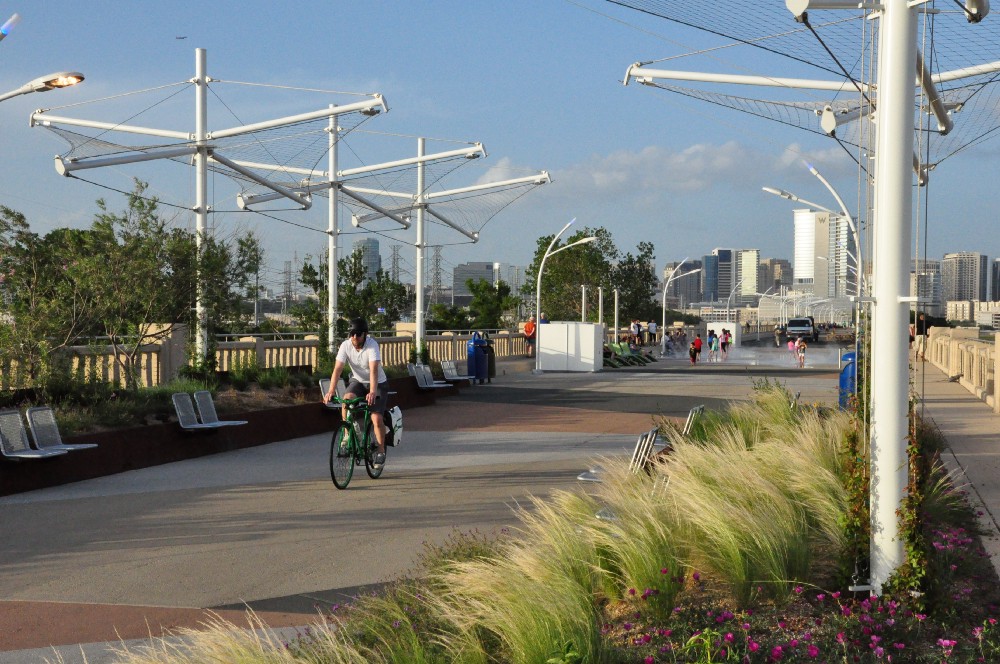
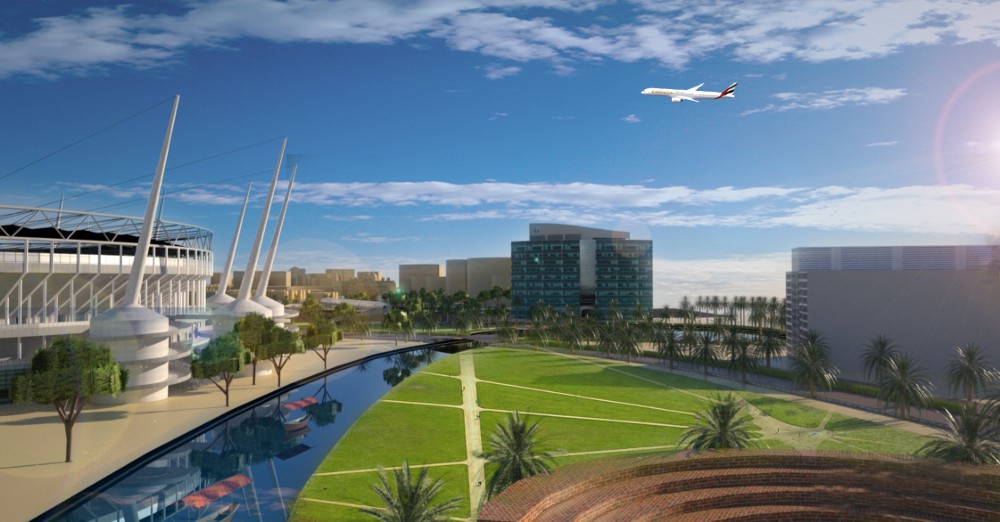
Continetal Bridge, Trinity Lakes (Photograph courtesy of WRT)

On specific principles she strives to adhere to
WRT has a long standing environmental philosophy, “for every site there is a solution that is most intrinsically suitable and which impacts nature least,” originated by Ian McHarg, co-founder of WRT. I think this is well said, but for me the “nature” includes both humans and communities. In my design process, it is very important for me to know the end user of the project as well as understand the community in which the project is located. The role of the Landscape Architect is getting more complex, especially in Urban Landscapes, which is my focus. It requires an understanding of the many layers of issues from social to environmental, and finding the right team of people to work with.

In that sense, we are like the composer of an orchestra and that is definitely the part I enjoy the most. Pragmatic and systematic approaches are always key principles of my designs. This is true for both my architectural projects and landscape architectural projects, but I view landscape almost as a skin or a tissue, a layer of systems, programs and policies that that are intertwined beneath the surface, they may not all be exposed, but their power is in their connectivity, and the ways in which they evolve over time, and sometimes in unpredictable manners. That’s another thing, the scale and timeline for landscape projects have a much larger and longer potential to change the context of the spaces in which we work. Like the SteelStacks Arts + Cultural Campus project in Bethlehem, PA. We won the competition in 2009, and just completed the third phase of the project in 2015, with plans for continued work.

It started as a campus landscape project, but projects such as the Levitt Pavilion and Hoover-Mason Trestle Park, have continued to evolve the site thanks to the engaging impact that the first phase (open space + pavilion) provided for the community and region. The Hoover-Mason Trestle Park is particularly special to me. Our design team had such a true collaborative spirit beyond WRT. The project not only accentuates the heritage of the site but the true transformation and preservation of the area created a powerful message of what design can do to revitalize communities. More than that, the experience of seeing people who used to work on the site all come back for the opening day of the project and tell own stories from back then with tearful eyes, that was an incredible honor and a truly rewarding moment for me as a designer.

On her role at WRT
My primary focus right now is building my practice within WRT’s platform. I am involved with everything from selecting the projects to hiring new team members. Hiring is particularly important to me. Our team is a tight ship and it is critical to have the right people on the team. I am also leading our re-branding task force, which is super fun but also super hard when you have so many different focuses and project types within one firm. WRT is embarking on a challenging but fascinating moment right now. As a firm with more than 50 years of experience and deep roots in the profession, we are reconsidering our brand and identity. Being elevated to a Principal within the firm during this transitional time has allowed me to be a part of reinterpreting the heritage and shaping our identity for the next 50+ years to come.
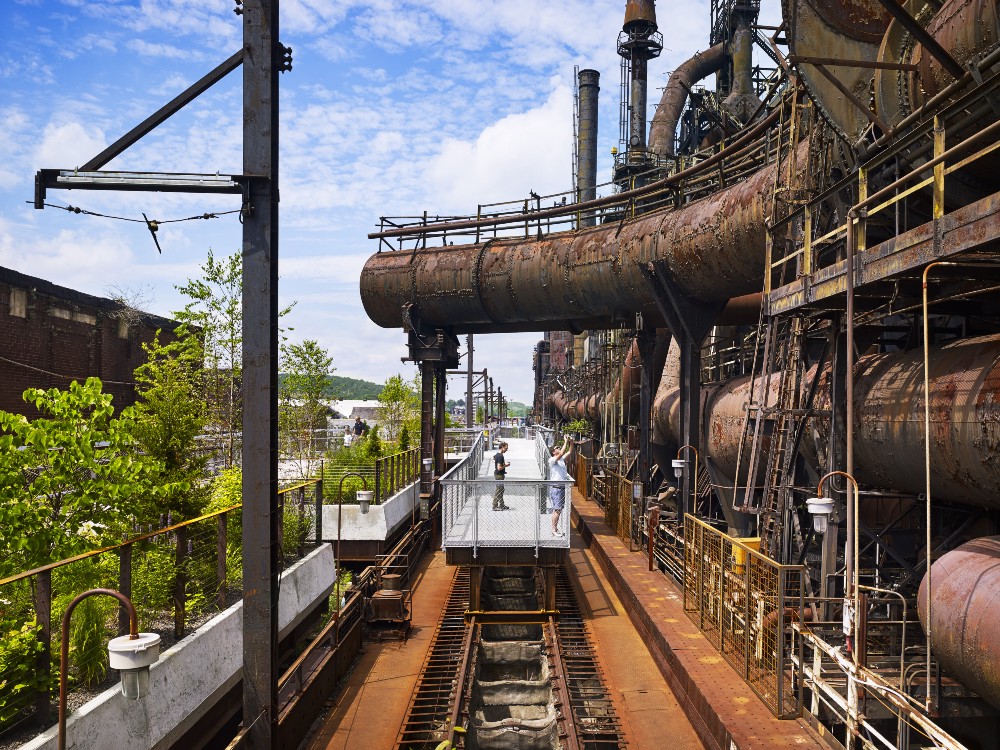
SteelStacks Arts and Cultural Campus (Photograph Copyright holder © Halkin Mason Photography courtesy of WRT)

On recent projects that represent WRT’s unique approach
Our natural collaborative style has almost become a “must” in all of our projects, and I mean “true“ collaboration. We work with other disciplines in a variety of team structures, sometimes as the prime and sometimes we are subs internally and externally. We maintain close relationships with many of our sub consultants too, through a constant exchange of information and dialogues, with and without projects. This constant communication gives our approach and collaborative style a richness and authenticity that enhances all of our work.

The SteelStacks project is one of the projects that represents the full potential of our culture, but more recently we went on an interview in Maine and I strategically brought all key personnel from our team. I needed everyone’s help and input from my team, because each professional has a specific role and skill. Our team included: Landscape Architect, Urban Designer, Public Engagement leader, Civil and Traffic engineer, Environmental graphic designer, and Urban Horticulturalist who all presented and spoke in the interview and we won! The same can be said with our team structure within WRT as well. I respect everyone’s contributions in any level and everyone on my team should have an ownership of the project. It has to be a two-way relationship even between principal and staff who just graduated from college. It is amazing what those younger professionals can bring to the table, not just digital skills, but some of them have the inspiring ability to think outside of the box and look at the project’s potential in many different ways. Another unique aspect in many of our projects is that the client is not the end-user, and post construction is a critical phase in some ways.

For example, the Daiichi-Mutual Life Insurance Campus project, we completed in 2011 in collaboration with Takenaka Corporation (my previous office in Japan!). At first, our client was not interested in doing anything for the campus, and just wanted to maintain infrastructure in a minimum way. After many conversations and endless sketches, our clients agreed to prioritize the space and create a little bit more fun, if we stayed in budget. Yes, the same budget. It was fortunate to work with a company like Takenaka, which is basically a large-scale design & build company, because we were able to strategically create earth forms by tweaking the construction method and logistics, by moving the same amount of cut and fill, cutting the same way but filling in a more strategically designed manner. The road alignment was already in the scope, following a curvature instead of a straight line. Simple and large undulations and infrastructural forms are tied back to the surrounding landscape to accentuate the unique character of the space.

Now, post-construction you can see kids spending more time in the campus after school, and the project has become a gateway for both the school and town. The space has now become a central cultural space in the town. We preserved beautiful cherry blossom trees to celebrate the start of the new school year every spring, festivals in the summer and many baseball games on the weekends. Recently, I heard great news that the Town of Daiichi has made a commitment to preserve the open space on the campus instead of developing it further. This is why we do what we do, to have a positive impact and influence on communities.

On her design toolkit
We use mixed media in our process, 3D modeling of course, but we still sketch in hand as well. 3D modeling is a huge part of our process, especially in the early stages of design and visualization, to understand a project’s scale and the complexity of a project’s conditions and requirements. 3D modeling definitely provides us more opportunities and a better understanding and ability to shape forms. Even during the shop drawing process, 3D modeling gives us much more precision in the creation and production of our designs and details.

On the state of design software today
I find it much more complex and exciting to see what design software can provide, but at same time, software can be very time-consuming. The level of precision sometimes scares me, especially when thinking about where it will stop, or where it should stop, when it comes to creating precise visualizations before a project is built. For example, 3D printers allow for the recreation of almost any form in any scale. There is a beauty in the ability that design software has today to create precise visual representations of unbuilt projects, however there is also a beauty in the collaborative and multi-media processes that we use to create our designs and communicate and our design philosophies. For me, I value a graphic representation that tells the narrative of the design, whether that is a precise visualization, or an atmospheric diagram that creates a richer collaborative process.
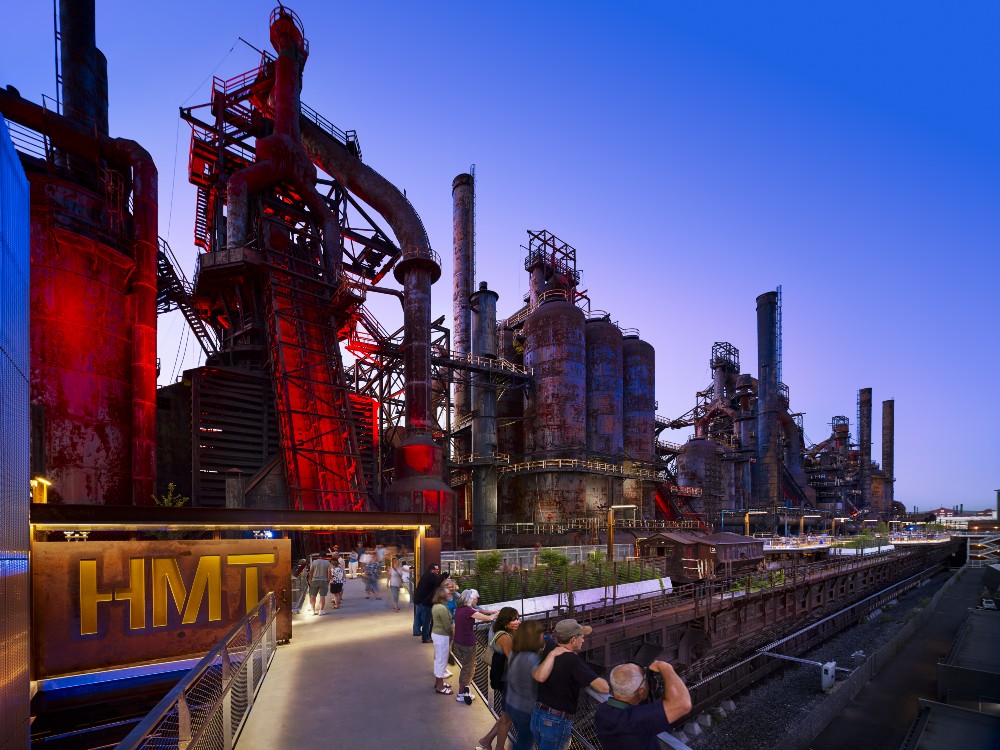
SteelStacks Arts and Cultural Campus (Photograph Copyright holder © Halkin Mason Photography courtesy of WRT)

On the future of architecture in the next 5–10 years
I can see that the definition of “Architectural” or “Landscape Architectural” will be more seamless and all disciplines are embraced much closer. However, Landscape Architecture will always be the critical method or system needed to recover the value that once existed, whether it remains or may have been lost. This requires interacting with policy on a deeper level, and our role needs to be more flexible to interface between a variety of platforms and programs, like resiliency. To address resiliency, we require larger administrations to be involved, ones that have the vision, knowledge and means to implement innovative ideas, even in small scales. This type of understanding and approach is in need of disruption within the Landscape Architectural profession in order to create an innovative future.

From my point of view, it will be very similar to what we are doing now. But the public’s perception and how the public defines “Landscape Architecture” should be evolved and different in the future. I can speculate that opportunities and how we approach design and the environment could be much different, more diverse and complex, and who we work with and how we work together also could be different. Landscape Architecture should serve as the interface that connects diverse challenges, a central communication device. The majority of my team has dual or multiple degrees and diverse backgrounds, and like myself, I have seen many architectural students and architects transfer themselves to Landscape Architecture as a primary career. I think Landscape Architecture is evolving to be more diverse and starting to define very specific challenges in much larger scales than architectural projects. This is a very exciting moment in time for both Architecture and Landscape Architecture.

On the future of WRT in the next 5–10 years
WRT recognizes that the industry is continuously evolving and changing. In order to stay relevant, we must continue to grow and challenge ourselves to adapt to the industries in which we work. The term “multidisciplinary” is not a magic word anymore. The very concept of collaboration allows anyone to bring a multidisciplinary approach to their work, however I think there is definitely an advantage to being a practice of many disciplines under the same umbrella if you have the right mindset.

Our teams are not just made internally. I always look for the best matches for each particular project, and sometimes that requires consultants from outside the firm. In my view, the success of WRT’s ability to evolve within our ever-changing profession lies in our ability to maintain the multidisciplinary character of the firm while growing the identities of each discipline, and our leadership.

On advice she would give her younger self
Advocate for your design. You are the only person who can stand behind your design unconditionally. Love it and live with it.

Design Manifestos: Greg Mottola of Bohlin Cywinski Jackson | Modelo Blog Series

Design Manifestos: Greg Mottola of Bohlin Cywinski Jackson

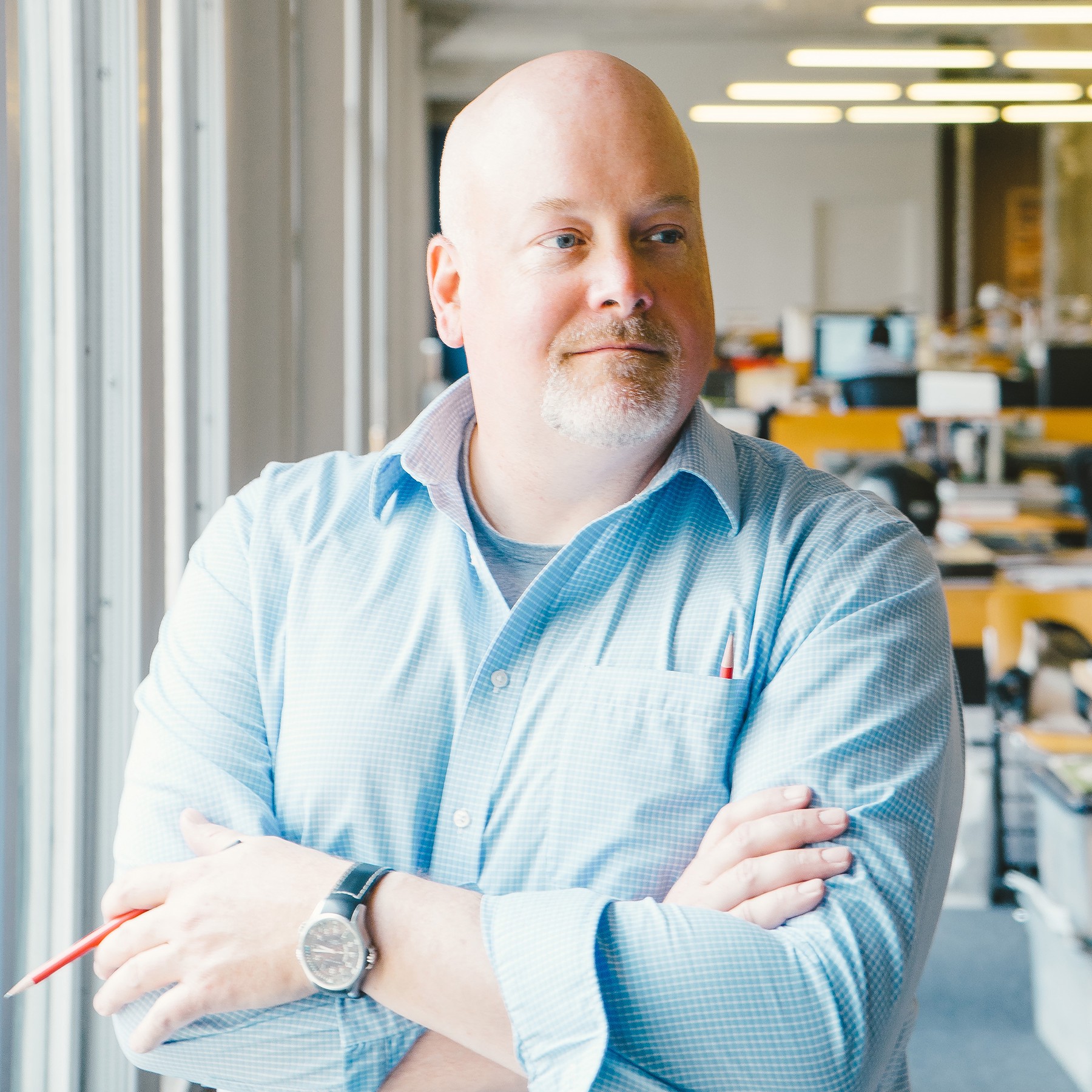
Gregory Mottola (Photograph by Joel Bear courtesy of Bohlin Cywinski Jackson)

Gregory R. Mottola is a Principal in Bohlin Cywinski Jackson’s San Francisco, California office. As lead designer for a diverse group of award-winning commercial, workplace, hospitality, academic, and civic buildings, he possesses a deep understanding of how buildings can shape and transform their environment. This is exemplified in his work for the Newport Beach Civic Center and Park, the Lorry I. Lokey Graduate School of Business at Mills College, and for technology companies that includes Square and Adobe, Inc. Modelo spent some time learning about Greg’s current role at BCJ and his unique approach to design.

On becoming an architect
I was born in New York City in the late 1960s and as a child my family moved to the suburbs in Northern New Jersey, just outside of New York. It was a fairly rural area when I first moved there, but a lot of development happened over the first 15 years. A new subdivision was under construction across the street from where we lived, and as a kid I’d spend a lot of time exploring the construction site. I was fascinated by construction, building, and how you could create with these raw materials.

Neither of my parents were architects, so it was from my childhood experiences and observing the world around me that I developed my interest. We often went to museums in New York, and spending time in a big city made me aware of the built environment around me. It was that initial interest that guided me to think about going to architecture school.

I went to Carnegie Mellon in Pittsburgh, Pennsylvania, which has a great program that prepares you to become an architect and to understand the technical pieces of the profession. It also has a good conceptual design component too. It teaches the importance of ensuring the buildings you design also perform well.

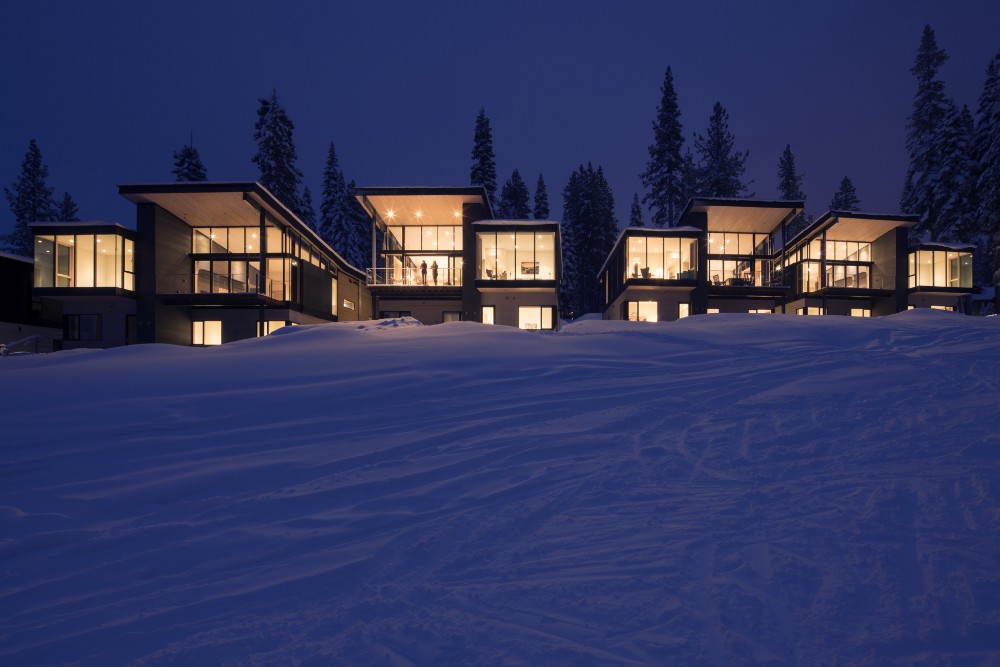
Stellar Residences (Photograph by Nic Lehoux courtesy of Bohlin Cywinski Jackson)

On discovering his voice as a designer 
I’m a Modernist at heart. I’ve been influenced a lot by the Modernists of the early and mid-twentieth century, such as Alvar Aalto and Sigurd Lewerentz. I also admire the work of Charles and Ray Eames, as well as Peter Zumthor. I learned about them in school, but even more once I started working at BCJ. When I graduated from Carnegie Mellon, it was 1991 and a pretty bad recession. A lot of folks who graduated with me didn’t get jobs in the profession, but I was one of the few who did. It was a great opportunity to get a full-time job with BCJ after I graduated. Our founding partner, Peter Bohlin, was and is a great mentor, helping to shape my views of architecture and design. He is just as much an influence on my work as the other Modernists I mentioned.

I’ve been with the firm for 26 years and have spent time in most of our offices. I started in Pittsburgh, working with Jon Jackson for about eight years after I graduated. My wife’s family and my family were all on the coast, so we had an interest in moving closer to them. I transferred to our Philadelphia office to work with Bernard Cywinski, another founding partner, for five years before Peter approached me in 2002 about moving to the West Coast to help grow and run our practice out here.

The following year we moved to the Bay Area. There were about a dozen people in the office at the time, including one of my partners, Karl Backus, and now we’re close to 60 people. Over the last 15 years we’ve seen the office grow in response to a variety of great design and project opportunities. Through many years of experience with BCJ, seeing it evolve and grow with every project, with each new generation, with change in ownership and leadership — it’s turned into this thriving place with a variety of design voices, and they all come from the tradition that Peter Bohlin established when he started the practice in 1965.

On how his approach has changed since he joined
The principles of how we think about design haven’t changed. If you look at some of our work you see it’s quite varied in how it’s conceived, designed and detailed. This is because we really try to design without preconception, we respond to the influences or circumstances of each project, and the design emerges from that. We like our buildings to have emotional power, to be moving. While buildings also need to function well and be beautifully designed, creating places that stir your heart is at the focus of our work.

What has most evolved for me since moving to California is trying to be much more open to different projects types that I might not have considered when I was younger. Now we think just as hard about interiors as we do the exteriors of a building. Experience with companies like Apple has allowed us to think about innovating the way we build and design, using new methods of construction, using materials in unexpected ways, like structural glass — technology that has been developed designing Apple’s retail stores. This has taught us how to research and develop extraordinary and unexpected ways of building and detailing, which also spills over into our other work, like residential projects.

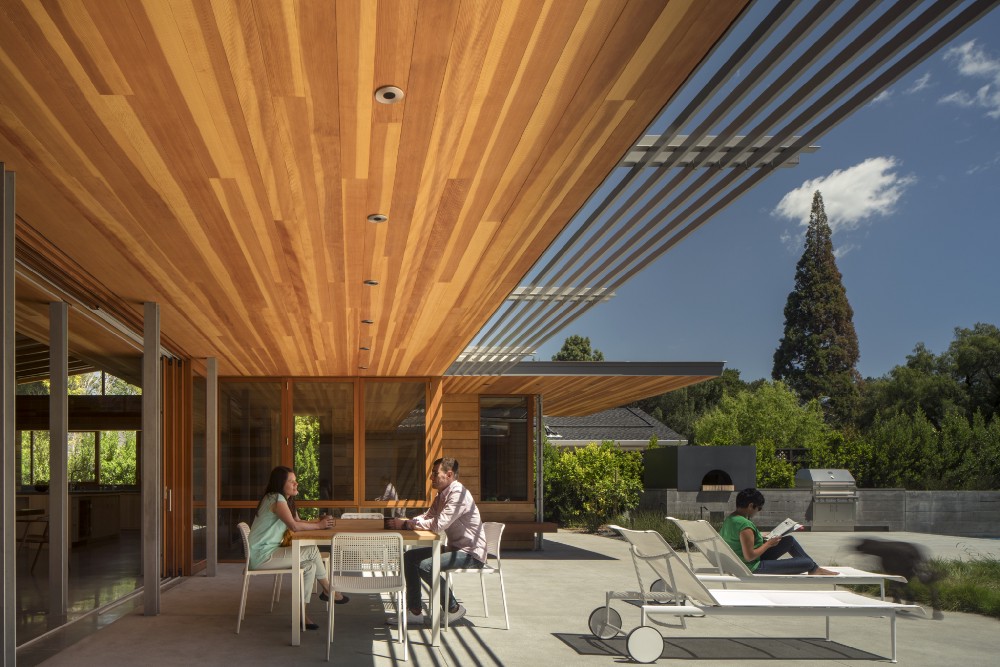
Los Altos Residence (Photograph by Nic Lehoux courtesy of Bohlin Cywinski Jackson)

On his role at BCJ
I’m one of ten Principals charged with leading the practice. My primary focus these days is leading design and bringing in new work. We all wear many hats and we’re all responsible for ensuring the firm stays strong, is financially stable, and that we hire and retain good people. Those are the keys to the success of our practice. As a rule, we always focus on great design opportunities and bringing in good work. And lately, we’re really focusing on promoting our work, so that it’s more visible and seen by more people.

On recent projects that represent the firm’s unique approach
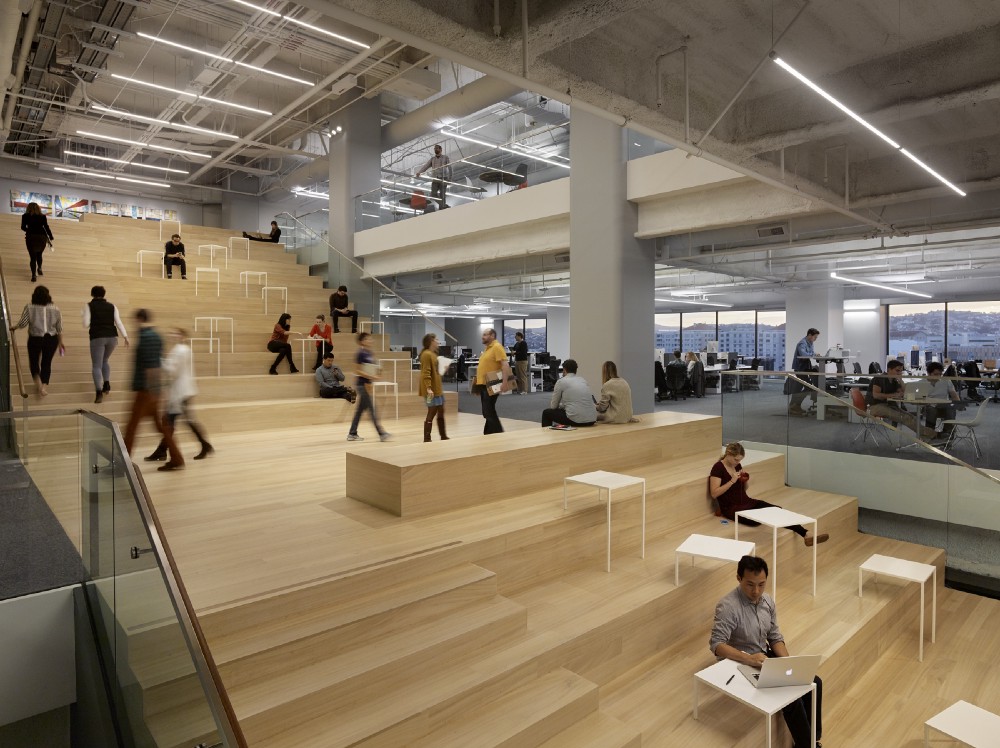
We’ve been designing a series of pretty interesting projects over the past 5–6 years, a variety of workplaces and headquarters for Bay Area companies, many who are interested in a well-designed space for their employees to work. It’s been interesting to see the trends in workplace design and how much of it has started in the Bay Area. Technology companies often need room for growth, flexibility, and highly collaborative environments for their people to do amazing work. Helping these companies make spaces that foster the culture they’re interested in is something we’ve been doing a lot of.

We’ve done great work for a company called Square, a financial services company that makes payments easy for small businesses and individuals. We designed their headquarters in the Mid-Market neighborhood and there have been a series of other projects that followed. There’s this interest in making great places for people to work, which also manifests itself in some public buildings we’ve designed.

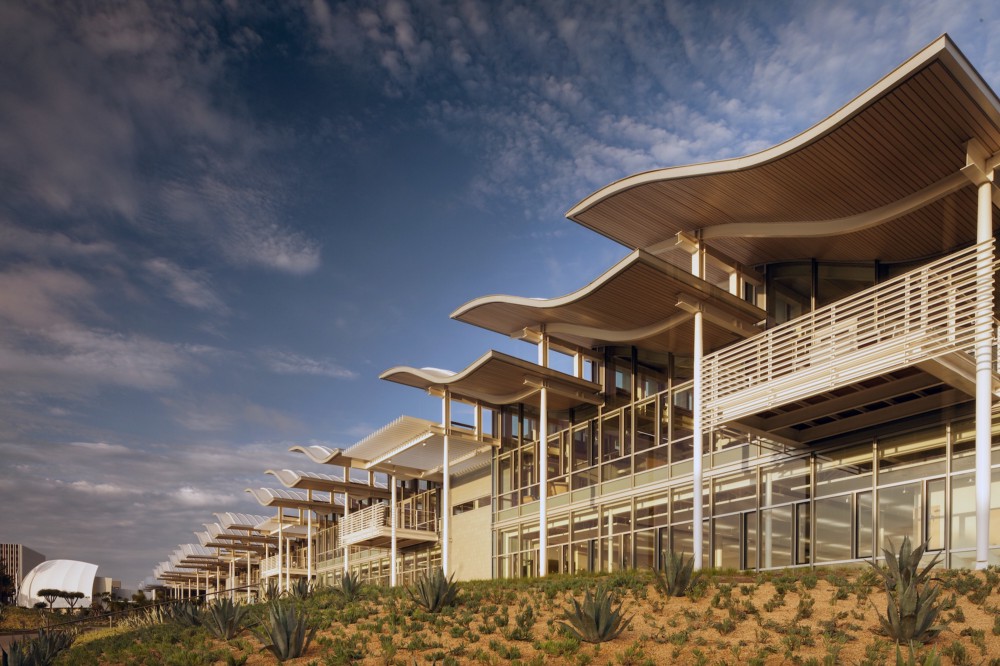
Over the last few years we’ve done a great civic center project for the city of Newport Beach in Southern California. We designed their City Hall and took what was an inefficient and old style workplace and gave the staff and public a great new building. We designed the inside as well. It’s been remarkably transformative for them to collaborate and work with each other, and to deliver their services in a much more open and accessible way.

We recently worked with a developer, designing a multi-family housing project in Lake Tahoe for a resort at Northstar, which is just north of the lake. The client approached us and asked if we’d be able to apply some of the design elements of our custom single-family residences to a multi-unit design. We thought that would be an interesting challenge — to do something modern and nicely detailed, but on a much tighter budget for a developer trying to sell vacation homes to the Bay Area market — a lot of young, very sophisticated and intelligent folks who work in tech. The developer thought our insights from designing single-family homes for individuals would be helpful to them, and the units really turned out well.

Newport Beach Civic Center and Park (Photograph by Nic Lehoux courtesy of Bohlin Cywinski Jackson)

On his design toolkit
Our process generally starts with thorough research and understanding of the particular circumstances of the site. It usually starts with developing a series of conceptual ideas that are more about what the principle of the particular project should be. What are the big ideas relating to the program or the views or some particular feature of the site that are unique or noteworthy? And we let the design emerge around that.

Through collaborating with my colleagues and a lot of initial sketching, we start to develop very crude digital representations of those concepts. We often build study models early on to think about how the building might relate to its site or how the building massing might look and feel. Eventually that gets translated into a digital representation. We use a variety of software; some of our staff is fast with Rhino, some with SketchUp and some are stronger with Revit.

We do early conceptual 3D work in any one of those programs. We generally run everything into Revit and use that as our tool, starting robustly in early design development where the scheme has been settled and it’s now about figuring out how the building will be constructed. You use a tool like Revit as a way to not only do visualizations for clients to understand how spaces will feel, but also as a way to tightly coordinate the building. There’s definitely an upfront investment of time in building a good design model but it pays off later as adjustments and refinements are made, and everything comes together. It also creates an easier path in coordinating with our consultants and many of them are able to help us integrate all of the systems into the design pretty well using a tool like Revit.

SketchUp used during earlier design phases also allows me to walk a client through a space virtually and see what it’s going to feel like. There’s something about that that can be a very effective way to communicate ideas.

On the state of design software today
To me it’s all about ease of use and flexibility in using the right tool for the particular task at hand, not just using one particular platform. There’s room for a variety of tools and we want to be open to what’s new and developing. Revit has improved over time and is easier to use. It’s becoming the default for how we do our documentation for CDs. The way they’ve added improved ways to render right out of Revit has made for a nicer workflow.

Software is always a work in progress and I imagine it will continue to get better over time. We would love to see technology become more intuitive to use so people aren’t spending so much mental energy learning the software. Instead, the mental energy might be better reserved thinking about the design issues at hand.

Square, Inc. Headquarters (Photograph © Matthew Millman courtesy of Bohlin Cywinski Jackson)

On the future of architecture in the next 5–10 years
I would love to see the connection between design, documentation and fabrication start to merge. We’re beginning to this happen on some of our projects, where we’re designing something very special and custom and essentially doing the fabrication drawings. The software has become so powerful that you could basically hand over your model to a fabricator and they could make a more direct connection to the fabrication. This would be a big plus for our industry and would let us maintain control over design and help us partner better with the folks who actually make these things.

People are doing some incredible fabrication now that digital fabrication is getting more mainstream. I’ve seen glimpses of the way people start to use digital representation of documentation of design documents as a way to make few mistakes when you’re building. In other words, the contractor will be walking around with a tablet with everything right there or will have a virtual reality way to view the site that’s much more dynamic. I would see that as being a natural evolution to the process. Our industry in the United States is a little behind the times on this front, there seems to be a lot more integrated design-construction happening in places like in Europe and Japan. We hope that could happen in a more powerful way here in the future.

On the future of BCJ in the next 5–10 years
I’m hoping this merger of design and fabrication really takes hold, as I would like for us to be right there with it. I see it as a way for us to be providing a lot of value to our clients and being able to do more interesting and better work that way. Getting back to my initial reason for being in architecture, I’m always fascinated with how we build things. If we can have a more direct way to shape that or influence that, I’d be all for it. Not on every project, but on many of our projects, we are involved with some custom fabricated element. Whether it’s a feature wall or some piece of furniture or something where we get really involved with the person making it. It’d be great to blur that line even more and to be right there doing it with the craftspeople.
On advice he would give his younger self
There are several things I’ve learned through more experience. One is to choose your clients carefully. Look for people who share your values and views. Over time, you realize there are only so many years in a career and you want to work on things that are exceptional, fun, and learning opportunities. Don’t squander the time you have.

Another piece of advice is to be open-minded and not place limits on your work. Our practice thrives on being generalists — we’re not market-sector specialists. We think of ourselves as designers very broadly and if an opportunity comes along and we don’t necessarily have the exact expertise to do it, but it seems like an interesting opportunity to learn, we want to chase those things. It keeps us fresh, keeps us alive and passionate about what we do. So don’t be limited by your own perceptions of yourself.

Design Manifestos: David Marks of TEECOM | Modelo Blog Series

Design Manifestos: David Marks of TEECOM

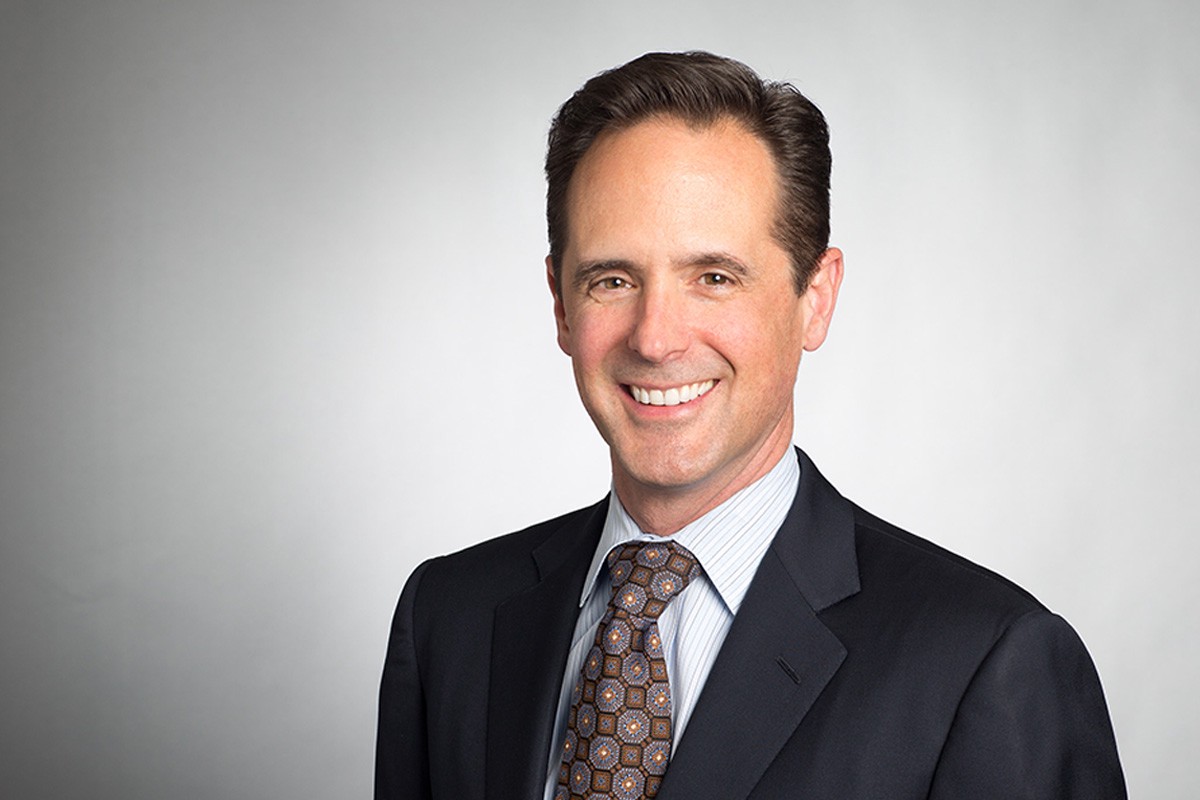
David Marks (Photograph courtesy of TEECOM)

David Marks is the President and CEO of TEECOM, with offices in Oakland, California, the United Kingdom, Dallas, Texas and shortly Portland, Oregon. Believing that people are the key to a successful services business, David began early in his career surrounding himself with the best people, treating them like family, and giving them the tools necessary to do outstanding work for the firm’s clients. Today, those efforts have paid off. The San Francisco Business Times has ranked TEECOM as one of the top 100 fastest growing companies, as well as one of the top 20 best places to work. David has led by example to create a company where all employees work toward the same goal: integrating forward-thinking and innovative ideas and technology into architecture that is practical and aligns with the business objectives of the firm’s clients.

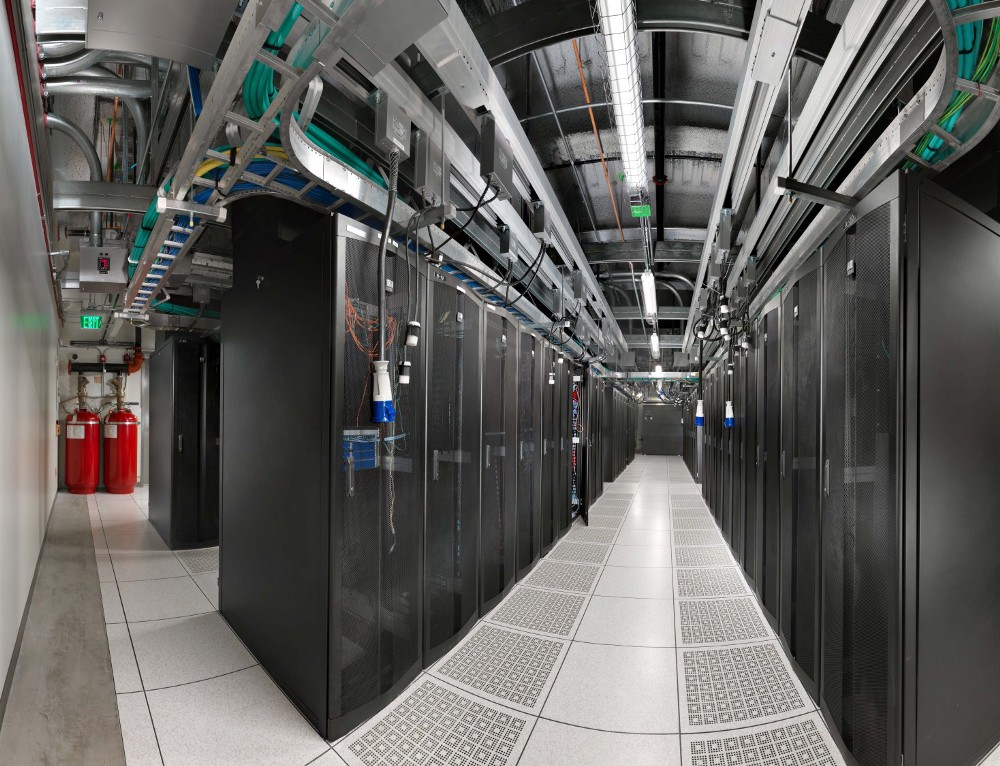
TEECOM is an integrated technology design company that forges the ultimate convergence of technology and experience. By creating the infrastructure solutions that make today’s buildings smart and social, the firm brings strategic thinking and innovative engineering to telecommunications, security, audiovisual, acoustics, virtual reality, wireless, network, VoIP, and other electronic systems. Modelo spent some time learning about David’s current role and the evolution of TEECOM.

On becoming an engineer
In high school, I enjoyed math and science, but I had no idea what I wanted to do. A computer science teacher suggested I explore engineering. I didn’t know what an engineer did, but I figured if it was math and science it sounded good. I went to the University of California, Berkeley and majored in electrical engineering and computer science, and absolutely hated the program.

I decided to leave school to pursue an internship at an engineering firm and do the things that an engineer does. My first project was the Moscone Convention Center Expansion in San Francisco. I was amazed. I had no idea that engineers designed buildings and that they worked with architects. I always loved buildings and marveled at how they were built. I fell in love with the profession and ended up going back and finishing my degree in electrical engineering at Cal Poly in San Luis Obispo.

On discovering his voice as an engineer
When you first start out in any profession, you’re not sure if your ideas and opinions are valid. Once you have more experiences where you have an idea and somebody else says it and everyone thinks it’s great, you start to trust yourself a little bit more.

One of the instrumental moments in my life was when I went to a senior engineer and asked why he designed something a certain way. His response was, ‘I don’t know I just copied it from someone else. I figured it was right.’ I was shocked because he was someone I respected and trusted for his knowledge. It taught me that not everyone in the industry who has an opinion about something knows why they believe it.

If you truly understand something, you understand all the properties and principles of it: the goals, why you’re designing it, how it works, and that fact overrides opinion. When you understand all of the fundamentals about your idea, you’re much more confident saying, ‘This is how it should be done. I know everyone does it this way but I’m doing it this way and it’s much better for these reasons.’ That is how we progress the industry.

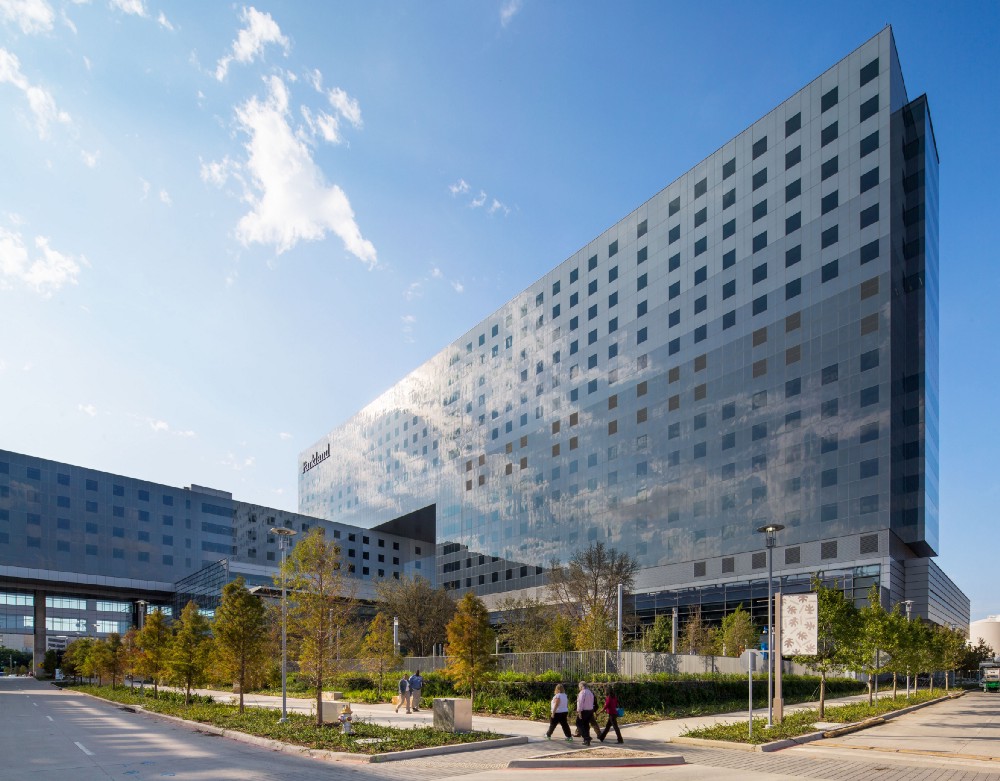
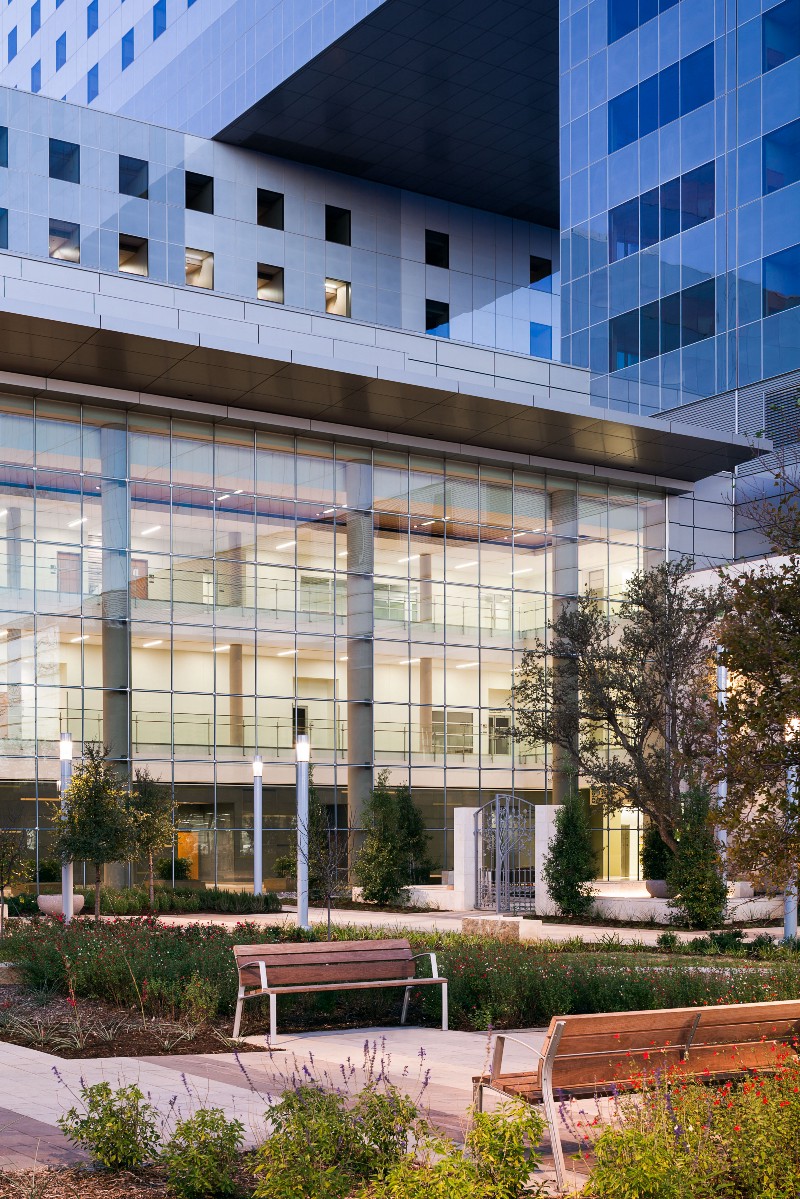
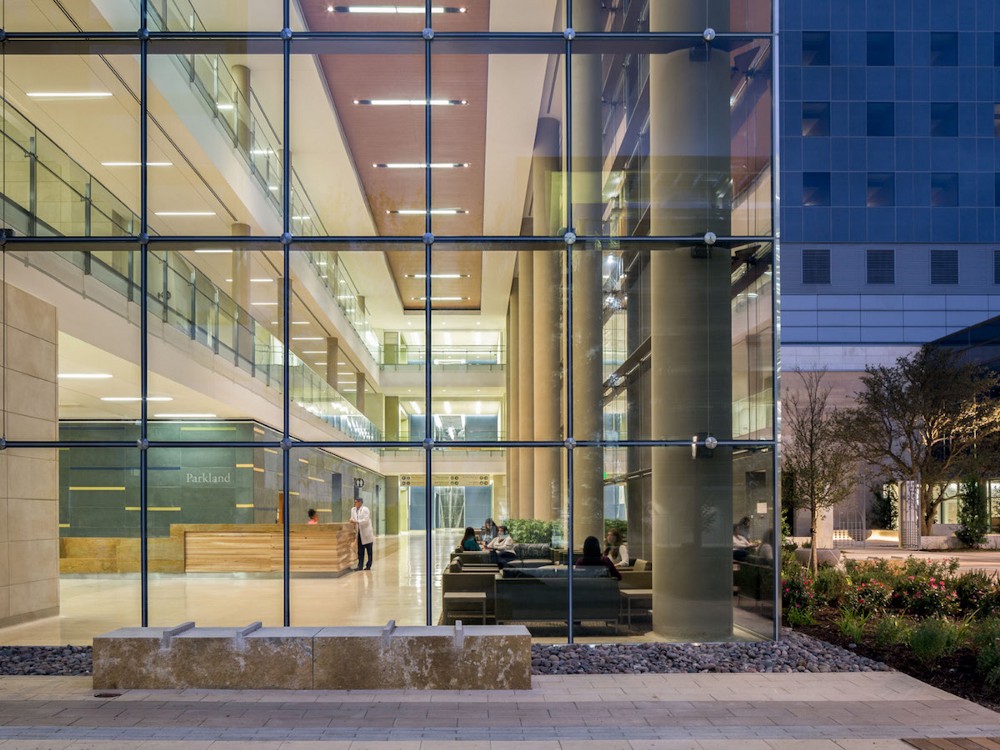
Parkland Hospital (Photograph © 2015 Dan Schwalm: HDR courtesy of TEECOM)

On starting TEECOM
Ever since I was 16 and had my first job working at a Carl’s Jr. (a fast food restaurant) and then at a Best Products (a big box retailer), I believed that I could run a business. One of the things that I’m naturally good at is that I see a process or system and I know how to improve it. I started TEECOM because I saw what was being done in the industry by other professionals and I would ask them, why do you recommend that it be done that way? Or why are you recommending this solution over another? Usually they didn’t know. They repeated something that they had heard.

I took the time to ask why and learn the reasons and facts behind various design choices. I had a strong opinion and felt that I should share it. I knew I wanted to start my own company. I was growing the company that I was with, but not all of the owners saw a future in designing technology for buildings. I disagreed, so I left and started TEECOM in 1997. It was the perfect time to start a business because we had the whole Silicon Valley dot-com boom and the first round of Internet companies. There was so much work.

On the evolution of his approach
When you start out doing something, you’re exposed to one specific task, whether it’s to design a building or a system. As you do it over and over again, you start to see how it could be done better or how it relates to something else. TEECOM started out just doing IT infrastructure engineering. We looked at all the systems attached to that — the network, audiovisual systems, security systems, acoustics related to audiovisual performance, or project management. We found that the industry was lacking in good engineering and project management.

Over the years, we continue to add services where there was a need. That’s probably true of many different businesses. You have an initial idea of what you want to do and a service or product that you want to develop, but then you find that in order to control the end user’s experience with that product or service, you have to control more of the process. So you expand and do more things that deliver a more integrated and higher-level result.

When we talk to clients, we don’t really talk about IT infrastructure or displays or card access readers. We talk about what problems they’re having, how we can better connect their people internally to an office or organization, with the outside world, their clients, how to keep them safe from a physical security but also electronic security standpoint. We figure out how to deliver it. That’s what clients want. They don’t necessarily want the end product or service, they want the experience. They want someone to handle it, take over and deliver it whether they know to ask for it or not. Over the years we’ve grown to deliver experiences rather than services.

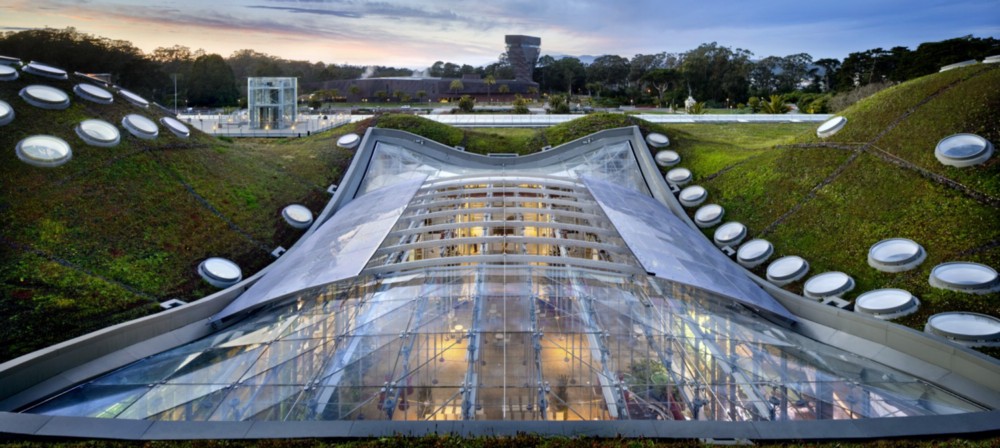
Cal Academy (Photograph ©David Wakely Photography courtesy of TEECOM)

On specific principles he strives to adhere to
One of the things that bothers me is poor design. Poor design usually results from people not thinking about it in advance. That’s why you see pathways strapped to the outside of buildings or satellite antennas stuck to rooftops in plain view. It doesn’t need to be seen.

The best way to describe our design philosophy is that if it doesn’t need to be seen or heard, it shouldn’t be. Unless there’s a reason to see the cables, the pathways, the antennas or all the electronics that go into making something happen, it should be invisible to the user. The space should speak for itself.

On his role at TEECOM
Even though I’m the CEO, when I first started out I did engineering, interfaced with our clients, put together drawings, wrote specifications, spoke with contractors, walked jobsites, and did anything that needed doing. As the company grows, you have to learn to train other people to do what you do. My role became more about training people in engineering. Then as you start to pass 20–30 people, you find that you need people to lead specific aspects of the business.

You start to put a leadership team in place: someone who’s in charge of engineering, someone in charge of operations, someone in charge of business development and marketing and someone in charge of HR and finance. My job now is about making sure I have the right leadership in place. We’re about 85 people. We’ll probably be over 100 people by the end of the year. I haven’t walked a jobsite in a while. I don’t put together drawings anymore. In fact, the design tools that our staff uses have surpassed my abilities. I have never used Revit, which is a little uncomfortable for me because I was so hands-on.

My job now is about designing a business that’s scaled from $1 million a year in revenue to $10 million a year in revenue to over $20 million a year in revenue. In order to do that, you have to think about how to sustain a business that can deal with all of the challenges that come with having a lot of people with competing interests, ideas, goals, clients, and industries. How do you do what you did when you were small and it was easy on a much larger scale?

Palomar Hospital (Photograph ©John Linden courtesy of TEECOM)

On recent projects that represent TEECOM’s unique approach
We probably have 200–300 different building projects going on at one time. The California Academy of Sciences in Golden Gate Park is the first natural history museum, planetarium, aquarium, and research institute all housed in a single new building. We put every electronic system on a converged network. It was the first museum of its kind to operate that way, and probably one of the first buildings of its kind to operate anywhere that way.

The project won an award from InfoWorld for being one of the top 15 green IT projects in the world. That was the result of a great team, a great vision for the client and people who were willing to do things that hadn’t been done before.

The hospitals we work on are good examples. There’s somewhere between 120–150 different electronic systems in your typical hospital and the whole healthcare industry is in need of innovation. We’ve been fortunate enough to work on Palomar Hospital in San Diego, California; Parkland Hospital in Dallas, Texas; Stanford Hospital in Palo Alto, California; and UCSF Hospital in San Francisco, and we’ve been able to bring a different level of thought, envisioning, and integration that improves patient outcomes. I’m proud of that.

On the other spectrum, we build corporate offices for fortune 100 companies all over the world. We’re able to oversee and deliver design from San Francisco to New York to London to Tokyo to Melbourne. It’s nice to have the client come back to you and say ‘you’re delivering space and services better than we ever delivered ourselves internally. We never thought that an external partner could do that.’ It makes us feel good.

On the firm’s design toolkit
We use a lot of tools. AutoCAD and Revit are the two big ones from a design standpoint. Then there are all the collaboration tools like Slack for internal communications and Asana for project management. Office 365 because you still have to communicate with clients over email and put together Excel and Word documents. We also use Confluence, which is our internal knowledge management platform. We use Bluebeam for cloud markups of drawings and drawing management. Plangrid we use a lot out in the field.

When the latest software comes out we like to test it to determine if it improves the process. We’re always trying to stay on the cutting edge of what’s available. We even tend to develop our own software internally if we don’t like what’s out there. It takes all of that to deliver a better product.

UCSF Medical Center (Photograph ©Stantec courtesy of TEECOM)

On the state of software today
It could be a lot better. Twenty-five years ago while in school, my capstone project involved developing an interface for what was called ICADS, Intelligent Computer Aided Design Systems, which the architecture department at Cal Poly was developing. It already used 3D modeling and the concept of objects rather than drawing lines or symbology to represent a real world object.

It understood what a room was and what a window was, what electrical power was and heat loads were. It used these intelligent agents written in an artificial intelligence-based software called CLIPS that understood building codes, the UBC, the electrical code, local codes, and Title 24. It also understood cost. As you designed a building and chose materials, whether it was wood-framed or steel-framed or concrete, it would tell you that your window was too big or the cost was too high. It would resolve it for you and make suggestions on what you could do to meet code or a local ordinance or energy guideline.

If you wanted to reduce cost, it would give you the best ways to do it. We still don’t have anything like it in the industry. I follow Bret Victor and his pursuit in life is to better integrate the tools that we use to design things with the outcomes of those tools. The design process is too disjointed. You have to do a lot of iterative work and then look at the outcome and then go back and change it, and then look at the outcome again. You should be able to work in both domains. You should be able to look at the outcome and describe what you want to have happen in the outcome, and have the design tool make the necessary changes.

On the future of the AEC industry
The industry needs better design tools and better collaboration tools. I think the raw capability of the existing tools is fantastic, but they need to be easier to use so that people are comfortable using them. Regarding collaboration, it’s still frustrating when you have to travel to an architect’s office and sit in a room of 30 engineers and designers for three to four hours every week to talk about a project and everyone gets two to five minutes to talk. The rest of the time you’re listening or the discussion has nothing to do with what you’re involved in.

The technology exists to allow people to collaborate on specific issues electronically or virtually. We have to get out of this mode of everyone having to sit in the same room and go through this long drawn-out process to resolve issues. There’s value in being in the same room and getting to know people when you have to work together. You’re much more likely to answer my question or help me if you know me as a person rather than just a name on an email or a website. Use the face-to-face meeting time for building relationships and then use better electronic tools for collaborating remotely.

As designers, we have to focus on the client’s experience as we do on the product or the service that we deliver. If you think about any time that you go shopping or you have your car serviced or you eat at a restaurant, it’s more about the experience than about that product or service. You want people to demonstrate that they care about you. You want to feel good and enjoy the experience. People tend to get focused on the technical aspect of the design or the product and not the overall experience.

On advice he would give himself
I would tell myself to trust my instincts earlier. To speak up, rather than waiting, and to not be afraid to try new things. Early on, when you run an organization, you don’t want to make a mistake. You don’t want to do something that’s going to end your career and the business. You tend to play it safe. As you get older and wiser, you start to understand that your ideas, when based in fact and experience, are pretty good and it’s okay to buck the norm.

For example, offering unlimited personal time off or allowing people to work from home or wherever it is that they want. You can work from anywhere given today’s technology. Or putting a compensation plan in place that incentivizes behaviors like providing a great experience, generating repeat business, and delivering great design. All those things are possible. While it is highly uncommon to do a number of those things in the industry, it’s okay to be different. In fact, there are a lot of good things that come out of being different. When you have an idea or you’re trying to solve a problem and the solution may be unconventional, push yourself to take risks.

Design Manifestos: Boris Srdar of NAC Architecture | Modelo Blog Series

Design Manifestos: Boris Srdar of NAC Architecture

Boris Srdar (Photograph by J. Craig Sweat courtesy of NAC Architecture)

Boris Srdar FAIA, is a Principal at NAC Architecture’s Seattle, Washington office. He champions the advancement of design, infusing the design process with his vision and enthusiasm. He has been the lead designer on many projects that have received multiple national and international awards. His background in European urban design strongly influences his design approach. Boris holds a Bachelor of Architecture degree from the University of Zagreb and a Master of Design Studies degree from Harvard University. Modelo spent some time learning about how Boris discovered his voice as a designer and about how his unique approach has evolved over time.

On becoming an architect
Growing up in Croatia, when you reach tenth grade in high school you need to have some sense of what you would like to do. My sense was that my brain has artistic and technical qualities and I had the impression that architecture was something where you needed both sides. I thought architecture would suit me and that I would be good at it. In the beginning, this was basically all I knew about architecture.

When I was 16, I worked in an architectural practice during the summer, but as a high school student they only gave me pencil drawings to draw ink over for printing. That’s all you could do at a time when you don’t really know anything. I didn’t deepen my perception of what architecture is other than still having that vague intuition. I went to a math-focused high school for the last two years and then went to the architecture school in Zagreb, Croatia.

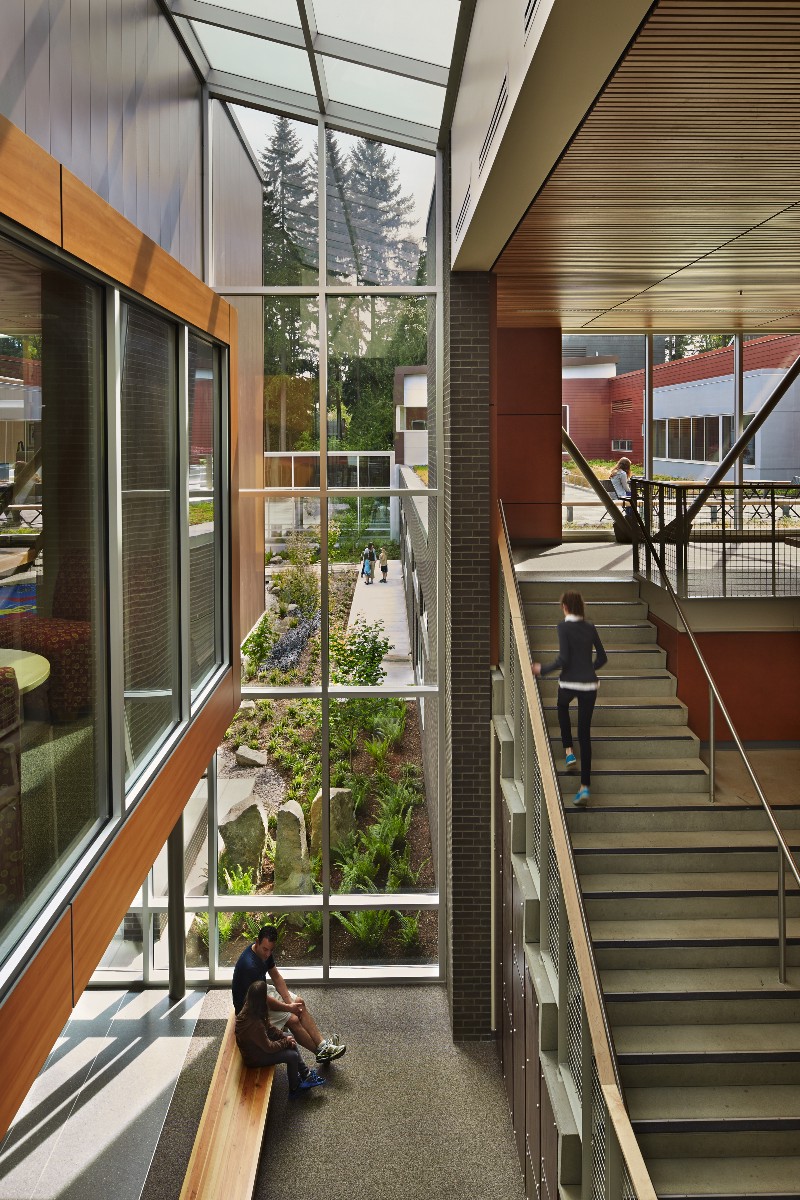
Cherry Crest Elementary School (Photograph by Benjamin Benschneider courtesy of NAC Architecture)

On discovering his voice as a designer
I started my education at the University of Zagreb at the School of Architecture. I had a fantastic teacher there, his name was Boris Magas and he came to school at the right moment for me. It was enlightening. The second great teacher I had was Raphael Moneo at Harvard Graduate School of Design (GSD) in Cambridge, Massachusetts. I feel fortunate that I attended during his last year as a chairman. These two teachers were great influences on my education.

When I was in my program in Zagreb I learned about Louis Khan thanks to Professor Magas who exposed us all to him in our theory class. I realized that there’s a more thoughtful way of thinking about architecture. Through Kahn’s work, I also learned about the importance of poetics in architecture.

In the late 1980s, I discovered the work of Alvaro Siza. This was before the internet, so often we were taught about publications, images and descriptions through magazines. In 1989 I saw a kindergarten designed by Siza in Berlin, Germany and that was a big learning moment for me. The key part is the power of quiet architecture with the surprise of discovery. This experience stayed with me throughout all of Siza’s projects I saw.

When I was at the GSD, I discovered the work of Louis Barragan. I saw the Emilio Ambasz book and that’s where I discovered his interaction of architecture and landscape. This influence has stayed with me through all of my travels in Japan and elsewhere. It kept growing on me in terms of the importance of experiential architecture.

I was able to organize traveling as field trips to see many buildings, which is important when growing as a designer. Even after graduating from the GSD, I was still working on my education and learning by myself with books and lectures.

Now looking back 26 years, it has been an exciting journey in the way I was thinking and crystallizing my thoughts. My design voice is a continuous evolution of things I learn intellectually and experientially, and not a combination of sudden twists or rapid changes or trends. At the time I arrived at the GSD, I was exceptionally inclined to think conceptually. This was something that was in my DNA. Since that time, my thinking has evolved into the whole spectrum of architectural thinking. Now I understand spatial flow more completely, even though it was important to me at that time.

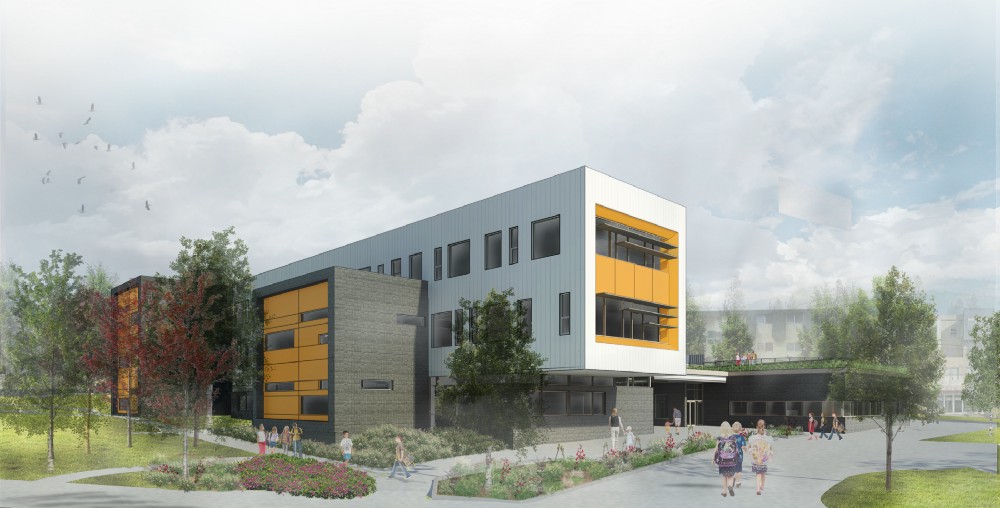
Hazel Wolf K-8 (Rendering courtesy of NAC Architecture)

On Joining NAC Architecture
A colleague of mine from a former firm brought me to NAC Architecture in Seattle. They said they were looking for talented designers so I interviewed and that’s it. That was 19 years ago. Fairly early after I joined the firm, I had the opportunity to be a Design Leader on a project, but it came relatively late in my career (in my late 30s). Due to continuing my education, I was probably a little bit more mature as a designer when I got that opportunity. It was claimed as a success so I continued working as a Design Leader.

With every new project, I felt my ability to connect the conceptual and the physical kept improving. That was a fairly linear process. If I look back now, it’s important to note that wherever you start as a lead designer you can always grow. I had that opportunity. It was connected to the way I was finding my voice and I don’t think that my approach has changed. My approach in essence has evolved from the key premises that I learned in my earlier days. It just became stronger.

On principles he strives to adhere to
The principle that I’m trying to distill on every project I’m involved in is its conceptual specificity. What is the project’s context calling for? What is the DNA of what we are looking at? Some projects may call for an introvert response, while some may call for an extravert response. Conceptual specificity has the right idea for the project through process of discovery.

The goal of this kind of attitude is creating a site-specific sense of place. The best way I can describe it is through desired outcome; I sometimes call it grounding a project to the site. It doesn’t mean physically. For example, sometimes the solution of the building may be a “floater”, but it’s because something on the site is calling for such an approach. If we are successful, the desired outcome is establishing a meaningful dialogue with its environment, whether it’s urban or natural. This is my desired outcome on every project. It may seem generic, but it’s my essential guiding principle that led to a wide variety of design solutions.

Another essential guiding principle is establishing a relationship between architecture and the landscape. There are many different project types where this thinking is underlying and underpinning the concept. I’m not striving for any specific style or preconceived outcomes.

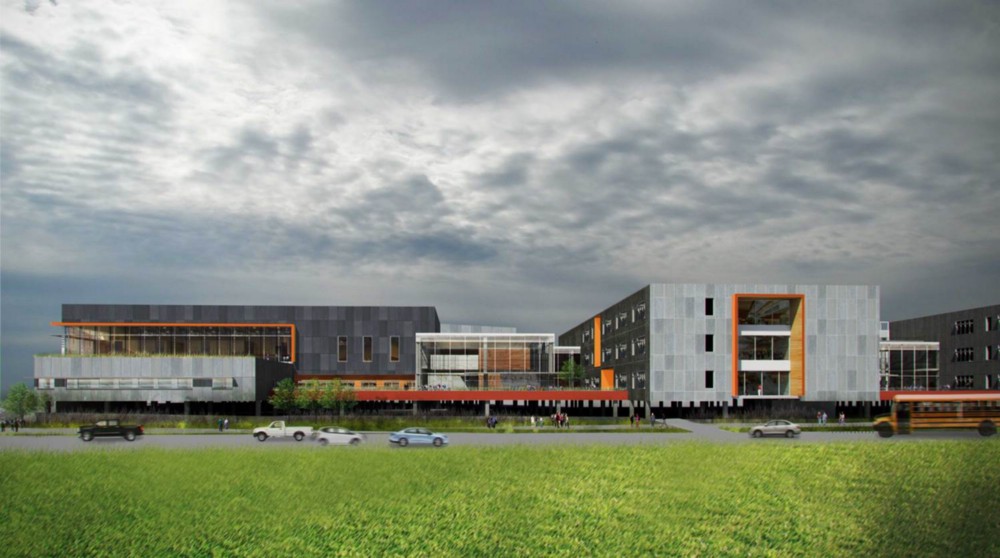
Mount Si High School (Rendering courtesy of NAC Architecture)

On his role at NAC Architecture
Since I was promoted as a Principal ten years ago, my focus has been on elevating the design quality. Now I have five key roles in the office. I work as Lead Designer on a diverse range of projects. I work as a Principal Designer where I mentor talented and capable project designers. I serve as design advisor to project teams with other project designers. I am a visiting critic at design charrettes in our other offices. And last but certainly not least, I select the projects to submit for design awards.

On recent projects that represent the firm’s unique approach
What is a unique approach? If we tried diligently to discover the right concept with these underpinning principles in mind, this could be considered a unique approach, as compared to the firms that do not go to that effort. In our case, a unique approach is in “walking the walk” of design inquiries with an open mind.

Personally, I approach every project as essential architecture by first considering the experiential qualities. I try to understand if there’s something universal about the place or what the place is calling for before I consider specifics of the project type.

So if you compare the six best elementary schools that NAC has designed in the last five years to the six best elementary schools of another firm, it would likely be hard to match the wide spectrum of our conceptual specificity. The project type is fairly narrow but it’s something that speaks to the process that has generated this outcome and our way of thinking.

Cherry Crest Elementary elevates an experiential quality and relationship between architecture and the heavily wooded landscape to a very high level. The Hazel Wolf E-STEM School is on a tight urban site in Seattle, Washington. Recently, it was awarded second place in the World Architecture News (WAN) Awards for the best future projects of the year in the educational category. If you compare it to the other five finalists, which are mostly higher education, you could see this is a very modest project in terms of its elaboration. It is the freshness of the conceptual specificity on that tight urban site that elevated the solution, making complete sense.

We are currently working on Mount Si High School. Because the site is in a flood zone, it’s a completely elevated campus, which allowed us the opportunity to design a unique indoor / outdoor experience.

Snohomish High School incorporates very sophisticated urban thinking towards the rejuvenation of an aged campus that ended up 50% modernized and 50% new. It was a difficult balance to achieve coherence and it was the conceptual urban design thinking that ultimately elevated the project.

The Kootenai and Ketchikan hospitals are trying to reconnect their users to their environment in very different ways, which is architecture and landscape interacting through different scales, scope and distances.

These six projects have very different outcomes and are different project types. There’s a certain way in thinking about architecture that has the underpinning guiding principle that results in these very specific concepts.

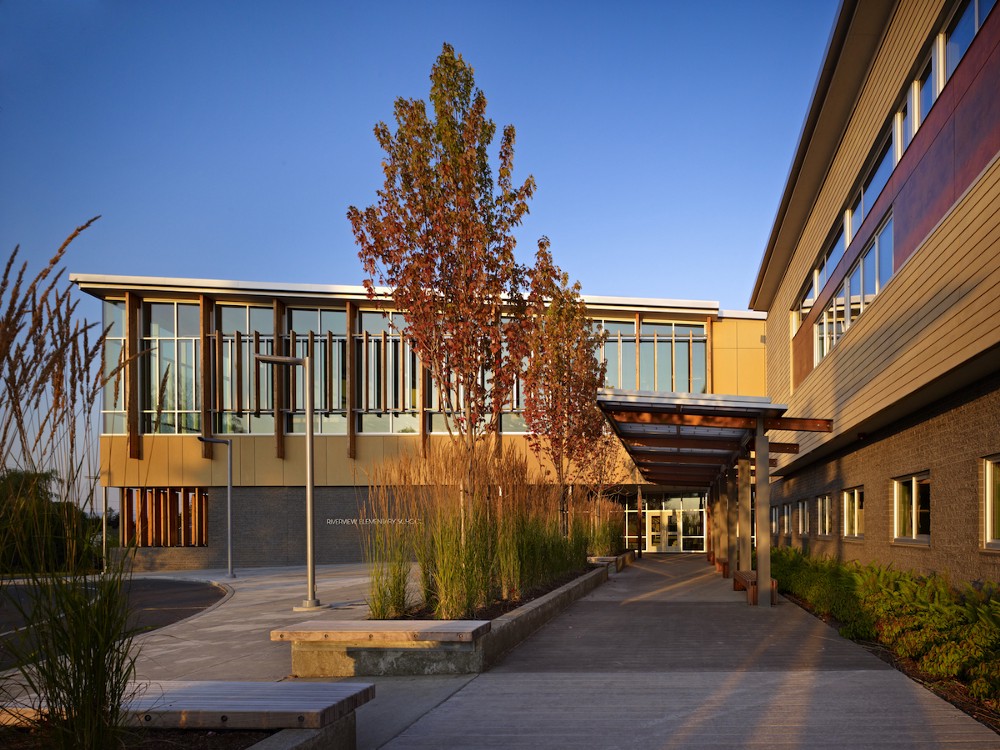
Riverview Elementary School (Photograph by Benjamin Benschneider courtesy of NAC Architecture)

On his design toolkit
One of the questions in this profession is how do we rejuvenate the process? We have been working on a rigorous ‘academic’ discovery process through multiple charrettes for 12 years in the Seattle office. We call it our genesis charrettes process, but it’s really the rigor of complete discovery pursuits. Some of the aspects of this process that are interesting are in the beginning when we are first discovering the project and the site. During this, you invite young architects who are outside of your project team, so they can participate in this process to infuse innovative ideas and try many possibilities.

Early on you want to be deliberate in exploring a multitude of options. The most radical option is a pursuit to open the thinking about the project. Nothing is off the table at the start. Sometimes the most radical options become the most logical solutions and everybody is excited about it because that’s what the project is calling for. This process is very challenging and requires everybody to elevate their design thinking. It has served us well. After every session, you feel excited because you’re still in a very conceptual phase with these five or six concepts that we will be studying for the next charrette.

We are not as strict about the tools we use because an important part of the process is the diagrams. For diagrams, we use a little bit of everything: hand sketching, markers or watercolors. The 3D printer comes into play in early testing and we have a wide variety of other tools to incorporate.

3D modeling is tied to the entire process in the office. In the early phase, I would consider it rapid 3D prototyping and testing of conceptual thinking. It works in-sync with the process when we’re trying to discover what’s needed. The second phase is representation and production, where we use 3D modeling heavily. Lastly, the efficiency and project knowledge with the 3D software and Revit becomes so powerful in terms of having more knowledge and information about the project. It’s the next level of overseeing efficiencies. In design tools, we use different software. On one project, interaction of textures is especially important so we’re using Grasshopper and Dynamo to elevate cladding textures and how they affect the rhythm and proportions of the physical resolution.

On the state of design software today
There are clearly great things about today’s design software and some that are still in progress, which is fine. These tools help us make more informed decisions early in the process with a bit more certainty, whether it’s conceptual in terms of forms, schematic design or space. It has worked reasonably well in that direction. Later in the process it helps us make more informed decisions as well.

One of the key questions is more philosophical. Does the software help us make better formal aesthetic outcomes or spatial experience? In other words, when can the software tell you there’s a good sense of spatial experience? It has more limitations in that regard. It’s our assessment that within five years the virtual reality will be completely mainstreamed and that will help clients who have a hard time visualizing the 3D space. It is in its early phase now but this will be a significant improvement. The state of software is appropriate, adequate and still a work in progress.

Wilson High School (Photograph by Benjamin Benschneider courtesy of NAC Architecture)

On disruption and innovation in the industry
What is the need for disruption? Right now, there is a need for thoughtfulness more than ever. There are other aspects of society where thoughtfulness may be needed more than ever, as well. With the right budget and right client you can build the Guggenheim museum and it’s not a barrier anymore. Technology has allowed for so many things. Now the question is what is the right thing to do?

More thoughtful evaluation and understanding of the building is needed. Even when projects get the best recognition, such as AIA national awards, there are some that stand out from the rest. I’m not sure if they are sufficiently understood and elevated as such. We need to re-discover essentials to engage the context in a more dynamic way for the long term experience. There’s a need to establish a dialogue with the surroundings in a more meaningful way. The most successful buildings in my opinion allow for a lasting, fulfilling engagement.

On how the industry will change in the next 5–10 years
In terms of high-level conceptual things, we’ll see the shortage of thinking time increase. That’s especially apparent during the boom of construction time at developer-driven projects. Many times there is pressure to shorten the schedules. We understand why that’s so, but the outcome is the decrease of thinking time. We are trying to figure out how to offset it in our process. It’s going to be harder for the profession to come up with projects that advance design thinking in a substantial way.

How can we keep creating projects with a large magnitude of influence in the profession? Design professions will be increasingly drawn into solving social and political issues that may not be only design issues to begin with. In the lack of the solutions from the political arena, there’s more pressure on architecture and design to come up with solutions. It’s increasing here in Seattle in schools and in society through societal issues, environmental concerns, or economic issues.

Fabrication options have been expanding in the last few years significantly with technology and that is going to curve up exponentially. Design-build will be more frequent as a mode of procurement. In the U.S. there’s this fear of nostalgia resulting with conservative architecture and hopefully this does not materialize.

On the future of NAC Architecture in the next 5–10 years
NAC will have to do some of the more pragmatic things to continue growing and evolving. Lately, we have been doing more design-build projects and many have been very successful. We will have to be involved in procurement more often. We’ll keep using technology, but we are looking for more deliberate ways in our firm to organize young folks who are wizards and see how they can deliberately and continuously maximize the use of software. The elevated part of technology is to advance the design process or creation. To that goal, we will have to continue to develop and reinvent our charrette process, which we have been doing for the last 12 years. It is now in a more mature phase, but we are always looking for ways to refresh it.
We’d like to establish purposeful design mentoring. There’s the realization that we need to mentor young folks differently than through the normal process. That’s going to be another diligent effort that I will personally lead so they can be ready for the role of lead designer as the opportunities arise.

On advice he would give his younger self
Have patience about success. Sometimes this is not apparent to young people. Even if it feels like you deserve some recognition and it doesn’t come, if you keep doing the right thing success will come. This is much easier to say now than it would have been to realize 25 years ago.

If you’re thinking of being an agent of change, be prepared that going upstream will take a lot of stamina. That goes for every profession I suppose. Everybody needs to keep evolving if they want to keep improving. For some of us that’s natural and something to look forward to but it is advice that I understand much more clearly now.

Creating something really good is often hard to do. When you’re young you may think that you can create something good and you can. But very few architects ever create the perfect project in any aspect. That is a blessing. You can generally be successful at trying to raise the bar at every next project and always strive for the better. It’s good aspirational and motivational awareness that if you want to create something really good, you need to work very hard at it and it’s not easy.

Design Manifestos: Jean-Sébastien of Lemay | Modelo Blog Series

Design Manifestos: Jean-Sébastien of Lemay

Jean-Sébastien (Photograph courtesy of Lemay)

Jean-Sébastien Bourdages is a design architect and entrepreneur with 15 years of international experience spanning architectural design across diverse fields such as retail, hospitality, commercial, planning and sustainability combined with business development strategies in emerging markets. He joined B+H Architects in 2006 and became a Principal in the firm in 2010. After 7 years based in Shanghai, he relocated in 2013 to Hong Kong as Design Director of Asia. In May of 2015, he relocated to Montreal, Canada and joined Lemay | LemayLAB as Design Director to pursue further opportunities. Modelo chatted with Jean-Sèbastien and learned about his current role and about what inspires him today.

On becoming an architect
To be an architect was a childhood dream of mine. I loved to draw and was always turned on by creativity. My father took me on construction sites when I was a kid. My parents also had hired an architect to renovate our family house in Cite-Jardins in Montreal, Canada. At the time it was an urban prototype based on the Gardens City Principles. In the early 80’s the concept of open plan and great daylighting for a house was still novel.

On discovering his voice as a designer
I am inquisitively curious in nature and journalism would have been my second choice of career. At University I discovered the open plans of Mies van Der Rohe as well as the organic outreach to the landscape of Frank Lloyd Wright. I approach projects from the user experience and with the notion that architecture can be an expressive, fulfilling adventure that also can be a business success.

I spent the last ten years living in Shanghai and Hong Kong, China as Design Principal at B+H Architects covering many projects in Asia aswell as in Dubai. It was a fruitful time in history and location for architects to be part in the fast development of these emerging economies and the opportunity to work on many type of exciting projects ranging from an airport in Inner Mongolia, to a Smart City in India, an Healthcare facility in Singapore, the World of Retail in Shanghai and Hong Kong.

After so many years abroad, I decided to move back to Montreal and I joined Lemay, a leading firm in Quebec with an appealing international growth strategy

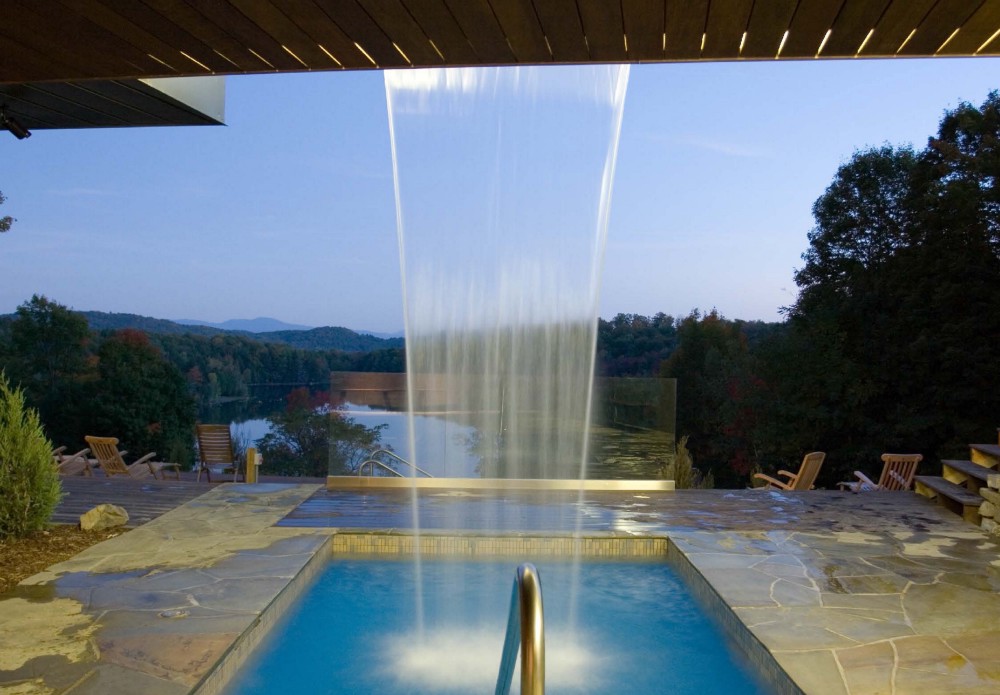
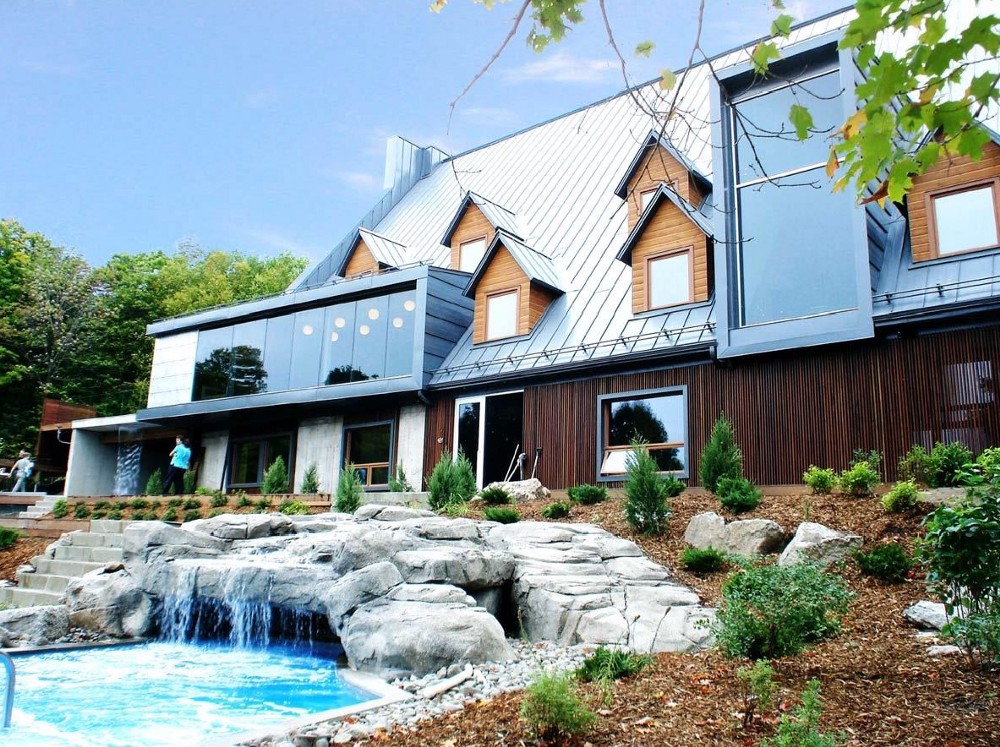
Balnea Spa (Photograph by Thomas Asselin courtesy of Lemay-Nomade)

On specific principles of the firm
Lemay recently acquired a few other firms in Montreal and New York. Collective Intelligence is one of the mottos here at the firm. The wide array of expertise and discipline coming together is really dynamic and inspiring for us and our clients when working together on a project. Therefore, we cherish creating sustainable environments that bring value to the client and the community.

On his role at the firm
As Design Director, I try to understand very well our clients a bit like a doctor with a patient, also envisioning the end-user experience in a holistic manner. I then lead design teams, coordinate with other disciplines and mostly try to motivate everybody on how we can raise our game to inspire a better environment through design and architecture. While the design process often requires confidence in decision making that can be as harmonious as adaptable for years to come. The outcome is truly a team effort.

On their unique approach to design
More and more Lemay is going towards a design-thinking approach. From my end, getting involved in foreign business development can allow us to bring in a network-thinking approach. Our world and ourselves become so interconnected that it can become a positive aspect in moving projects forward. Design led projects allow us to think outside the box, can inspire new business models and generate synergies through design experiences.

Balnea Spa (Photograph by Jean-Sébastien Bourdages courtesy of Lemay-Nomade)

On his design toolkit
Most importantly, we try to understand the goals, targets and even personality of our clients. Then we consider the context of the project. We try to gather as much initial data as we can and clarify challenges and constraints. All of this becomes the drivers in fleshing out the project. To do so, we brainstorm and have workshops but we also do a lot of sketching. We definitely end up studying the project through 3D modeling.

I came of age in the digital era, and in the late 90’s pioneered the use of 3D modeling and renderings while I was at university. It became a crucial tool to reach design understanding for our clients and to bring all other disciplines to the tables and to all believe in a vision.

On the state of design software today
Software is becoming more and more accepted and integrated in the design process. Ten years ago, purist architects would have said it’s for ‘pretty pictures,’ meanwhile competitions might have been won thanks to killer visualizations.

Today I think it’s simply a common tool. We master it enough also to willingly do ‘Low-Resolution’ renderings at times and cinematic visualizations at other times. The construction and technical teams are also more into BIM and both ends are getting curious about the opportunities of Virtual Reality which may be a new tool. Some clients also can now appreciate more the abstract nature of the visualization process. I also like Real-Time environment where we can test our design into a real-world sand box.

Urban Lodges, Old Montreal (Rendering courtesy of Lemay)

On the future of architecture in the next 5–10 years
We need to change our process of design to construction in order to be more integrated, similarly of what the aeronautical and the car industries have done. Citizens, cities, employees, students, everybody should also request more quality of their built environment.

We should also acknowledge humans love beauty. One colleague in our marketing department was surprised architects never talk about beauty. I supposed it’s too subjective. But actually she had a point. Hence my interest in the concept of biophilia: no one will say nature is ugly. As we live in denser cities, we should bring in nature more than we bring car access. Landscape in recent cities was often a residual space.

In Quebec, the City of Saint-Laurent recently pushed for a law about architecture quality standards witch hopefully will go ahead and get national echoes.

Also architecture needs to get back into the realm of being an essential driver for the economy, sustainable and social changes by generating inspiring, and welcoming public realms and ergonomic adaptable yet beautiful environment

Since cities have been getting denser and renewed. We all dream of health, nature and quietness. We need to consider themes of biophilia and integrate more nature into our built environment. We used to consider unbuilt areas as residual spaces and we need to change that and get a more seamless integration between our habitats and nature. We need to protect our environment, whether it’s built or natural, and this should be considered a responsibility. Great architecture should make good business sense.

As resources become more scarce and land is valued higher, I hope the initial investment in architects will be understood as simply a better use of value and actually minimal investment in the whole lifecycle cost of a project. It’s better to take the time to plan a project accordingly on paper and get it right in 3D first.

We might see much more mixed-use projects and the sharing economy with self-driving cars might free our environment while keeping it more active and richer hoping for the end of the Sprawl.

Sandhill Plaza (Photograph by Jean-Sébastien Bourdages)

On the future of Lemay in the next 5–10 years
Social and technological changes are faster and faster. We seek to design environments and buildings, actually not for today but for the future generation, therefore we need to be adaptable when planning a project today that might be completed in three years to last a few decades!

We have developed the LemayLab, which is an exploratory unit that works on special projects involving R&D and branding architectural positioning to help with this.

On advice he would give his younger self
Architecture is not a race but a marathon…actually it’s more like a decathlon with numerous topics to master. Maintain the passionate fire, stay curious and good spirited!

To contact Jean-Sèbastien email him at jsbourdages@lemay.com

Design Manifestos: Amber Richane of CallisonRTKL | Modelo Blog Series

Design Manifestos: Amber Richane of CallisonRTKL

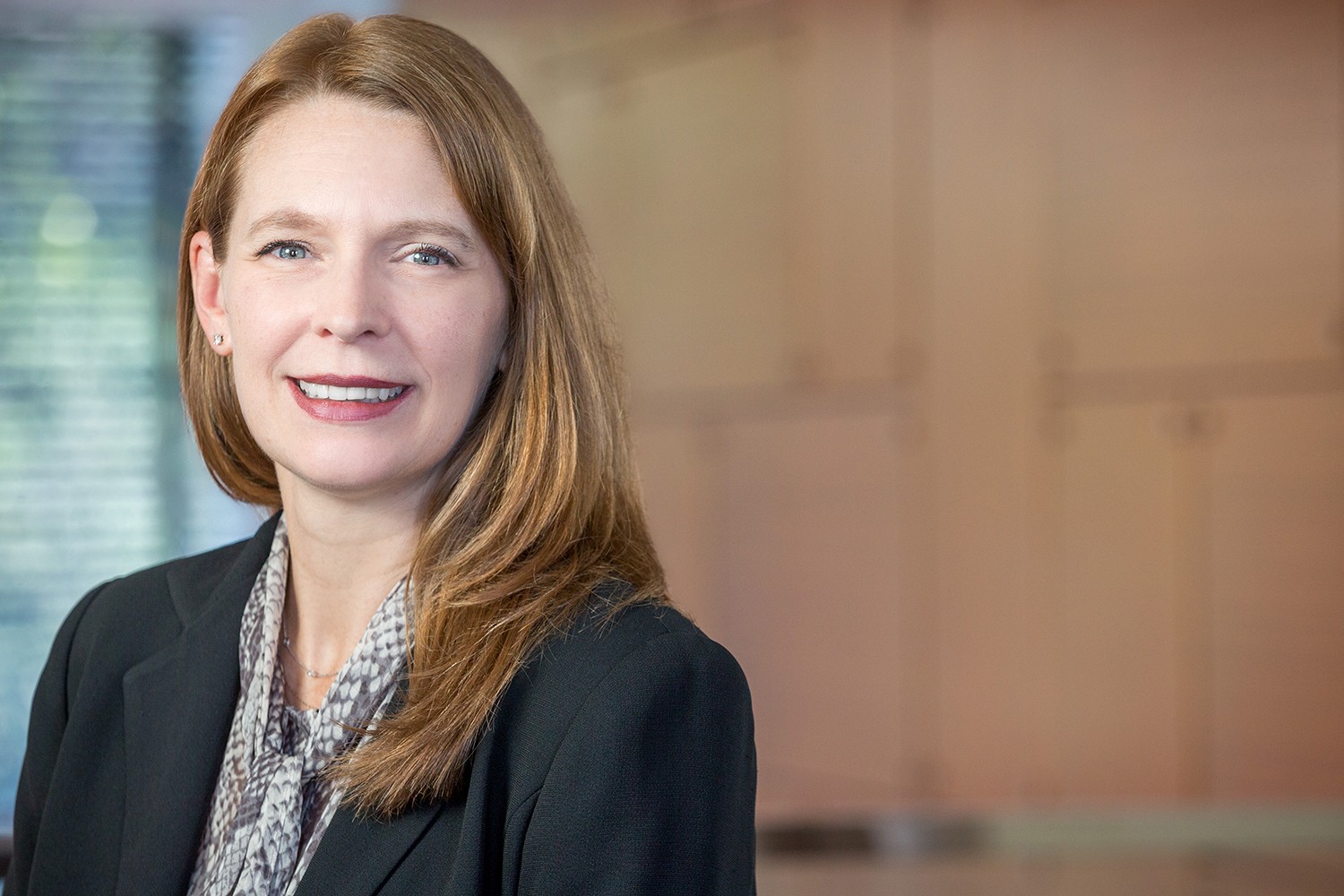
Amber Richane (Photograph courtesy of CallisonRTKL)

With more than 16 years of experience in architecture, planning, interiors and historic preservation for public and private entities, Amber Richane leads CallisonRTKL’s Performance-Driven Design initiatives at the Los Angeles, California office. She excels at assessing different development schemes for mixed-use projects by seeking functional design solutions and research-based design alternatives. A sustainable strategies leader in her market, her skills in examining urban densities, analyzing data and determining efficiencies make her a valuable asset to any design team approaching large or small scale-projects. Modelo spent some time learning about Amber’s path through architecture and design, and about how her sustainable approach has evolved over time.

On becoming an interior designer
I kind of fell into architecture and design. Growing up, I had very cool parents who encouraged me to explore all of my interests as long as I kept my grades up in school. During my junior year of high school, I took an interior decorating class, and that course made me want to major in interior design when I went to college. My dad wasn’t thrilled with my choice, so we compromised on architecture. I applied to the Environmental Design program at Syracuse University, which is a multi-disciplined program that encompasses architecture, interiors and landscape architecture. I was hooked immediately.

Their methodology is to design buildings from the outside-in and from the inside-out — a very holistic philosophy that jived perfectly with my green upbringing. I love the intersection of nature, design and program. What really sealed the deal for me, though, was visiting Fallingwater, the Pennsylvania residence designed by Frank Lloyd Wright. I just felt it in my bones, as if I had returned home. The magic of how that building and its interiors blend so seamlessly with the environment still stays with me today.

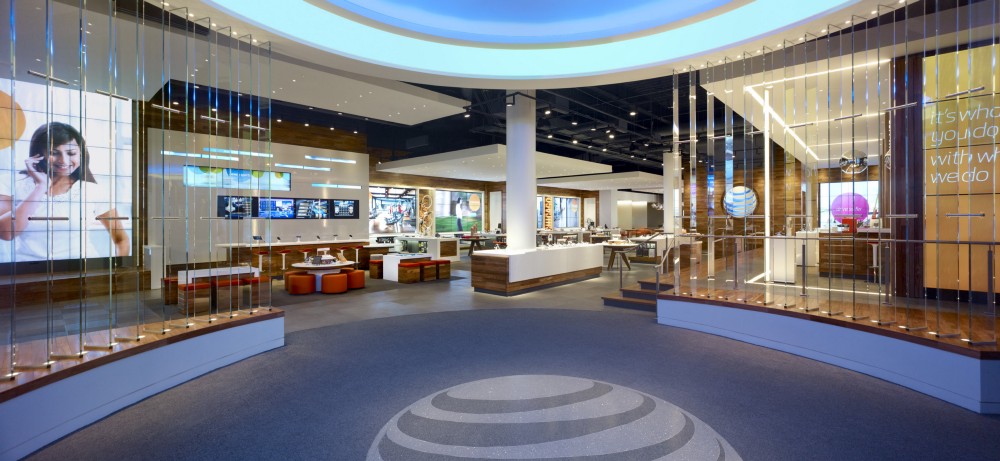
AT&T Michigan Avenue, Chicago, Illinois (Photograph courtesy of CallisonRTKL)

On discovering her voice as a designer
I think I am still trying to find my full voice as a designer. It’s an on-going and iterative process. My path has taken me in many different directions like office space planning, historic preservation, interior design, strategic planning, urban design and sustainable design. I have been lucky to have some really great bosses and mentors who have guided me in my career. Most notably, I have had some incredibly strong female mentors who have taken me under their wing and helped navigate a mostly male profession.

On joining CallisonRTKL
I joined Callison almost 10 years ago before the company became CallisonRTKL. It was the firm that my then-boss recommended to me, and he couldn’t have given me a better gift. CallisonRTKL has been a great fit. It has allowed me to expand my design aesthetic, dig deep into sustainable design practice and push my colleagues towards a more sustainable future. I feel that my work has gone from largely theory-based to more substantial, data-backed solutions during my time at CallisonRTKL.

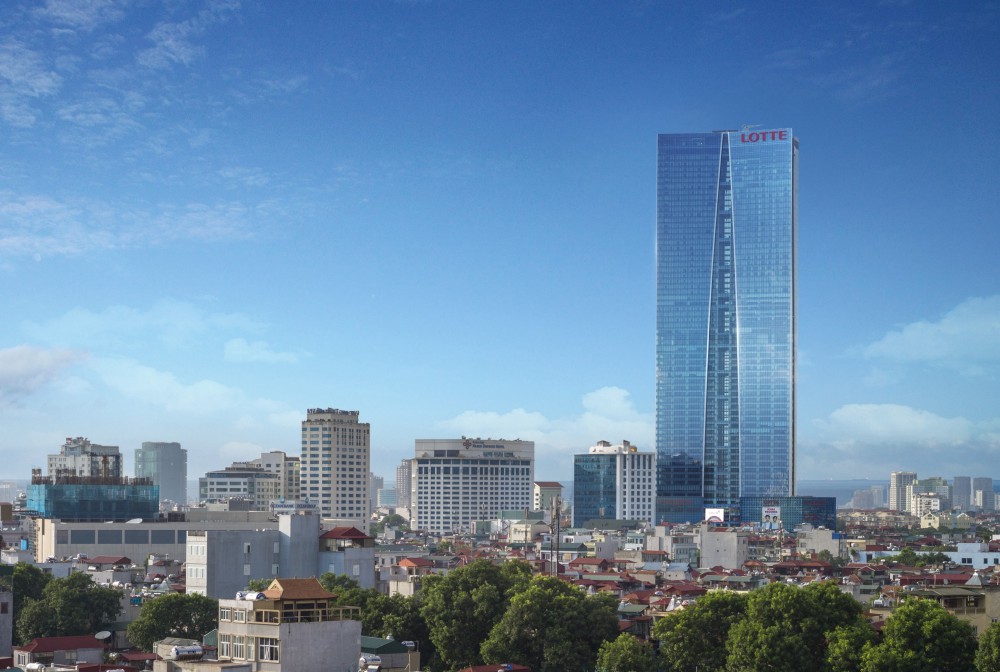
Lotte Center Hanoi, Hanoi, Vietnam (Photograph courtesy of CallisonRTKL)

On specific principles she strives to adhere to
My work is wholly focused on sustainability. I don’t specialize in a specific type of project, but I instead strive to bring sustainability to all project teams. My primary focus is setting goals to solve problems for clients using performance-based solutions. This method helps CallisonRTKL provide smarter and more sustainable solutions that save energy and water, reduce waste and provide better environmental quality.

On her role at CallisonRTKL
As the Performance-Driven Design℠ (PDD) Lead at CallisonRTKL, I direct a team of sustainability experts that works with our project teams to define sustainability goals including energy reduction targets. Another part of that job is education. When working with project teams, we also educate them about sustainability so more of their work will follow sustainable principles. I sometimes joke that my job is to make sure I don’t have a job in the future.

Lotte Center Hanoi, Hanoi, Vietnam (Photograph courtesy of CallisonRTKL)

On recent projects that represent the firm’s unique approach
Our approach is really about bringing value to our clients through sustainable practices. What that means in a general sense is that, while it’s great to save energy and water, it’s even better to do that while also designing a building that will sell for a higher price, command stronger rents and lease more quickly than its competitors.

Our work with AT&T is a great example of our approach. This is one of only a small handful of LEED Platinum retail projects out there. We used a completely integrated design process and ran everything through a cost/benefit analysis before deciding on a direction. This informed every decision we made and allowed us to target the most effective credits for the money and achieve the highest LEED certification target.

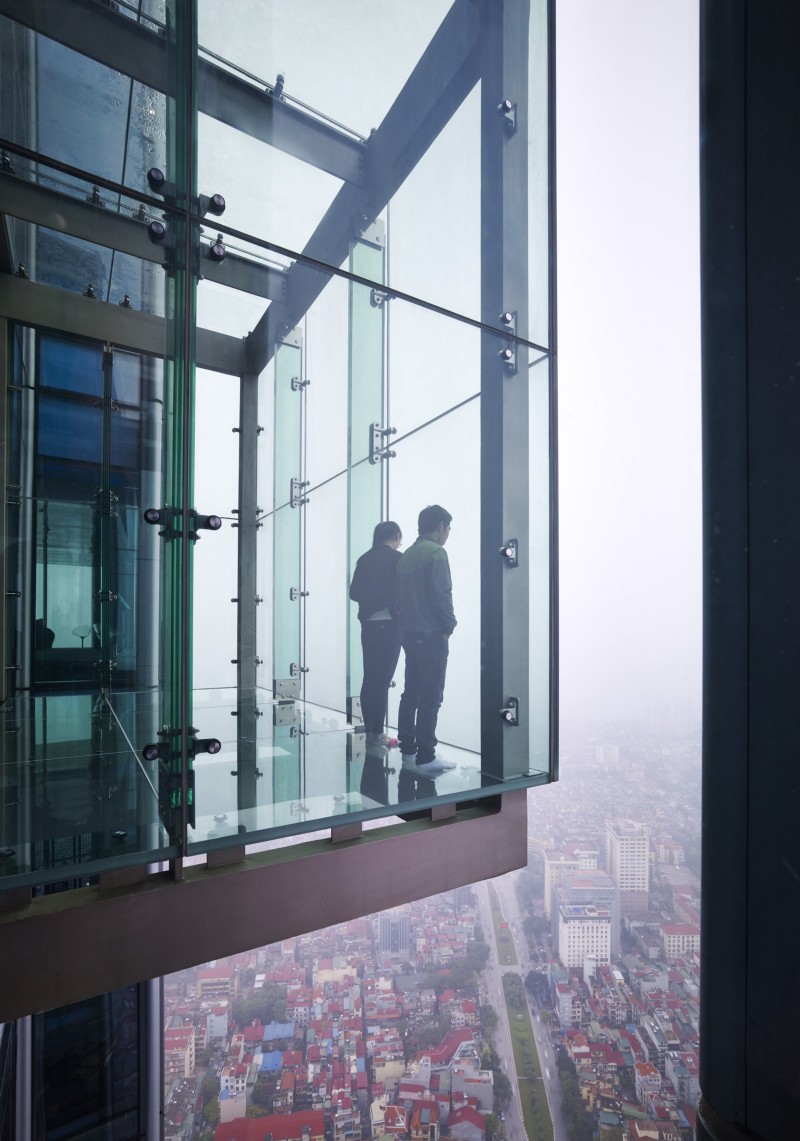
Lotte Center Hanoi is another example of how CallisonRTKL designs for the local culture and climate. This project’s sleek and tapered design is in reference to the traditional “ao dai” garment — a design unique to Vietnam. The tower is oriented along a southwest/northeast axis, minimizing the building’s solar heat gain and maximizing exposure to the area’s prevailing wind direction, providing the best conditions for natural ventilation. Six-story sky garden atria are an integral part of the tower’s cross ventilation strategy. Rainwater harvesting, greywater systems and water-efficient appliances reduce potable water needs and are critical components of the tower’s performance. The building’s sewage is also treated on-site in membrane bioreactors.

In additional I think our strong legacy of sustainable projects really speaks for itself. Our firm designed Mirdif City Centre, the first LEED Gold retail mall in the Middle East, the National Geospatial-Intelligence Headquarters, which is the largest LEED Gold federal building, and we were the first to receive LEED Gold certification for a private development in Seattle for 2201 Westlake. Not to mention the San Antonio Military Medical Complex, which won the 2015 AIA COTE award.

San Antonio Military Medical Complex, San Antonio, Texas (Photograph courtesy of CallisonRTKL)

On her design toolkit
We have a number of external and internal tools that we use for assessment. We have developed the DART and Matrix to help assess and explain sustainable strategies as external resources. For our project work, we use climate analysis to discern what passive strategies are appropriate. We look to optimize our waste streams as part of the operations of the building typology to further reduce our impact and create value for the client. We then work with a variety of software like IES, DIVA, Radiance and Sefaira to ensure our projects utilize passive strategies, make the architectural elements perform better, and design smarter outcomes.

On the state of design software today
The speed at which design software development is moving is impressive. New applications and software are being invented every day, and many of these allow us to work more intelligently and seamlessly while also helping us to more accurately analyze climatic conditions. I think the single biggest inhibitor to using them on all projects, though, is computing power and the time it takes to test multiple options.

Mirdif City Centre, Dubai, U.A.E. (Photograph courtesy of CallisonRTKL)

On the future of design in the next 5–10 years
We’ll see the first driverless cars and see computer speeds unlike anything we can even comprehend right now. Designers will be more collaborative and will figure out how to use crowd-sourcing to solve design projects with hyper-local solutions. I believe that carbon neutral buildings and spaces will become commonplace and that we will be able to start reversing the effects of climate change.

On the future of the firm in the next 5–10 years
These are actually questions that we constantly keep in mind. Where will our business take us in five to ten years? What do we need to be thinking about now to facilitate how we want to shape that future? We continuously assess the tools that we need, new markets we can break into and what type of work will keep us relevant on a global scale.

On advice she would give her younger self
If I could give my younger self some sage advice it would be: if you see an opportunity, take it. Push yourself to do things you aren’t comfortable with and always keep learning.

Design Manifestos: Eugenio Carelli of Provencher_Roy Associés Architectes | Modelo Blog Series

Design Manifestos: Eugenio Carelli of Provencher_Roy Associés Architectes

Eugenio Carelli (Photograph by Marc Montplaisircourtesy of Provencher Roy)

Eugenio Carelli is an Architect and Partner at Provencher_Roy + Associés Architectes in Montréal, Canada. He joined the firm in 1993 and became an associate in 2010. Throughout his career, he has collaborated on numerous, often large-scale projects as a designer and member of the building team. His ability to intervene at every step of the design process, whatever the scale of a project, has made him an invaluable team member whose imprint can be seen in Montréal’s urban landscape. Modelo spent some time learning about Eugenio’s journey through the profession and about the collaborative spirit at the firm that influences his work.

On becoming an architect
As child I was always building things with my hands. I was building cities in the sandbox, playing with Lego blocks and later played with a Meccano set. In high school, I was drawn to the logic of mathematics and geometry, but was also interested in literature. I had the chance to visit Italy and New York City a few times when I was young. I marveled at old stone buildings and towering modern skyscrapers. Those trips with my family left a lasting impression. I knew I wanted to be an architect since I was a teenager, but I had a naïve idea of what the profession was about when I applied to McGill University’s School of Architecture. I was drawn to the creative, noble and heroic aspects of architecture. I wanted to make a difference and create something of lasting value.

On discovering his voice as a designer
Discovering my architectural voice or values began while I was at McGill University. We had some great teachers and a great studio atmosphere with students from all over the world. It was where we spent most of our time working on projects, drawings and models (before computers) late into the night. My voice also came from reading a lot books and essays by architects such as Louis Kahn, Frank Lloyd Wright and Alvar Alto. We had a great History of Architecture professor named Peter Collins who was an expert in French architecture. He instilled a sense of history and meaning in us, as well as insisted on rationality and honesty in architecture. He taught us a way to see and understand architecture. Along with a group of fellow architecture students, we traveled to Europe one semester to visit some of the buildings we had studied in our history course and more contemporary works by Le Corbusier. Later influences include works by Renzo Piano and Toyo Ito.

Montreal Casino (Photograph by Stéphane Groleau courtesy of Provencher_Roy)

On the evolution of his role
I joined the firm in the early 1990s. I had been working on my own for about five years doing mostly residential work. I shared a loft space with some architect friends, graphic designers and artists. It was a lot of fun but became financially difficult when Montreal fell into a deep recession. I had heard that Provencher Roy was looking for people to work on the first phase of the Montreal Casino which was to be located in the old French pavilion of Expo 67. My wife and some friends were already part of the team, so I decided to apply to the firm. On my first day at Provencher Roy, a senior architect warned me that once I start working for the firm I might never want to leave. I took it with a grain of salt at the time, but he was right. I left for a brief period at the end of that project, but returned and I am now an Associate of the firm. I was quickly impressed by the collaborative and inclusive design approach at Provencher Roy. There was a great team spirit. Everybody had a chance to express their point of view and good ideas. No matter who proposed the idea, they had a chance to see the day if it had merit.
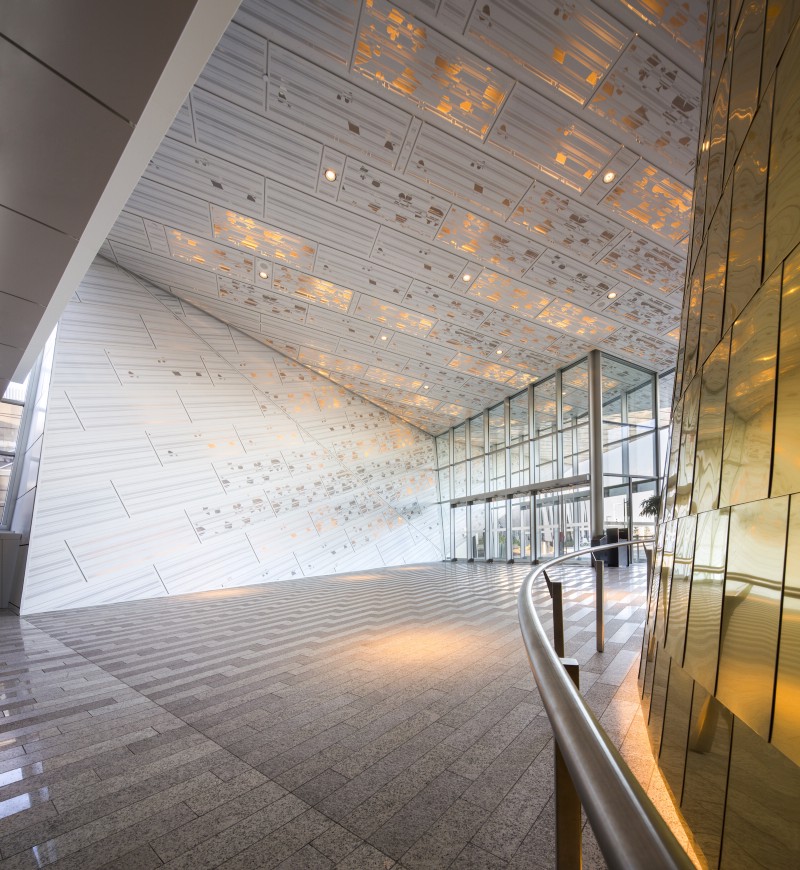
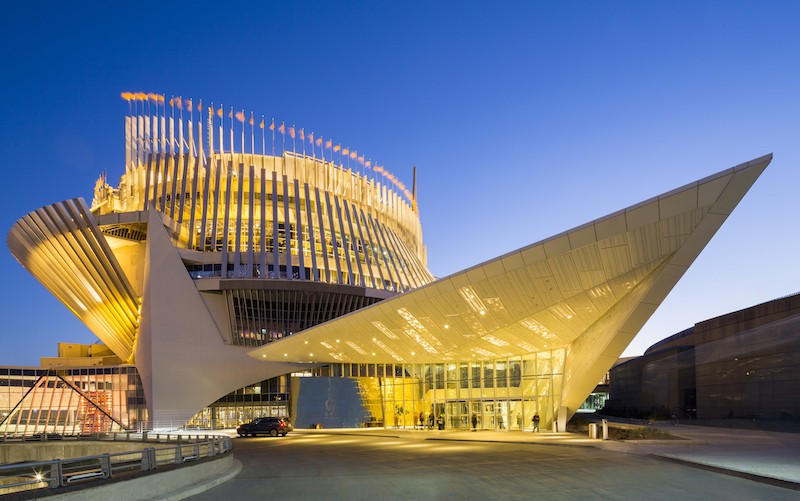
This collaborative spirit has greatly influenced my work. I discovered the importance of taking the time to step back and discuss design intentions with colleagues. The value of working with models from conceptual design through to design development stages was revealed to me through working at Provencher Roy. Other lessons learned during my years at the firm include the importance of simply listening and being attentive to client needs and aspirations. I’ve also learned the importance of the priority of getting basic spatial, programmatic and volumetric relationships right on a project.

The firm strongly encourages architectural designers to invest time and effort into developing innovative ideas through exploratory drawings and models. This attitude allows Provencher Roy’s work to remain relevant design-wise and responsive to clients’ objectives.

Montreal Casino (Photograph by Marc Cramer courtesy of Provencher_Roy)

On principles he strives to adhere to
Our projects try to respond to and reveal what is unique about the site such as its orientation, topography and historical context; the building program (public vs service spaces); and the clients’ needs and aspirations. Provencher Roy buildings are very much concerned with ensuring that spaces receive an abundance of natural light and strive to create spaces that are good to be in. Our buildings try to provide a permeable ground floor, allowing an easy access to all from street level as well as contributing positively to the urban surroundings or natural landscape. This engages occupants and passersby as well as reveals the building’s interior workings. Provencher Roy values the clarity and fluidity of circulation paths and spaces in its buildings. Lastly, we search for innovative materiality, proportions and tectonic assemblies that are evocative and appropriate for the project.

Ritz Carlton (Photograph by Stéphane Groleau courtesy of Provencher_Roy)

On his role at Provencher_Roy 
I have worked on developing projects from conceptual design to design development, which involved understanding project programs, collecting information on the site and context, elaborating volumetric studies, space planning and elevation studies. This was mostly done through sketches, scaled drawings and physical models. This work usually involved collaboration with a team of one or two people and the participation of Claude Provencher, who is one of the founding partners of the firm. More recently, my work involves managing projects and project teams, which includes overseeing conceptual / design development teams, managing the transition of preliminary designs to construction working drawings, coordination work with engineers, consultants and clients as well assisting the site supervision team with coordination and design issues.

I also participate in bi-weekly design reviews of current projects at the office with Claude Provencher, other senior designers and members of the project teams. I participate in interviews of student architects for summer apprenticeships at our office. I try to keep an eye out for new competitions, potential projects as well as interesting articles and documentaries on architecture to share with employees.

Ritz Carlton (Photograph by Stéphane Groleau courtesy of Provencher_Roy)

On recent projects the represent the firm’s unique approach
Our unique approach stems from Claude Provencher’s and Michel Roy’s initial vision to consistently produce quality contemporary works of architecture and design. They insist on creating architecture that is resolutely modern, responsive to site, historical context and programmatic constraints as well as opportunities. We believe in architecture that speaks of its time and place yet reaches for the timeless, such as our Ritz Carlton and Montreal Museum of Fine Arts projects. We strive to create architecture that engages its occupants to new experiences through dynamic spaces and forms, but also to a sense of well-being for work, living and leisure. This can be seen in the Modernization of the Montreal Casino with the new entrance, offices and interiors. We strive for an architecture that contributes to the public domain of urban landscapes, such as the Ilot Balmoral project.

Claire and Marc Bourgie Pavilion, Montreal Museum of Fine Arts (Photograph by Marc Cramer courtesy of Provencher_Roy)

On his design toolkit
Projects usually start off with a small team of just one or two people along with Claude Provencher. We meet with the client to discuss the intentions and program requirements, budgets and schedule. We then usually study the project site, historical context, zoning requirements, taking stock of possible constraints but also of opportunities to create something unique. We start sketching in plan, section, volumes, looking to define the right relationships be they programmatic, formal, contextual, spatial or volumetric. We usually create quick rough physical models made out of cardboard or foam to test ideas. Once we obtain a clearer idea of how spaces and volumes could work for a given project, we proceed to more detailed drawings in plan and section that enable us to produce more detailed study models. We go back and forth. Models help us to push our drawings further and then the drawings help us test ideas in more detailed models.

Recently, our office has invested in a laser cutter and a 3D printer to help us produce more accurate models. These new tools have influenced our design process and output and helped create a new generation of young architectural designers at our firm. Periodic informal team meetings are usually conducted around the study of models and drawings in progress. Depending on the project size and schedule, this process may go through many iterations and building up to a formal presentation to our client. At some point the small design team expands to include a 3D modeler to test certain spatial and volumetric ideas incorporating context buildings and site. As the project evolves, the 3D models serve to test the architectural treatment of facades and interiors, simulation of natural lighting within the proposed building.

If the project schedule is too tight, we will forgo building physical models and go straight to 3D modeling to test design ideas. Software such as SketchUp, Rhino or Grasshopper allow us to do visualizations and test potential architecture intentions fairly quickly.

Claire and Marc Bourgie Pavilion, Montreal Museum of Fine Arts (Photograph by Marc Cramer courtesy of Provencher_Roy)

On the state of design software today
Design software is becoming more and more sophisticated, giving architects unprecedented ways to develop a project. They allow the possibility to do numerous design iterations fairly rapidly and provide unique ways to present projects to clients. Photorealistic images and animations allow clients to better visualize the finished project as though it was already built. But, I have some reservations as to the possible takeover of the design process by fast working 3D modelers who are able to produce realistic and seductive images. Design teams can quickly be handcuffed by the images produced and spend a lot of energy trying to make the building look like the images instead of exploring the constraints and opportunities which eventually determine what the building will be.

On the future of architecture in the next 5–10 years
Architecture has gone through profound transformations in the last decades from the digital revolution to the emergence of green design principles to the way buildings are delivered. The disruption and innovation is continual and we are living it every day. It seems that anything is possible today in architecture. If you can imagine it, it can be built. But we have to keep in mind that this is the privilege of a small fraction of the world’s population. I believe that we need innovation to ensure that there is good architecture. This means well thought out buildings and spaces that are good to be in, inspire the common good and can be accessible to all people.

There is a growing tendency of architectural firms going towards providing a one-stop-shop. Practices are evolving to offer a variety of complementary design services such as urban design, interior design, industrial design, graphics and communications. Some firms also offer in-house engineering services. The next step would be to provide construction services as well, enabling a firm to deliver a project from conceptual design to the built work. Yet, I think that there will always be room for the small design-oriented firms that are often best placed to create unique and innovative projects. The real challenge to larger firms is how to ‘compete’ with smaller firms with respect to thinking outside of the box and to remain relevant in terms of producing innovative designs.

Balmoral Model (Photograph courtesy of Provencher_Roy)

On the future of the firm in the next 5–10 years
Provencher Roy has and is evolving very much in line with these industry changes. When I started working here over 20 years ago, we were a 35 person office doing drawings by hand, starting to use AutoCAD and doing some hand built models. We would still hire outside artists to do hand drawn perspectives. Provencher Roy is now a 200+ person firm, offering an array of design services including urban design, interior design, industrial design, graphics and communications. The firm strives to remain at the leading edge of industry and technological changes. Yet through its collaborative and inclusive design approach, Provencher Roy manages to maintain the agility and energy of a small design-oriented office.

On advice he would give his younger self
The advice I would give myself is to relax more. A single day, deadline or presentation does not determine the rest of your life or career. Things are rarely as critical as you imagine them to be. The important thing is the day-to-day rapport with your colleagues, in playing off each other’s knowledge and experience in the attempt to create something new and meaningful. It is important to take the time to step back from your work once in a while, do other things and to return to your work with new perspective.

Design Manifestos: Michael Great of Ankrom Moisan Architects | Modelo Blog Series

Design Manifestos: Michael Great of Ankrom Moisan Architects

Michael Great (Photograph courtesy of Ankrom Moisan Architects)

Michael Great, AIA is a Managing Principal at Ankrom Moisan Architectsat the Portland, Oregon location. A graduate of the University of Oregon with a Bachelor of Architecture, he has been in the industry for more than 14 years. His project experience includes multi family housing, senior housing, healthcare, workplace, and hospitality.

Michael currently manages a team of 22 with a focus on early design concepting and innovative design thinking. He is a board member of the Architecture Foundation of Oregon, and an AIA Oregon Portland delegate. Modelo spent some time speaking with Michael and learning about his journey through the profession and about how the firm is reinventing their design process.

On becoming an architect
As a kid, I was always drawing things, but never buildings. When I was a junior in high school, I took a drafting class without any previous knowledge of architecture. I was amazed when I discovered that it was possible to make drawing a career, so I talked to my teacher about pursuing architecture and the possible avenues I could take.

On discovering his voice as a designer
Like many designers, it took time for me to develop my design voice. This involved going through trial and error while also learning what is actually important in architecture.

As a firm, we are working on refining our design voice and how the design process can create better buildings. And as the Lead Designer on projects, my role is to understand each team member’s and client’s point-of-view and navigate all decisions and questions. I try to work with everyone to find the best design direction.

Daimler Trucks North America headquarters (Photograph by Casey Braunger courtesy of Ankrom Moisan Architects)

On joining Ankrom Moisan Architects
While studying architecture at the University of Oregon, I decided to pursue an internship. Another firm in town actually referred me to Ankrom Moisan, a company I had never heard of before. After interviewing at AMA, I realized that it would be a great place for me to grow as a designer and an architect. The knowledge and experience of technical, architectural, and interiors staff provided a wonderful resource and learning opportunity. I felt like I could bring a fresh attitude about design, so I embraced that mindset and worked a few summers as an intern before eventually being hired full-time.

After graduation, I set out to mold the way the office approached design in order to energize the firm. For example, I was really excited about 3D modeling, a tool that wasn’t widely used in architecture at the time. The ability to leverage this technology opened a lot of doors — we could show clients four or five ideas in the same amount of time it previously took to show two.

Daimler Trucks North America headquarters (Photograph by Casey Braunger courtesy of Ankrom Moisan Architects)

On principles he strives to adhere to
At AMA, we are reinventing our design process. I know that this will sound counterproductive, but bear with me. We avoid actively designing the building, and instead focus first on the issue and then build a solution around it. This philosophy consists of a unique approach: designing from the Inside-Out and the Outside-In.

This philosophy is a method to understand the full range of informants that will shape design. The team explores ideas from the macro to the micro, from the far-reaches of the site to interior experiences, allowing our design team to make smart design decisions based on relevant information. We progress the design by understanding the nuances of the user, program, client expectations, as well as the neighborhood’s character, the property’s potential, and the “phenomenon,” or uniqueness of the site. The data we uncover becomes the driver of design.

We’re still developing the process, but clients are starting to appreciate it and people at all levels in the firm enjoy working with that philosophy. We feel that this is a win-win process for the firm and the client. There has been some trial and error as we discover the best methods, but we have had some success and received positive feedback about the process.

Daimler Trucks North America headquarters (Photograph by Casey Braunger courtesy of Ankrom Moisan Architects)

On recent projects that represent this unique approach
One recent project where we were able to utilize the Inside-Out/Outside-In process was the new Daimler Trucks North America headquarters in Portland.

This was a great way for us to jump into a high-design project and understand what the building’s occupants needed to be not only more productive, but happier. We began by interviewing the employees to understand exactly what they needed, and then designed the building around those needs, starting from the workspaces themselves and then radiating out.

We also designed a residential tower in the South Lake Union neighborhood of Seattle using this approach, although it has not been built yet. This project was again all about digging in, analyzing, and understanding what the potential residents might want. How would they live in these spaces? And how could we connect Seattle to those apartment spaces? It was all about air and light. Light is so crucial up here in the rainy Northwest and we’re always looking for ways to engage it in as many spaces as possible. The client was really excited about that direction and construction will hopefully begin soon.

Daimler Trucks North America headquarters (Photograph by Casey Braunger courtesy of Ankrom Moisan Architects)

On his role as Managing Principal at the firm
There are three Architectural Design Principals at AMA. Besides Portland, we have an established office in Seattle and just opened a new San Francisco office in June. Each of us have slightly different roles, but what I strive to do every day is energize the design teams on their various projects. Sometimes I walk into a room and mess things up a little bit. That’s the part that I enjoy- trying to be a catalyst for ideas. I don’t want them to be my ideas — I want to get the teams excited about theirs. Being able to see that spark in a design team meeting is really the reward.

Shepherding the teams through the whole design process is another significant part of my role. Once those ideas are cemented, we have to follow through. How do we navigate the clients’ expectations and other influencers and still end up with a product that aligns with that initial concept? I try to guide the people and the project through to the final product. Many times, that’s my primary role, which is a little different than what I originally expected architecture to be. I think everybody envisions architects just drawing cool stuff all day, but it truly is a multifaceted profession.

On his design toolkit
We draw a lot of diagrams, which are important tools in the Inside-Out/Outside-In process in order to get decisions from the client and design team. We frequently use 3D diagrams that include a lot of information with as few lines or moves as possible to demonstrate the essence of the project and encourage a discussion with the client. We then build on that diagram as the project progresses. The diagram will inevitably evolve from 3D and we may even go back to 2D, depending on how the designs are being received.

The next step is to develop the diagram into a full 3D model, although we may overlay it with some sketches. The level of technology we use depends on the client, the team, and the time. Recently we have been using 3D visualization, virtual reality, and a few other similar medium types, which is unique and very exciting.

Daimler Trucks North America headquarters (Photograph by Casey Braunger courtesy of Ankrom Moisan Architects)

On the state of design software today
Architects have always struggled with software. When I was in college, 3D software was definitely the big thing. I was interested and jumped into learning it. But when I graduated, people were still using AutoCAD and 2D software. There’s always been this conflict with different systems. It seemed as though we were using multiple programs to get the same results.

The new VR technology is exciting, but also adds another layer of complexity and options. We primarily use SketchUp in the early design process and then we transition to Revit. The goal is to streamline the process without sacrificing the design, which can be challenging.

Daimler Trucks North America headquarters (Photograph by Casey Braunger courtesy of Ankrom Moisan Architects)

On the future of architecture in the next 5–10 years
In the next five to ten years, we will see advanced technology that provides more flexibility in design. I think it will be equally thrilling and scary as architects are able to leverage this technology to build projects that keep up with the changing industry budgets and timelines.

On the future of Ankrom Moisan Architects in the next 5–10 years
AMA is gearing up for a lot of those changes as we dive head-first into the BIM software and Revit. We want to learn as much about those programs as possible in order to save time and money. The firm will also focus on modular construction. In particular, Cross-Laminated Timber Technology is emerging regionally, so we may be using a lot more of that in the near future.

My ultimate goal is for us to efficiently utilize our tools and organize our teams so that we have more time for design.

On advice he would give his younger self
Have patience. Like many of the younger staff here, I also wanted to learn everything at once, but it takes time to truly absorb all of the components of architecture. If you take time to thoroughly learn each of these components, you will be a better designer.

Design Manifestos: Chuck Armstrong of Corgan | Modelo Blog Series

Design Manifestos: Chuck Armstrong of Corgan

Chuck Armstrong (Photograph courtesy of Corgan)

Chuck Armstrong serves as Design Director for Corgan in the Dallas, Texas office. With over three decades of architectural experience, he has developed an impressive portfolio of healthcare, corporate, retail and institutional projects worldwide. As one of the firm’s most talented designers, Chuck has led design teams on a variety of complex projects and garnered more than forty awards throughout his career. He was elevated to Fellow in the American Institute of Architects in 2015. Modelo spent some time learning about what inspires Chuck’s innovative designs that are aimed at enhancing human experience and well-being.

On becoming an architect
I was aware of architecture and wanted to be an architect since I was about nine years old. I have very early memories of drawing the Dallas skyline compulsively in those days. I started making “cities” with wooden blocks, then graduated to the first version of LEGOS when it was a new product and ultimately was given a construction toy called “Super City” which was hi-tech and modern in 1968. It’s difficult to even remember a time that I didn’t visualize myself as an architect.

Toyota North American Headquarters (Rendering courtesy of Corgan)

On discovering his voice as a designer
I came into the profession in the very early 1980s when post-modernism was the fashion. My first design successes came early for me, right after graduating from the University of Texas at Austin. We were largely interested in celebrating and elevating the unsung vernacular forms of humble and utilitarian buildings as a source of inspiration. To this day, I find more inspiration in accidental or purely utilitarian forms than I do in more self-aware or sophisticated architecture. I am also very interested in the fine art across a long time span and in various media. My wife of 38 years, Lynn Armstrong, is a ceramic artist and we both enjoy art and travel to cultures with a strong tradition of artisan crafts. I spend most of my project design time looking for ways to solve a problem in the most essential elemental way. I ask myself at every new opportunity: What’s the essence of this?

Toyota North American Headquarters Construction (Photograph by Kurt Griesbach courtesy of Corgan)

On joining Corgan
I joined Corgan in late 1997 as the first design director for the firm. I had several professional friends and acquaintances in the firm and had known of the firm since my days in high school. The firm at that time wasn’t known for design, but rather, had a reputation as a trustworthy, service-oriented practice that valued its client relationships above everything. My approach to architecture has actually changed radically since joining Corgan. I focus now (or for the last fifteen years) on the human experience and functional value of architecture over the formal “isms” which were the focus of my academic training. People and their satisfaction with my work are much more important than the objectified solution.

Parkland Hospital (Photograph by Dan Schwalm courtesy of Corgan)

On principles he strives to adhere to 
We aspire to satisfy these principles with each project.

Empathy
We design to enhance the human experience and well-being. We create places where people thrive.

Clarity
The world is a complex place. We provide clarity and order.

Singularity
Every project is unique. We explore possibilities with our clients.

Locality
Our work is inspired by both the place and culture for which it is created.

Responsibility
We are good stewards of our clients’ and the world’s resources.

Parkland Hospital (Photograph by Andrew Pogue courtesy of Corgan)

On his role at Corgan
As Design Director, I am responsible for leading and protecting our firm’s design brand. I have been involved on most of the firm’s large and high profile projects since 1997. I work across all of the market sectors we serve which includes aviation, commercial, education, healthcare and critical facilities design. I have a very small staff of dedicated design specialists who engage with teams throughout the firm (including our offices in New York, Los Angeles, Houston, San Francisco and Phoenix). Our group provides leadership, ideas and innovation whenever called upon in service to our clients. I spend better than half of my office time advising and teaching the younger members of the firm in the finer points of design and more importantly, human psychology.

On recent projects that represent the firm’s approach 
I wouldn’t say our approach to design is “unique” per se; however, I would say that our firm values run counter to many of our competitors in that we genuinely strive to satisfy the needs of our clients and their constituents over any preconceived or stylistic approach we may adopt as designers. We value the functionality and adaptability of our projects more than how they look in photographs. We are constantly looking for ways to make our work lasting and relevant by enhancing human experience and satisfaction.

The New Parkland Hospital reflects our point of view in considering patients first in the design process. Even though this building is enormous and a maze of treatment rooms in the clinical areas, we thought first about the patients’ and visitors’ understanding and ability to navigate this vast facility. Despite its size, the building is light infused and easily understood by first time visitors. The exterior treatment is also a reflection of Dallas’ modern tradition of sleek glass architecture; we wanted to acknowledge this tradition.

Our design for Toyota’s North American Headquarters (currently under construction) was based upon the idea of creating a singular communal outdoor space as the primary organizational premise. The client’s goal is to provide for a “One Toyota” solution to a currently dispersed organization in several regions of the country. The notion of “locality” comes into play in the complex as represented in a distinctly Texas material palette. The campus is designed to achieve a very high LEED Score.

The Sacramento International Airport Terminal was all about creating a new front door for the city and greater region. Terminal buildings in general serve as symbols for communities and create first and last impressions for residents and visitors alike. The solution for this building reflected the tree-lined streets of central Sacramento and opened the building up to the California sun.

Parkland Hospital (Photograph by Andrew Poguecourtesy of Corgan)

On his design toolkit 
Our initial design process seeks to couple abstract aspirations and goals with more concrete pictorial images to quickly develop a consensus of a design direction with our clients. We have to tailor this process each time to the large and varied client types we enjoy. We work hard to actually gain a consensus on design direction before we propose a given scheme or a set of options. We resist having any preconceptions early on and genuinely collaborate with our clients to create a solution suited to their needs. I usually buck the growing trend to start design immediately on the computer, and as preamble to the inevitable, challenge teams to draw more spontaneously as a way of expressing pure ideas first, before dealing with the intermediary tool. Ideas are more important than tools.

We employ a wide array of software (SketchUp, Rhino, Revit, 3ds Max) as well as drawings and physical models in our design process. We tend to design everything in 3D space regardless of the phase or software used. We employ Revit as our Primary software for construction documents.

Sacramento Central Terminal B (Photograph by Tim Griffith courtesy of Corgan)

On the state of design software today
The most relevant comment I can make about software in general is this: It’s constantly being updated and improved such that periodic and frequent training is mandatory. The trick is knowing when to use aspects of a software’s capabilities. All of the programs offer so much utility it can sometimes be far more power than we need early in the process of design.

Sacramento Central Terminal B (Photograph by Tim Griffith courtesy of Corgan)

On the future of architecture and the firm in the next 5–10 years 
The biggest “disruption” I see for the profession revolves around issues of technical integration into other disciplines such as: big data, genetic innovations, robotic and/or Nano construction technologies. These areas may also prove to be huge opportunities.

If I knew this with any certainty I could retire NOW! Our biggest change will be in the very control of our profession. As time goes on we “traditional” architects have lost market share to big engineering and real estate firms. I do worry that technological advances may hasten this if we don’t fight back and defend our roles as the central creative voice for architecture.

Corgan has done a great job of staying abreast of technology in general. I expect our firm to expand our horizons of expertise, adapting to new practice and design models as markets present themselves.

On advice he would give his younger self 
Travel more, see the world and always take creative time for your own self-expression.

Design Manifestos: Pavitra Sriprakash of Shilpa Architects Planners Designers | Modelo Blog Series

Design Manifestos: Pavitra Sriprakash of Shilpa Architects Planners Designers

Pavitra Sriprakash (Photograph courtesy of Shilpa Architects)

Pavitra Sriprakash is an architect and urban designer with a focus on Sustainability. She is the Chief Designer and Director at The Global Design Studio of Shilpa Architects in Chennai, India. The firm is an acclaimed design house that draws inspiration from cultural values that are distinctly rooted in the sub-continent, fusing vernacular methods with modern design and construction practices. Having practiced urban design and planning in New York and Chicago, Pavitra’s work has been India-focused since 2008. Modelo spent some time learning about Pavitra’s perspective on the future of the industry and her views on sustainability in architecture.

On becoming an architect
As a child of six, I would sidle into my mother’s architectural Studio under coconut trees in the house garden. The truncated pyramidal roofs of the low-slung structures had skylights of clear glass. Sunlight would gently fall on massive design boards and I remember sitting up on high drawing stools to watch squirrels play peek-a-boo in the swaying fronds! I would finger paint and designers would lend me their sketch pens and acrylics. Swatches of stones, tiles, fabrics and laminates were favorites for my crafts’ projects in higher classes, and soon I became obsessed with computers. Growing up among the smells and sounds of a studio, I knew I had to become an Architect. History of Architecture and the study of Mohenjo Daro inspired me. I wanted to travel, especially to Italy. I applied for graduate studies in Urban Design from Columbia University in New York City, and was thrilled when I was accepted.

Club House (Photograph courtesy of Shilpa Architects)

On discovering her voice as a designer
As a student of Bharathanatyam, a classical Indian dance style, I learned the connection between performing arts and temple architecture. Indian philosophy and culture never separates these two. Learning about spaces through classical dance is interesting. As dancers, we transport our audience into a make believe setting on the stage, much like an architect imagines a space where none exists. Having spent time away from India gave me a greater appreciation for all things “Indian”. The emphasis on using intrinsically Indian ideas in contextual architecture became a passion.

I also am a product of the Internet age. I had a huge focus on the usage of software for creating ideas and representing them. At some point the tool became the medium for creative ideas. I love learning about new and exciting technology that impact art and architecture.

On joining Shilpa Architects
Coming back to India meant coming home to SHILPA after a decade of being away. The change that SHILPA brought into my architectural thinking was on two things — sustainability and frugality. I was already a LEED certified professional and understood sustainability, but the need to be really sustainable is far more compelling in a country like India. We work on several projects where literally new towns are being created in the middle of nowhere. No infrastructure means you have no choice but to be sustainable. The Indian market is also extremely cost sensitive and to create great architecture that is self-reliant and affordable became a huge focus after joining SHILPA. The drive is not to get a neighborhood that is ‘rated’ but to have something that will work and, to do it in the most cost-effective way possible.

Club House (Photograph courtesy of Shilpa Architects)

On specific principles the firm adheres to
I think the words that really drive the design and aesthetic of the firm are Indo-centric Sustainability. I would describe this principle of architecture as being rooted in the subcontinent by way of philosophy and its rich heritage — sustainability here also refers to cultural and social sustainability. All our projects aim to bring in elements that are intrinsically Indian and local to the fore. From usage of local materials to construction techniques that bring nostalgia, is always a part of the design solution for a space. Indo-centricity is also derived from philosophy. For example equating a technical requirement of an air-lock for the completion of a HVAC scheme with the vedic concept of ‘Akhand’ or infinite. Handmade clay bricks placed on edge formed the roof, walls and floor in an office project to seamlessly represent the cosmos as a visually homogeneous enclosure.

Holistic Sustainability is another major mantra for the firm. The belief that successful design solutions are those that ‘reciprocate’ between all major stakeholders and users is one that drives all our projects. There is a focus also on aspects of the socio-economic benefits of architectural programming in our larger developments, such as the inclusion of community gardens that have produce, which can then be sold for revenue towards maintenance.

Dubai Urban Plan Amphitheater (Rendering courtesy of Shilpa Architects)

On her role as a designer at Shilpa Architects
My primary focus as a designer at Shilpa is to ensure that most if not all our projects tie back to principles of Indo-centric sustainability. All projects go through our internal ‘sustainability’ audit. We use software to check on the basics of the architecture such as orientation, wall sections and design of fenestration. Apart from this the ‘localization’ of the project is also a part of the audit that I am very involved in. The search for that defining ‘soul of the project’; whether it is a material adaptation or a local construction technique, blending it in and finding a place for it in a contemporary application is where I love being involved.

I am also responsible for the seamless use of software in our design and implementation process. We are a BIM-based studio and have been so since 2008. As early adopters of the software, the transition has been even more challenging as many of the protocols and standards had to be developed on our own for the first few years.

On recent projects that represent the firm’s unique approach
Our Studio’s approach is to create spaces that are responsive to users and enhance their utility or efficiency. There is always a push to try out an alternative approach in all our work. What makes us different is that we are not afraid to borrow from traditional methods as much as we rely on technologies to produce a unique architectural experience. As a means to increase energy efficiency in the building cooling solution, a hybrid solution of envelope cooling and renewable energy has been used in an office building. The envelope cooling is through radiant cooling pipes embedded in the slab, a system of cooling that has existed on the Indian sub-continent since the 16th century. The cooling is powered through air handling units, which are run on renewable solar power and a geothermal heat sink. A perfect blend of old and new technology for a modern day solution that is effective and brings about a saving of 60% over conventional methods.

The sculpting of spaces using traditional Indian inspiration is another method of design that is adopted as a common design tool in our studios. The usage of the Tanjore technique for art has been around since 1600 AD. The paintings are characterized by rich, flat and vivid colors, simple iconic composition, glittering 24K-gold foils overlaid on delicate but extensive gesso work and inlaid with precious and semi-precious gems. Essentially serving as devotional icons, the subjects of most paintings are Hindu gods, goddesses, and saints. The re-interpretation of this as Taruu, the mythical tree of life, in an oversized mixed media art installation involved breaking the norm of having a depiction of typical subject. The limitations of the medium and the preservation of the gold and gems through a new-age technique of resin application helped bring this art alive in a public building.

Dubai Urban Plan Night View (Rendering courtesy of Shilpa Architects)

On her design toolkit
Our process is completely digitized and all aspects of the design creation are done virtually. The very first sketch of ideas are quickly brought into a digital medium and the rest of the design development is done through modeling software. We rely on Revit largely and use 3DS Max for visualization. Some of the initial stage design work is completed on SketchUp as well, but that is also largely transitioning to a BIM platform. The 3D model is more than just imagery, and we strive to use it more as a Digital Database. Today software has become so much more than just a tool. Earlier the computer was replacing the drafting table, but nowadays software powerfully embeds large amounts of information and detail into every drawing. These can be modified, tracked and extracted into data in ways that are so much more expressive and complete. I believe that 2D drawings will soon be completely replaced as information is exchanged and tracked virtually.

On the state of design software today
Design software is becoming more complex and versatile. The medium of presentation has moved completely away from physical to digital. There are newer software that are popping up so rapidly that it is hard to keep up with the newest and greatest out there. Nevertheless, software has always excited me because it represents new possibilities and innovation. The power of software is limitless!

Shilpa Architects Studio, Country Bricks Akhand (Photograph courtesy of Shilpa Architects)

On the future of architecture in the next 5–10 years
I think the area where architecture is most in need of innovation is in material creation and re-inventing traditional building on-site methods. In a world that is fast evolving, taking years to complete a project will soon be our biggest hurdle. With the exchange of information occurring at such a quick speed, it will become necessary to cut down on the time for actually building out a project. The information age is already providing building sites with real-time data on construction and this can be used for streamlining the process.

In terms of materials, the disruption I see is in the world of additive manufacturing and the usage of materials which go beyond the usual thermoplastics and thermoplastic composites that are widely used today. Innovation with architectural materials including pure metals, metal alloys, ceramics, clays and composite concrete is where we need to see the most development in the coming years.

As a futurist and child of the Internet age, I believe architecture will soon become an extension of a wearable. Probably not in the next 5–10 years, but definitely further out in the future. With the evolution of the notion of comfort as something that is with you always, portable, connected and capable of real time monitoring and information gathering. The concept of “my-space” as something that can ‘plug into’ social space is the future. It is already possible to dynamically monitor the performance of a building. The next sea change will occur wherein it is possible to 3D print custom environments depending on the requirement for the day/week or perhaps longer.

In the next 5–10 years though, I see the transition to the digital medium in architectural processes being complete. Creation of materials on site depending on local conditions and additive manufacturing should commence in some rudimentary way.

Shilpa Architects Studio, Lobby (Photograph courtesy of Shilpa Architects)

On the future of the firm in the next 5–10 years
At Shilpa, we are constantly researching various methods for adapting materials that could be created through the process of additive manufacturing. A part of our practice is focused on solving the issue of rapid urbanization and the requirement for affordable, sustainable and expandable homes in Indian cities.

We are currently working on transitioning digital formats between CAD and STL in order to stay on the edge of design innovation.

On advice she would give herself
You are never done learning. Every project is an opportunity to create an experience for you and the people you are building it for! With things changing rapidly we are on the verge of the CAD revolution, design will soon be decentralized and very easily replicated.

The opportunity to create and innovate will have to be reinvented, possibly in my lifetime, and that itself will be a huge learning experience for this generation.