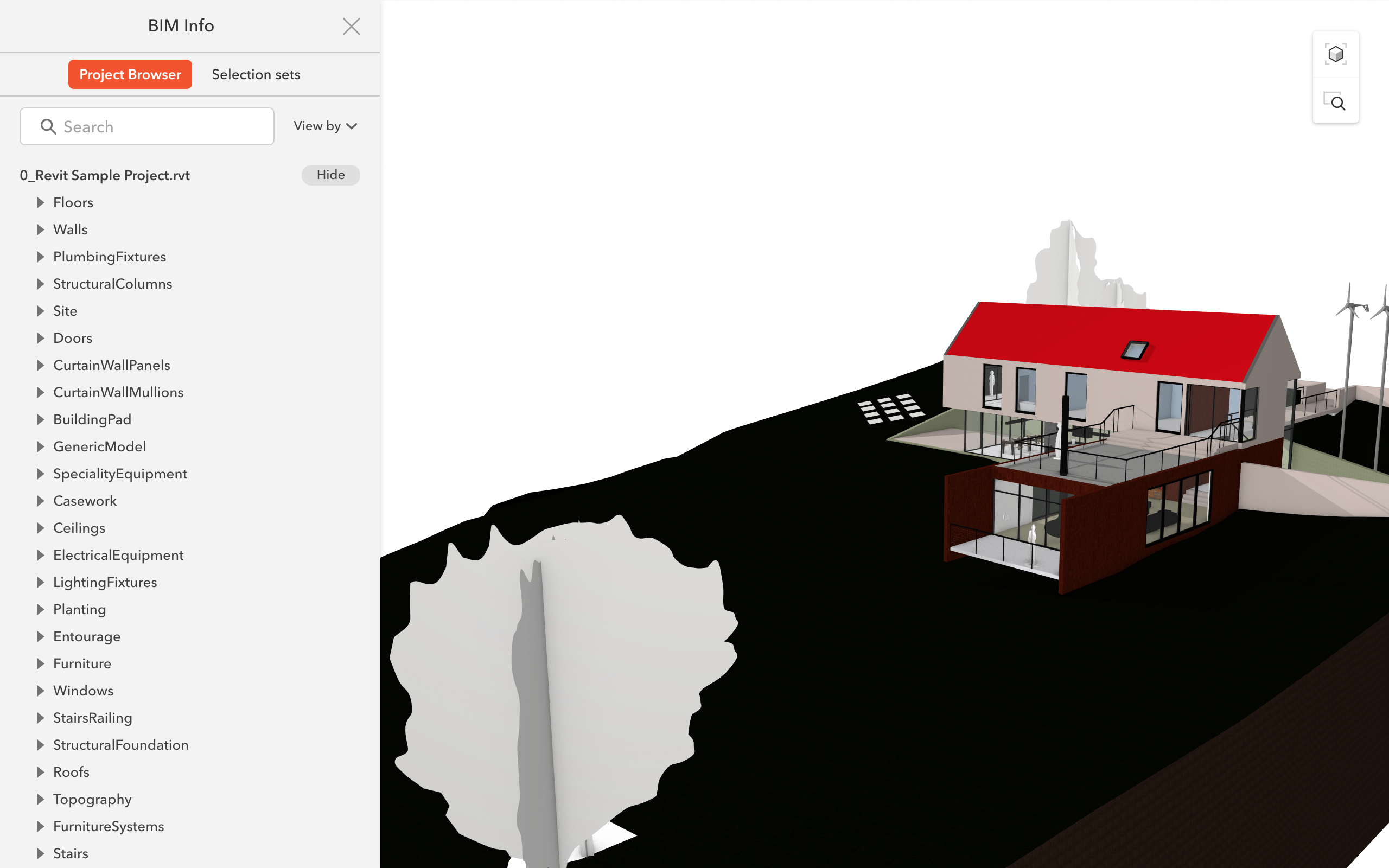
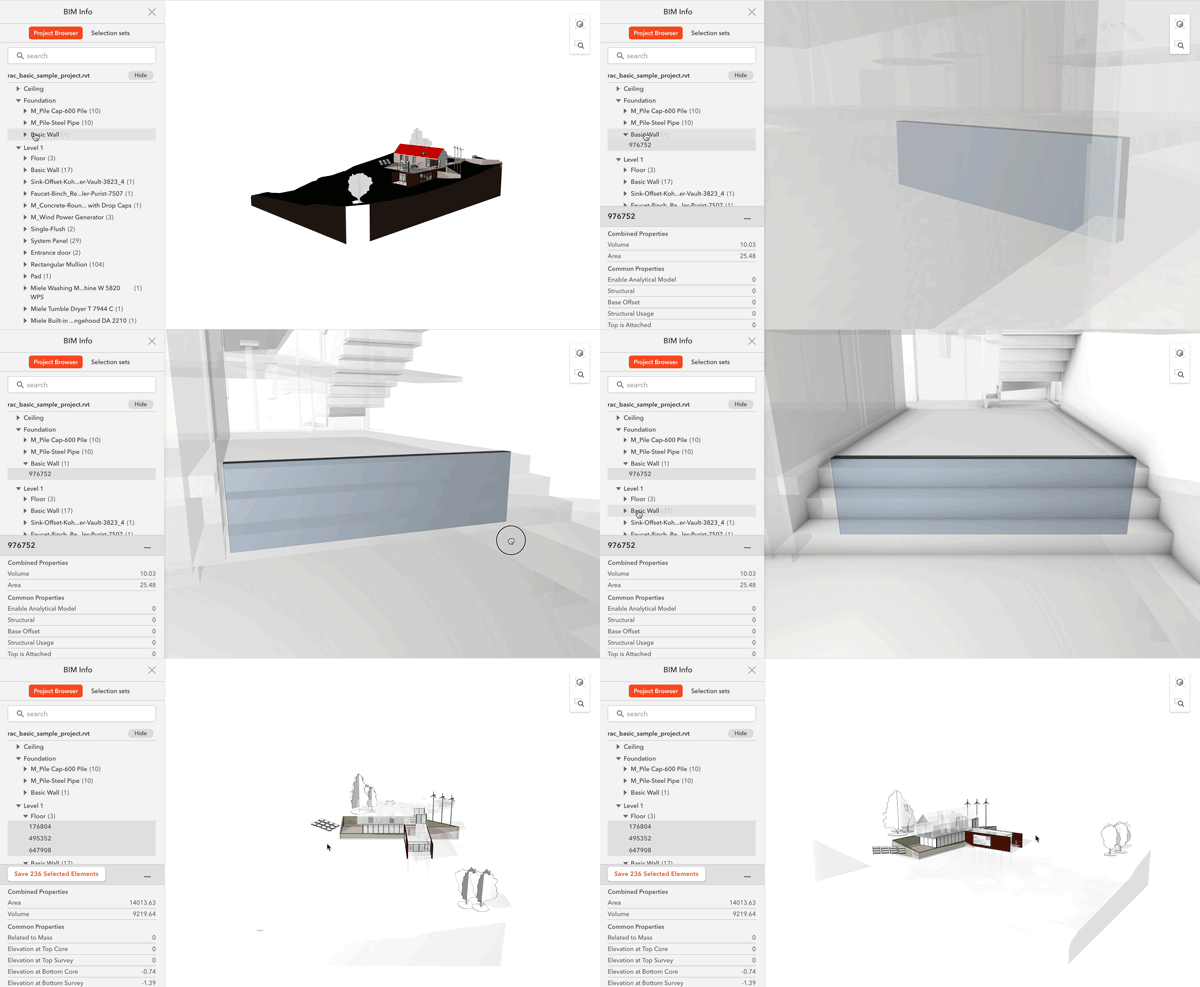
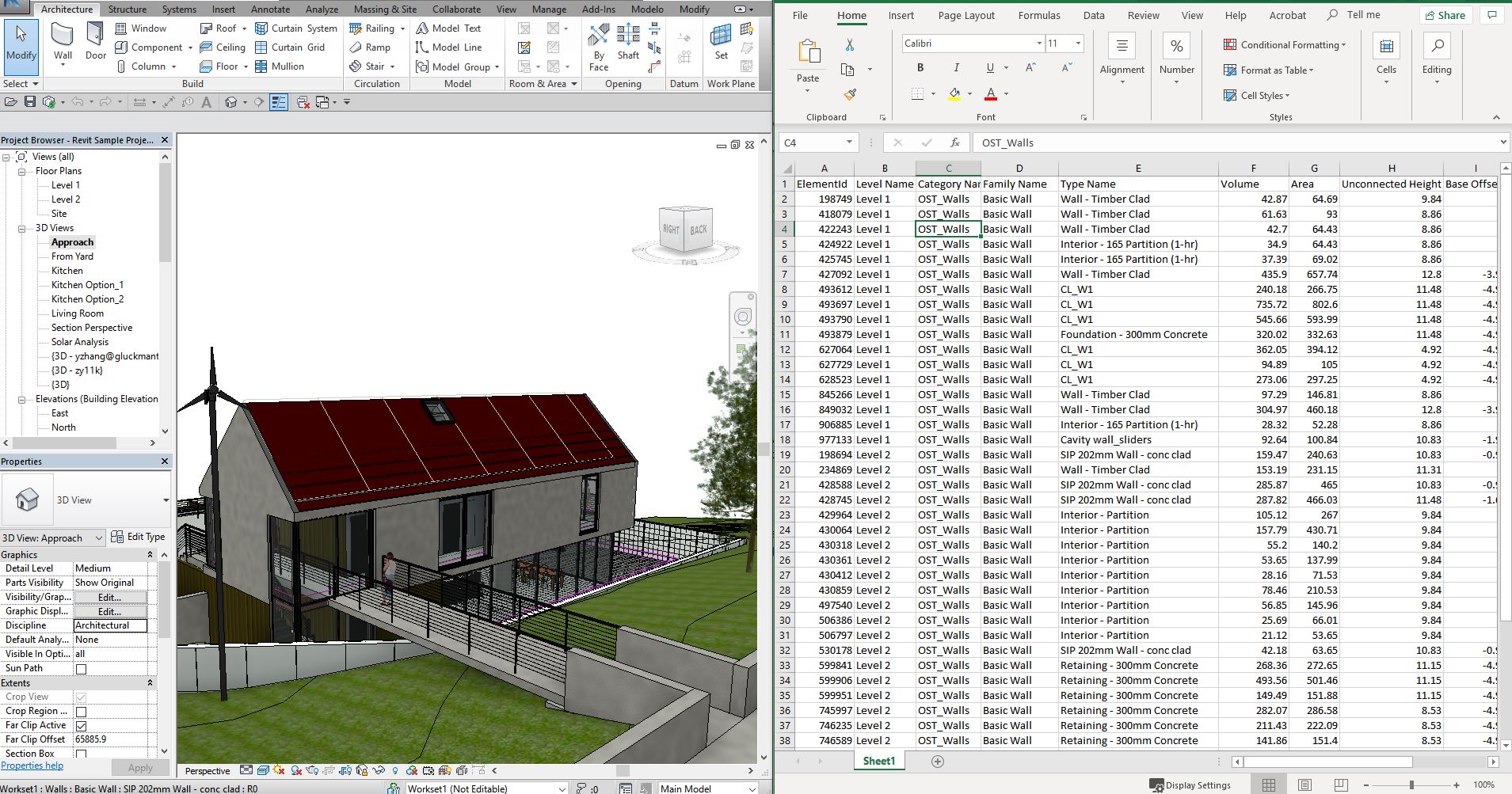
How do you view a Revit file if you don’t have Revit installed on your computer? Or when you don’t have the correct version of Revit installed. Look no further, Modelo’s new support for Revit will save you thousands of dollars every year on maintaining Revit licenses.
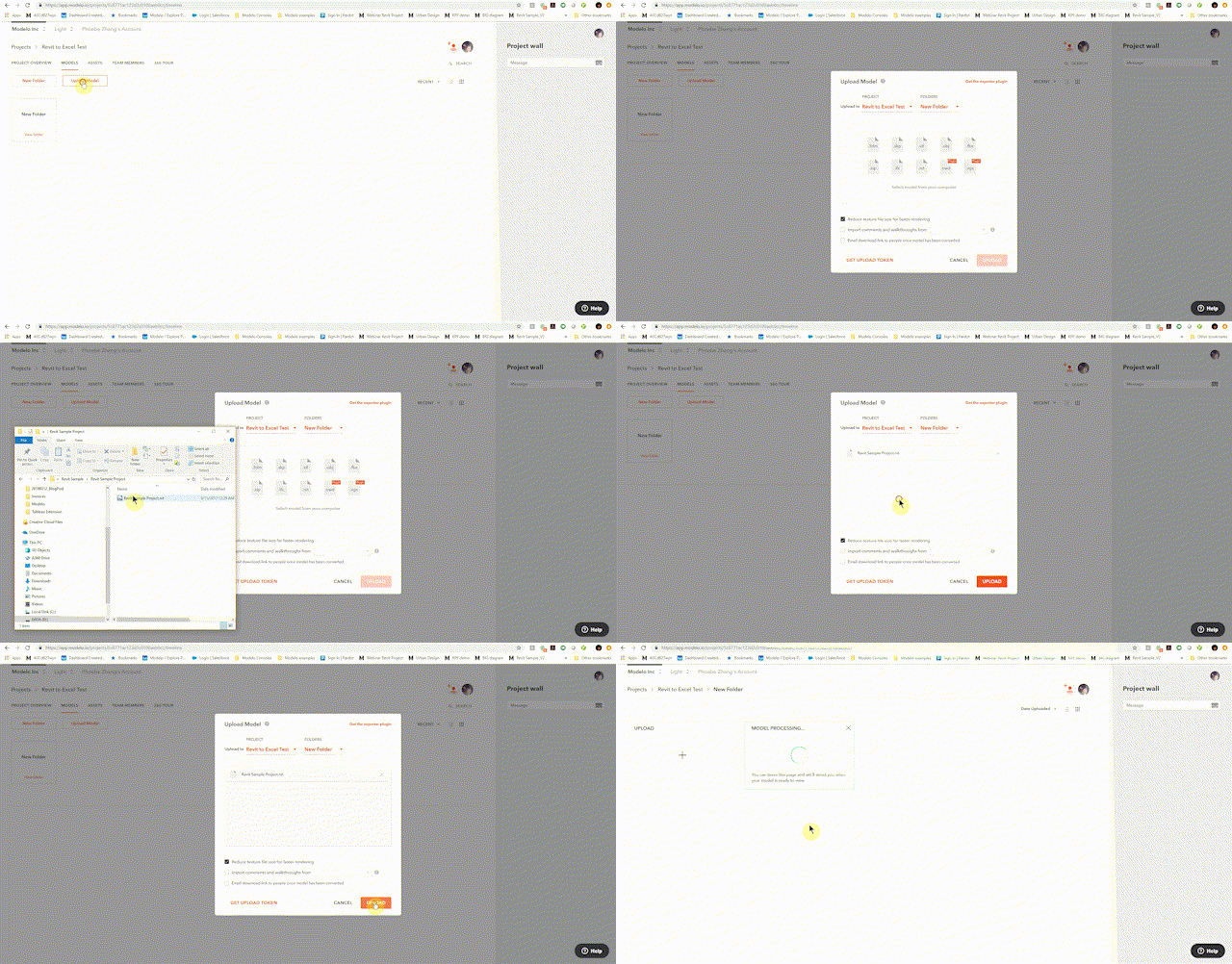
Simply drag and drop your Revit files into Modelo’s upload window, you would be able to view the 3D design and all the 3D element’s BIM information right in your browser.
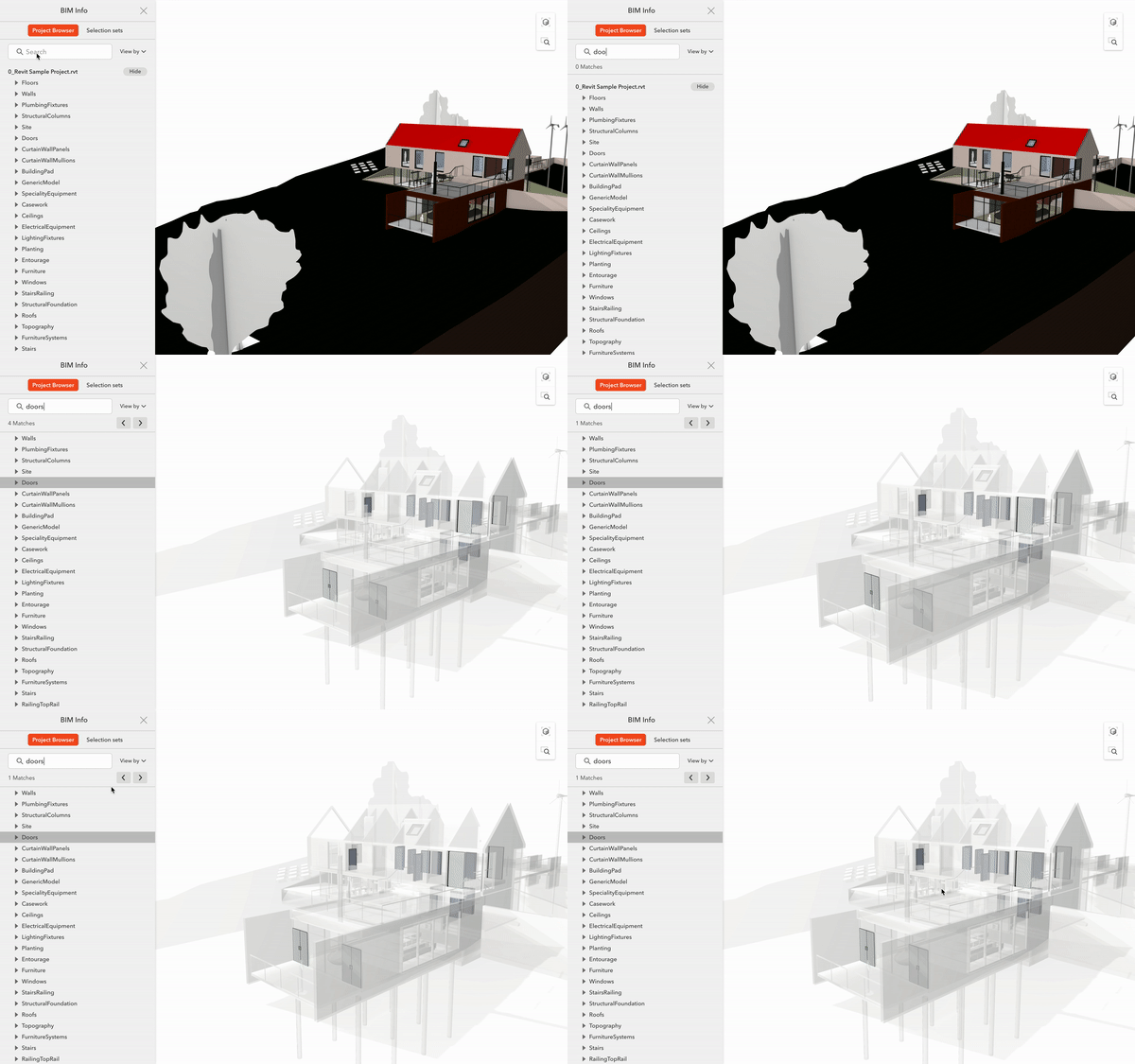
You can search families and types. The searched elements will be highlights to give you a quick count of the items.
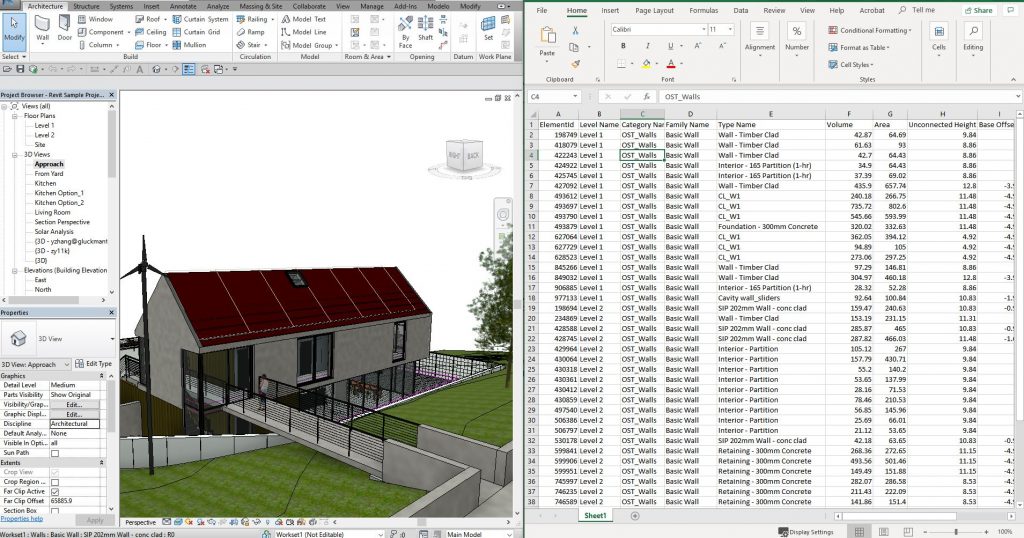
There are many ways to download Revit schedules to excel but do you know the element properties can also be downloaded as an excel document? Having these properties downloaded into excel you can quickly make quantitative analysis that helps you make the right business decisions.
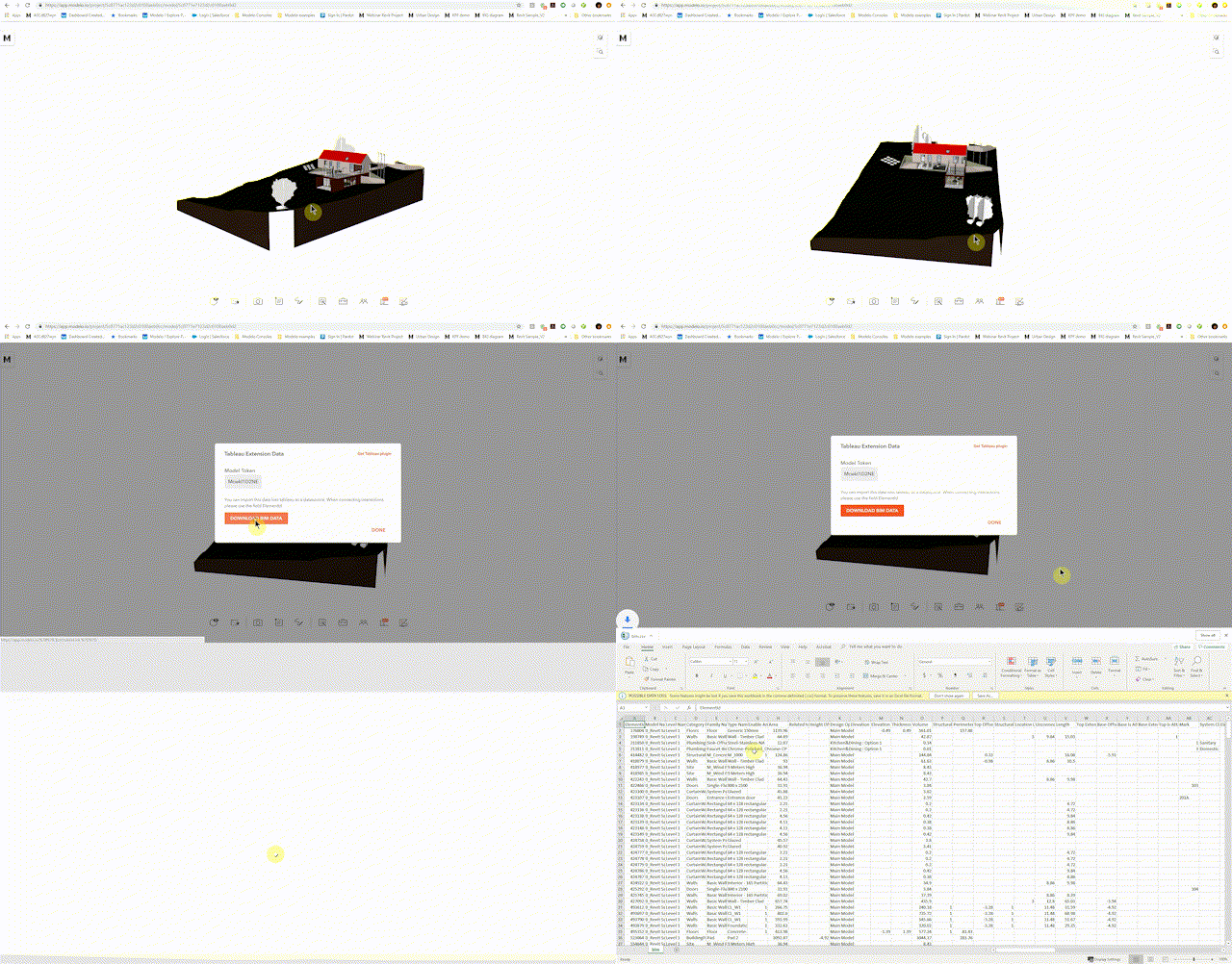
And the best part of this is – You don’t even need to maintain a Revit license to do it! Simply upload the file to Modelo, and we will convert the 3D file into a data sheet that can be downloaded with a simple click. No installation required, no Revit license required. You can save thousands of dollars on software licensing fees every year.
Step 1 – Drag and Drop your Revit file into Modelo, we support Revit 2015 to 2019.
Step 2 – Open Share Tool Bar and click to “Download BIM Data”.
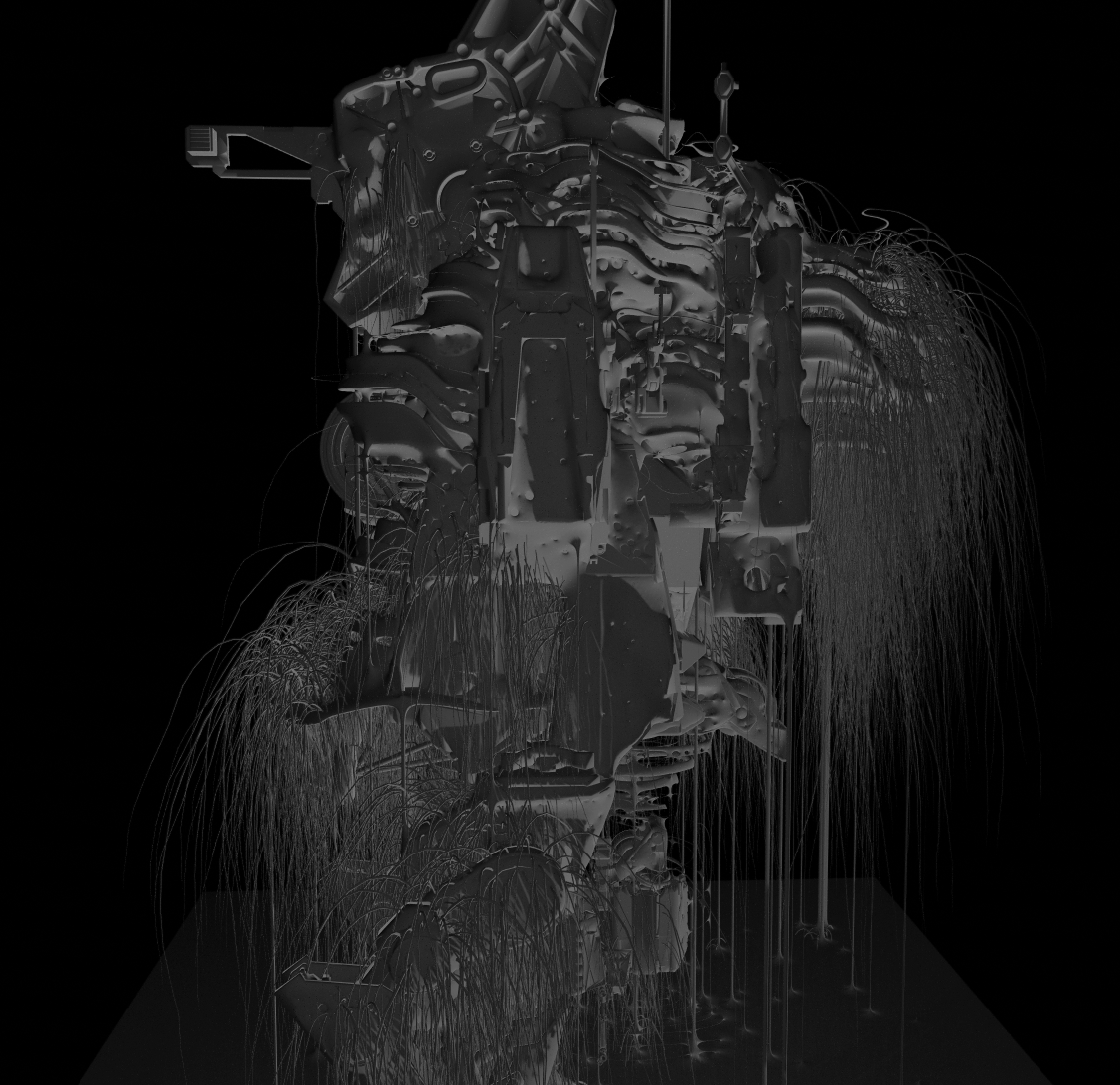
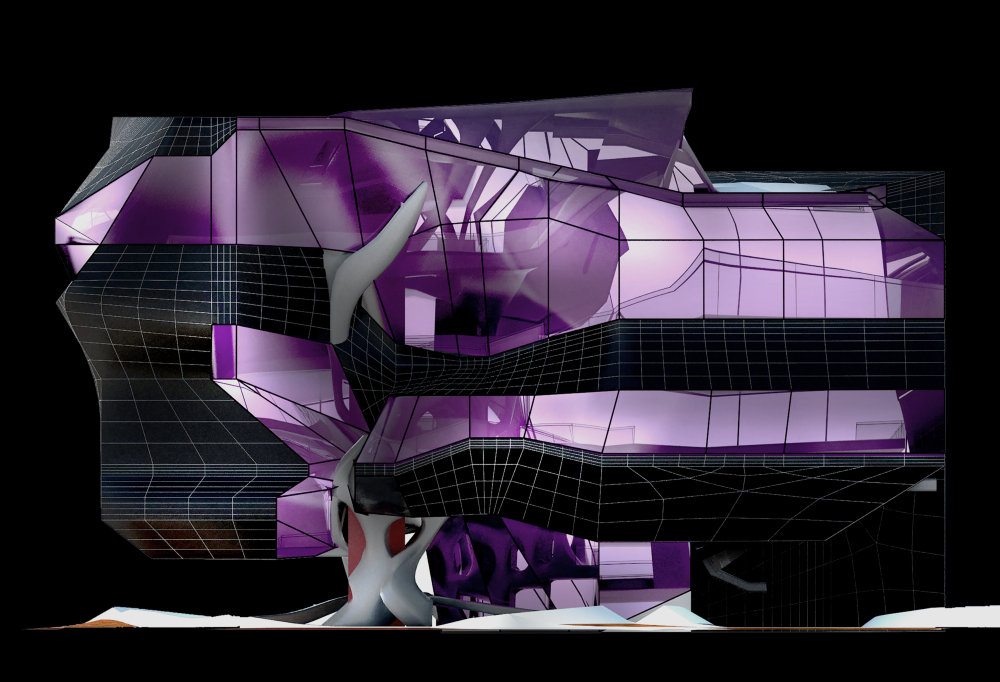
Hybrid between the algorithmic process and human intervention
Production time: 4 days
32 million polygons
34 GB production data
Total render time: 125 hours
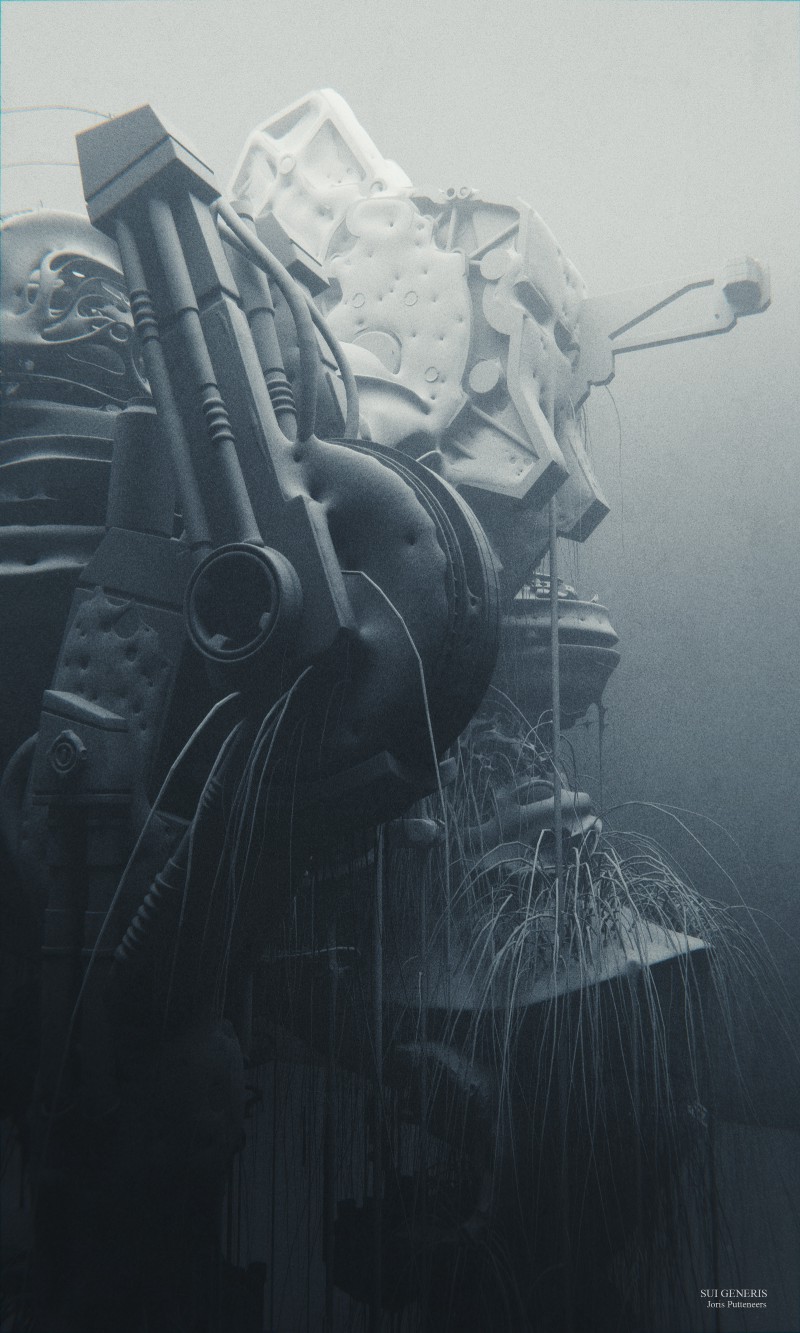
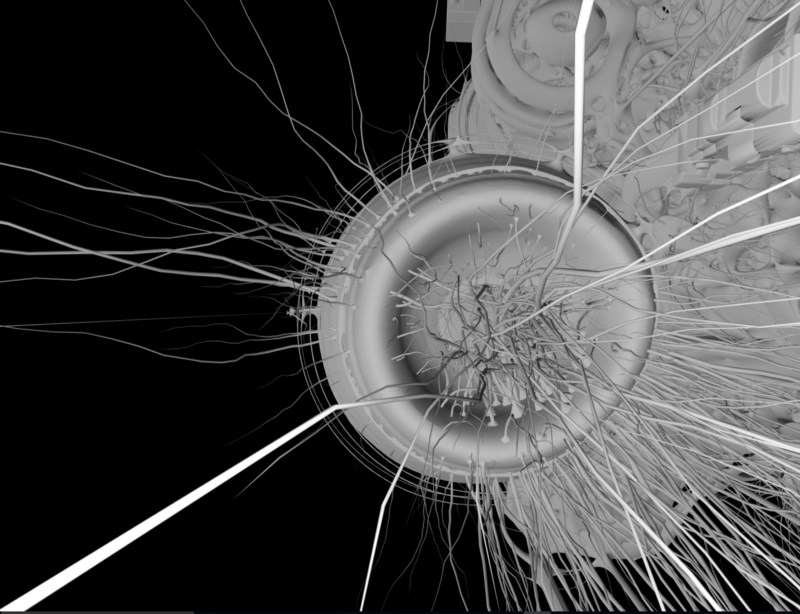
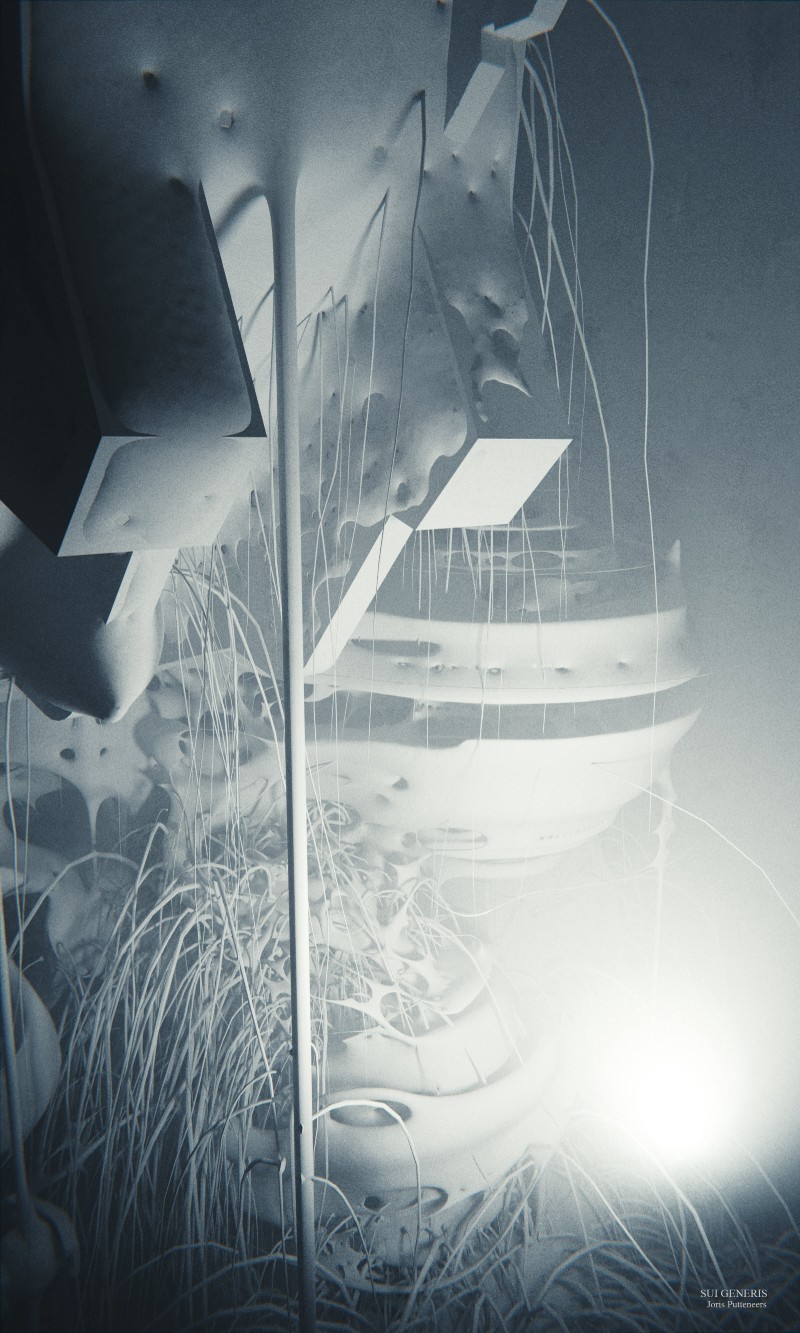
Humankind has developed a new form of construction. A synthetically programmed nano-seed is planted into the soil which sprouts into an organism that feeds upon the minerals in the soil and rock. Although the seed are exact copies of each other, the conditions vary with every location thus creating a new structure each time.
Architecture as it is known in the present day lends itself to mass production of parts and materials, each with there own functions and construction methods.
Sui Generis leaves this homogeneous design process behind and gradually varies its functionality by adapting to their hosts until it becomes a hybrid. This process allows the building of habitable structures on the Earth and on other planets in a dramatically cheap and ergonomic way.
Architecture can operate in an exploratory vein where material and structure allow for experimental pursuits in form. Use of digital tools and software give access to entirely new languages of form, and make the building of anything nearly possible.
In an era of discovery and exploration, not only in terms of physical territories but also disciplinary and technological possibilities, architecture, as a discipline, must embrace its responsibility to explore the limits of its extents; to de-familiarize the familiar and to decompose the composed while adhering to the Vitruvian virtues of architecture: Utilitas, Firmitas, Venustas.
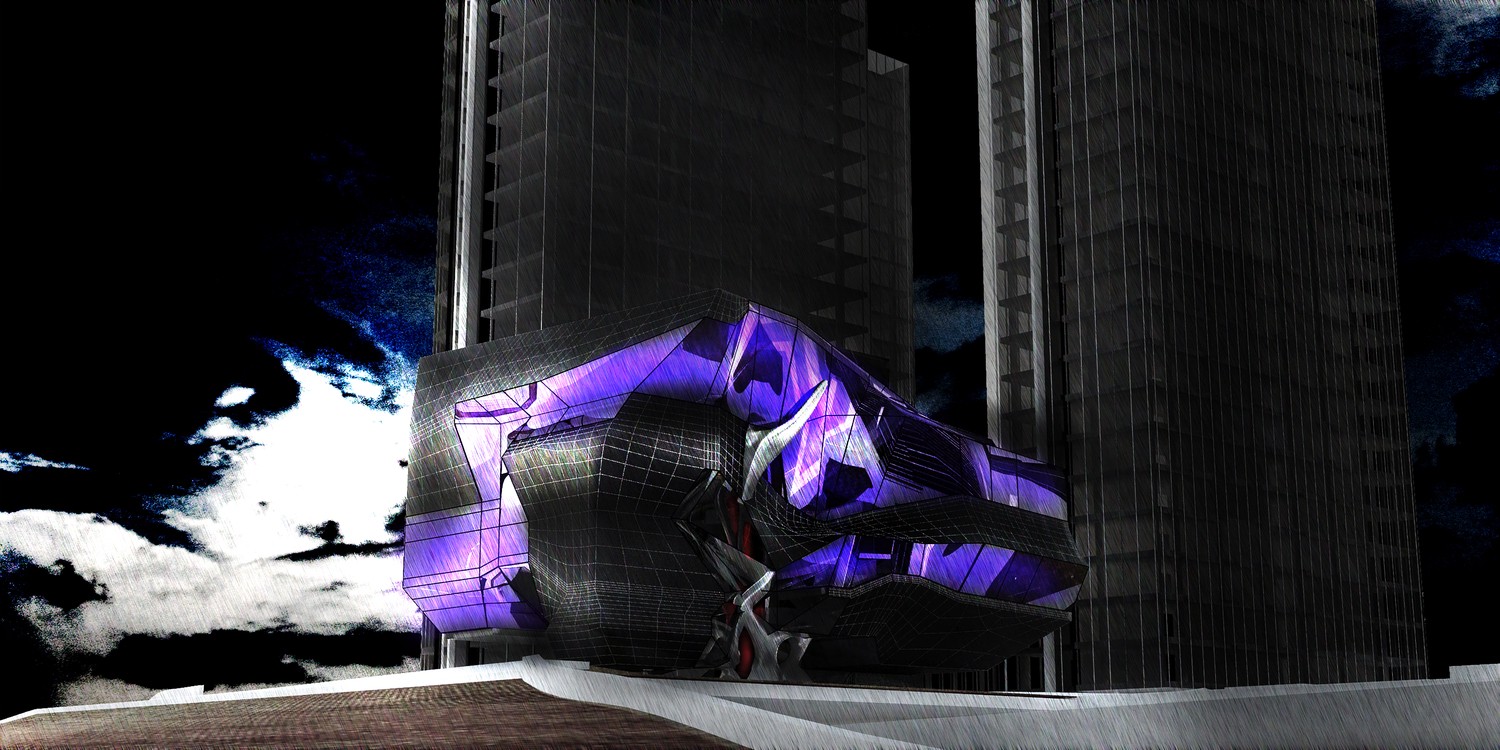
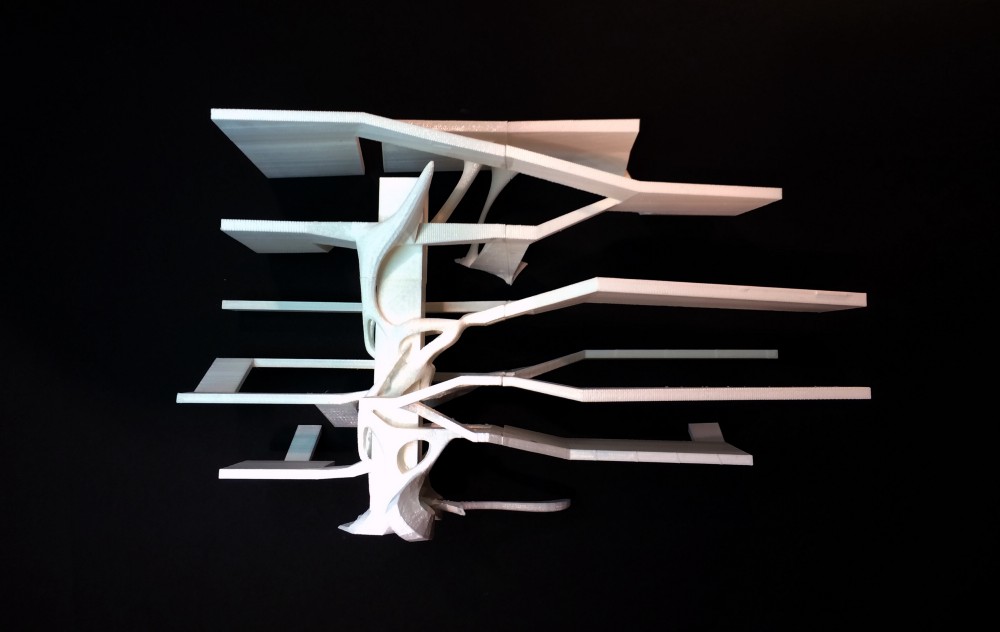
The proposed C.A.S.I.S (Center for Advancement of Science in Space) headquarters explores architectural form driven from emotional responses associated with the mystery and uncertainty of exploring the undiscovered in space. The building intends to not only fulfill its functional requirements, but also to acts as a vessel of exploration through its foreign appearance in contrast to its surrounding. The atmosphere it casts within and around the context via its particular aesthetics, derived from a formal interpretation of emotion, become the rationale for its design.
Team:
Architects: Mamou-Mani ltd.
Engineers: Format Engineers Ltd. (Stephen Melville, James Solly, Will Pearson)
LED Lighting: Street Communication SAS
Build Team: Arthur Mamou-Mani, Maialen Calleja, Philip Olivier, Eira Mooney, Aaron Porterfield, Antony Dobrzensky, Laura Nica, Karina Pitis, Hamish Macpherson, Jon Goodbun, Yannick Yamanga, Matthew Springer, Joshua NG, Lola Chaine, Dror BenHay, Junbing Jiang, Knaan Kirshenbaum, Charlotte Chambers, Michael DiCarlo, Sandy Kwan, Solomon Ebere, Regan Parrish.
Special Thanks: Jeremy Crandell, Katie Hazard, Kimba Jorgensen, Shane “Dream Crusher” Sischo, Dave X , Typhaine Ni Nyoman
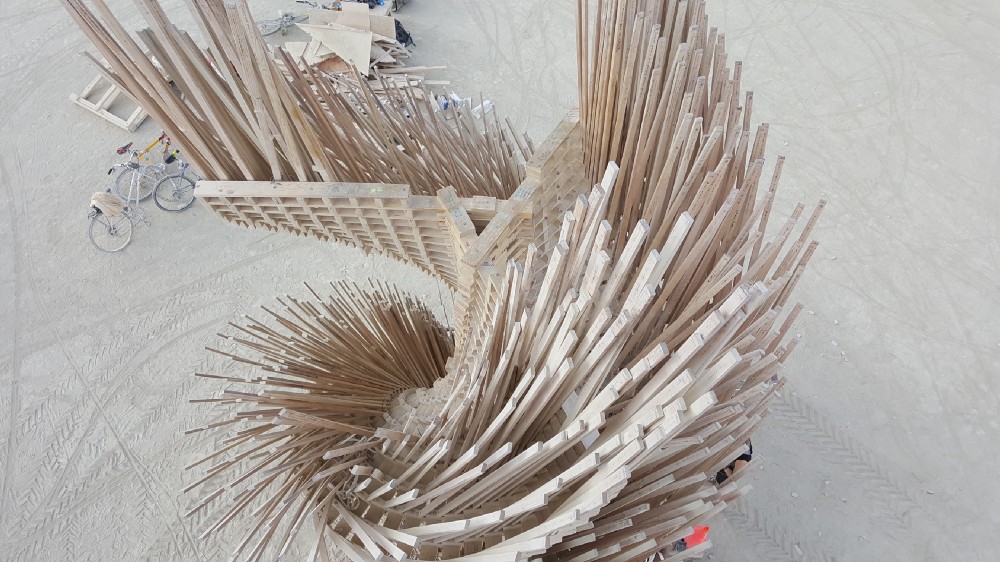
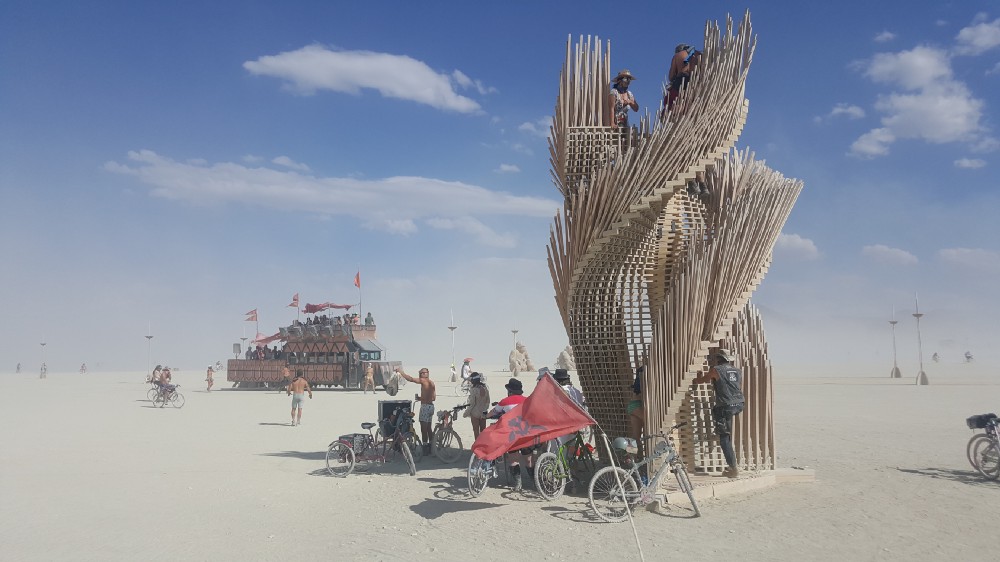
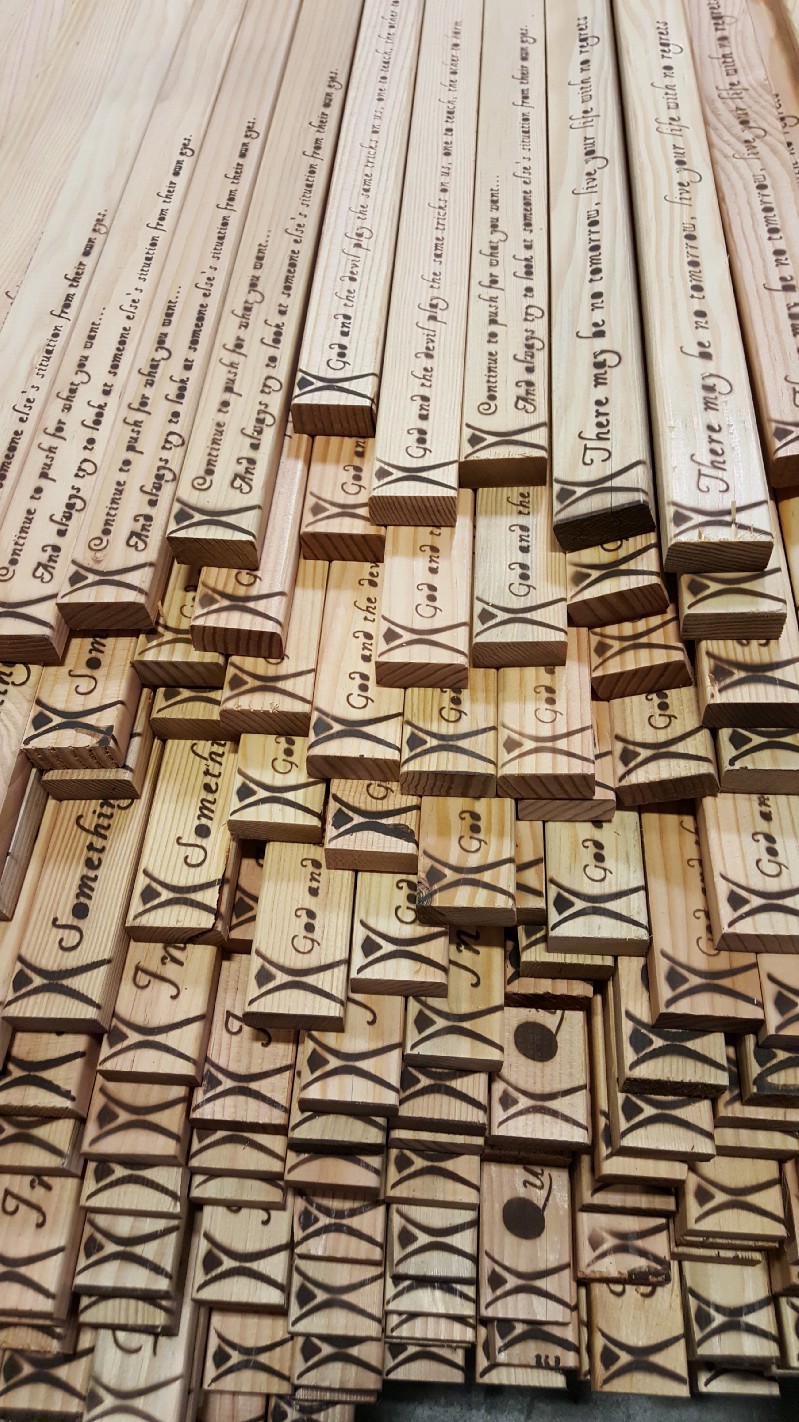
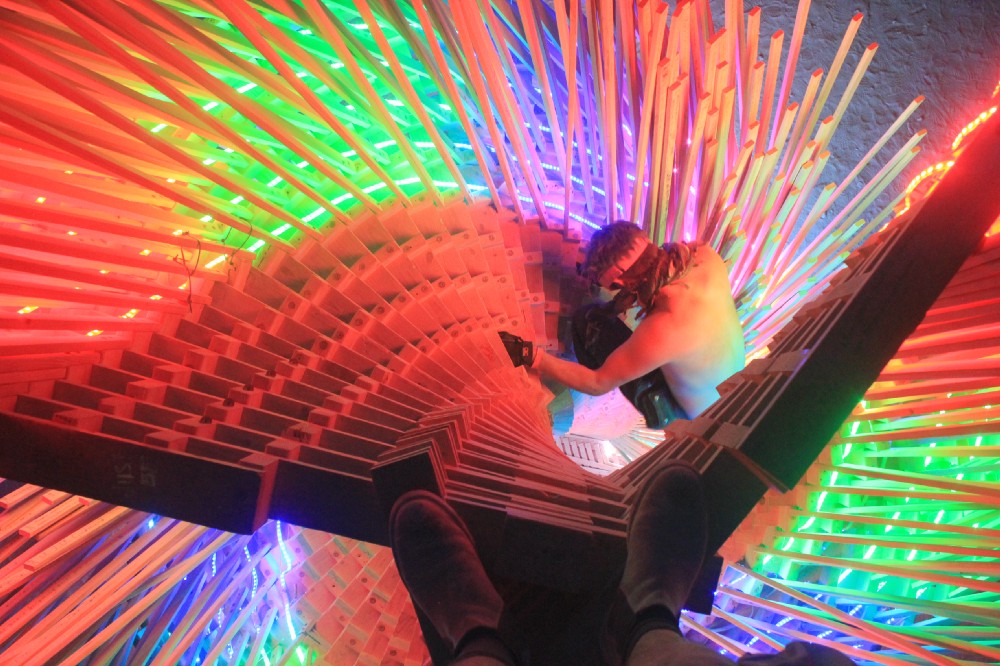
“A simple curve, the brush of the artist, the beginning of many dreams, our tangential dreams. This piece seeks to express the myriad of interpretations that we make of art and celebrates the dreams they engender. Tangential Dreams is a climbable sinuous tower made from off-the-shelf timber and digitally designed via algorithmic rules, maximizing inexpensive materials. Around 1,000 “tangent” thin wooden pieces are held in position via horizontal pieces rotating along a central axis, gently moving in the wind like leaves of a giant tree. Each tangent was stenciled with inspiring sentence from people around the world, collected through our crowdfunding campaign, and hand written by burners throughout the festival.” Each one of the poetic branches faces a different angle, based on the tangent vectors of a sweeping sine curve.
In line with this year’s theme, the piece is reminiscent of Leonardo’s Vitruvian man’s movement, helicoid inventions such as the “aerial screw” helicopter and Chambord castle helicoid staircase as well as his deep, systematic, understanding of the rules behind form to create art. From a wave to a flame all the way to a giant desert cactus, the complex simplicity of the art piece will trigger many interpretations, many dreams. The piece attempts to maximize an inexpensive material by using the output of an algorithm — (the value of the piece being the mathematics behind it, as well as the experience, not the materials being used).
The computer outputs information to locate the column, sub-structure and tangents. We believe digital tools in design are giving rise to a new Renaissance, in which highly sophisticated designs, mimicking natural processes by integrating structural and environmental feedback, can be achieved at a very low cost. We worked very closely with our structural engineer format, sharing our algorithms, to give structural integrity to the piece and resist the strong climbing and wind loads.
There are now three “legs” to our proposal, each rotated from each other at 60 degrees angles around a central solid spine, to ensure the stability of the piece, similarly to a tripod. The tangents are not just a decoration, they act as a spiky balustrade to prevent people from falling. The central column is made of clusters of 2*4 timber, tapered at a 30 degree angle to form triangular pieces, overlapping and rotating by a fixed increment, holding the helicoid pieces together around a strong central axis, fixed with deep structural wood screws. The helicoid members, made of 2*8 timber, will be held on one side by the column and on the other side by another standard riser piece, also fixed with structural wood screws.
The sub-frame will then be used to locate and fix the tangent pieces, made from a thinner and lighter piece of plywood and screwed with washers to the edges of the two closest sub-frame pieces. The whole 6m high sub-structure will be pre-assembled at the Generator in Reno. The first three legs will be grounded with 4 ground anchors each after having placed the decomposed granite. Once the sub-structure is up, the branches will be screwed in place on playa using a scaffolding placed below the spiral. The order of the branch will matter as some of them will be unscrewed and sent to the crowd-funders whilst some of them will be burnt at the end together with the substructure.
Plus… the project has grown to be even bigger, keep up with Mamou-Mani to see where it will be built.
Project Details:
Project Address: Gauja National Park, Sigulda, Latvia
Client: association “Nature Concert Hall”
Project Author: architecture office DJA (Didzis Jaunzems Architecture) — Didzis Jaunzems, Klinta Pickaine
Area: 150 m2
Engineers: “Veldrums and Partners” Ltd.
Builders: “Hanza Film Service” Ltd.
Photos: Ernests Sveisbergs
Year: August 2014
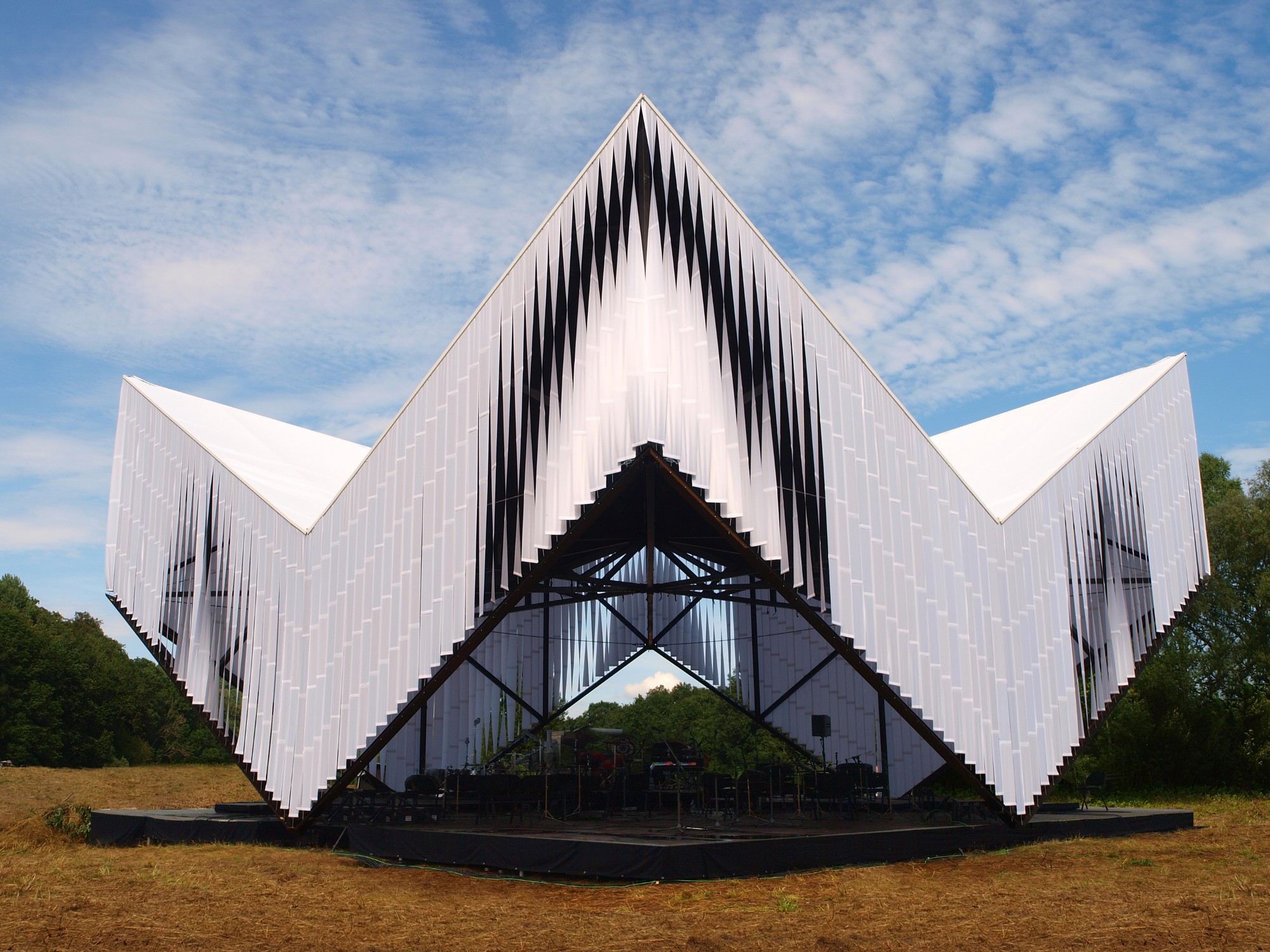
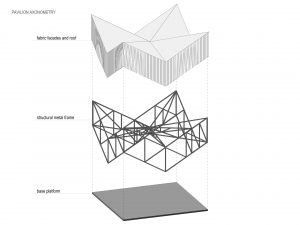
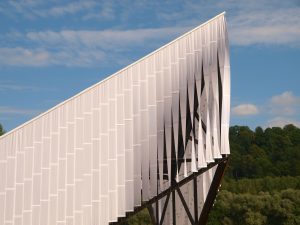
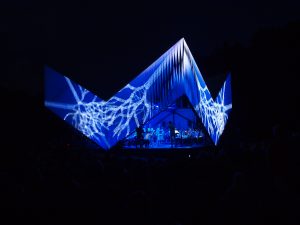
The Pavilion / stage for “Nature Concert Hall” is designed as an art object that unifies all main atmosphere making components of the event — space, light, video and music. Under the roof of the pavilion is a place for academic symphonic chamber orchestra of 20 people and Nature Concert Hall music band. The elevations of the pavilion serves as a screen for video and light projections. Architectural volumes are referring to existing elements in the nature. The structure of the pavilion is made in a way to reduce the amount of points touching the protected biotope meadow.
OLYMPUS DIGITAL CAMERA
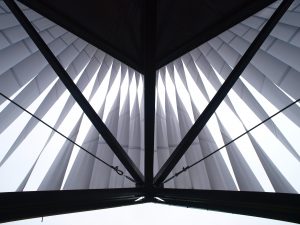
The scientific workshops are designed in a volumetric module system. Modules can be mutually combined to get different size and configuration spaces as well as be carefully placed in environment. The elevations of workshops and pavilion are made from vertical fabric bars that can be rotated and therefore different varied closeness or transparency can be created.
OLYMPUS DIGITAL CAMERA
Nature Concert Hall is a multimedia nature and educational structure that incorporates science, dramaturgy, music and art. Its aim is to bring attention to surrounding nature, to tell people about daily unnoticed and invite people to be careful. Nature Concert Hall 2014 took place in Gauja National park, near Sigulda, Latvia and its main character was armored fish — Asterolepis Ornate.
Modelo’s individual package provides the user a lot of capabilities within Modelo’s platform, however for just $25 a month, you can take advantage of Modelo’s integral features that will save you time and money in the long run.
Modelo’s main purpose is to be a presentation and collaboration platform for 3D CAD designs. With the Individual Package, your collaboration capabilities are limited. When you upgrade to the Studio Package, you unlock many features that allow you as the designer to collaborate in an organized and meaningful manner. With our screenshot and markup tools, you can communicate your ideas to stakeholders directly on your design.
You can also assign tasks to people by tagging them in a comment in the design and effectively communicate directly in Modelo. With Modelo’s helpful collaboration features you will be able to save time through the creative process of your designs as it will be easy to make your own edits and take the comments of others simultaneously in one, organized online platform.
Additionally, upgrading to the Studio Package gives you access to many sharing features that gives you the ability to export your designs and the flexibility to share your designs. With our Studio Package you can bring your designs to your client and impress them in presentations by embedding your walkthroughs and 3D models. You can also embed your walkthroughs onto your website, which is sure to make a great first impression with our best-in-class rendering and smooth walkthrough design. Plus, you can upload a background image of your choice in Modelo to present to your clients.
Design Manifestos: Raegan Porter of FGM Architects
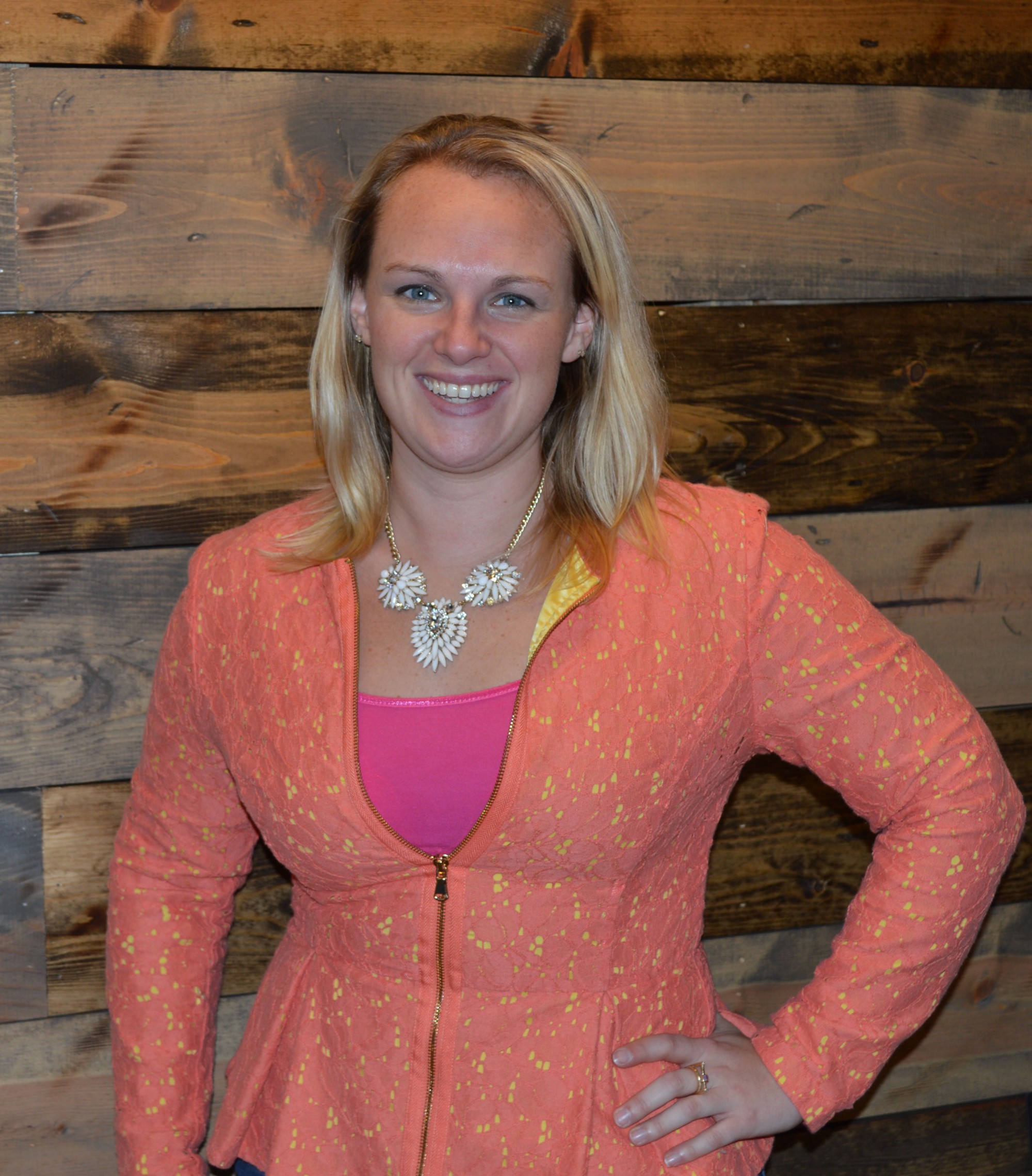
Raegan Porter (Photograph courtesy of FGM Architects)
Raegan Porter is a Registered Interior Designer with a diverse background in recreation, municipal, educational and contract design. She is the Municipal Interior Design Leader for FGM Architectslocated in Oak Brook, Illinois. Raegan has a unique ability to understand her client’s needs and incorporate them into creative, functional space plans. Through space planning, materials, furniture, lighting and art work, she brings her clients vision to life. Her goal for clients is to create an overall experience for the communities using her spaces. She states, “I often judge a space on how it makes me feel. I want to create exciting spaces that make people feel good.” Modelo spent some time learning about what inspires Raegan and about her current role at FGM Architects.
On becoming an interior designer
My mother and grandmother were a big influence on my love of art and design and my decision to become an Interior designer.
My mother had intended to go to Art school in Atlanta in the 1960’s but, due to the rioting happening at that time, her family decided it was best she didn’t go. But she still had a love of the arts and always encouraged my creative side!
My grandmother was a painter and creative in every sense of the word. My cousin and I, who are very close in age and in spirit, spent many hours with our grandmother playing games that involved creative thinking and design. The three of us would dream up designs for our future homes and weddings. Both my cousin and I decided at that young age that we would be designers. And there was no turning back!
I feel very lucky that I knew so early in my life that Interior Design was my calling!
On discovering her voice as a designer
Since I can remember I have had a LOVE for color. Some of that comes from my mother and aunt who also have a love for color and art. Being immersed in that from an early age has most definitely contributed to my love for color and dramatic environments.
For a while I freelanced at a firm that did more commercial interiors and was introduced to this idea of branding environments, this idea was fascinating to me. After some research I found it was a concept that made so much sense to me. It can help increase the client’s bottom line, so why wouldn’t they want to use their environment for marketing? Designing a space to embody the client’s brand is something that I am always trying to achieve. It is in my nature to want to help, so if I can help a client have a competitive edge or help the impression of a client to the public I am happy.
I also believe that all the adventures that I encounter in life have an influence in different ways whether it’s dance, fitness, painting, teaching self-defense or my passion for giving back. All of these have an effect on who I am which I know in some form shapes how I design.
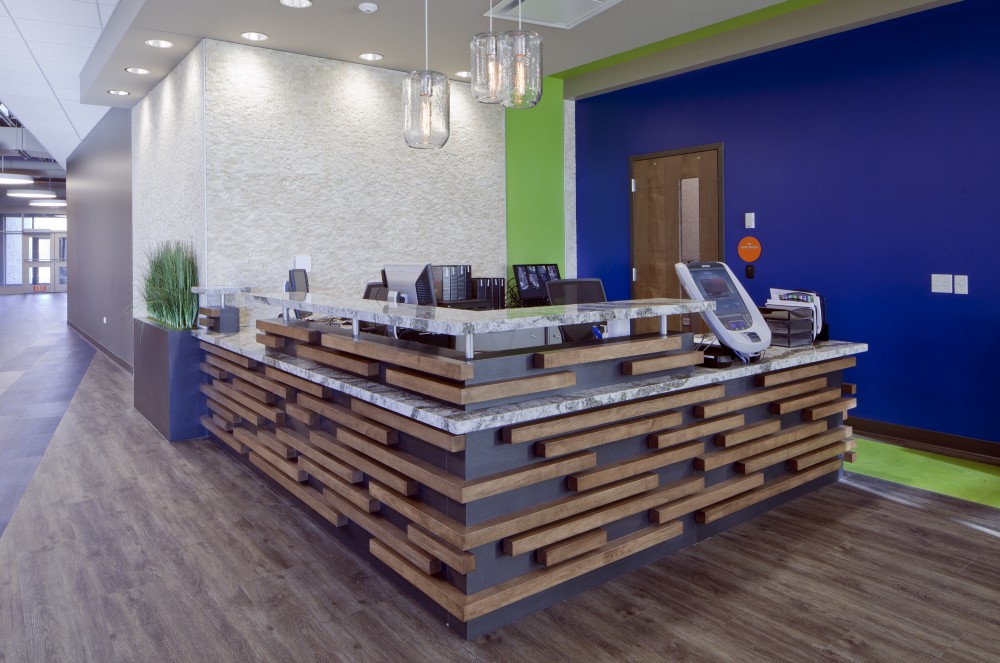
McHenry Recreation Center (Images courtesy of FGM Architects)
On joining FGM Architects
I started with FGM right out of college. My lighting professor in college put me in touch with a gentleman who did a critique in our class. He was a project manager at FGM and that’s how I got connected to interview.
In the early days I learned functional and durable design as well as how to be creative on a budget. We learned fundamentals in school but the early years of working are where you really learn. A majority of the buildings that we work on are public facilities that will be around for a long time, not to mention the abuse of a 24/7 facility. The functionality and durability are critical. Budget is key so it is critical to find durable inexpensive materials or reinvent standard materials. It’s easy to find really interesting materials when you have a large budget but when you are forced to reinvent materials on a tight budget the real creativity happens. That’s a talent I have learned at FGM that I wouldn’t give back for the world.
With the down turn in the economy I was laid off after about two and a half years. I went on to work for a furniture dealership and had my own company doing design. In 2014 I knew FGM was looking for someone to head the Interior Design for the municipal practice area so I reached out and interviewed.
Coming back and working the second time around I am truly grateful for all that I learned while I was away. There are talents and lessons I have learned I may not have had otherwise. Those are invaluable tools that I got to bring to back to FGM with me, making me a better designer for FGM and our clients. To this day I am still learning from the amazing team of people that I get to work with every day and continuing to evolve in my approach.
On specific principles she strives to adhere to
In each project I try to create an overall great experience for those using or visiting the building. We spend so much of our lives now stressed and busy. I try to create environments that welcome you in and give you a “WOW” moment.
Designing the clients’ space to embody their Brand.
Designing healthy functional environments for the client.
On her role at FGM Architects
My role as the head Interior Designer of the municipal practice is multi-faceted. One day it could be…who am I kidding one hour it could be marketing then project management, design or drawing. It just depends.
I work hand and hand with our Head Design Architect Louise to come up with the design direction on each project. Then for the interiors I work with our team giving design direction for them to implement. However, I must say it is a team effort! The whole municipal team is very collaborative on all aspects of a project.
Chevy Chase Country Club (Images courtesy of FGM Architects)
On recent projects that represent the firm’s unique approach
We breathe energy and life into our built environments that can’t be duplicated. A great example of this is a project that was just finished a year ago, McHenry Parks and Recreation. The use of natural materials with vibrant colors gives you this great warm energy right as you walk in the door. Many of the community members have been quoted saying “wow I wasn’t expecting that” with a smile on their face and eager to see what the rest of the facility looks like.
We have an understanding of our client’s profession which allows us to help when planning and listening to their needs. Another project that is a great example of this is Chevy Chase Country Club in Wheeling, Illinois. It was an addition renovation. After listening to their needs and studying the space, it was clear that the traffic flow needed to be more efficient. We added an event room for weddings and corporate events that seats around 200 people as well as a new pre-function and sales office. Moving the pro shop off of the gable room so that golf is separate from the event spaces helped tremendously. This is also a great example of how an interior renovation of a space can affect your bottom line. The new space has been open for only a year and bookings are already up. Currently we are compiling the data for a case study and it is looking very positive.
On her design toolkit
FGM is a firm that is standardized on Revit which has taken designing to a new level. It is always a struggle to be able to provide 3D modeling to help clients visualize while keeping cost down in order to meet budgets. Revit allows us to provide a 3D of the space while part of that time is still working on the construction documents.
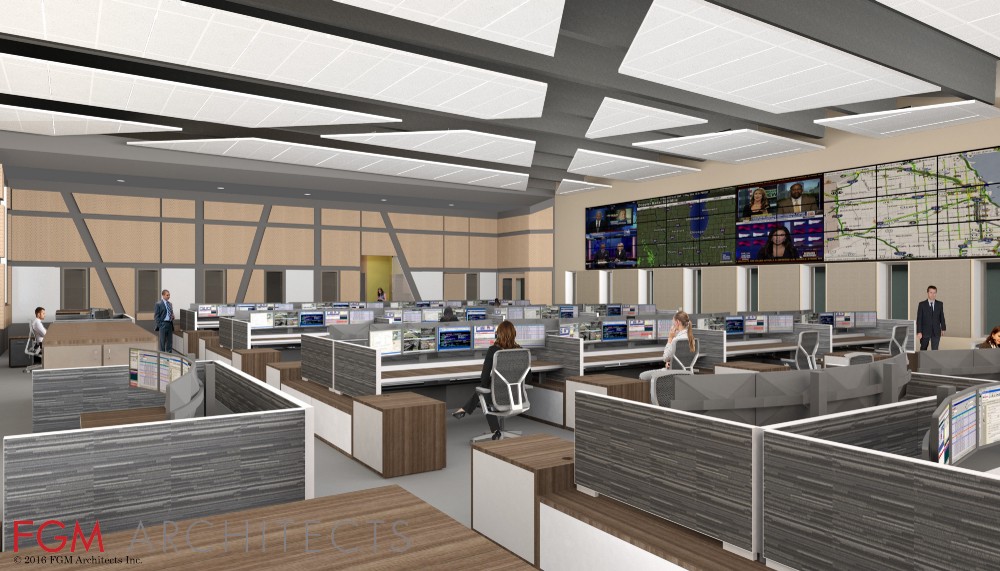
A great example of this is a project that is currently under construction for Addison Consolidated Dispatch Center in Addison, Illinois. The space is designed to reduce stress for the employees taking into account the way light is used and sound levels. There are a lot of natural materials used with accents of blue and green. Revit allow us to show the client what there space will look like and the ability to tweak things before even building the space.
Addison Consolidated Dispatch Center (Rendering courtesy of FGM Architects)
On the state of design software today
There is a plethora of design software to choose from. It amazes me how far we have come in the past ten years, it makes it so much easier to convey a design or space to a client that may not be able to envision the creation.
On the future of the design industry
Designers are always pushing the limits and that is something that will always continue. Where we need to spend more time is really educating the general public on what we do and the benefits of our profession. We don’t just pick materials and colors. Although I love that it’s really is only about 5% of what we do.
Honestly I don’t know how our industry will evolve moving forward. We have seen so much change in the past ten years with the recession, inventions in technology and political climate. I do believe it will be positive change filled with its own exciting puzzles to solve.
On advice she would give her younger self
I would say to myself: network, network, and network! You never know where something will lead.
Design Manifestos: Trace Jacques of ESG Architects | Modelo
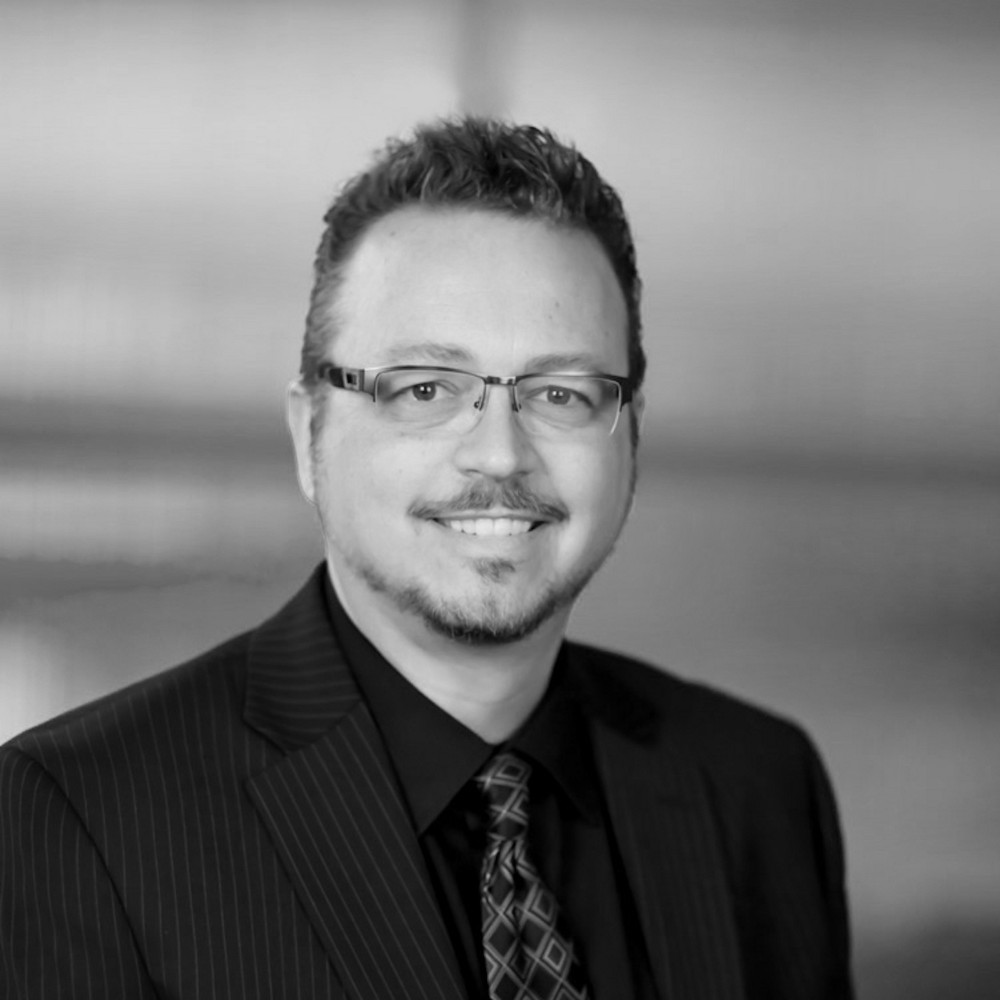
Trace Jacques (Photograph courtesy of ESG Architects)
Trace Jacques, AIA, CID is a Partner at ESG Architects in Minneapolis, Minnesota. Even though Trace is a senior design principal involved in every area of ESG’s expertise, he remains a hands-on leader. Trace is keenly aware of the ways in which new buildings can transform the character and livability of a neighborhood. Always working within budget, Trace creates refined, context-sensitive projects that fulfill client objectives for functionality. At the same time, his projects “tell a story about place, and how design is bettering the lives of people who live in our buildings and who pass by them on a regular basis.”
On becoming an architect
As a child growing up (surrounded by perpetual construction) in the suburbs of Chicago, Illinois, I was captivated whenever we got close enough to see the silhouette of the downtown skyline in the distance. I would see construction progress on the Sears Tower and Standard Oil Building and compare them to “Big John” — The sheer scale of those towers was awe inspiring to me. I loved them so much that I started building scale models of them and collecting any information that I could find in an almost obsessive way.
On pursuing the profession
Making architectural models starting at age eight, began my exploration and education in architecture. Even early on, those models explored the fundamentals of each building’s design (i.e. Form, color, composition, and eventually contextual urban fabric). Building models brought attention my way and having an uncle who was an architect (the only professional in a very large extended family) also played an unquestionable role in determining my direction in life.
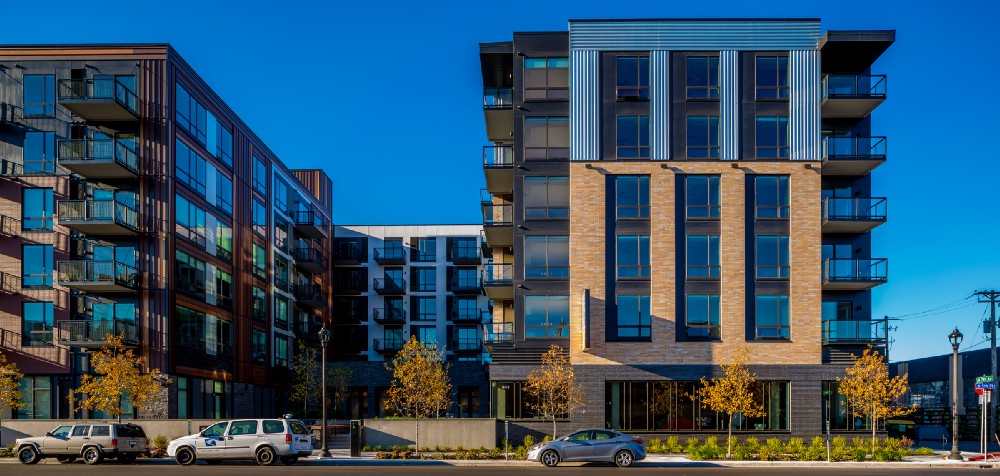
Junction Flat (Photograph by Trammel Crow and Farm Kid Studios courtesy of ESG Architects)
On discovering his voice as a designer
Looking back, it was from the immense amount of model building done in my youth (which evolved to building designs from my own imagination) where my confidence grew. With the support of a few key art teachers who allowed me to display my work, my voice began to be heard. That voice was quite naive to say the least until my eyes were opened in college art history classes and more importantly as an architecture student at the College of Architecture at the University of Minnesota during the 1980’s.
Professional influences: I would list Leonard Parker first as my early mentor and Mark Swenson as my most important mentor (as well as partner today). I have always been a consumer of great design — firms and designers such as: KPF, Rafael Moneo, SOM, HOK, Perkins & Will, SHoP, NBBJ to name a few have steadily fed my appetite for high quality design.
Educational influences: The University of Minnesota College of Architecture in the 1980s was marked by the recent retirement of long-time head Ralph Rapson with its intense practical approach to design and was transitioning and experimenting with bold new academic based studios so I experienced quite a range of differing design approaches and it helped me to be able to sift through and see which approaches truly fit my own sensibilities.
Personal influences: I am a person of many passions. I have a passion for aviation, skyscrapers, ocean liners, navy ships, and stadiums to name a few. My other passions are with family (especially my wife and children) and my Catholic faith.
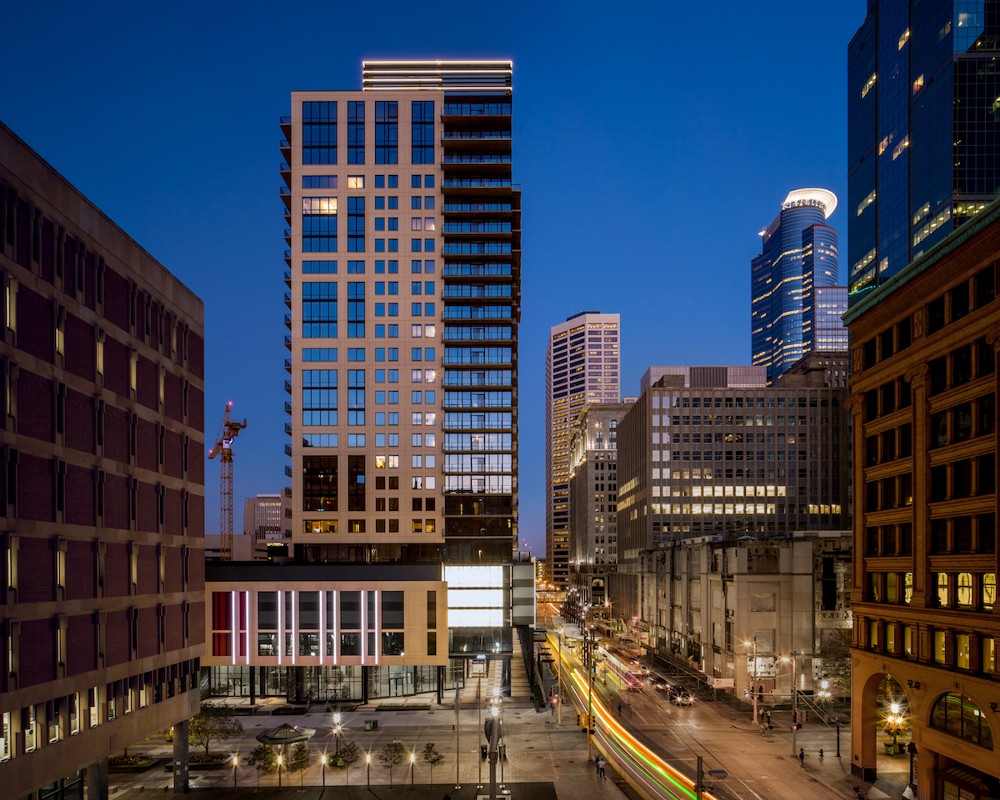
Latitude 45 (Photograph by Farm Kid Studios courtesy of ESG Architects)
On joining ESG Architects
I joined ESG after working eleven years for The Leonard Parker Associates and I needed a change and was given an opportunity to be a lead designer and the joy ride hasn’t stopped. Unlike TLPA, ESG was a younger firm that focused on private sector work which meant faster, seat-of- your-pants work and a lot more opportunity for hands on design experiences.
On how his approach has changed since joining ESG Architects
Because of the fast pace and the sheer number of projects and the variety of clientele, efficiency and flexibility have been the keys to success. I am a modeler by nature and able to self-teach when I have a need to possess a certain skill set. Interns also help that process of learning new skills. That drive has steered me into designing much more hands-on with the aid of computer modeling software like Sketch-up and V-Ray.
NIC on Fifth (Photograph by Farm Kid Studios courtesy of ESG Architects)
On specific principles he strives to adhere to
As cliché as it sounds, a customized, creative, client driven approach that reinforces the value of design excellence by enhancing the residential and guest experience all the while contributing to the design awareness and expectation level of the general public as they experience and engage our designs on the community level.
On his role as Vice President & Design Principal at ESG Architects
My role is still very “hands-on,” meaning creating the overall baseline design vision as well as refining that vision for many higher profile projects at ESG in all categories of project types. I am a designer at heart and see every new project as a fresh opportunity to explore the ways a design can be approached and executed. In that role, I hope to lead and mentor (by example and engaging) the younger staff as well as the more seasoned staff regarding not just how I think, but how they can think about (and execute) quality design and what that means.
On recent projects that represent the firm’s unique approach
As stated earlier, ESG is very creative and very well versed in blending our specialties in mixed use, multi-family residential (of all kinds), commercial, office, and hospitality. Mix in a very creative interiors group, and it is a great environment to try things out and make people happy.
I have many favorite projects so it is really hard to single out just 3–5 but if I have too, they would be:
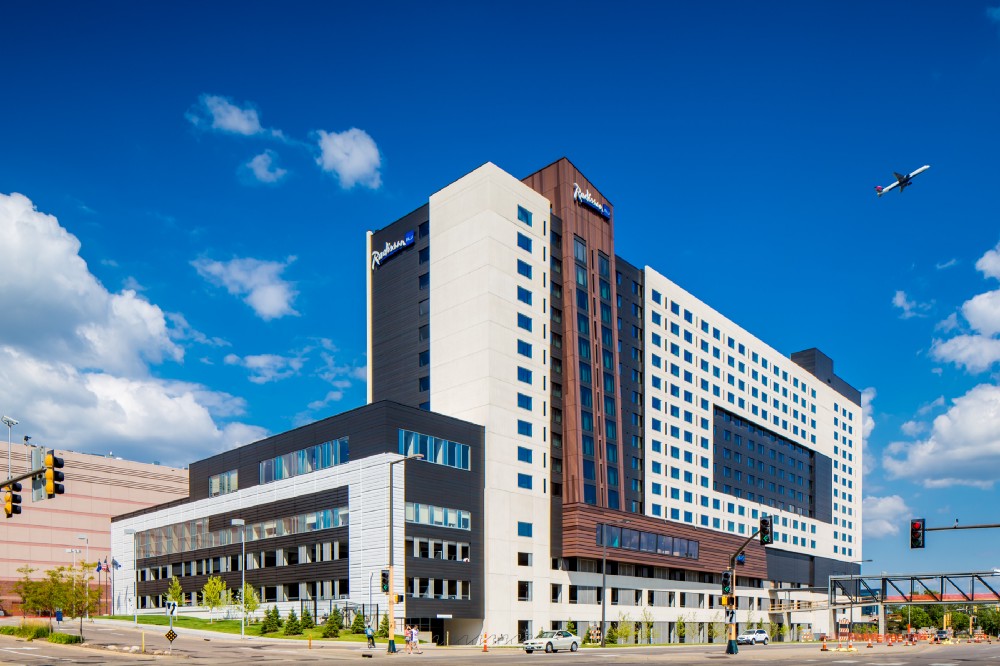
Radisson Blu MOA
Latitude 45
Nic of 5th
Junction Flats
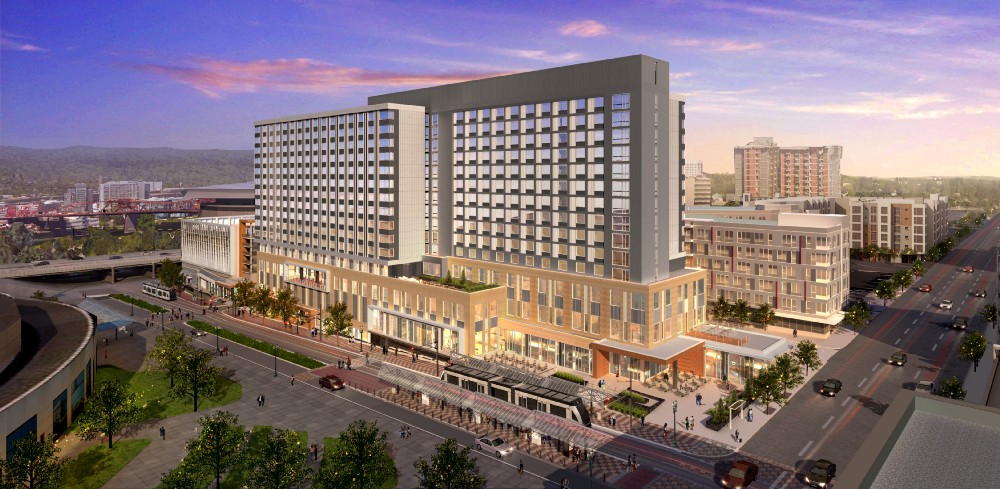
Oregon Convention Center Hotel (Hyatt Regency Portland)
Oregon Convention Center Hotel at the Hyatt Regency Portland (Rendering courtesy of ESG Architects & Leo Mao)
On his design toolkit
I try to immerse myself in the built context and history of site, as well as the end client, operator, and user. I believe, that successful design has a purpose and should exceed people’s needs, it should tell a story and enlighten people about place and quality design. As stated earlier I am a modeler through and through so I start sculpting and shaping from the get-go using mostly SketchUp. I use a lot of V-Ray and Photoshop as well to communicate design intent and vision.
On the state of design software today
A lot of it is very good today, but the expectation bar rises by the day on our end as well as with our clients so in my ideal world, there is an even more intuitive, simple software that renders and animates much more quickly and has access to current materials and objects with up-to-date information to help aid in selection, pricing etc.
On the future of architecture
I feel architecture is evolving beautifully and should continue pushing boundaries naturally and exploring and adapting as it has…
Radisson Blu MOA (Photograph by Farm Kid Studios courtesy of ESG Architects)
On how the industry will change in 5–10 years
Smarter, faster, more flexible, and more interactive during design.
On the future of ESG in the next 5–10 years
At ESG, you always feel like you are in the front of the pack on a very fast race track of design opportunity and success means embracing that feeling because that is how we have flourished — I don’t see that changing, I only see it propelling us to even greater opportunities.
On advice he would give his younger self
I am a firm believer that we live out God’s plan for our lives and not so much our own so, as much as I would like to say that some wisdom of today would have put me in a better place, I don’t think it would have. Passion has always been there for me and I found the perfect partner in my wife and that has made all the difference for me, if there is anything moving forward, it would be to experience more with her before it’s too late!
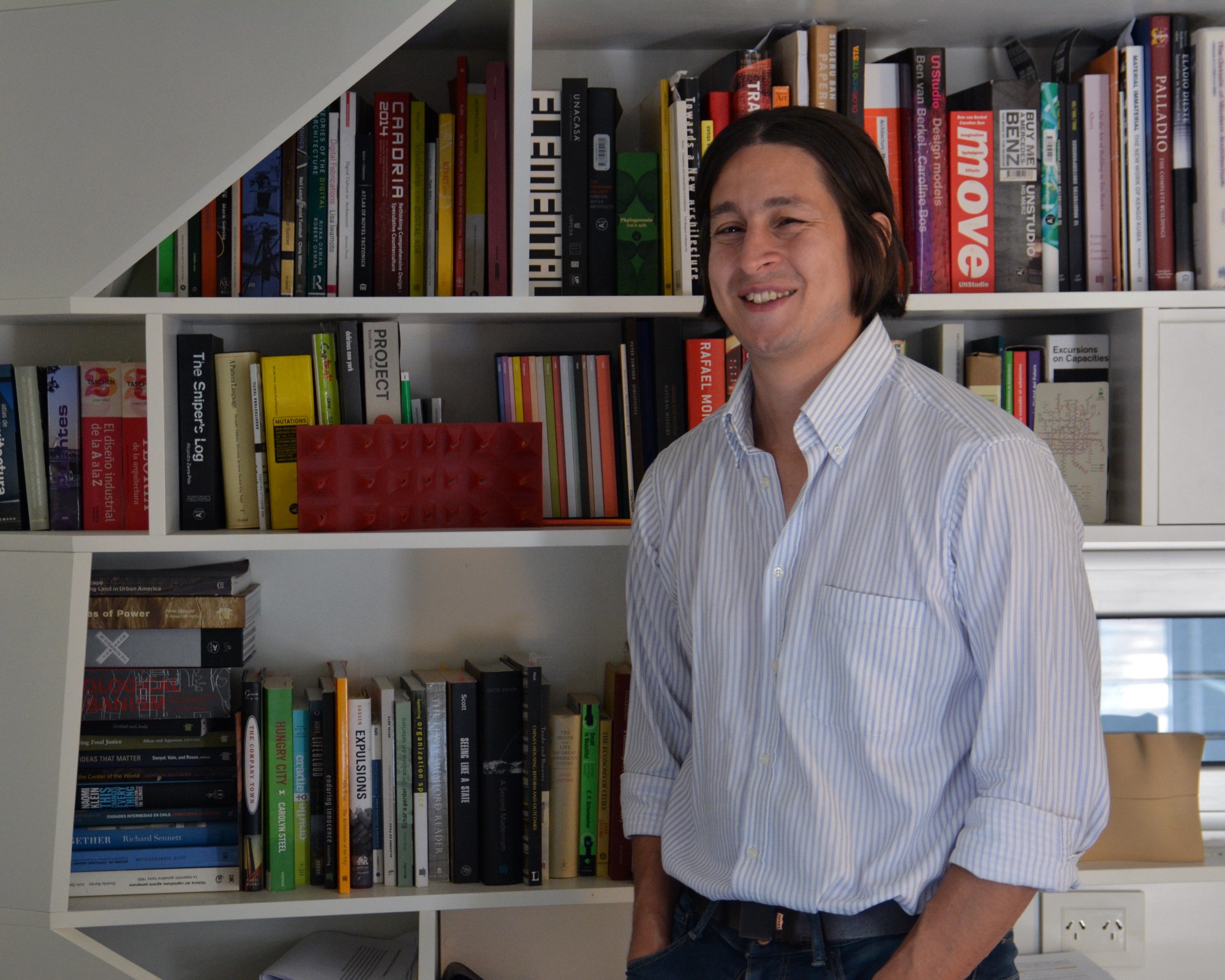
Matías Imbern obtained his Master in Design and Technology with honors from the Graduate School of Design at Harvard University (GSD). His research is focused on the strategic interaction between digital technologies and material systems applied to architecture. He currently serves as Tenure Professor at the National University of Rosario, where he previously obtained his degree in Architecture with gold medal. He is also a Professor Fellow at the School of Architecture and Urban Studies at the Universidad Torcuato Di Tella. having lectured and participated as a visiting professor at several universities and schools. Matías leads his firm I+GC [ar], based in Argentina, where he also directs the research group Lab.Id. His production is focused on housing, competitions and research projects. Modelo spent some time learning about what led Matías to pursue a career in architecture and about what continues to inspire him today.
On becoming an architect
Design has always been my passion since I was a child. Beautiful buildings and big infrastructures have always attracted me, so to study architecture was almost an involuntary decision.
On discovering his voice as a designer
I studied at the School of Architecture in Rosario, Argentina. The great advantage there is that, once you get your diploma, you have access to construction very easily. However, the school is not updated on some key issues, which makes it kind of isolated.
While studying, I met some professors who encouraged me to continue my education abroad. So I decided to apply to Harvard GSD in Massachusetts in order to understand how contemporary architecture was evolving. The rapid and sustained development of new technological processes emerged as a pivotal design concern, motivated by the synthesis of two worlds that seem opposites: digital and material. That was the beginning of my design research.
Guggenheim Helsinki (Rendering courtesy of I+GC [ar])
On founding his firm
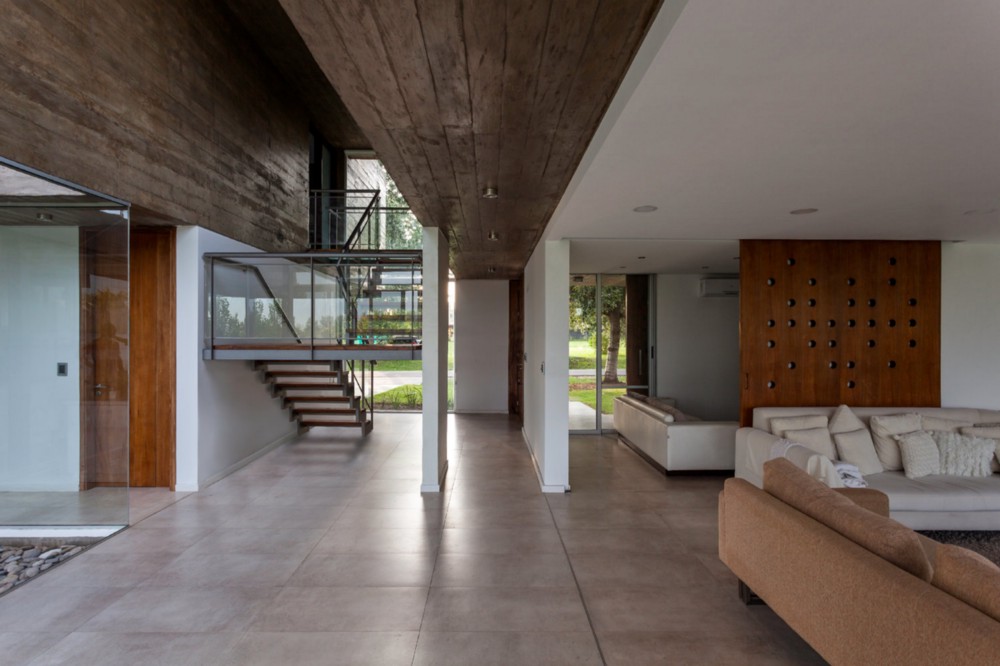
After finishing school I had a couple of housing commissions, so I decided to start a young firm, a common situation in Argentina. I used those houses to apply the concepts I learned while studying, but also to learn how to lead and how to put a building together.
Then, Harvard GSD was a life-changing institution not only regarding education but also influences and vision. When I decided to come back to Argentina to develop my firm, the architecture we practice evolved towards a more systemic approach, based on digital design tools. Apart from that, the scale of projects we are building have changed, mostly housing/mixed-use developments.
Our studio was conceived with the philosophy of stimulating constant interaction between academia and the professional scenario, between research and practice. This design research is what feeds our role as university professors, as well as the importance given to postgraduate studies as a source of experimentation and continuous feedback. Additionally, I decided to create a research branch called Lab.Id as a tool to work mostly on competitions, able to speculate and test concepts more freely. Lab.Id aims to promote a permanent debate about the development of contemporary architecture, trying to understand where to position our architecture. We give a persuasive value to utopia, understood not as an impossible achievement but as something that has not been developed or materialized yet.
On specific principles he strives to adhere to
As a general design principle, we share the idea of generating a contemporary architecture that addresses its time and place, as a way of contributing to the cultural progress of society.
SnJ Building (Rendering courtesy of I+GC [ar])
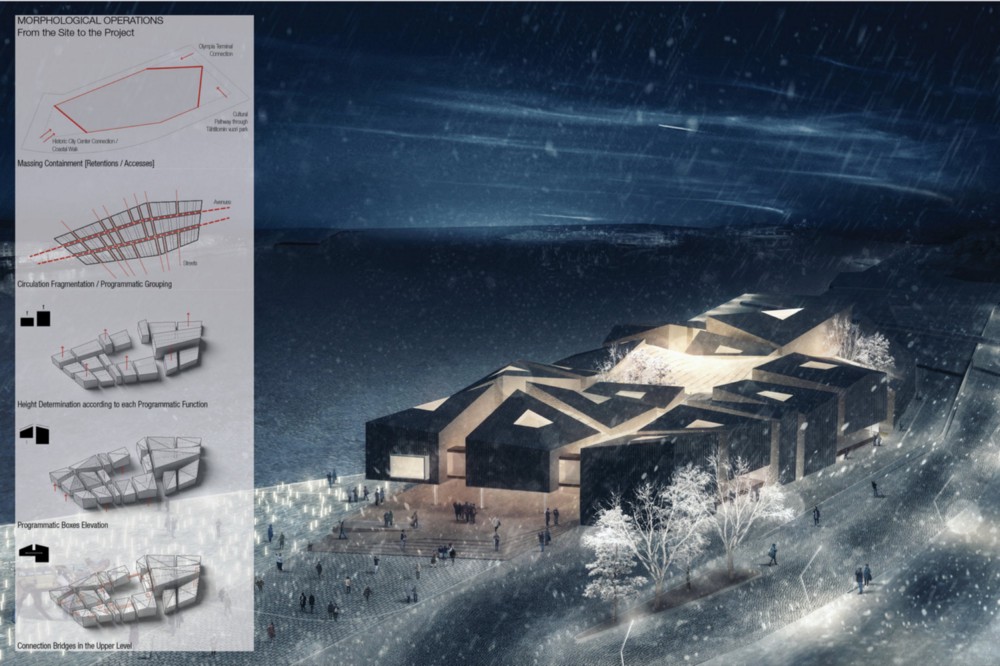
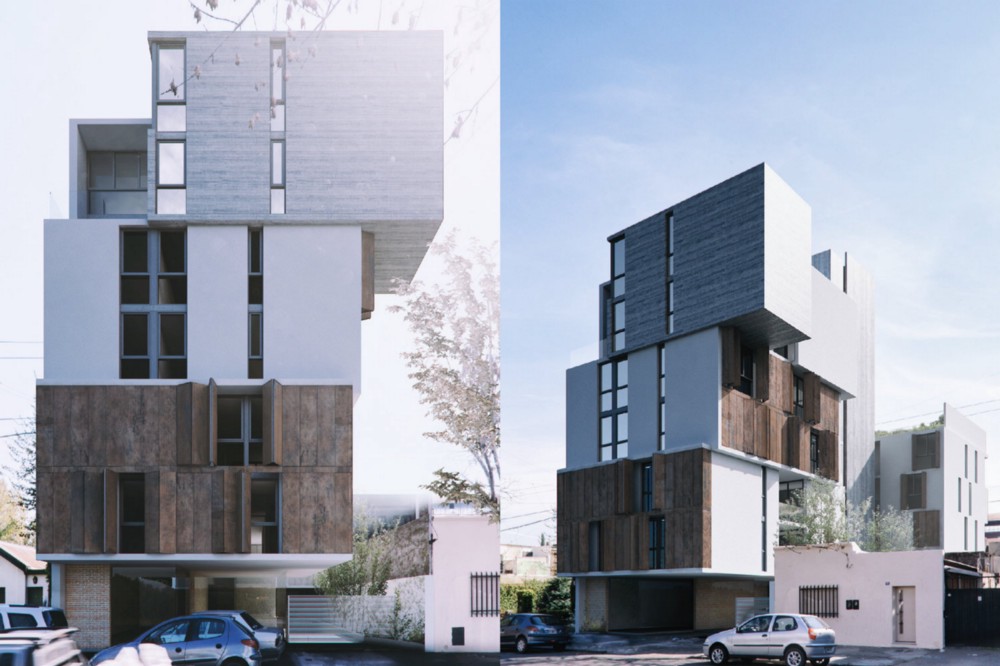
As a specific design principle, we always use a systemic approach, based on the use digital tools, but we tend to define simple systems that can be easily applied with local technology. For example, in the 17×17 House we used a system of folded concrete planes to define form and interior space while accommodating programmatic functions For SnJ Building, the strategy was to use a sequence of stacked boxes that follow programmatic functions, defining, at the same time, the building´s materiality.
We believe in diagrams as a powerful design and communicational tool, to share our design concepts with clients, colleagues and most importantly with ourselves, to understand and substantiate our design procedure.
Architectural design is understood as a system of symbiotic relationships, becoming a hybrid between intuition and systemic thinking. Being more emphatic on processes rather than forms.
On his role at the firm
I think my role as Principal is divided in two tasks. On the one hand it is essential to impart a strong design philosophy to the design team, and be able to convince clients and contractors to believe in that philosophy. On the other hand, leadership becomes crucial in order to organize the tasks, to increase productivity and to get things done. Additionally, there is another role, which runs in parallel to daily activity: constantly thinking in perspective about the future that the firm should pursue in terms of design. A critical thinking to create a feedback loop with daily activity, otherwise you can get lost in daily routine.
María Elena Walsh Educational Complex (Rendering courtesy of I+GC [ar])
On recent projects that represent the firm’s approach
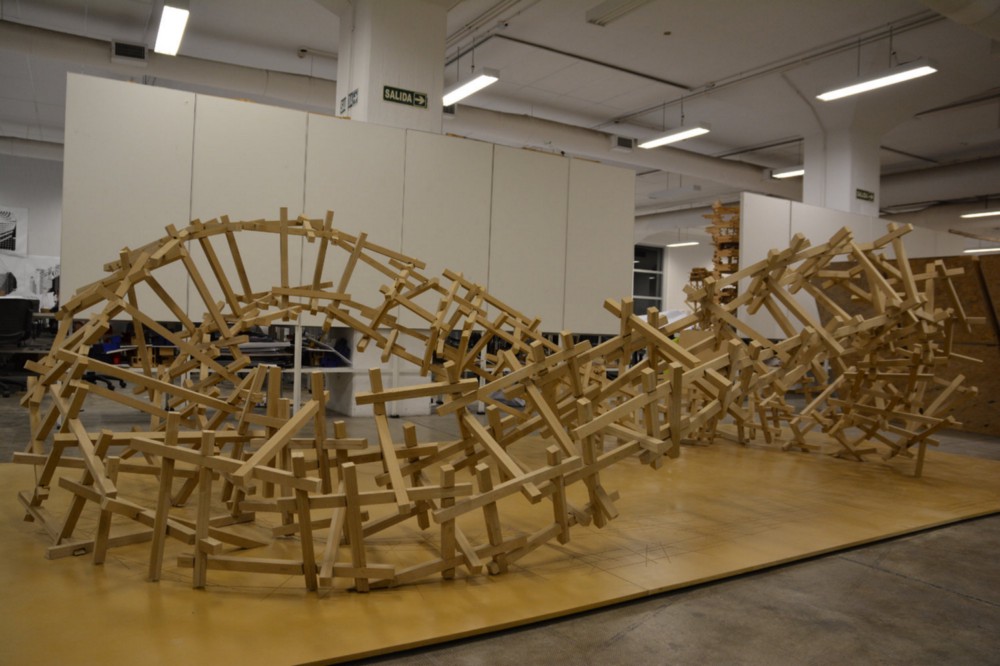
I do not think we have a unique design yet. We still have to work harder in pursuing and clarifying our interest, being able to hack the use of digital systems in a low-tech environment as Argentina. I try to use my teaching experience in Torcuato Di Tella University as an experimentation lab. Last year we finished a Pavilion called Ditebius Torus, an investigation that combines reciprocal structures, timber wood, and the use of digital tools for design and manufacture. The geometry of the pavilion responds to a generic three-dimensional form called ‘moebius torus’, used as proof of concept of the versatility of the system. Afterwards, the real challenge is to be able to express those academic concerns into architectural design process.
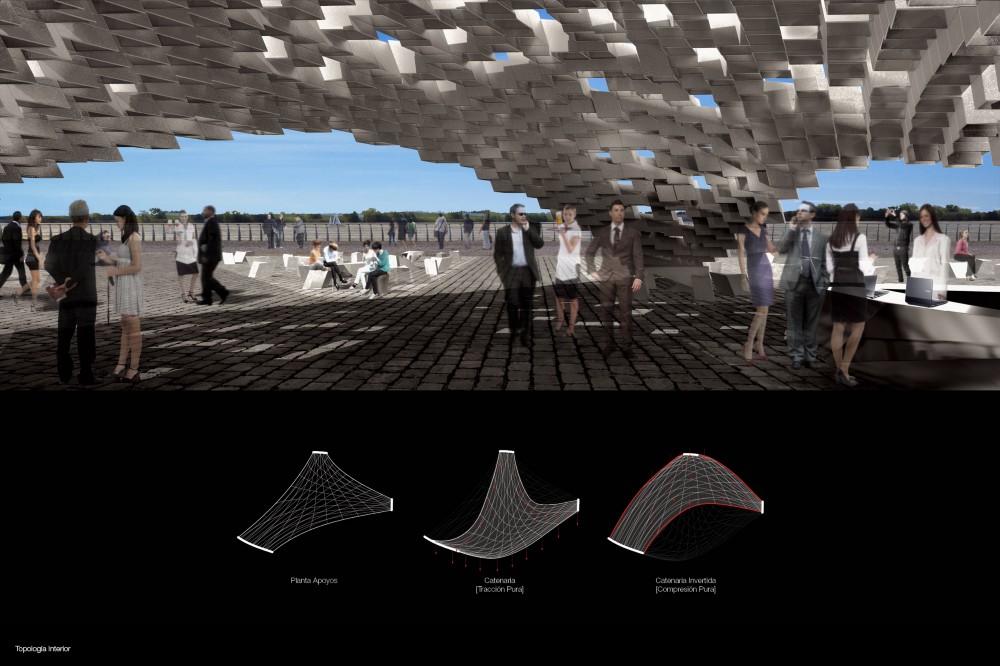
The Disseminable Pavilion is one of the most convincing projects we created following that challenge. As a strategy for our the low-budget proposal required by the Iberoamerican Biennial of Architecture and Urbanism, we submitted a pavilion made y steel benches that can be installed in several parks and squares of the city, after the event is over. A Pavilion that articulates Architecture and Urbanism, and remain imprinted on the collective memory of the citizens. The result is a pure compression dome populated by benches, structurally optimized by finite element analysis software.
Disseminable Pavilion (Rendering courtesy of I+GC [ar])
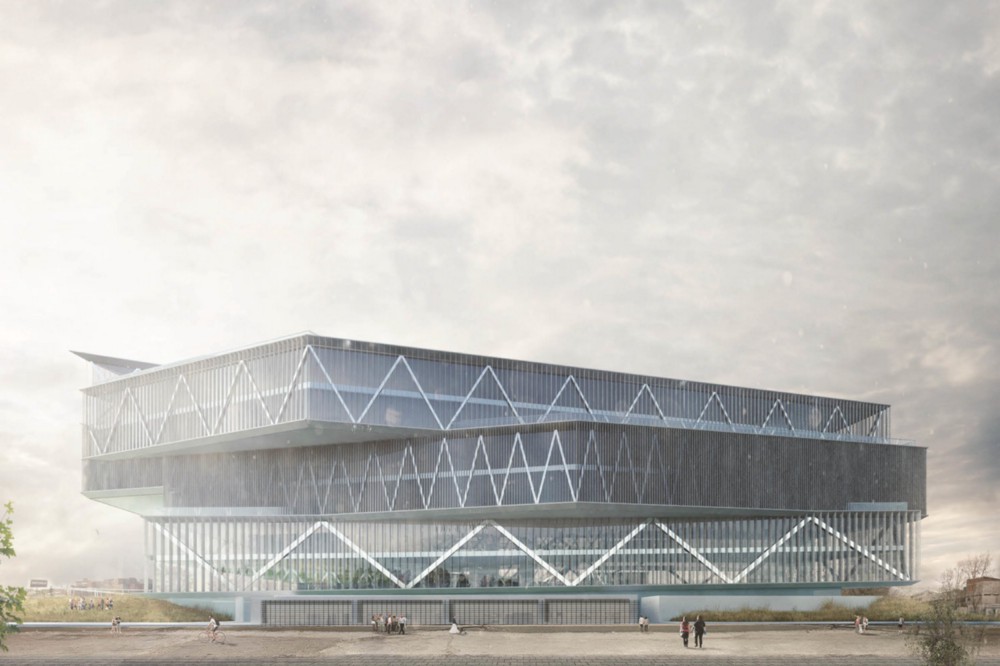
Increasing the scale of the project, another interesting proposal came up for the Guggenheim Helsinki competition. Morphological and material strategies were carefully designed in order to merge with the existing architecture of the city, respecting its historical tradition. The fragmentation of the program reduces the visual impact of the building and gives independence to the exhibitions, being able of re-arranging them in many possible ways. Each programmatic unit has a steel egg-crate structure with a cladding façade of brick panels. The exterior panels use digital technology to create a pattern from a traditional Finnish forest. Additionally, the robotic fabrication of the panels allow making them off-site during the winter (when the harsh weather complicates the construction on-site) and setting them together during the summer, reducing construction time and cost.
Finally, at the urban scale, we got a prize with our proposal for the newest country in Europe, Liberland, besides the Danube River. The critical challenge of the project is how to create a city within a flooding forest. The Danube river dynamics generate lateral migration according to the geometry of the meanders, shaping the landscape of Liberland. In order not to interfere with the natural ecosystem, the project develops two superimposed strategies at different levels. It creates a floating city capable of coexisting with the flooding forest, allowing nature to flow underneath. Scripting was essential to replicate the forest pattern (created by the affectation of meanders), and arrange the city grid accordingly, developing a symbiotic relation with the existing landscape.
17×17 House (Image courtesy of Walter Salcedo and I+GC [ar])
On his design toolkit
Incorporating digital systems allows us to reliably engage design and manufacturing, providing new opportunities even with traditional materials. Rhino and sometimes Grasshopper are present during the whole process, from design to fabrication. They are used to develop initial concepts, to understand space complexity and to study building details.
Projects as the Maria Elena Walsh Educational Complex, the last competition we have submitted, would have been impossible to develop without the use of digital tools. The project has a huge open-office space that was conceived as a helicoidally continuous ramp. The resulting complex space and its reciprocal Vierendeel-girder structure, were impossible to solve without 3D modeling.
On the state of design software today
I think there is a lot of powerful design software. In the last ten years I have noticed an important diversification in the software industry, and the appearance of more specific software to work on different design topics. I remember while being at school, knowing four or five software was enough. However, nowadays, architects need to handle a complete set of tools in order to use the computer as the as a powerful design tool. In the near future, architects will be required to use these tools and to be able to create their own tools, using scripting or similar methods, to be considered literate.
Another software branch is the design of apps for smartphones, popular as an interface between designers and clients. For example, in our submission for the competition One House (an innovative pre-fabricated housing system), we proposed the use of an app, so clients could choose and test their houses preferences, seeing results in seconds. By doing so, clients act as designers, into a controlled environment developed by architects.
One House (Image courtesy of I+GC [ar])
On the future of architecture in the next 5–10 years
I still notice some resistance in the use of digital technology for envisioning architecture. Although digital technology is pervasively around us, we still have so much to learn regarding not only design and fabrication, but also augmented spaces where technology behaves as a surrounding interface.
Of course that technology will continue developing; however, as it happened since the Renaissance, there is always a need of and architectural way of thinking in order to produce innovative buildings conceived according these new set of technological systems. Nonetheless, the challenge as architects is to be able to use technology as a tool to address not only formal/spatial issues but also crucial social problems.
I think robotics and new smart-materials still need to keep expanding to affect all layers of industry. We live in a world in which robots can perform complex surgeries. They are making a strong impact in different areas of our society. Architecture, as discipline and as industry, should reflect these social changes. There are a lot of research prototypes in academia and some few examples in architecture as a practice, but robotics and smart-materials still have a major role to play.
Ditebius Torus Pavilion (Images courtesy of I+GC [ar])
On the evolution of his firm
My firm is based in Argentina, a developing country, so regarding advanced technology we are always one step behind. However, Internet, social networks, smartphones and so on, are tools that keep us informed and connected with the rest of the world. We try to use competitions as research projects in which we can speculate about contemporary technology.
Eventually, as a firm, we will try to expand globally, to be more in touch with these fabrication technologies, and actually use them to construct, not only in competitions.
On advice he would give himself
Dream big, trust your instincts, be perseverant, and never give up.