Design Manifestos: Kevin Kudo-King of Olson Kundig | Modelo Blog Series

Design Manifestos: Kevin Kudo-King of Olson Kundig

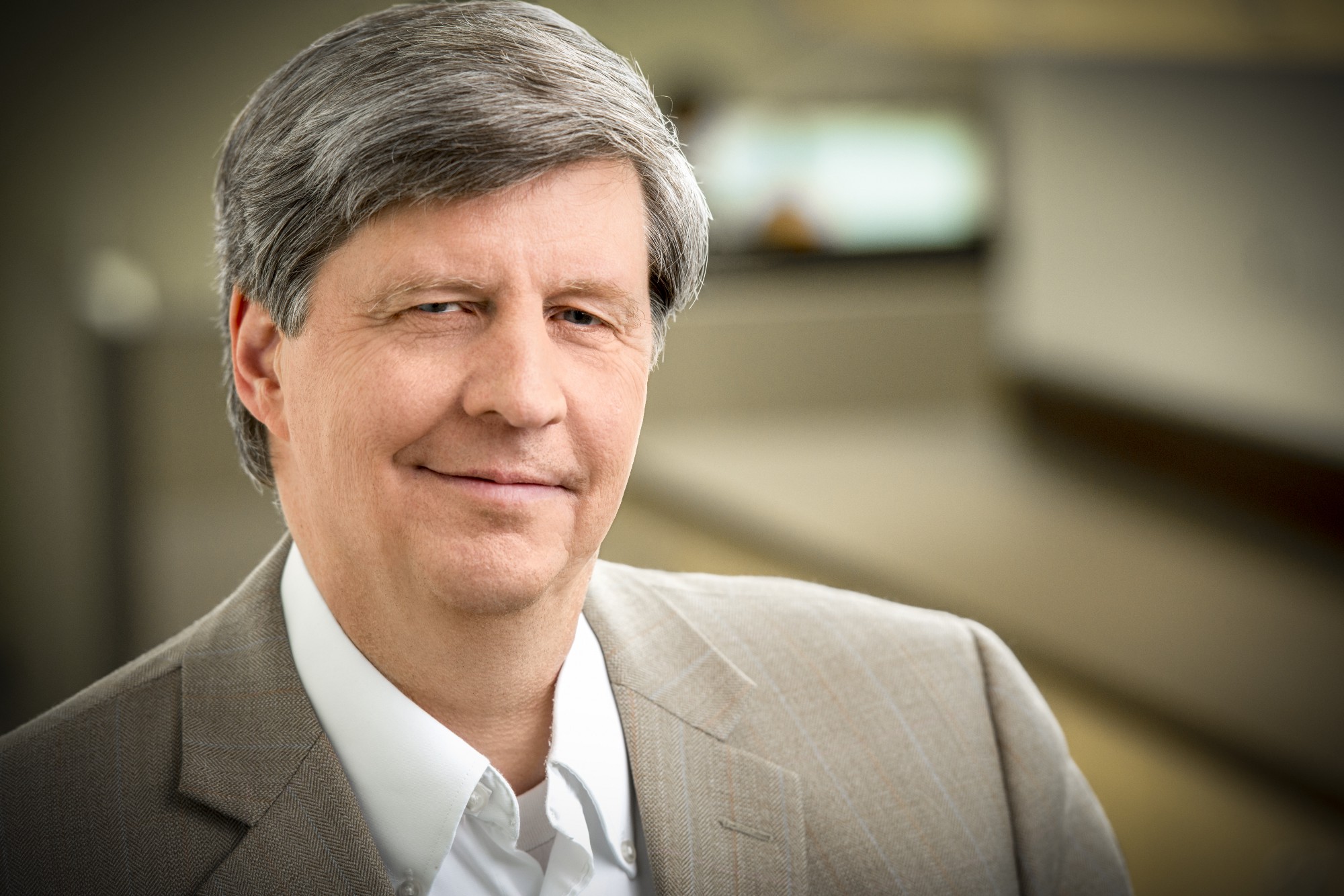
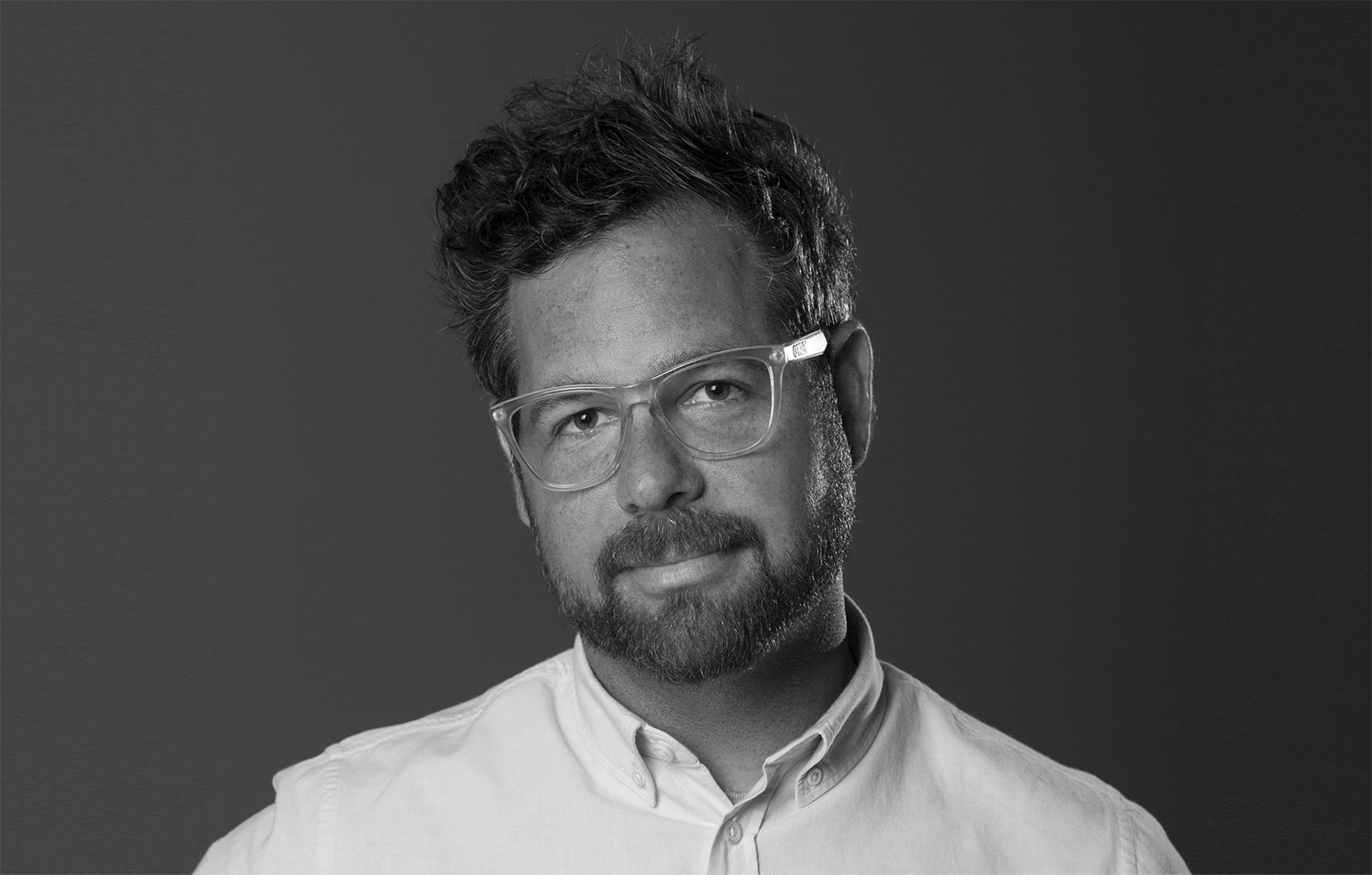
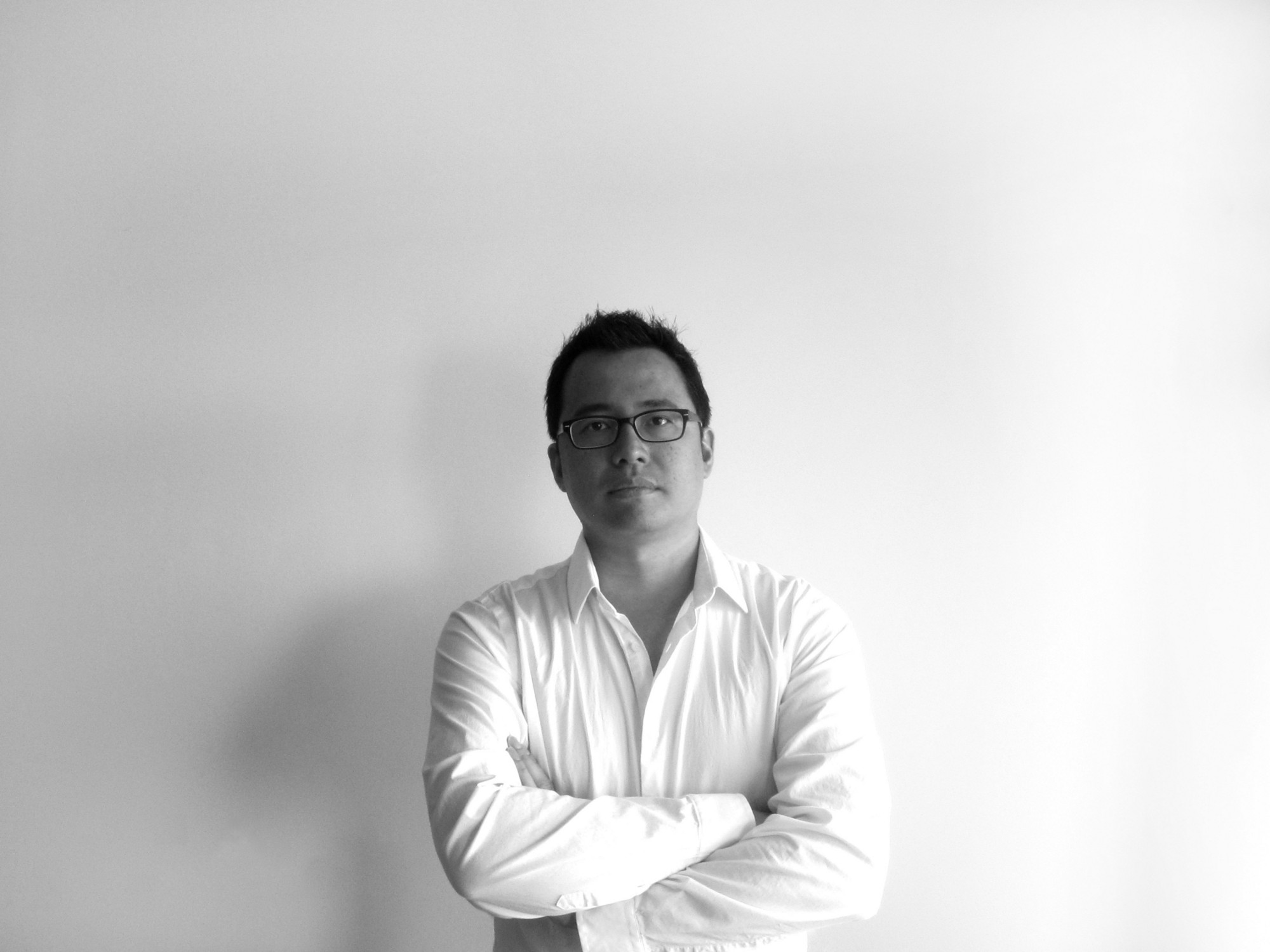
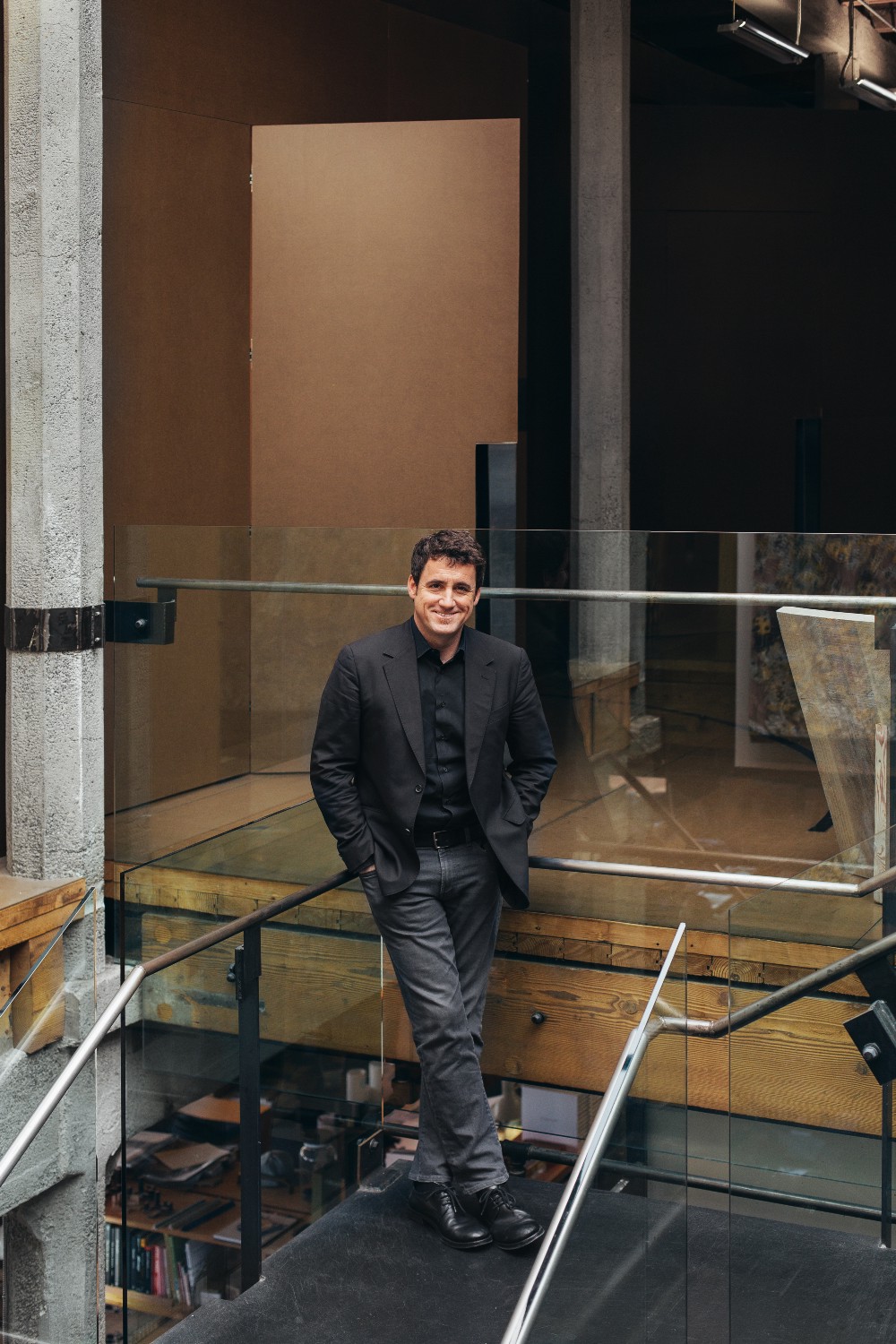
Kevin Kudo-King (Photograph by Rafael Soldi courtesy of Olson Kundig)

Kevin Kudo-King began his career and nineteen-year tenure at Olson Kundig in Seattle, Washington as an intern architect and was named an associate in 2004, a principal in 2010 and an owner in 2015. Kevin works across a broad range of project types including private residences, museums, resorts, and mixed-use and institutional design. His projects extend from the firm’s home base in Seattle to work across the nation and around the world such as India, Mexico and Taiwan to Costa Rica, Europe and Australia. In addition to design leadership on projects, Kevin oversees Olson Kundig’s marketing and business development initiatives and serves in a leadership role on the board of trustees of Artist Trust, an organization that supports artists in Washington State. Modelo spent some time learning about Kevin’s professional journey as an architect and about discovering his voice as a designer.

On becoming an architect
I had an interest in sketching and building things from a very young age. I can still remember drawing sections of airplanes and structures and simply imagining how people might exist inside of them―it really interested me. Remarkably, I see the same thing with my own kids today, so architecture might be in their destinies too.

By the time I reached high school, I knew I wanted to be an architect and decided to attend the University of Arizona in Tucson. It’s a great place to learn about architecture because you can’t ignore the desert. It tells you what it wants and what it needs from you to build there.
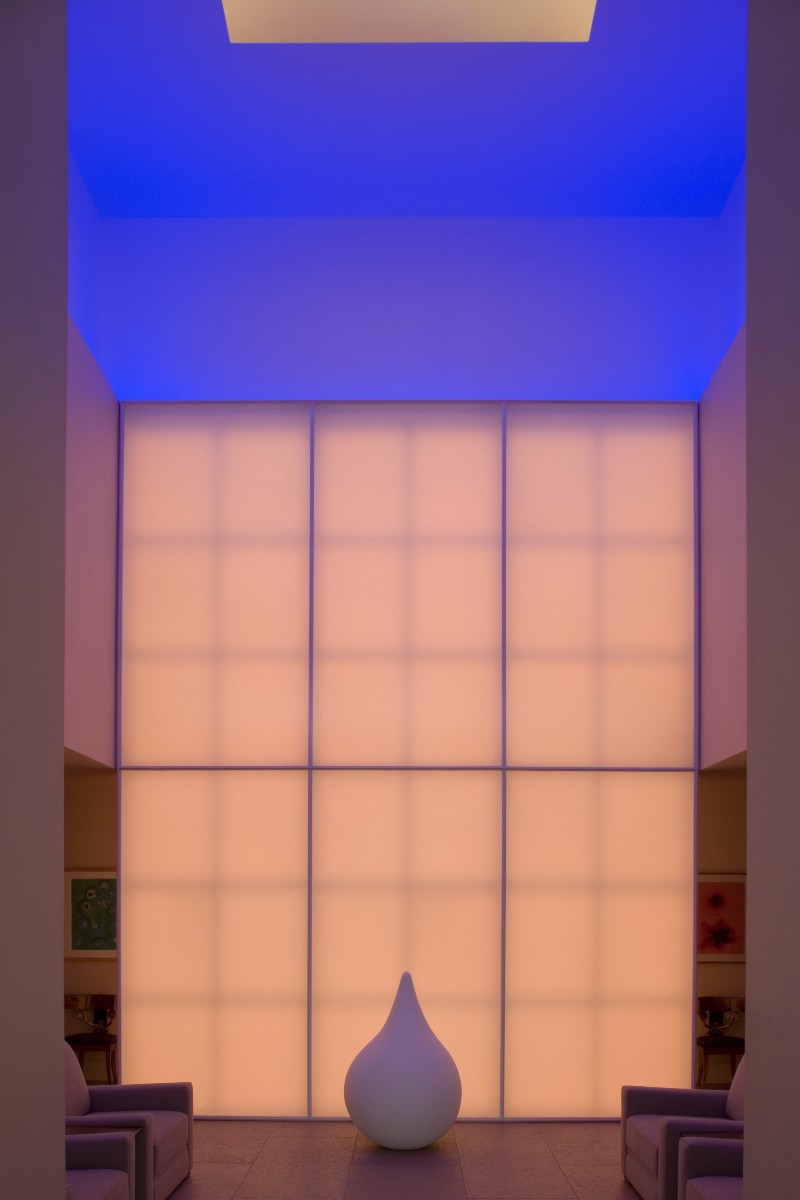
House of Light (Photographs by Paul Warchol and Tim Bies courtesy of Olson Kundig)

On discovering his voice as a young designer
I developed my design voice in Arizona, when I would go out into the desert and basically think about what it means to be there and how humans can exist in that extreme environment. In order to do so, you need to build thick concrete or heavy walls; you need to dig down in the earth where it’s cool; you need shade. The light is so strong and dramatic, and there are inspiring views of the surrounding desert, mountains, and hills that need to be considered along with solar orientation as you design.

My education in Arizona really pushed me to think about “place” beyond the actual physical place, which is so important―it encouraged me to think about what it feels like to be in a particular location on a spiritual level. That philosophy guided my interest early on. It took a couple years in school―this was the 1990s―to wade through the external influences of the moment in order to focus on concepts that were more timeless. Some early influences for me were the Salk Institute by Louis Kahn and the work of Luis Barragán.

I joined Olson Kundig directly out of school. It was the place I wanted to work. Prior to that, I had spent a lot of time in the shop and had started making furniture out of steel. I had also worked in construction, which I feel all architects should do. I ended up at Olson Kundig because I valued the firm’s focus on materiality and the cornerstone principles of craft, site context and integration with nature. Olson Kundig was known for interweaving materials and details in a fashion similar to masters like Carlos Scarpa; they allowed the hands of the craftsperson to be expressed in their projects and celebrated the collaboration with the builder as part of the design process. This foundation was instrumental in allowing me to discover my own voice.

The development of my architectural voice was also rooted in the firm’s focus on the integration of art and architecture. I was introduced to the work of James Turrell and later worked with him on one of our houses. I will never forget being in a dark room with him at 5:30 in the morning while he adjusted the light in one of his pieces―it felt like I was inside of a painting, as it was being painted. We’ve done work with Richard Serra, too, and his sculptures have also influenced me. Although we haven’t worked with Hiroshi Sugimoto, I have seen his photos and pieces during trips to Japan and they are really amazing―they’re about capturing these perfect, abstract moments in time, which is what architecture can do, too.

My wife is from Japan, so we go there every year and have done so since 1997. That has been a huge influence on me not only because of the architecture and craft but also because of the experiential aspects of how things unfold in Japanese architecture and gardens.

On joining Olson Kundig
In school, we were taught to do everything ourselves. When you get out into the real world, however, you realize that it’s actually a team effort. At Olson Kundig, collaboration is especially important. At our practice, we work closely with builders, craftspeople, and artists.

When you get out of school, it hits home that architecture is a service profession, especially in the work that we do which focuses on residential architecture. I find residential design to be exceptionally fulfilling because people are coming to you to fulfill their personal dream of building their own home. It’s rewarding to see them moved by what we create together.

On specific principles he strives to adhere to
We work around the world, and in particular, I do a lot of international work. Right now, we have a project in Sydney that I’m working on with Tom Kundig and a project in London that I’m working on with Jim Olson. They are in two completely different places, but both of them are about creating architecture that fits into a specific context. By bringing our design values to a specific site and a client’s set of determinants our work continues to evolve.

We always prefer to work closely with the builder early in the design process and we value a very collaborative process during construction. We do not feel the design process ends when construction begins. Leaving enough latitude in the design to allow changes and contributions by the builder means we create something together that reflects all involved―it is something greater than we could have achieved separately or with a less collaborative attitude.

On his role at Olson Kundig
I focus a lot on residential and international work. I also work on hotels and cultural projects. For example, we recently completed a visitor center for the Bellevue Botanical Garden outside Seattle, Washington, and an art museum in Tacoma. It’s important to us that we remain a strong regionalist practice, which we have been since Jim founded the firm in 1966, even though we also practice nationally and internationally.

My concentration is project-focused. On some projects, I am the design lead, while on others I work in collaboration with Jim Olson or Tom Kundig. I also oversee our marketing department, who are a great group of folks and don’t really need much overseeing, but that is part of what I do.
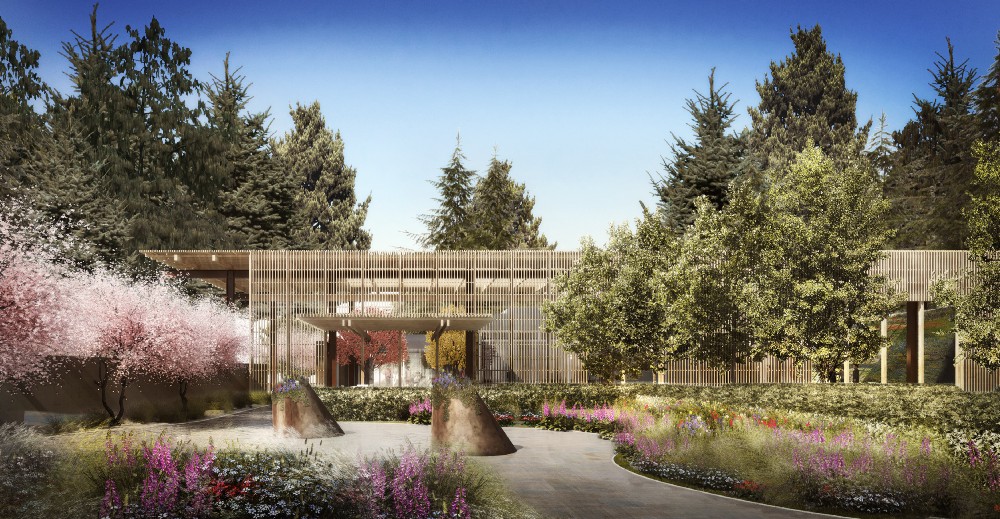
Leach Botantical Garden (Renderings courtesy of Olson Kundig)

On recent projects that represent his unique approach
We do have a unique approach―we believe in constantly reinventing ourselves. Every project is somewhat of a prototype because it needs to be about the place in which it is built, and about the people who it’s being built for, the combination of which is always completely unique.

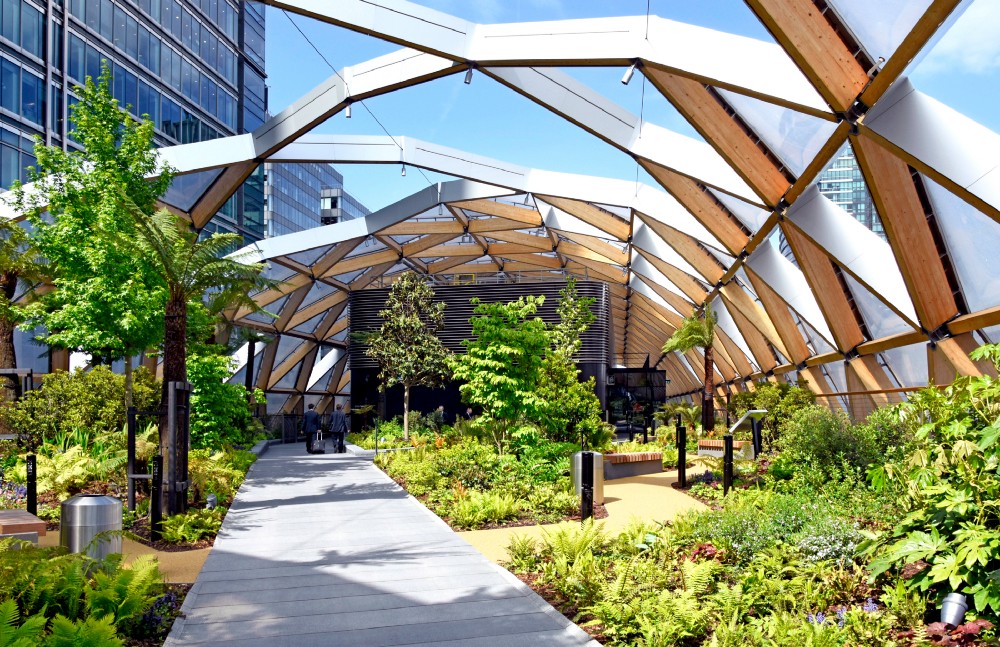
One project I’m working on now is the Upper Garden at Leach Botanical Garden in Portland, Oregon. The property was owned by a couple who is well-known in the horticulturist world. They gave the property to the City of Portland in order to create a new public property at the west end of Portland for everyone to enjoy. The concept we proposed is inspired by traditional lath houses―in this case, we have designed a wooden lath structure and a building that floats inside of it. The buildings incorporate vegetated roofs and alpine roof gardens into the structure that are both architecture and exhibit. They are about education, experience, storytelling, and are beautiful structures.

I recently worked on the JW Marriott Los Cabos Beach Resort & Spa with Jim Olson, which opened last November. For that project, we wanted to create a resort focused on the horizon. When you enter the open-air lobby, you are greeted by views of the ocean and expansive infinity pools, creating the illusion of the ocean merging with the property. It is reminiscent of Sugimoto’s photographs of the horizon. We wanted to create an experience of unfolding―you enter the resort on a high elevation, then descend down into the earth, but eventually every path leads to you to the top of the dune, looking out over the ocean, where you feel like you’re practically at the end of the earth.
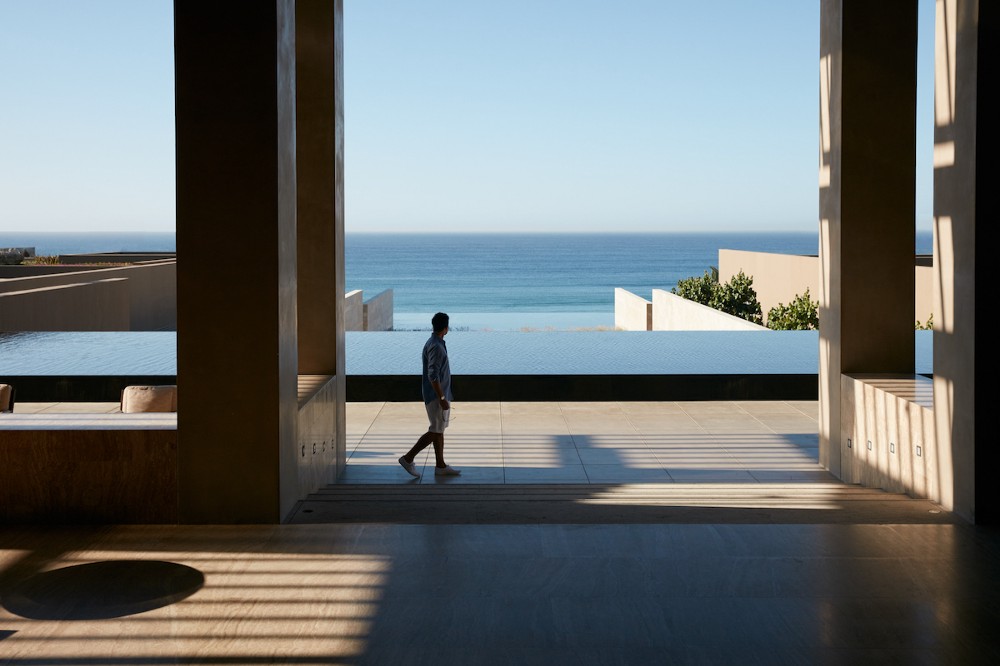
JW Marriott Puerto Los Cabos (Photographs by Benjamin Benschneider and Martien Mulder courtesy of Olson Kundig)

On his design toolkit
I came into the profession at a time when we were still taught to draft by hand, but we were also using early versions of AutoCAD, where you would type in all your commands. I’m glad I learned both. The computer is useful because you can study lots of variations and move things around easily, but its disadvantage is that you’re in this virtual world and you don’t really have a sense of scale.

In general, I start with hand sketches and drawings in a sketchbook, then I move to laying out the parts and pieces diagrammatically on the computer and, finally, I print those out and go back to hand drawing over the computer drawings. I move back and forth between the two because the act of putting pencil to paper allows you to feel the spaces you’re creating. We use physical models a lot and always have; I did the same on all my school projects as well. This also allows for a very direct tactile understanding of the project.

Nowadays, renderings and 3D modeling are amazing, but they still don’t take the place of being able to review a physical model. The client can hold it up, look inside, turn it around and understand the scheme at a more direct and tactile level. It is still less abstract than what the computer can produce.

On the state of software today
I feel the best tool an architect has is his or her imagination and training as a problem solver. We use Revit to produce construction drawings. My impression of it is that it’s not an extremely intuitive tool. What you can potentially do with it is amazing, but it has a very complex interface.

Ultimately our digital tools are going to become more intuitive and immersive, and they’re going to get better and better just like AutoCAD did. You used to have to type in commands to be able to draw, but then everything became more icon-based, more visual, and more intuitive. I’m sure Revit will head in that direction as well.

On the future of the industry and Olson Kundig in the next 5–10 years
Our practice is expanding and we recently dropped “Architects” from our name. We were previously “Olson Kundig Architects;” now we’re “Olson Kundig.” We do exhibit design, interior design, landscape architecture, furniture and gizmo design, and we even do videography. We use video to explain our kinetic work, which naturally lends itself to moving pictures. Video allows kinetic architecture to unfold in front of the viewer so they can truly experience it.

Phil Turner, who previously worked with us as a consultant, has been in-house since 2012, and he is simply a genius! Before he joined us he fabricated the kinetic designs we created. After he sold his company, he joined us to help with our kinetic designs. The profession of architecture is changing in that it has broadened and architects are finding new roles for themselves as designers of many things beyond buildings.

I also believe it’s become a smaller world. We’re doing work all over the world at the moment, and as architects based in the United States, we have a level of creativity that we can take elsewhere in the world. I hope that it will be easier and easier to do that. We could travel less when the digital technology and tools catch up; they work now, of course, but they are somewhat counterintuitive much like Revit is. I believe they will only get better and more immersive, and ultimately, less expensive and as the mass market embraces them.

For a long time now, people have been becoming more aware of sustainable design but I think it’s going to become more deeply embedded in our process more as architects. We have a member of staff solely focused on R&D and high-performance building technology―he ensures our projects are even more sustainable. We have always designed and built projects to last 100 years or more using local craftspeople and materials that respond passively to the climate. Now we’re going to take it one step further and be able to do the metrics and analytical work to make sure that they are aggressively energy efficient and incorporate the latest technology that carries them far into the future.

On advice he would give his younger self
This is a tough question. I look back and I realize I was very lucky to end up precisely where I wanted to be. However, if I consider whether that calculus class I took in college was useful, I would probably have to admit I didn’t really need to take it―even though I enjoyed it! In retrospect, I should have stuck with Spanish. We’re doing a lot of work in countries where people speak multiple languages. My wife speaks multiple languages, yet here I am, able to speak only marginal Spanish, some very bad Japanese, and only okay English!
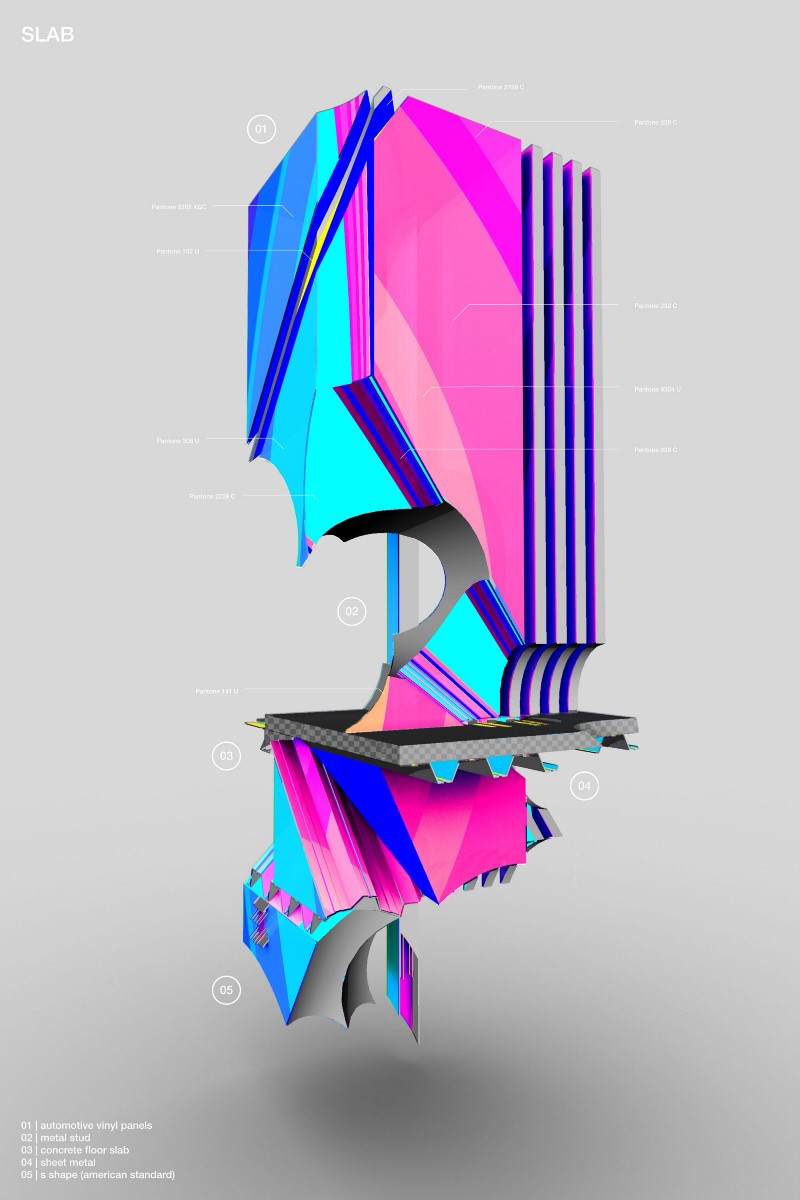
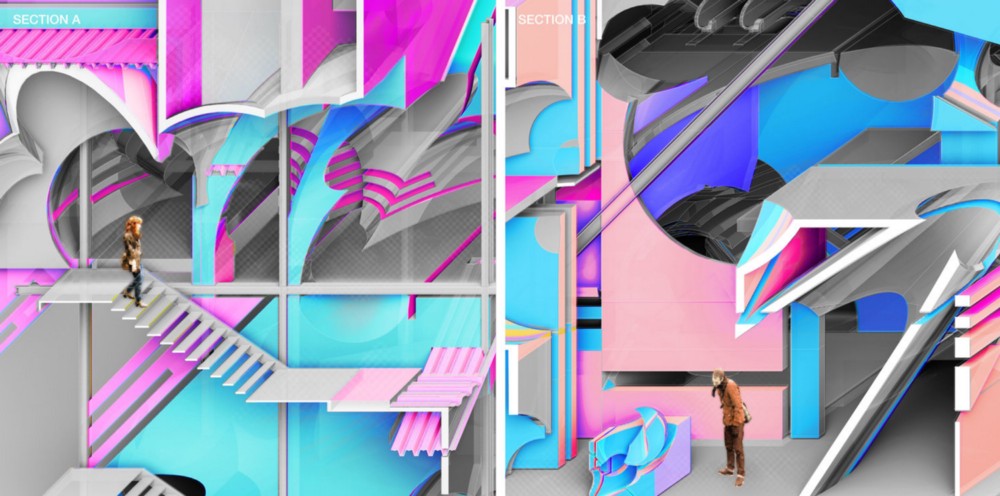
FLAT.obj|Modelo Blog Series

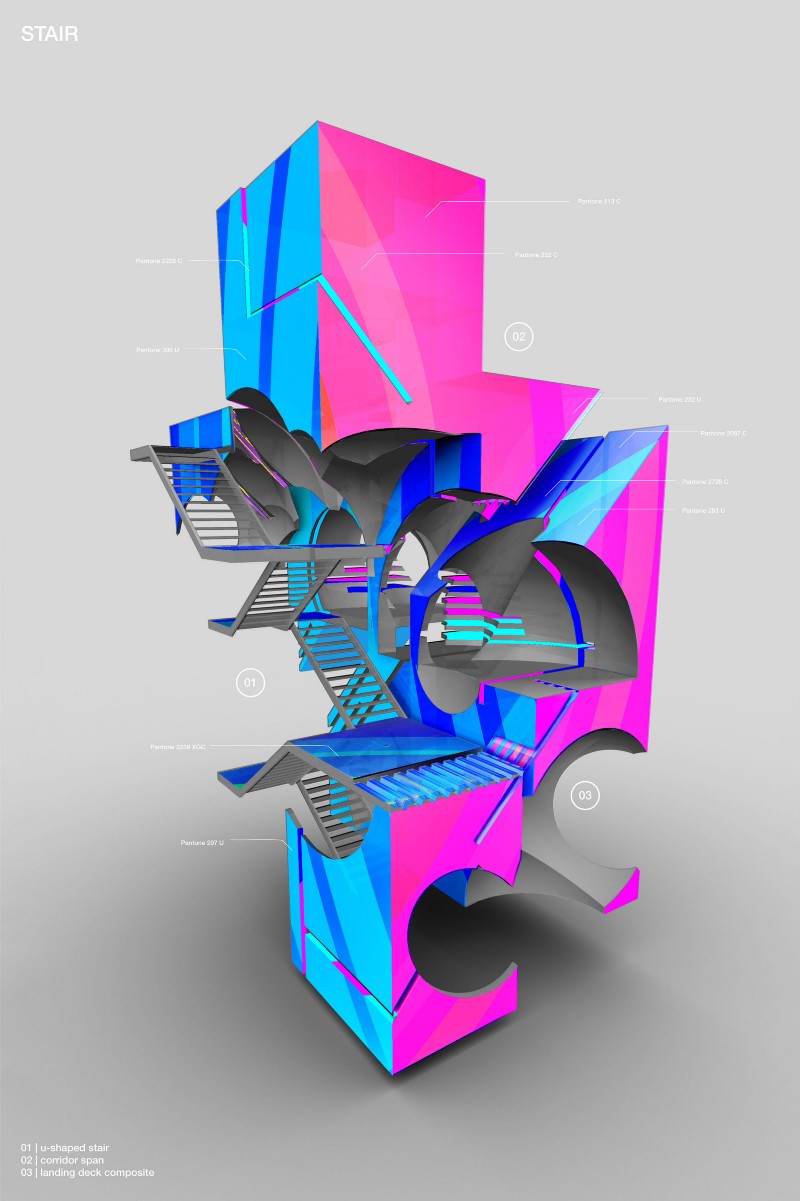
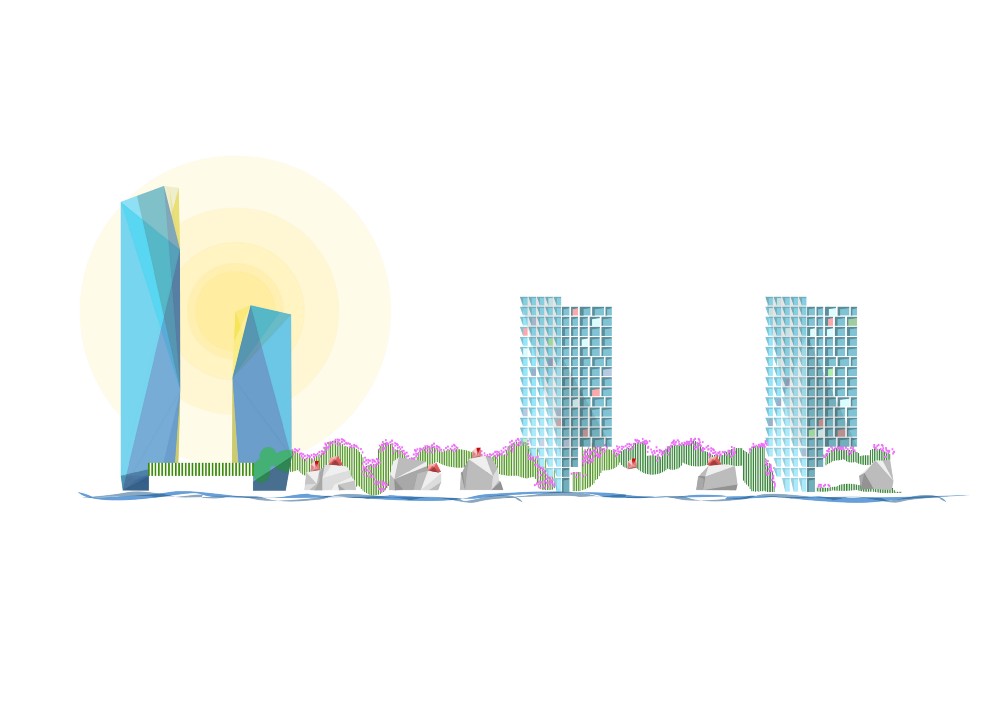
Featured in this week’s UNBUILT post, is Jaime Rivera’s FLAT.obj project. Check out his 3D model here.

Jaime Rivera
Advisor: Adam Fure
University of Michigan
Taubman College of Architecture and Urban Planning
Ann Arbor, MI
Degree: MArch2
Winter 2016


This thesis investigates the relationship between color and form through the reconfiguration of voids and the shifting of volumes, where the misregistration of one creates an alternate reading of the other. Overlaps and non-geometric alignments of color establish perceptual miscues where identifiable forms (cubes, spheres, and lines) take a turn toward the graphic, identified here as a set of material conditions that stem from logics of paper space and software. These fluctuating relationships between formal operations (shift, slice, taper) and the application of color open possibilities for a perceptual space between the 3-dimensional space of geometry and the 2-dimensional space of the graphic, one perceived and the other imagined.

Separate investigations into elevation, section, plan and perspective cultivate discrete forms of attention to the object, as color and form change within each representational convention. For example, perspective showcases the interplay between 2D and 3D that arises when the application of color, which is determined in the abstract world of software, confronts the depth of the physical object’s shadow. This results in a changing set of aesthetic effects that change with the perceiver’s viewpoint.

In ‘Art as Technique,’ Viktor Shklovsky describes the perception of everyday life as automatic. According to him, the role of art is “to develop a variety of techniques to impede perception, or at least, to call attention to themselves.” The automated and automatic is the condition this thesis responds to, deploying the graphic to call attention to the perceptual and representational extents of form. Flat.obj identifies the graphic as a formal register that exists between the digital and the physical, and between architecture and graphic design, combining concepts and techniques from both into a hybrid medium.

Design Manifestos: Lauren Collier of SSOE Group | Modelo Blog Series

Design Manifestos: Lauren Collier of SSOE Group

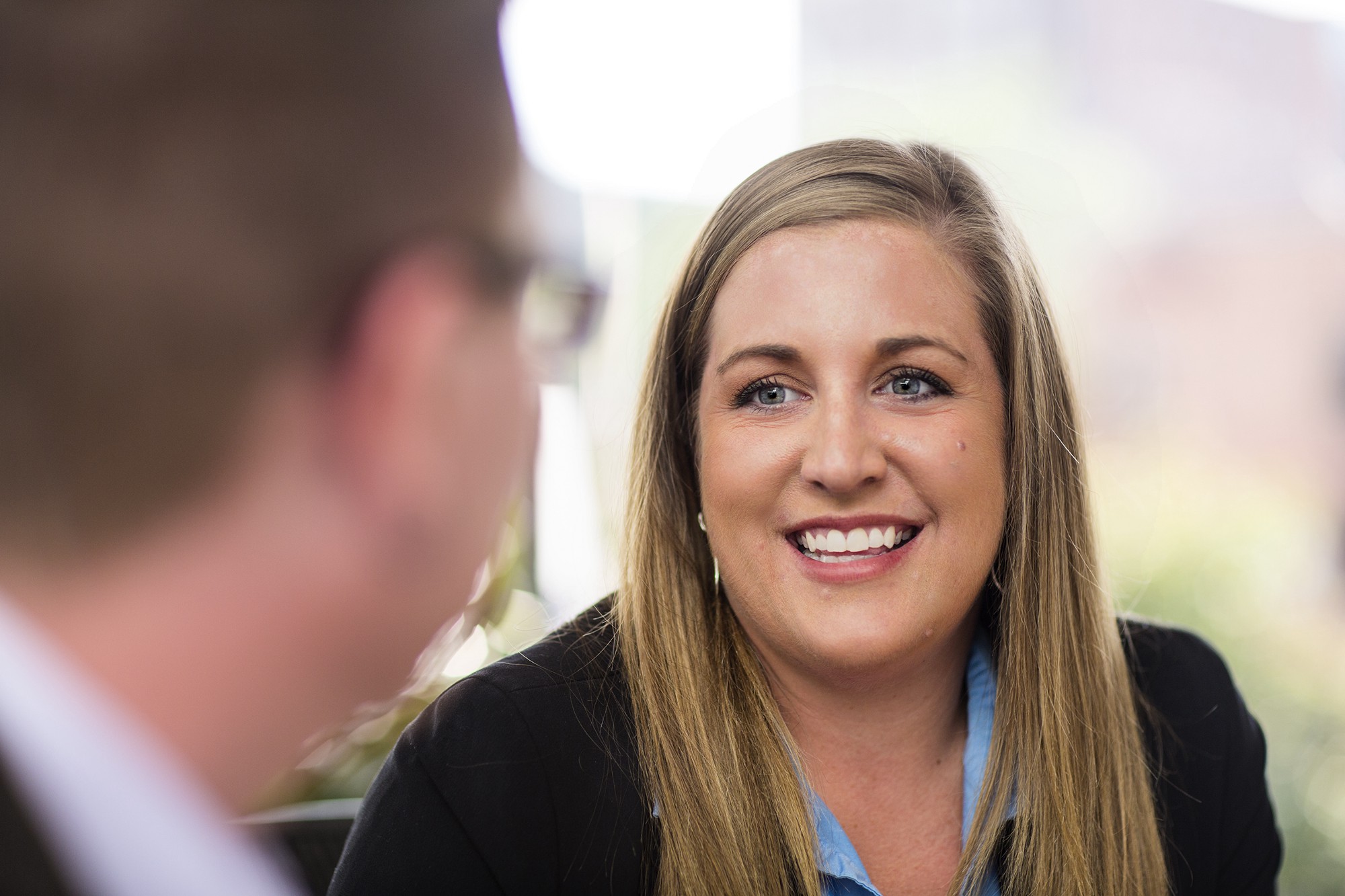
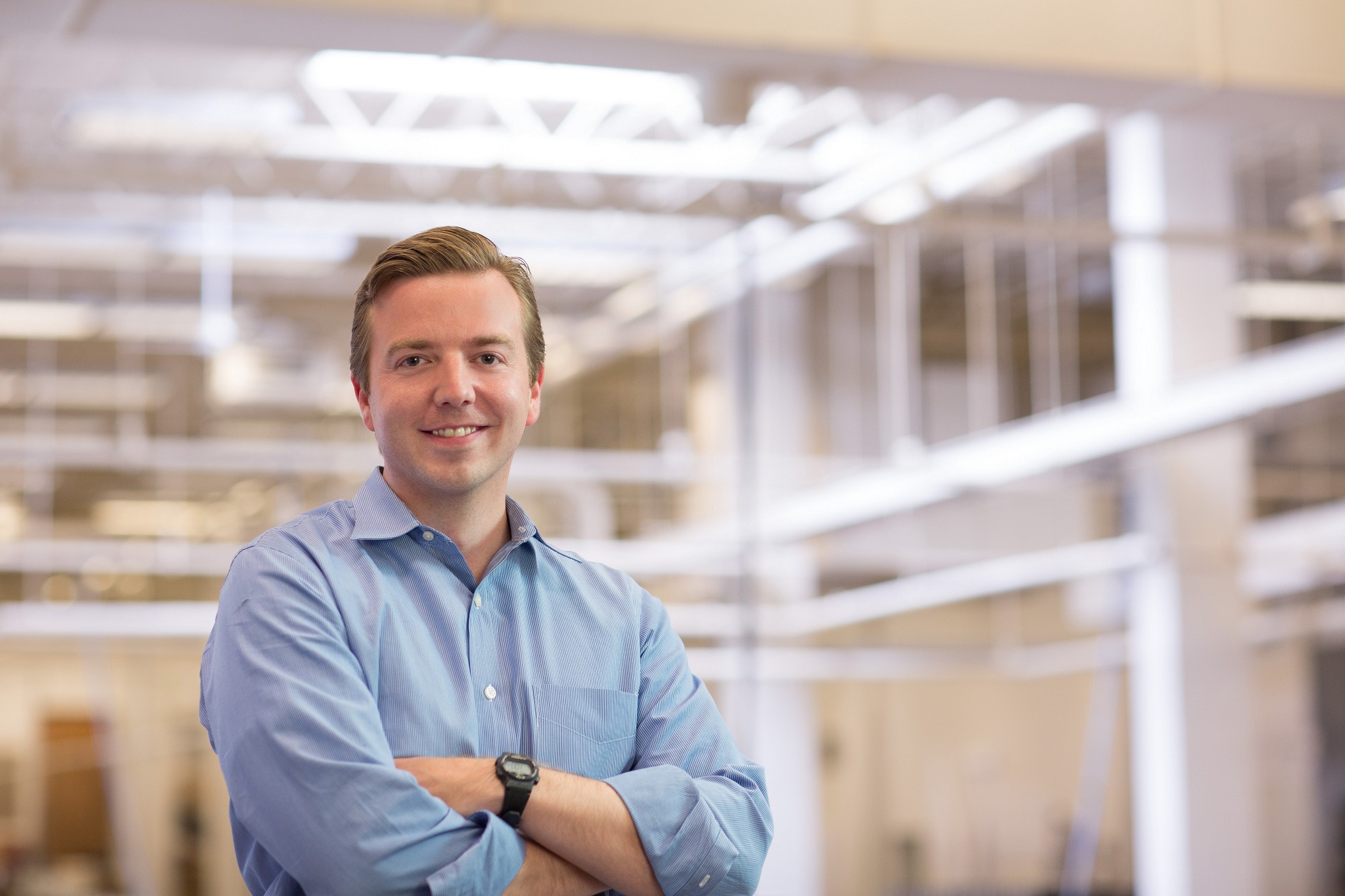
Lauren Collier (Photograph courtesy of SSOE)

Lauren Collier, Associate AIA serves as Virtual Design and Construction (VDC) Manager at SSOE Group, a global project delivery firm for architecture, engineering, and construction management. With 11 years of industry experience, she is a leader in SSOE’s VDC initiative and champions corporate BIM/VDC standards and develops innovative new technology strategies with her team. Her creative passion lies in developing constant improvements and innovative model/data use solutions for SSOE’s design and construction operations. She leverages technical tools for improved efficiency, performance, and quality in project execution. Lauren holds a Master of Art and Architecture from Savannah College of Art and Design and a Bachelor of Architecture from Miami University. Modelo spent some time learning about Lauren came to join SSOE and about her current role as VDC Manager.

On becoming a Design Professional
Early on, as far back as high school, I excelled in art but also in math and science. It was before STEM was being promoted as heavily as it is today. I had several excellent teachers that helped guide me in the direction of architecture and engineering. After visiting a couple schools I realized that the architecture curriculum aligned well with what I enjoyed. That came down to problem solving. The architecture career is about problem solving for the built environment. You’re able to use your creativity skills to provide solutions for your clients, be that for hospitality or commercial or industrial. Each one of the building types have a different solution. I studied at Miami University for my undergraduate. I went to Savannah College of Art and Design for my Master’s. After college I actually worked for a healthcare firm and did healthcare architecture for some time.

SSOE was my first big internship when I was in undergrad. They called me up in the spring of 2007, after having graduated with my master’s the previous year, and asked if I was interested in a technology position. It had to do with the introduction and the implementation of BIM technology throughout their organization. They knew that I already had a connection with the architectural department from my days as an intern and many of the same staff members were still there. That took me down this technologist avenue. When I came back to SSOE, my main responsibility was the implementation of BIM in the architecture department and providing them unique solutions to meet the demands of the clients.

Since then, I’ve continued to stay connected to architecture. But I would say I moved on into the project execution realm. When I say project execution it goes beyond just using BIM. It’s developing processes, using other technologies, and syncing them with BIM and other modeling techniques to improve our overall efficiencies. Right now I have a team of other technologists with diverse backgrounds and our main responsibility goes back to coming up with creative problem solving solutions to deliver our projects. We develop a project execution strategy and we find the right technology to enable that strategy.

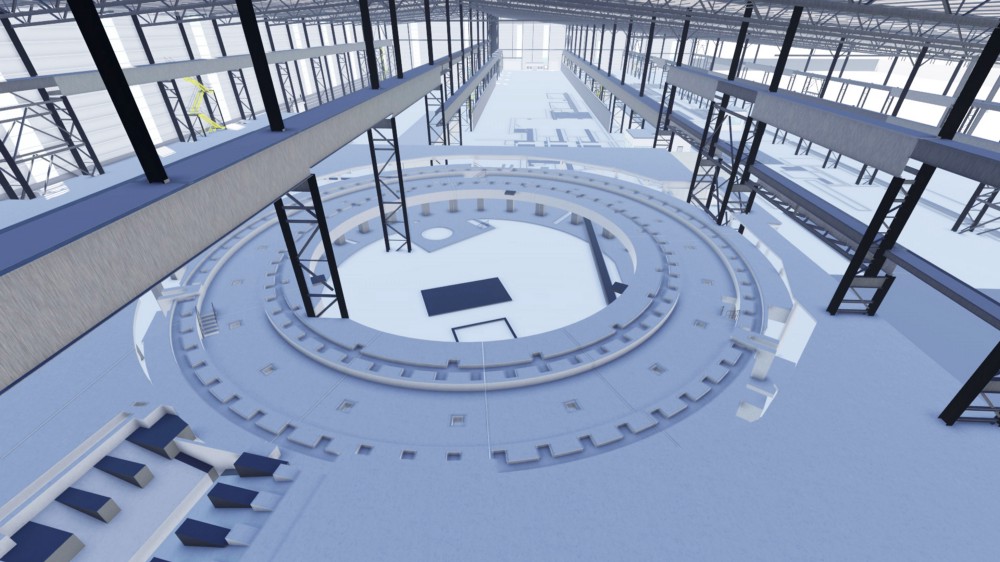
Confidential Client (Image courtesy of SSOE)

On discovering her voice in the profession
For the first couple of years my main responsibility was technology and processes for the architectural department. I quickly grew out of that role and into leading people in that execution. I attended many technical conferences, I also joined the USACE (United States Army Core of Engineers) Industry Consortium where we defined standards for their BIM deliverables. It was exposing me to a lot of general contractors, other design firms of varying sizes, and expanded my experience and network. I decided that it was time for me to have a discussion with our Chief Strategic Officer about an idea that I had been developing. This idea had to do with going beyond using the model just for design documentation and was about pushing it into estimating, preconstruction, procurement, and construction. The design and construction industry had the potential for dramatically increasing productivity and eliminating waste by integrating our delivery model.

We needed to be on the leading edge of this movement. I soon submitted a very rough preliminary business plan and research. We had lunch and discussed the plan in detail and I was given the green light to move forward.. He not only got behind this idea but offered to be my executive sponsor. After that opportunity, additional opportunities presented themselves. Through this process, I realized that even though I was a young professional, that didn’t mean that I had to keep my ideas quiet, I had a voice and it was being heard. It boosted my confidence. Since then I’ve gone from being a team leader, to a section manager, and I now just recently got another promotion to manager of our Virtual Design and Construction (VDC) department, and as nervous and excited as I am about this promotion, I realize that I’m doing all the right things.

Confidential Client (Image courtesy of SSOE)

On her role at SSOE
Our vision for our department, we have about six people, is focused on technology and processes to help influence project execution. Our team is focused on our EPC/M projects within our construction arm. EPC/M is engineering, procurement and construction/construction management. We have more skin in the game and they’re higher risk projects. We’re doing the construction management and we’re buying the equipment — -and sometimes the project through commissioning and start-up. The use of technology is helping us drive huge efficiencies. Initially, we had been focused on pilot projects. Over the last year, those pilot projects have created some proficient standard processes that we are now implementing at an organizational level.

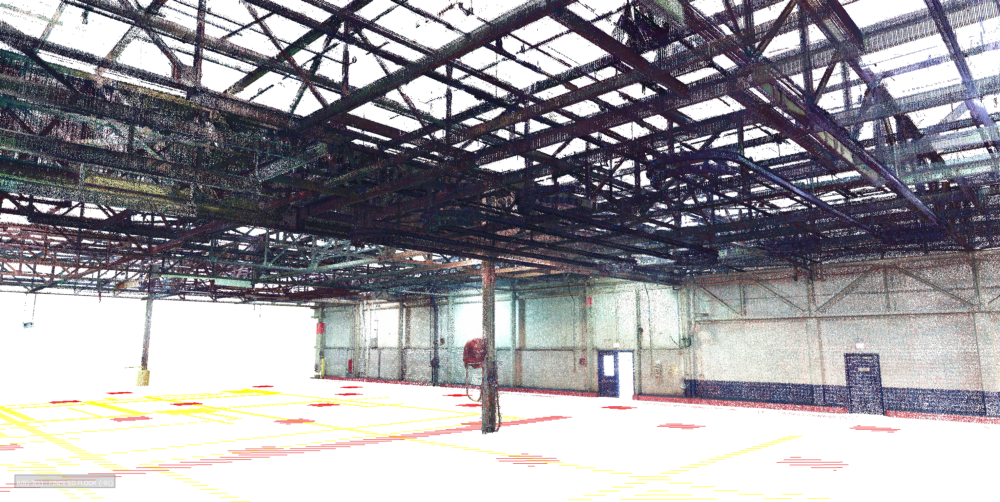
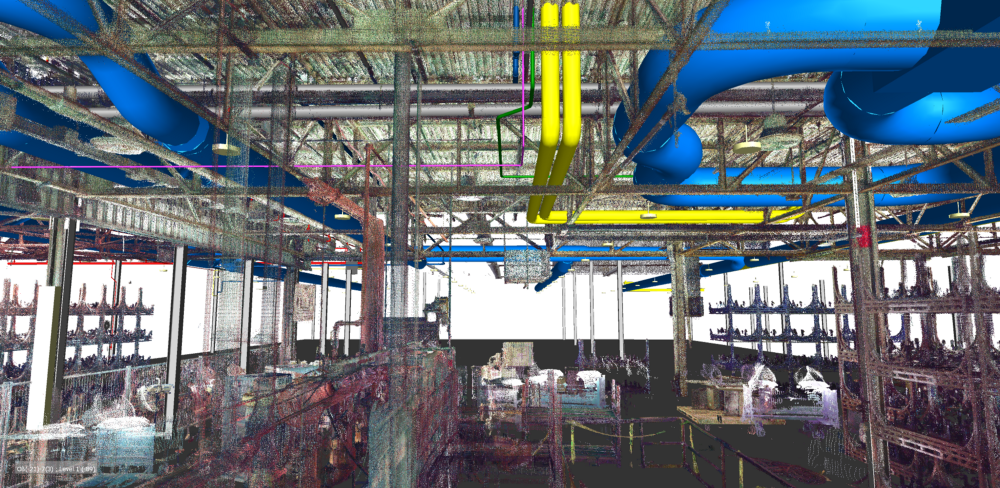
One of the technologies helping drive efficiencies is reality capture. I would define reality capture as using laser scanning or photogrammetry technology to capture existing environments. What we’re doing is taking this point cloud data and manipulating it and integrating it for our renovation work. This goes with using traditional LIDAR scanning equipment, drone data, and we even have a handheld device that takes a series of photos that we stitch together into a point cloud. We’re using all three types to capture existing conditions.

With these technologies, the accuracy is no longer a guessing game because we know what we’re building and where. It’s starting to change the way our documents look, how we communicate with contractors — — how we communicate with our design team — -and we’re pushing that technology to the limit. We’re very excited to see what comes next in this realm. That’s been a very big win for us over the last couple of years. We’re now going into integrating the model with estimation databases. I have a data scientist, even though that’s not his job title, who will help us integrate that big data within the model and try to drive efficiencies with that. We are a bunch of mad scientists working together to solve our projects’ needs.

On specific principles that SSOE adheres to
Project planning is extremely important to us. We have integrated not only technology into early project planning, but we’re integrating estimating and safety. We want to make sure that we’re going in with a good plan in place on how we’re executing projects so that there are no surprises. No surprises to us, no surprises to our client, and no surprises to any of the other players in the game.

Quality is a big and having a good plan going into the project matters. During execution, we take that solid plan and it helps us in the execution of the technology so we’re not lagging behind. For instance, if we know we’re going to be doing certain types of modeling or we need to be scanning, we’re executing those things before people are waiting on them. When that’s done, it’s set up correctly, and the design team doesn’t have to worry about any type of glitches because they have the confidence that it was already set up properly. Our vision statement is about project delivery. “World Class people, delivering world class projects, to world class clients, and we are going to be innovative in how we do it. We need to be agile and flexible. Things happen and we need to be able to adapt to that.

Confidential Client (Image courtesy of SSOE)

On recent projects that represent SSOE’s unique approach
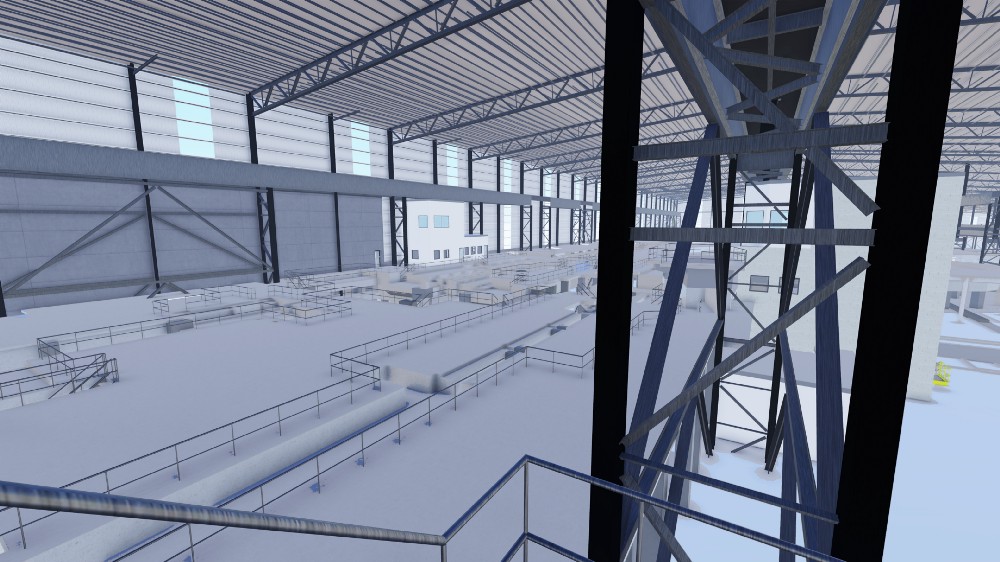
Most of our team’s projects are confidential, industrial clients so they have a lot of proprietary information to protect. On a recent project, we had to adhere to a very tight, very aggressive schedule. The timeline we were given was very short to integrate an equipment installation. We had to perform demolition, rearrange production lines, and install three large pieces of equipment. The building was dated. There wasn’t relevant documentation. We had a rough floor plan from the client. We decided to scan the facility. With that scan data, we realized that the initial design of these large pieces of equipment wouldn’t fit because the columns were off in the floor plan and the existing roof steel was too low during a design review.

Upon 3D model review, we realized that the height of the equipment wouldn’t work, so we had to work with the vendors to adjust the sizes for installation. These three pieces of equipment were long-lead items and if they didn’t show up on-time, correct, and ready for installation, we would miss our tight window for installation. If this were to occur, the client would not be to start production and therefore would miss production deadlines. Due to our technical strategy and overall execution, we were able to finish the project a week and a half ahead of time resulting in extra money saved back to the project. We planned the technology, we planned the project execution, we handled the construction management, and we found the critical issues ahead of time so that they could be addressed. It was a very successful project on the backend.

Another example is beginning to estimate quantity take-off in construction before the design is complete. On this project, we were tasked with replacing roof equipment while the plant was operational. Going into it, we knew that we needed to align the support systems below the roof to be able to hold this new equipment so we scanned and modeled a scenario. We quickly estimated the quantities, realizing that we could reduce the amount of steel based on the platforms, so we came up with another design solution. We were able to calculate that with our quantity kick-off methodology, allowing the client to benefit from these design savings realized as a result of us performing a rapid design scenario. We are currently in the execution phase.

Confidential Client (Image courtesy of SSOE)

On her design toolkit
You want to use the right tool for the project. Sometimes you don’t need a nail gun, you just need a hammer, as my co-worker always says. We are very fortunate to have multiple BIM and CAD tools here at SSOE. We have our standard ones that we use regularly. We use a lot of AutoDesk products. At the beginning of a project we have to identify what the needs are for the client and project. In order to do a lot of our VDC processes, we need that BIM model it is our virtual design platform. It is a standard practice on large and small projects here at SSOE.

We are modeling all disciplines: architectural, structural, mechanical, electrical, process, and civil because we are using those models not only to create construction documents but we’re using them for planning, coordination, quantity take off, and 3D design reviews with the client. It’s not just about looking at a set of drawings or 2D documentation when we’re reviewing. It’s about immersing the client and the project team in the design. We’re continuing to push and improve that concept.

The next step is moving the model beyond design into the fabrication level and that’s where you’re able to get the construction level coordination that you may not get if you’re just doing design. When you get into construction, you’re starting to put the pieces and the parts together. That’s where I’ve seen a big opportunity for software companies. It’s about integrating all fabrication level models because in this stage you’re getting into the different model platforms. One platform doesn’t do it all well. And that’s when you have to rely on other software to aid in interoperability. It is extremely important that this federated model be accessible. It’s starting to introduce ideas like cloud platforms. It’s making it easier and acceptable for all of the project team to look at it globally.

We’re at a certain point where some of our clients will allow us to use that type of technology and computing power, but we have a lot of proprietary clients where we can’t. Their information isn’t allowed to be off of our servers or encrypted drive. We continue to push our 3D world, but now we’re coming to a point where the infrastructure that we’re utilizing is bringing us to a fork in the road. We want the infinite computing power that cloud applications can offer us, but a majority of our clients aren’t yet comfortable with this. Finding opportunities to use cloud computing and demonstrate data security for our clients will give our teams and projects great advantages.

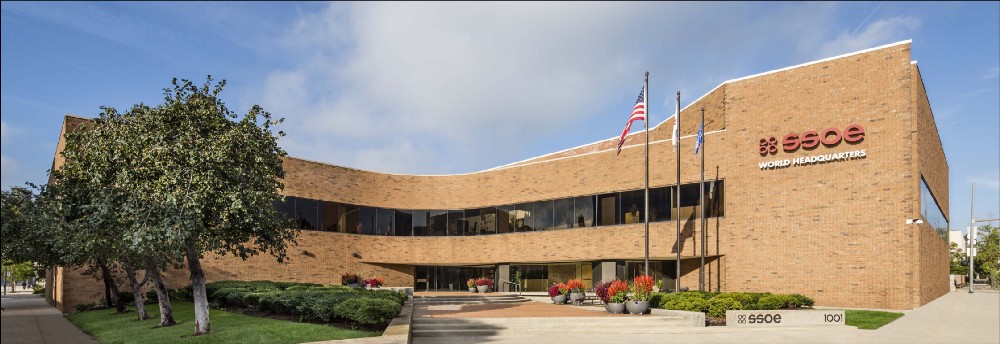
SSOEHQ Toledo, Ohio World Headquarters Building (Photograph courtesy of SSOE)

On the future of the AEC industry in the next 5–10 years
You’re noticing a change in the delivery method of projects, from traditional design projects to design-build. A more recent trend we are starting to see are called joint ventures or IPD (integrated project delivery). These create shared risk and reward for all parties and the benefit is better decision making and quality, and a lot of 3D technology is the collaborative nature of it. The ability for all disciplines to collaborate with all design players, coming together to make better decisions, to build a better project so that we can reduce schedule and reduce risk for the owner is a game changer. You’re going to see that technology is going to continue to drive a lot of those efficiencies.

The biggest change in the construction industry will be for the players that can stay above the strategy curve in project execution and can use technology as a strategic advantage to execute those strategies; they will be the firms on top. I do believe one day that there will be a 3D deliverable. Code officials and permitting agencies across the country and in different states are starting to allow us to submit 3D models for permitting. Eventually, I see owners requesting that our deliverable be a model with these standards. We are going to have to adjust our ability to check and verify this 3D deliverable.

Currently, we have a client who requires scanning at the beginning and the end of their projects because they want to capture the existing conditions at the beginning and the existing conditions at the end. They know that the model isn’t going to stay up-to-date throughout the construction process. They want to have the data available to them in 3D. The industry is shifting. I still think we’re a couple years out.

Not only within the AEC industry, but across the industries we serve, I foresee big data becoming the next trend. It’s not just putting all of this information in BIM, it’s integrating those model elements into other databases so that we can capture vital information for reporting and asset management. Right now, a lot of people are focused on building everything in this model, where I really think that the model is integrated into multiple databases. We just need ways of using that information. That’s going to be another change that’s on the horizon and the companies that are paying attention and are a little paranoid about falling behind are the ones that are going to move ahead. SSOE has made a commitment to innovation and technology resulting in the creation of my department and is allocating resources to stay ahead of the curve.

On advice she would give herself
Advice I would go back and give to myself would be, don’t be intimidated to stand up for what you believe in. It’s ok to push boundaries because you don’t know what opportunity can come from it. Failure is ok because it can be the best way to learn. It took me a while to believe that and understand that. If I would’ve known these things eight years ago, who knows what success I could have found sooner?

Design Manifestos: Matthew Krissel of KieranTimberlake | Modelo Blog Series

Design Manifestos: Matthew Krissel of KieranTimberlake

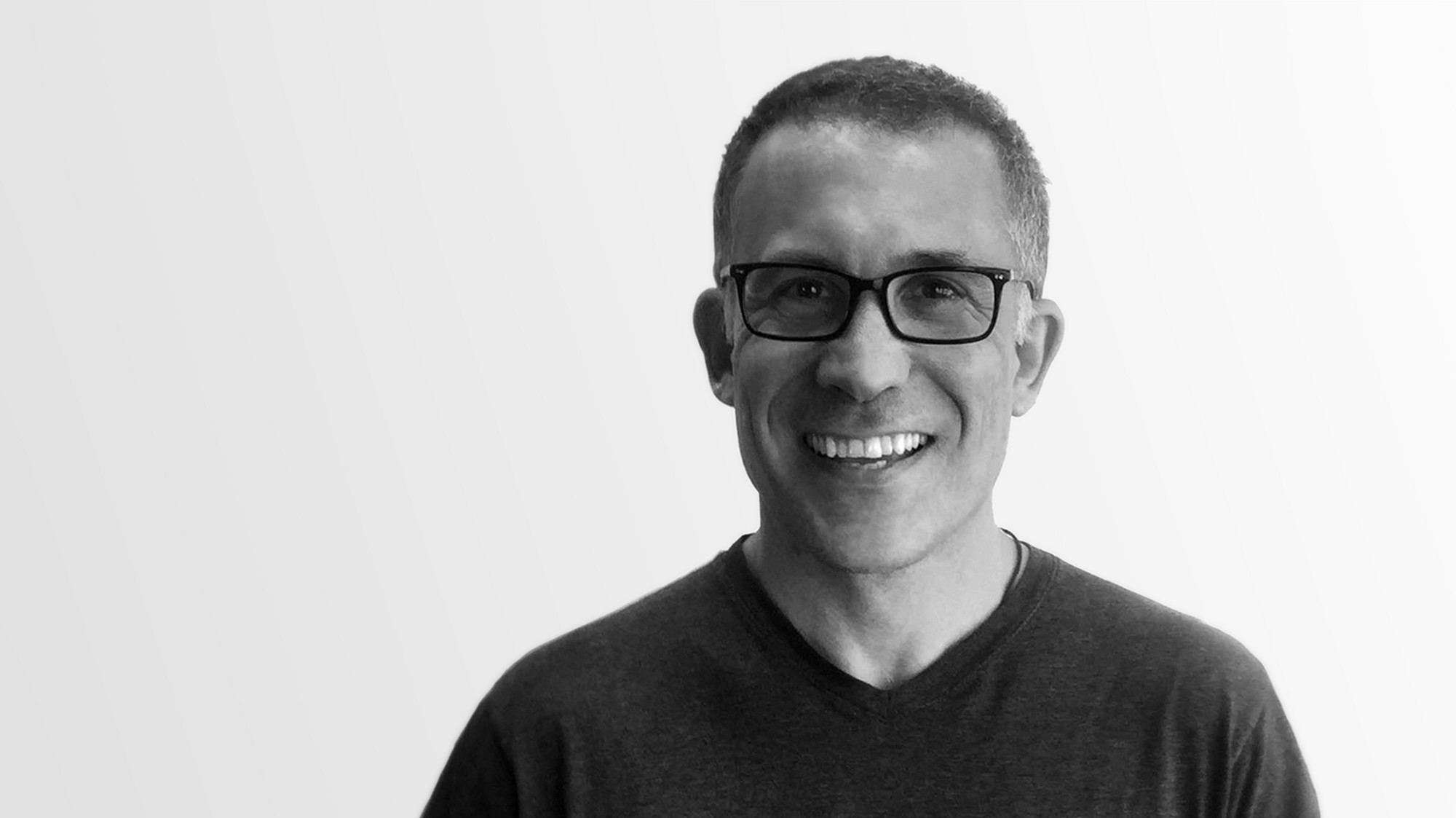
Matthew Krissel (Photograph by Ed Wheeler courtesy of KieranTimberlake)

Matthew Krissel is a partner at KieranTimberlake, an award-winning architecture firm recognized for its environmental ethos, research expertise, and pioneering design and planning. He has completed projects for Cornell University, Dartmouth College, and Massachusetts Institute of Technology, and is currently working on projects for the United States Department of State and New York University. In addition to his design responsibilities, Matthew leads KieranTimberlake’s Digital Design Visioning Group, an initiative dedicated to digital innovation, visualization, and knowledge sharing within the firm. Modelo spent some time learning about Matthew’s journey through the profession and about his current role at KieranTimberlake.

On becoming an architect
As a kid, my exposure to architecture was limited to the traditional suburban landscape that dominated my small hometown in New York. By the time I was a junior in high school, I had never even met an architect and, truthfully, had no idea what the profession entailed. But I had also already completed all the art classes offered at my school, so I signed up for a technical drawing class which, incidentally, was taught by a local used car salesman. Inspired by the didactic drawings from Popular Mechanics Magazine, I spent hours in the school basement drawing gears and sprockets using donated T-squares and triangles (this was 1992, after all). I loved the challenge of bringing clarity to complex problems through drawing and representation. After visiting a local architecture practice during a career fair and learning a little more about what an architect was, I kept coming back to the field as I considered college and a future career.

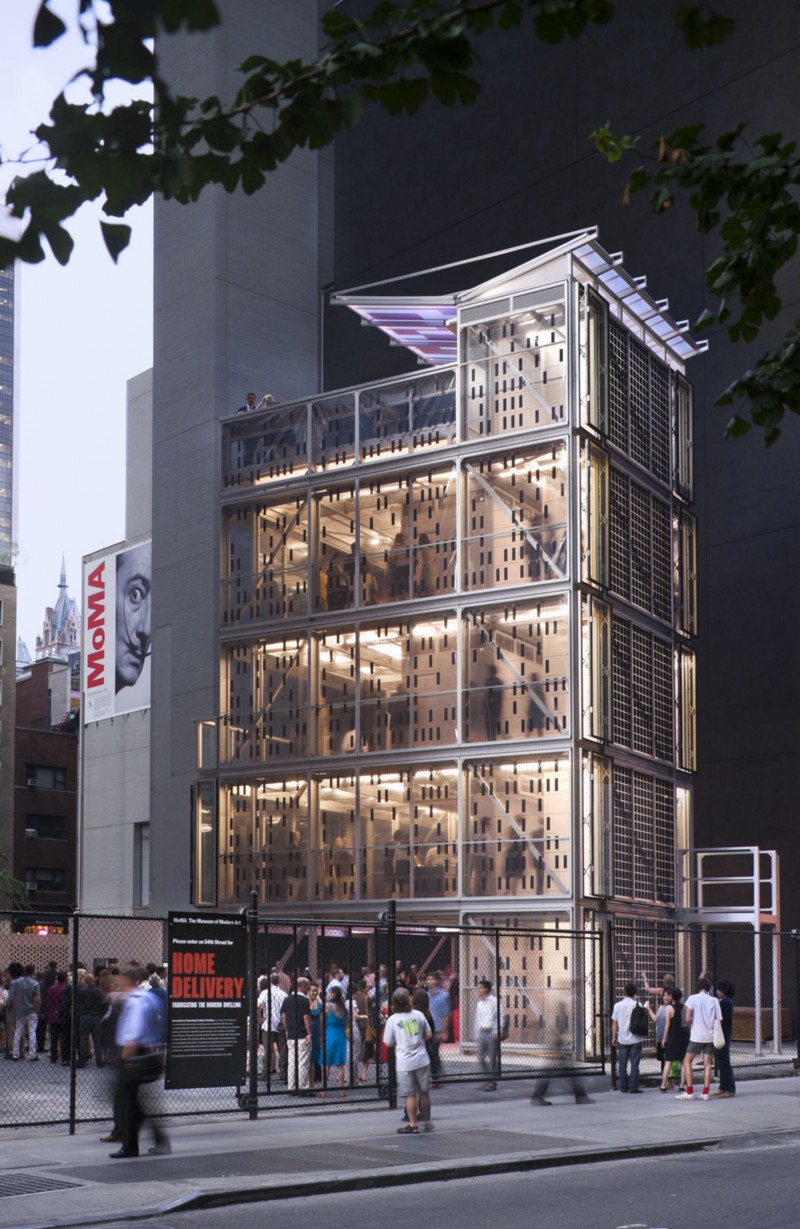
Cellophane House © Peter Aaron/OTTO Cellophane House, a five-story off-site fabricated dwelling exhibited at The Museum of Modern Art

On discovering his voice as a designer
When I graduated high school, my grades and the financial pressures faced by my parents with multiple kids already in college led me to start my higher education at a two-year technical college. While I was enrolled in an architecture program by name, I really was being trained to be a draftsman. I learned how to see and interpret the physical world, as well as how to annotate and construct two-dimensional and three-dimensional drawings by hand through traditional architectural representation. My success in the program translated into my acceptance into the University at Buffalo’s Architecture program, which offered me an entirely new perspective. Unlike my previous training that focused on depiction, my education at Buffalo centered on learning how to think and create like a designer.

After graduating with my bachelor’s degree from Buffalo in 1997, I boarded a bus with two duffel bags and moved to New York City. I spent my formative years there, in a city that was saturated with creativity and ideas and where everything was always on a big stage. My time working at Skidmore, Owings & Merrill, and then later at Kohn Pedersen Fox, exposed me to great design talent and urban living. However, it wasn’t until my time in graduate school at the University of Pennsylvania that I discovered the other facets of design in ways I had not yet imagined.

I was at UPenn from 2003–2005, right in the middle of a pedagogical transition towards the digital. It was a special time in our field’s collective history, and one that I am grateful to have participated in while in school. Seeing design and design methods shift so dramatically away from the analogue was critical for me, especially since I had the advantage of being educated on both sides of this history of architecture. Learning design and making by hand as well as through advanced computation and digital fabrication allowed me to discover my own voice within the design world.

That voice then came into focus at KieranTimberlake, where so much of what I had discovered in school could be put into practice and cultivated in an environment that truly enables experimentation and holistic thinking. While challenging workflows and rituals of practice, I began to see and think differently, which led me to realize that to do great design work, we often have to engage in practices outside of the traditional boundaries of architecture. The elastic process of designing at the firm built on my strengths and taught me the value of understanding my limits in a place where collective intelligence is encouraged and people are empowered to imagine and create.

Cellophane House Alberta Vecerka/ ESTO Timelapse video of Cellophane House constrution over 16 days (Video courtesy of KieranTimberlake)

On joining KieranTimberlake
During my first semester at UPenn, my Visualization Studies professor worked at KieranTimberlake and offered me a summer job while I was finishing graduate school. It was a wonderful experience, and when my wife and I decided to stay in Philadelphia after my graduation, I joined the firm full-time. Working at KieranTimberlake was so different from my previous experiences working in New York City, and the firm’s unique approach to design created an environment and space in which I could build and explore. The culture, leadership, and expectations were a framework that I knew I wanted to build on.

When I first started, the firm had only 35 employees and each one was challenged to operate with purpose and grit. I enjoyed working at a place where ego is shelved, moxie thrives, and opportunities to discover new ways of working abound. When I arrived, three-dimensional modeling was nascent and therefore slow. Consequently, it was used more for representation than iterative design. Over time we developed new workflows and expanded the training and tools available into the practice, enabling more people to engage with advanced modeling and simulation. This mindset helped us to imagine and model faster and in more exploratory ways. The timing was fortuitous as rapid advances in hardware and software capabilities allowed us to leverage these emerging tools and layer them in a place that was bubbling with ideas. Ultimately, the profound change in methodology amplified the practice and helped me see that having a positive attitude toward change can lead to great design. Those attitudes start with leadership and are driven by culture.

On KieranTimberlake’s approach
At KieranTimberlake, our mantra is “fail fast” which is as much about learning from mistakes as it is about working iteratively. We know that the path to making exceptional work is not always clear, mistakes will happen and the process may get messy. But those kind of setbacks are essential to creating great work. That’s why we constantly question ourselves, our practices, and remain open to change.

On principles KieranTimberlake applies across projects
We are a restless community of curious designers who actively seek problems to solve, and we consciously put ourselves in unfamiliar territories so we can search for answers. Each one of our projects begins with a question that we answer through deep investigation and collective intelligence. While we work on projects we are also pursuing ideas that push design forward.

On his primary focus at KieranTimberlake
As a partner, I design buildings as well as platforms for thinking and making. I create knowledge networks, and help design new work flows, software, and hardware. I am also involved in hiring new staff, which I consider one of our ultimate design challenges. I’m proud to help build a research-centered practice and promote a culture of experimentation.

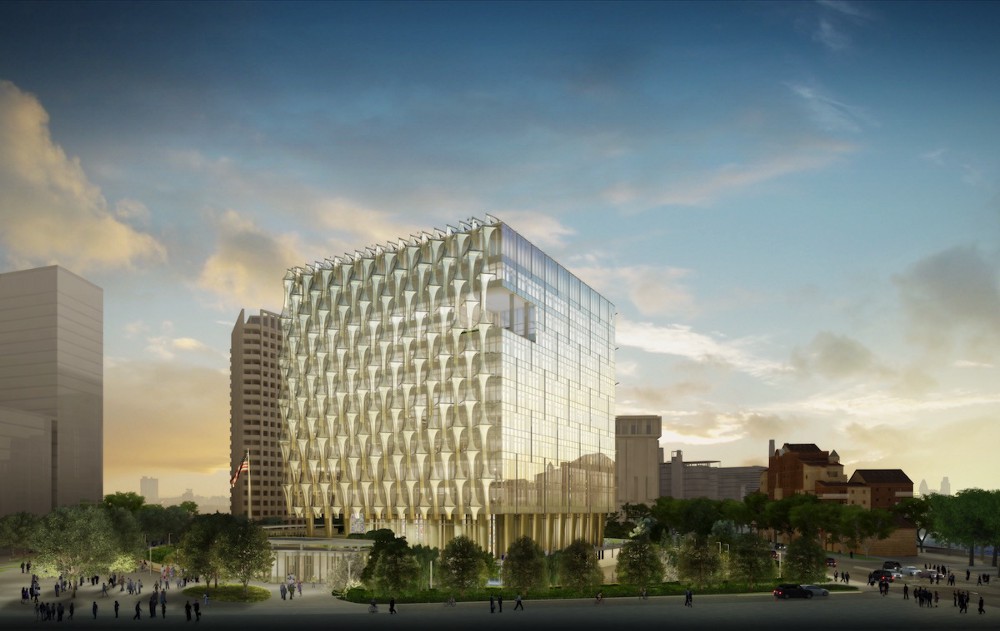
London Embassy © KieranTimberlake/Studio amd Rendering of the new Embassy of the United Staes in London, set to open in 2017

On his design toolkit
I am rooted in the tactile experiences I had in my youth working with a pencil and a mayline, and I studied architecture during the transition to digital making, simulation, and representation. I think that many architects in my generation straddle the divide between two modes of designing; they don’t prioritize one over the other. Too often as architects mature and start to manage a project or even lead a practice, they lose touch with the contemporary toolset. I try to stay connected to drawing by hand as much as I continue to use modeling programs like Rhino and Revit. This allows me to see the work develop, lead teams, and communicate differently.

On the future of architecture in the next 5–10 years
There are three areas that I see for change in architecture in the next 5 -10 years: communication across teams, computation with purpose, and redefining design.

One of the most frustrating aspects of architecture today is the disaggregation of tools, workflows, and expertise across the industry. Architects still have to turn 3D models into 2D drawings for contractors to build much of what is made today. This one example speaks volumes about the disconnect that exists at many levels across the Architecture, Engineering, and Construction (AEC) profession. Even while our tools are developed at a rapid pace, the AEC community remains slow and inconsistent to adopt them. As technology evolves rapidly, it is difficult to remain on at the forefront of every new tool or software developed, creating a natural skillset gap among people and entities. To close the gap, we need more inclusive ways to share and interact with each other’s work. Web-based tools are inherently easier to learn as they build on people’s familiarity with the internet while creating real-time connectivity, suggesting one way towards democratizing our tools. Collaboration is about developing generative ways for experts and non-experts to add value to the discourse and contribute to the design and fabrication process. While there will always be a place for complex software and processes that require expertise, I’m excited to see more accessible tools emerge, and I believe it is an important leap forward for design. In the next 5–10 years, I hope we will all share a more common language and drive to embrace this evolution.

Second, while computational tools have the potential to extend design withconviction and purpose, they are not always leveraged in truly meaningful ways. On one side is computation used gratuitously, backed by architectural whimsy and form-fetishizing devoid of real acumen. On the other side is sterile, data-obsessed design that is devoid of atmosphere, mood, and narrative. Architects have become very good at capturing data that can be described objectively and represented through descriptive geometry, but they should not lose sight of the intangible or intrinsic qualities of architecture to meaningfully articulate place and culture. I want to see us as a profession move past the simplistic seduction and novelty of computation inputs to design and leverage this coiled spring towards the big and small challenges ahead.

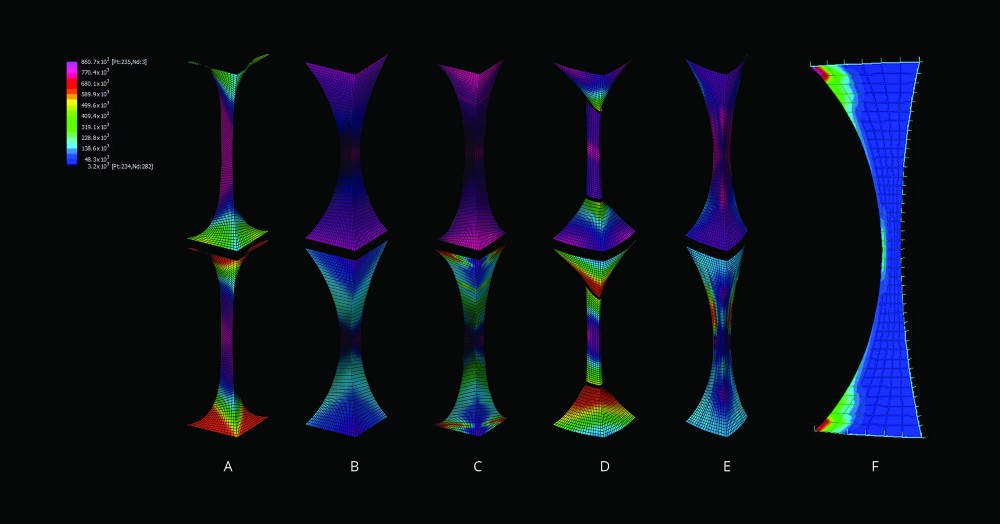
London Embassy © KieranTimberlake Analysis of curvature in individual ETFE forms for the London Embassy’s outer envelope

And finally, in the next 5–10 years, architecture will be challenged to define the trajectory of digital modeling, simulation, sensors, automation, artificial intelligence, contextual programming, cultural and social data, and more. These advances inherently change not only what we make, but also how we make it. In response, we must change how we define a project, think about what a design practice can and should be, and push our capacity as designers to bring together strategic thinking, curiosity, and creativity, and increase our ability to contextualize information with the tactical acuity of computation: its speed, precision and expanding capacity.

If we evolve our mindset, processes, and tools into a truly relational framework, we might overcome the myriad of issues that keep us from designing holistically. This includes improving our ability to see and interrogate what is possible with greater clarity and fluidity across platforms, and mature ideas across multivariate problems over time. We are beginning to see how immersive environments, interactive data sets, advanced visualization and analysis, simulation, and dynamic analytical environments, can help reach that goal. But it’s imperative that we overcome the knowledge silos across design. I hope that in a few years, digital practices are so pervasive they aren’t considered specialties, but core competencies.

On advice he would give his younger self
Be comfortable with uncertainty and failure as a young architect. Resist the seduction of early design concepts, cast a wide net, and remain patient when cultivating ideas. Find a place that supports query as a design tool. Develop question-asking as a skill and use it to reframe problems, draw out insight, and build ideas. Designers must be capable of developing solutions as well as challenging the underlying symptoms. Design is more than tangible products, buildings, and environments. It also includes scrutinizing policy, entrenched stasis, and infrastructure, and taking them on as design parameters. In doing so, you can achieve more meaningful change by altering the underlying dynamics as much as the design of spatial outcomes.

Design Manifestos: Ramón Hone of 5+Design | Modelo Blog Series

Design Manifestos: Ramón Hone of 5+Design

As a design principal, Ramón Hone approaches design as a wide-ranging exploration of ideas, where virtually anything is possible in the search for creative ways to respond to client needs, site context and budget restraints. Ramón leads his design teams throughout the design process, encouraging collaboration on necessary changes while maintaining the integrity of the original vision.

Born and raised in London, Ramón received a postgraduate diploma in architecture from the University of Greenwich in London and a postgraduate diploma in computing in art and design from Middlesex University in London. Before joining 5+ design in 2012, Ramón worked as design director at Manser Associates in England and at Gensler, The Jerde Partnership and WET Design. He is an architect licensed in Great Britain and a member of the Royal Institute of British Architects. He is also LEED accredited by the U.S. Green Building Council. Modelo spent some time learning about what led Ramón to pursue a career in architecture and about where he is today.

On becoming an architect
I drew a lot as a child and my parents suggested that it might be something to think about. At the time I was thinking about art school but my parents convinced me that I was more likely to make a living as an architect than an artist, I haven’t regretted the decision.

On discovering his voice as a designer
I don’t know that I have found my ‘voice’ or even if I have a ‘voice’ as such. I believe that there is a rigor, logic and creative approach to solving problems and that architecture falls into a place where the art and science of design come together in sometimes unexpected ways to suggest solutions. Being open to those opportunities rather than pursuing a path or direction that is somehow my ‘voice’ is a more exciting and educational process. If anything my ‘voice’ is one of curiosity and discovery.

Image courtesy of Ramón Hone of 5+Design

On joining 5+Design
I knew the partners from my time working at Jerde where they each worked before setting up 5+design so we were familiar to each other. I was traveling in Korea with my previous firm and I ran into Tim Magill (one of the founding partners), we were staying at the same hotel, we got talking, then met up again back in the US and subsequently I left my last firm and started at 5+design.

As someone who is more senior at the firm I do bring my own approach to design but given an overlapping history this meshed well with the firm’s own approach.

Image courtesy of Ramón Hone of 5+Design

On specific principles he strives to adhere to
Early in my career I worked at The Manser Practice in London, here under the guidance of Michael and Jonathan Manser I was taught the importance of honesty, sincerity and rigor in design, lessons that have stuck with me throughout my career. When I moved to the US I spent time at the Jerde Partnership working on large scale projects each strove to develop the idea of public experience, the space around the building being as important as the building itself.

Architecture as a profession is a process of continual education — developing your approach through experience; learning from colleagues both young and old and utilizing new and developing technologies. But the early lessons stay with you, they change and evolve but they still remain a guide through the chaos.

Image courtesy of Ramón Hone of 5+Design

On his role at 5+Design
As a design principal my role is to lead design teams on a number of projects, it’s also to advise and mentor younger people in those teams. As a young professional I was fortunate to have worked with and learned from many good architects and so there is a responsibility to do the same for those coming up.

On recent projects that represent the firm’s unique approach
Many of our projects are complex urban mixed use projects and we provide a unique and experiential solution to those problems. There is no specific style but there is an approach that strives to provide the users be they occupants or the public with an out of the ordinary experience.

Retail projects which form the core of our business are complex projects it is a rapidly changing typology that is experienced and used very differently by different generations and income brackets. As retail has evolved it has become more of an experience the public areas are much more than circulation spaces. The space in-between has become the architecture of experience. This becomes more valuable as cities become denser and public space is eroded.

Image courtesy of Ramón Hone of 5+Design

On his design toolkit
3D modeling is essential these days, not just as a design tool but also as a way of producing documentation and communication with clients. In our office we develop most projects in Revit for documentation but we supplement the design process with Sketchup, Rhino, physical models and sketching amongst others. As an international firm we also rely on web meetings that allow us to workshop with clients and design teams in other countries, showing drawings and models.

The role of the architect at its most basic is the same now as it was 100 years ago, that is communication of an idea. The tools have advanced, we have become more sophisticated in our methods of representation but in the end there is still something visceral about talking and sketching with a client so you both see an idea evolve in words and lines.

Image courtesy of Ramón Hone of 5+Design

On the state of design software today
I feel that the impact is twofold, some design software is evolving at a rapid rate and the lines between design and manufacturing software are becoming more blurred as digital files can be used to output physical objects. This no doubt will lead to expanding opportunities for some architects and designers. Software allows us to design and fabricate ever more complex forms combined with systems of optimization that allow these forms to be more economically realized. This is available only to a very small proportion of clients and projects. But at the other end affordable and easy to use 3D software has changed the way that all architects are able develop designs and to communicate with clients. In the end though I do feel that a sketch is still a core component of the design and communication of an idea.

Image courtesy of Ramón Hone of 5+Design

On the future of the industry in the next 5–10 years
Software advances will continue to aid in the evaluation of designs from a sustainable perspective; expectations of BIM files will increase so that they are updated over the life of a building; VR will develop as a tool for experiencing design before it’s built, but without a total sensory experience it will remain a sophisticated rendering representation.

But it’s the physical manifestation of the design that matters to most and so advances in material technology, and manufacturing and delivery systems will have the most impact on our environments but this is a longer timeframe.

On the future of 5+Design in the next 5–10 years
Our commitment to BIM will continue to expand and we will continue to leverage the possibilities to improve the design process, communication and documentation. But BIM does not improve the design concept it refines the ideas and develops them, the ideas still come from somewhere else and that is the essence of architecture that we wish to nurture.

On advice he would give his younger self
Don’t rush, experiment more.

Design Manifestos: Richard Thomas of SHP Leading Design | Modelo Blog Series

Design Manifestos: Richard Thomas of SHP Leading Design

Richard Thomas (Photograph by JHPhoto courtesy of SHP Leading Design)

Richard Thomas, AIA, LEED AP, is a Vice President at SHP Leading Designin Cincinnati, Ohio. He has a broad background of experience gained over his 30 years of diverse practice. In service to his clients, he has pioneered the delivery of planning and design work through an integrated team approach, capitalizing on technology advancements in software that have transformed the design and construction industry.

In order to facilitate an efficient design, construction and delivery process, Richard was an early adopter of Building Information Modeling (BIM) software. He was also a founding member of the firm’s integrated design and construction business, 2enCompass, and serves as the general manager. He continues to focus on trends impacting the architecture, engineering and construction industry, and is sought after to speak at events across the country on such topics. Modelo spent some time learning about Richard’s journey through the profession and his role at SHP.

On becoming an architect
I decided I wanted to be an architect when I was 13 years old, and in 7th grade mechanical drawing class where I learned the process of orthographic projection. My love of drawing transitioned into a passion for buildings leading me to believe I had the potential and the talent to go further.

On discovering his voice as an architectural designer
I question the efficacy of developing a single voice. I would suggest that just as I temper my voice and approach to the situation / relationship at hand, my design voice also follows suit. Architecture is a process of listening, interpreting, and responding. I believe that it is only through listening intently and choosing the right voice to respond does the solution deliver on needs as well as desires.

I was taught about composition, plan, rhythm, scale, texture, color and pattern by studying the works of Klee, Ben Shan and others. I internalized the poetry and strength of Kahn and the complexity of Lutyens and Venturi. I studied the discipline of Meier but settled in with real admiration of firms like Polshek, Perkins & Will (Ralph Johnson) and Miller Hull as several who had the ability to manifest substantial and beautiful architecture out of the normal complexity and politics of daily programs, budgets and project needs.

My freshman design studio professor, Robert Deshon at the University of Cincinnati was a huge influence on my understanding of composition and theme. My senior thesis professor David Niland was the single greatest source of understanding of spatial composition, sequence, geometry, detail as the reinforcement of the larger idea and the power nuance plays as part of the overall story being told. An early business partner was my mentor, personally and professionally.

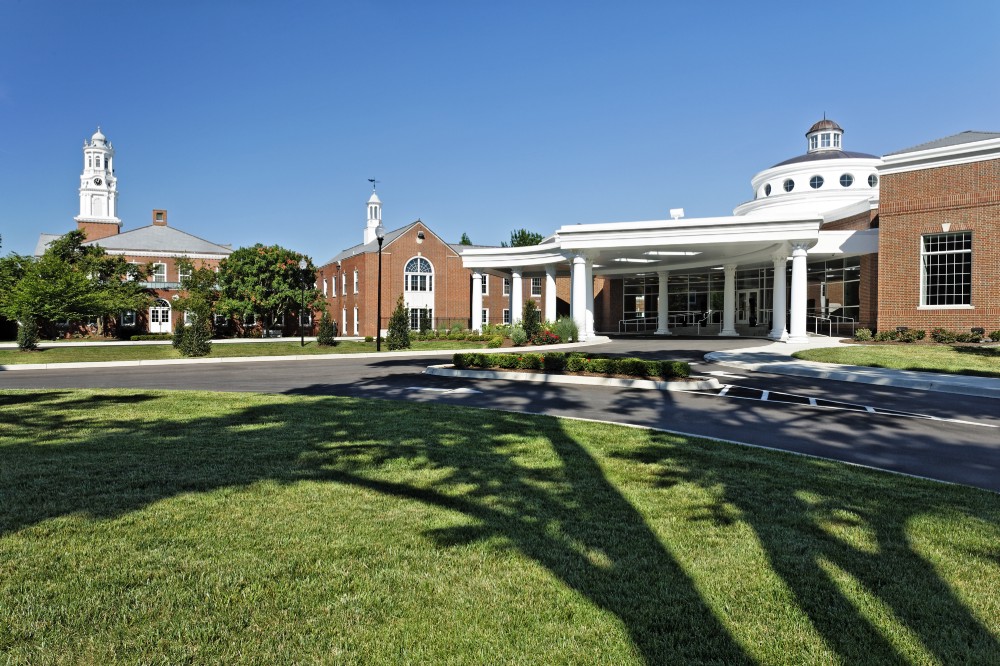
The Duke McCall Sesquicentennial Center — The Southern Baptist Theological Seminary (Photograph by William Manning Photography courtesy of SHP Leading Design)

On joining SHP
I came to SHP during a transition period that moved from responsibilities on an international scale, serving corporate and private investment clients, to one that centered on work in public, institutional settings that were more local in nature.

The approach involved a substantial change in the freedom to explore the voice of the user, how to communicate about architecture, and how to shape the way buildings are delivered via the designer / builder relationship.

It changed from listening and interpreting the voice of a few to the voices of many. That transition evolved by understanding constituent values before constituent needs, then pairing those values with solutions that resulted in buildings and forms with scale, texture, rhythm, and pattern. When I arrived at SHP, the firm was approaching the peak of its use of an internally-developed and nationally-recognized customer and community engagement process called The Schoolhouse of Quality. The model was borne out of the TQM movement of several years past, the philosophies of Edwards Demming, and it was patterned after the paradigm changing success of Toyota.

On specific principles he strives to adhere to
Attention to the voice of the customer, reverence for the values of my education and training as an architect, and problem solver, and to always look for a better way to deliver value across the total spectrum of the process of design and construction.

The Duke McCall Sesquicentennial Center — The Southern Baptist Theological Seminary (Photograph by William Manning Photography courtesy of SHP Leading Design)

On his role at SHP Leading Design 
I am one of ten shareholders and have been with the firm a little over 21 years. SHP’s legacy, dating back to 1901 was, and continues to be, in public institutional work with a heavy emphasis on educational facilities at all levels. My background allowed me to open up new business opportunities in privately-funded education. That parallel market segment allowed greater freedom in how buildings were designed and constructed. As a result, I became intensely focused on alternatives to the highly structured traditional public design process for buildings, investigating and executing delivery models that embraced the whole process from start to finish, programming through design, construction, occupancy and facility management.

My primary role at SHP has evolved over the past two decades. It remains primarily to produce successful relationships that through service and design generate high quality architecture in support of the mission, vision and values of SHP customers. On a broader level however, my role has grown into one that is also focused on the future of how and with whom we design, the tools we use to document and build, and the value we add by leveraging the work we produce for the customer. It is one thing to create a great design. It is another thing entirely to be able to deliver it creatively with reduced risk, exceptional and extended value, and delight.

To that end, in early 2000, I was involved in the creation and management of a second business inside SHP (called 2enCompass) that delivered private education projects in a fully-integrated project design process (IPD) almost ten years prior to the industry adoption of an IPD practice model. Working with a regional leader in construction as an equal partner in delivering an integrated design and construction service, 2enCompass LLC pursued private education work in the K-12 and Higher Education marketplace.

As 2enCompass grew it became our test bed for the application of BIM technologies. The 2enCompas team was first to integrate 3D modeling and visualization software at SHP which ultimately led to the firm transitioning from 2D to 3D in its entirety in less than a year. Though we experienced some rough spots, once complete, SHP was ahead of the BIM adoption curve and looking at ways to leverage data for professionals and clients alike.

In 2009 I led the effort to develop one of the earliest BIM Standards for Indiana University. The application of these standards changed how work was being developed and produced, opening up further opportunities for the pursuit of the value of data in the design process.

One result of the value of leveraging data was the creation of SHAPE Environments, another SHP branded company. SHAPE’s initial mission was to develop BIM content for the manufacturing industry. The content we developed was available for download from the web and is highly valued for its lightweight, robust configuration and technical accuracy. SHAPE customers include some of the largest furniture, sports equipment and product manufacturers in the world.

SHAPE’S offerings are evolving to provide construction coordination services for all aspects of project coordination on a jobsite. The key learnings of these services are funneled back into SHP’s process models, enhancing our accuracy and design product.

My most current interest and mission is in helping SHP explore and position itself as an active and leading voice in the development of the future of education.

The Duke McCall Sesquicentennial Center — The Southern Baptist Theological Seminary (Photograph by William Manning Photography courtesy of SHP Leading Design)

On SHP’s unique approach to design
We have always believed that design is in everything and about everything. Yes we are an architecture firm, but as designers we have more to offer than simply the creation of the built environment. SHP has never been afraid to “design” an approach, a policy, a change process, a room or an experience. Our firm mission is to joyfully enrich the lives of people through service and design. Sometimes the best answer is NOT a building, but an approach, an operating model, an idea, a conversation.

We would like to challenge ourselves and perhaps others to consider how we as architects can shape the future of the how we apply our abilities in design, the way we tackle the whole of the process, not just what is traditionally our part but all parts of the conversation? Why do we educate the way we do? Why do we collaborate (or not) the way we do? How can we become part of the larger dialogue? Can we build differently, faster and more sustainably? How do we leverage forward the power of what we create, thereby extending the value created by our work and that of our clients?

Hebrew Union College (Photograph by J. Miles Wolf Photography courtesy of SHP Leading Design)

On recent projects that represent this approach

Hebrew Union College (HUC)
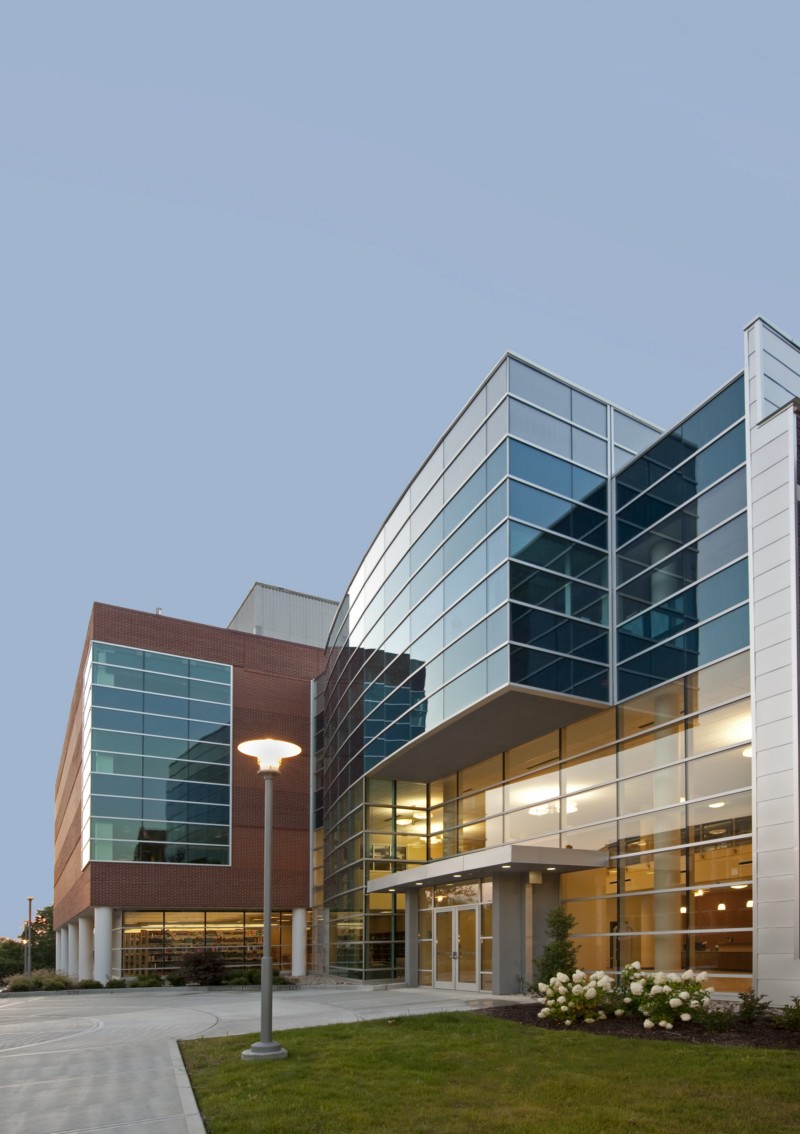
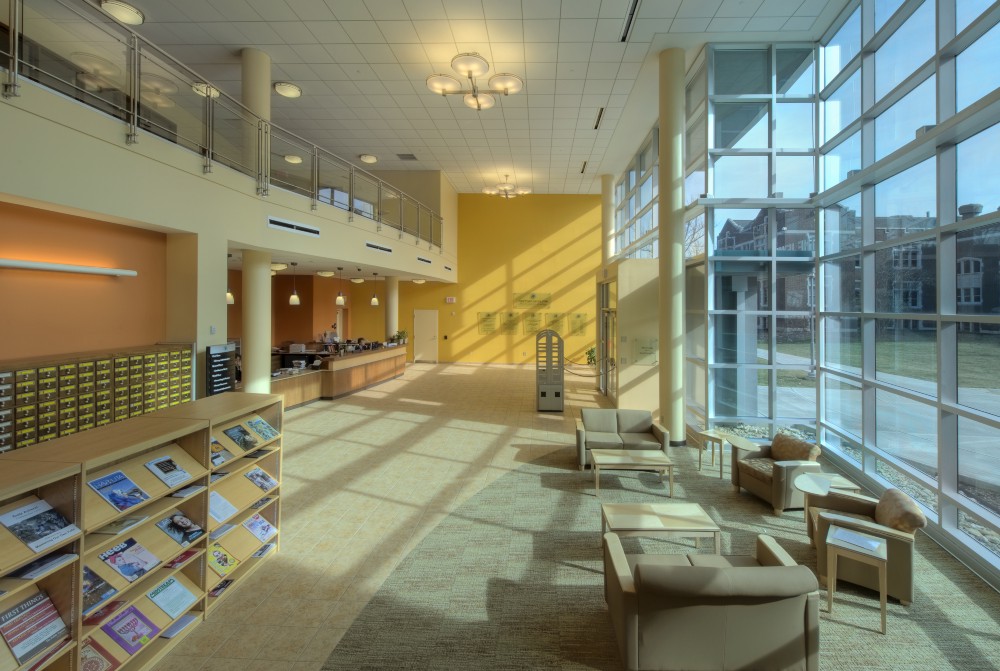
Done under the 2enCompass IPD delivery model, HUC involved the renovation and expansion of the Klau Library and the Jewish Institute of Religion. Klau has the second largest collection of archival Hebraic literature in the world. Some 300,000 volumes, including many dating back hundreds of years (one to 900 AD) were to be relocated but kept in circulation then returned to a renovated and expanded venue. The privately-funded program was developed, the costs were estimated and a guaranteed maximum price (GMP) was established and approved. The 2enCompass team shared the risk of the guarantee equally for the total value of the job (+/- $13.5M).

The library itself had the existing skin stripped and replaced, a new geothermal system installed and a new entry pavilion designed with a sophisticated rare books room and heightened security and environmental controls. The relocation effort, which had to be carefully sequenced between four different construction activities, was designed and orchestrated by the project team and involved on-campus and off-campus venues.

The integrated team worked collaboratively from the start, delivering the project early and under budget. The library, which is recognized world-wide as a treasure of Jewish history, never missed a day of circulation and never lost, misplaced or damaged a volume.

The Duke McCall Sesquicentennial Center — The Southern Baptist Theological Seminary
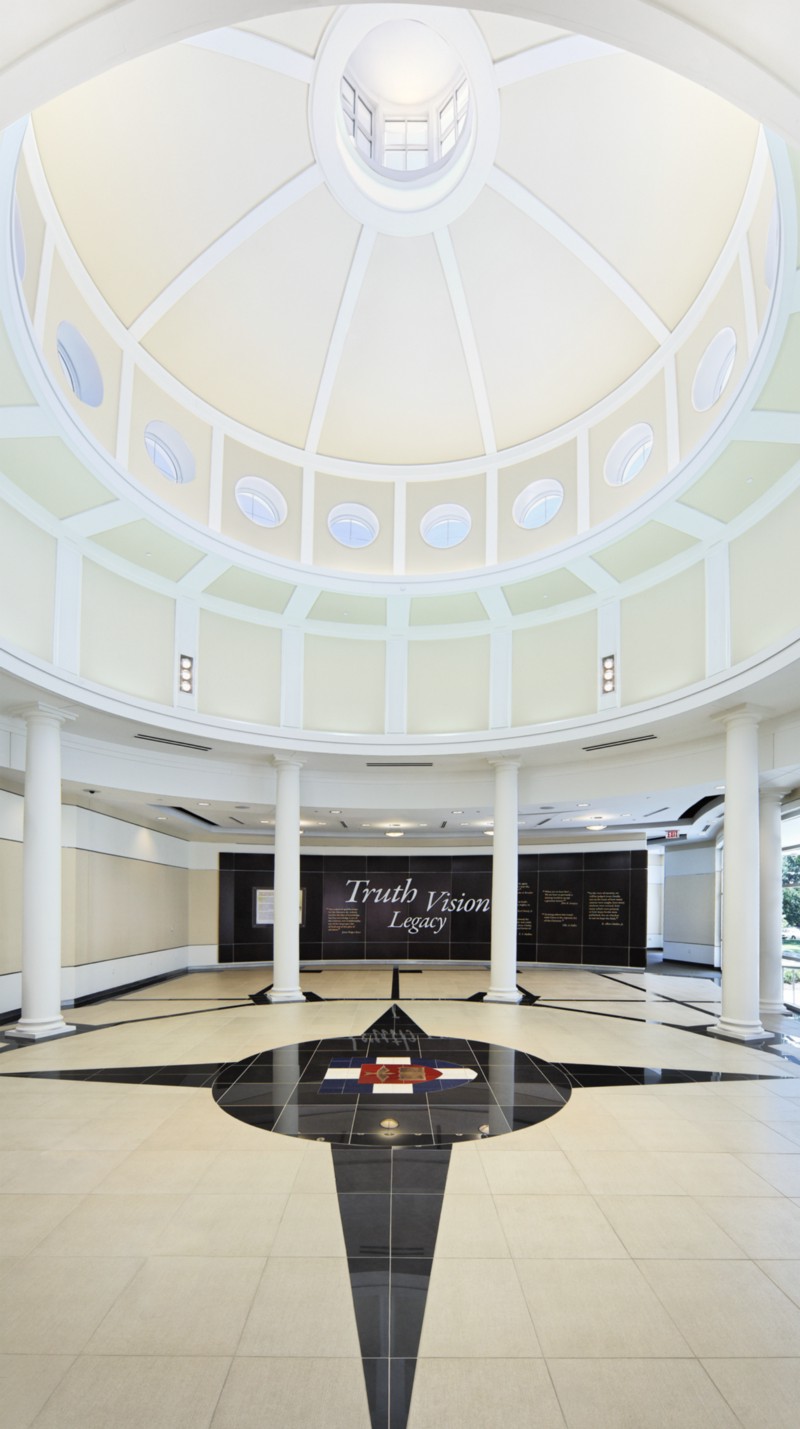
The call was to develop a new campus icon that was to be the first experience for visitors to the campus. The project was discussed for the first time in late March. A single pen and marker sketch was offered a week later, the project was adopted by the Board, budgeted at a not-to exceed figure of $6.0M two weeks later with a stipulated occupancy date of April 2nd the following year (The 150th birthday of the institution). The 2enCompass design and construction team was assembled, including all consultants and prime sub-contractor trades for an intense design, documentation and construction program that had permits pulled in thirty days, site work starting two days after that and completion eleven months later.

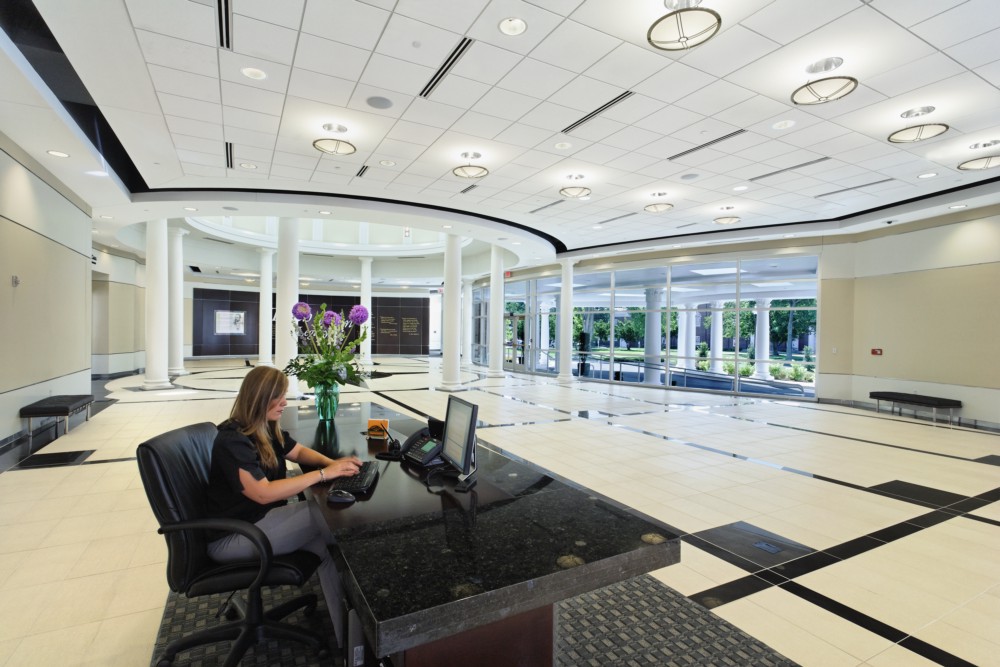
The new campus icon houses the main reception rotunda, a small visitor’s theater and the relocated campus security division. The structure connects two existing buildings with different vertical floor-to-floor arrangements. The campus approach involved a new roadway circulation system including a primary campus tower / gate house, and a new campus green. In the course of the eleven months of construction several smaller scopes of work were added to the program with no change in the completion date. The collaboration model, facilitated through a well-oiled IPD mentality, allowed this extra work to fit into an already aggressive schedule. All were completed in support of the initial program and completion deadline.

The Summit Country Day School
After suffering a partial collapse in 2004, SHP was hired to complete the program halted by the collapse, and set a course for the future for this 130+ year old faith-based institution. Ten years after helping the school through the difficulties and ensuing construction, they asked us to help them plan for the next decade of education and remedy a few remaining scars from 2004. The new project included renovation work and new construction. Given the past, it was essential that we kept construction and occupants completely separate while school was in operation. The solution was an IPD-like methodology with hand-selected consulting and construction resources. That team leveraged design assist and BIM technologies in an $11M program choreographed for completion in a thirteen week time frame over a single summer. Utilizing more than a decade of experience in related IPD challenges, the hand selected team carefully planned the project and executed it with skill, completing the work in record time.

Design assist, prefabrication, 3D modeling and laser scan technologies contributed to the highly collaborative effort that involved significant up-front commitment by key trades in the earliest phases of design. The existing architecture from 1888 was matched to perfection by a tightly integrated team of designers, engineers and precasters; erecting a five-story structure in 21 days. Work like this cannot be done without a highly collaborative team structure and a commitment to a common goal of service to the customer.

Hebrew Union College (Photograph by J. Miles Wolf Photography courtesy of SHP Leading Design)

On his design toolkit
A major public educational program can have as many as eight primary customer groups that have a voice in the final design expression. A major private institution can have even more depending on how campaigns are structured and how funding is acquired. SHP’s design process is driven by a belief that solutions are customer or stakeholder driven; emanating from a deep investigation of stakeholder values and objectives. Programming includes a rigorous effort to elicit core values, ideate on those values, explore design responses that capture and celebrate those values and contrast and compare those solutions through aggressive critique and development.

The toolkit list includes, but is not limited to the following: The Customer Value Path; The Schoolhouse of Quality; 3D visualization and Augmented Visualization with base modeling done in Revit, Sketchup, Photoshop, Navisworks and others; interactive software for large group dialogue and feedback sessions; research and development software (self-created) for in depth analysis of voting patterns in support of public education bond issue initiatives; laser cutters; 3D printers and others.

3D modeling is an integral piece of everything SHP does. We have been using the 3D capabilities for well over a decade now and are l leveraging the power of the data into other areas of service and collaboration.

On the state of design software today
A very astute colleague of SHP once noted that paradigmatic change takes a minimum of ten years. Though the industry has done well to date with the adoption of 3D modeling, it could do more. With change, patience is a must. We are entering the second decade of the 3D paradigm and ever more intelligent software, machines and materials, and the future is full of tremendously exciting opportunities. We are quickly approaching the state of singularity which will be a reality in my lifetime. If we think things are moving fast now, we should recognize that we are just at the very beginning of rapid transformation. Design software and processes like generative design, AI, 3D printing and the further integration of Nano-technologies will lead the conversation at many levels.

For the last six or seven years I have had the distinct honor of participating as member of an advisory team for a major software company. The team’s mission was to investigate future opportunities in the application of technology across manufacturing, design and construction and the entertainment industries. Through that experience I have been exposed to future advances that could soon impose paradigms of equal or greater significance than 3D modeling. I continue to be tremendously excited about the current and upcoming technologies.

The Summit Country Day School (Photograph by JHPhoto courtesy of SHP Leading Design)

On the future of architecture in the next 5–10 years
Architecture can do so many things and sometimes we allow ourselves be limited to thinking we are just a small part of a very large and complex chain of events. At SHP we have been involved in education for the majority of our 115 year history. We have pursued our craft by fulfilling the vision of others and today we know that more than a quarter million students a day walk the halls of our work. We are very proud of that and we have learned much from our many years of service. As we look to the future, we believe we can have a greater role in facilitating the use of design thinking around the topic of education. We are looking to participate in the conversation on the future of education, where it occurs, when it occurs and how it occurs and what role the built, natural and digital environments play in creating success. For us, it’s about creating real productive change in our society using design thinking and the problem solving approaches that underpin our role as architects.

It has taken a career spanning nearly 40 years to come to this conclusion about where Architecture and perhaps more specifically where SHP needs to go in the future. We are at the very beginning of our work in this effort and it is very exciting.

I hope the architecture industry will realize and exercise its muscle and intellectual capacity to get upstream in the many important and fundamental discussions that will shape all of our futures. I see those futures including a mix of the following:

1. Embracing greater and greater levels of collaboration with all parties associated with the process of creating Architecture

2. Embracing and ultimately relishing in continuous change.

3. Becoming more resilient, adaptable and inclusive. There is perhaps a huge potential for new business in that ability.

4. Embracing technology at every level.

5. Facilitating metrics on itself and others as a means of communicating the value proposition of it efforts. If we don’t do this, someone else will and we will continue to allow others to lead where we could step in.

6. Changing our attitudes about risk. Risk management is inversely proportional to our desire to take it on. The more we control the less risk we take on. For years the profession has avoided risk, delegating as much as physically possible. This approach may well underpin the reason we have lost ground in the process of creating architecture. Perhaps if we want more opportunity, we need to reassess our position on the risk we’re willing to embrace.

The Summit Country Day School (Photograph by JHPhoto courtesy of SHP Leading Design)

On the future of SHP in the next 5–10 years
SHP is evolving into an organization that sees its value as being greater than the traditional perception of what an architect does. We are at the very beginning of the journey, but believe with conviction that our future lies in our ability to leverage our voice and our skills in the larger conversations that shape our culture and our society. This is a daunting task but it is one we are up for. Check back in five years and see how we’re doing!
On advice he would give himself
To get outside myself and see, I mean really see, the bigger picture of what’s going on outside the four walls of my office environment and community. Then try to figure out how best to influence positive change across all aspects of the issues facing the business and mission of the firm.

Design Manifestos: Adam Tripp of Forms+Surfaces | Modelo Blog Series

Design Manifestos: Adam Tripp of Forms+Surfaces

Adam Tripp (Photograph courtesy of Forms + Surfaces)

As Design Director for Forms+Surfaces, Adam Tripp oversees Product Design and Development across all F+S product lines. In addition to the project management of new and custom product development, he is continually defining new materials and manufacturing processes that influence the look and feel of the Forms+Surfaces brand. Adam is responsible for some of the most recognizable site furniture, architectural surfaces and door hardware in the F+S catalog. He joined the Forms+Surfaces Design Studio in Carpinteria, California in 2007 and holds a degree in Industrial Design from the Rhode Island School of Design. Modelo spent some time learning about how Adam discovered his voice as a designer and about the studio’s introspective approach to design.

On becoming an industrial designer
I’ve always been interested in fine arts, drawing, and problem solving through sketching. I consider myself extremely fortunate to come from a supportive and creatively diverse family of craftspeople who fostered and encouraged my skills from a young age.

As a child I would dream up and sketch ideas for vehicles built from old bike parts, boats, gliders and treehouses. I would bring those ideas to my father and grandfather who would take turns critiquing and red lining my designs. Unfazed by the critique I would revise and detail as many times as it would take to wear them down to the point where they would help and teach me how to make my ideas become reality.

The love for the process and being able to see an idea go from concept to built completion primed me for a love of, and career in, material and manufacturing exploration.

Avivo Café Chair and Table Detail (Photograph courtesy of Forms+Surfaces)

On discovering his voice as a designer
I always search to identify formal, visual and aesthetic relationships — inspirationally, critically and within my own work. This constant evaluation was on overdrive during my undergrad years at the Rhode Island School of Design. The high level of competition and inspiration there drove me to further identify my voice as a designer to distinguish myself from my peers. Although I like to think that RISD was a catalyst, I also like to think that I’m continually re-evaluating my voice based on my professional experiences and growing network of colleagues and mentors. Inspiration is everywhere.

On joining Forms+Surfaces
I had an opportunity to interview with Forms+Surfaces in Pittsburgh not long after graduating. I originally didn’t have interest in moving away from the east coast, specifically Providence, Rhode Island, but at that point in my career, I wanted to keep my options open and take all the interviews that were available to gain experience in presenting myself and my body of work.

Upon arrival I was given a tour of the headquarters and manufacturing plant. What I encountered was a manufacturing atmosphere at a scale and diversity I had never seen before: an Industrial Designer’s fabrication playground with large format laser cutters, milling machines, turret punches, and manual and robotic welding work centers, all grounded by a 2,500 ton, 40’ tall Hydraulic Press affectionately named Bertha.

My interview was interrupted by one of the F+S principals who described how it would be my job to break every machine I saw on that tour, pushing each to its limit with the goal of creating products and details that others could not. I was sold. I moved out to the company’s California office two weeks later and have embraced that same development philosophy ever since.

Having not been trained within an architectural discipline, but instead choosing a career designing solutions for architects, landscape architects and interior designers focused on manufacturing quality and sustainability first and foremost, I feel like my approach to architecture and landscape architecture changes on a weekly basis based on my interactions with practicing professionals.

Manufacturing Process Image, Welding/Fabrication (Photograph courtesy of Forms+Surfaces)

On specific principles he strives to adhere to
Our design studio exists in a cyclone of constant evolution. We challenge introspective rethinking and constant consideration of how we can grow together to encourage better organization, accountability and communication.

Standard principles which are constantly thrown around the studio:

  • Make/destroy/make again — Fail fast
  • Sustainability through quality
  • If you’re not asking questions you’re not learning
  • Do your job

On his role as Design Director at Forms+Surfaces
As Design Director, I’m responsible for standard product development through material, process and creative direction. I work as a brand ambassador through monthly visits to landscape, architectural and interior design firms across the country. These meetings give me a chance to showcase our in-progress concepts and seek out inspirational thought-leading discussions regarding the future of architectural product development and the evolution of public space.

Every month I also visit at least one of our North American manufacturing centers to check in on product production and development, take meetings and review progress with Design and Development team members.

LINQ Woven Metal, Flux Crosslinq Pattern in Stainless Steel (Photograph courtesy of Forms+Surfaces)

On recent projects that represent the firm’s unique approach
Above all, we’re Solutionists.

I’ve been given the unique opportunity to build a design and development studio tailored to the needs of a growing business with an extremely diverse product offering. Our studio is structured to be a collaborative environment that supports the multiple market segments we serve. Studio expectations demand that all our team members work simultaneously on multiple products across our different divisions: surfaces, systems, site furniture and lighting. We also have the luxury and the challenge of making the most of our extensive manufacturing potential — something we’re able to accomplish by utilizing design and engineering roles interchangeably throughout our process.

We’re currently putting the finishing touches on our new Design Center in Carpinteria, California. The space will serve as both a showcase for our standard products, as well as what will be an ever-evolving proving grounds for new products and prototypes. Highlights include 80 feet of continuous double-sided etched and graphic laminated art glass for a bank of managerial offices, and a full wall within the design studio dedicated to new systems and surfaces prototyping and installation.

On his design toolkit
Processes differ depending on which market(s) and products are being developed but the general outline for development within the studio is as follows:

  • Research,
  • Sketching (hand/digitally),
  • Group evaluation (Repeat),
  • Modeling (Repeat),
  • 3D printing (Repeat),
  • Prototyping at full scale (Repeat)

Moving directly from sketches and small prototypes to Solidworks allows our group to intersect directly with our standard engineering resources, 3D printers or CNC equipment at any point within the development stream.

Tangent Rail Seating (Photograph courtesy of Forms+Surfaces)

On the state of design software today
The pace at which new design software allows the process to move is ever increasing. Facilitating ease of movement from digital sketch to model to 3D print — to full assembly file — to production is a necessity that allows us to stay ahead of the curve and keep the fast pace of development we encourage.

On the future of the industry in the next 5–10 years
I think the industry will need to focus on the importance of personal and public space and the blurred lines between traditional architectural and landscape environments. As we continue to become ever connected to a digital world there will need to be a focus on interconnectivity within public space in the same way that if exists in most private and personal spaces. Blurring lines of technology between interior and exterior public space will be the next frontier.

San Antonio, TX University Health System’s (UHS) (Architect: Perkins+Will, RVK, ViviGraphix Spectra glass, Photograph courtesy of Forms+Surfaces)

On the future of the firm in the next 5–10 years
Forms+Surfaces has been providing solutions for separate markets within public spaces large and small for decades. Our relationships with industry leaders and the ability to cross-pollinate diverse market resources has our company primed for the future of public space.

Adhering to our core values of honest material use, sustainability and quality will continue to carry us forward as we work to fabricate the changing landscape of public space in real time.

On advice he would give himself
Understand the resources at your disposal: experts love to talk about their respective expertise; you just need to identify the opportunities and ask.

Take every chance you can to reach out and expand your knowledge base. The more arrows in your quiver, the more prepared you are for future challenges presented.

UNBUILT: Culture Cultures |Modelo Blog Series

UNBUILT: Culture Cultures

Featured in this week’s UNBUILT post, is Zherui Wang’s Coney Island Life Screen project. Check out his 3D model here.


Zherui Wang
Pratt Institute School of Architecture
Lee and Norman Rosenfeld Award for Best Thesis
Critic: Jason Lee, Michael Chen
In Collaboration with Molly Mason

“We are only being offered one particular story about the deployment of networked informatics in the urban Milieu… it only portrays the narrowest sliver of what is possible.” -Adam Greenfield, Against the Smart City

New York, 2050. The agenda of the Smart City is to collect information from the vast datascape that saturates urban environments and render it actionable. The collection of data, lying latently embedded in everything we know, has had an increasingly physical effect on how cities grow, mutate, and behave. With each evolution of information infrastructures follows a higher degree of data resolution and, theoretically, a more sensitive city. We are interested in the next paradigm of information, life after the Smart City: a Biosentient City. By combining wetware with the New York’s existing hardware and software infrastructures, we are speculating on a new urbanism brought about by information.

Data requires units of measurement; Information requires an awareness of trends. The human body is already a rich site of bio-information. With a microbiota to human cell ratio of 10 to 1, these micro-organisms provide highly specific profiles of bodies and their activities. By tracking microbes, we observe that the data between bodies and bodies and bodies and spaces is in constant exchange. The Biosentient City begins with the dispersal of airborne bio-sensitive agents, bacteria capable sorting microbial data with an enhanced sense of delicacy and reacting based on a genetically programmed ruleset. If we coat New York with enough of these agents the City can truly behave as an organism; the collective bioagent population will register microbial exchange and behave accordingly. The city will transform with its own emergent consciousness.

New patterns of behavior will emerge at different scales within the Biosentient City-some with explicit instructions from municipalities, others seemingly of their own accord. We expect these to be accompanied by design moves on the urban, architectural, bodily, and micro scales. Changes to the Zoning Envelope will affect aerodynamic (and thus bioagent) flow through the city, creating neighborhoods of high information collection and potentially changing real estate value. Street space, the public tissue housing the exchange between many bodies, becomes invaluable in observing rising trends within the city.

A new body consciousness will descend upon the New York, allowing for the formation of new typologies such as the Pharm, a public facility where bioagents are grown, collected, and released. The site, 67 Greenwich Ave, acts as an entirely public space, a park where strange events occur in a normative manner. Interfacing with the biosensitive microtextures that compose the architectural assembly, visitors donate their microbes to the architecture which, in return, sniffs and trembles as it exchanges information with bodies. The body and architecture have tangible effects and affects on one another.

Through this exchange, we expect many issues to arise: questions of privacy, of resistance or compliance, speculations on policies, debates of top-down versus bottom -up, promises of material, challenges of “natural versus artificial.” Culture Cultures explores the emergent cultural trends of a city beginning to grow as a biological culture.


Design Manifestos: Alan Maskin of Olson Kundig | Modelo Blog Series

Design Manifestos: Alan Maskin of Olson Kundig

Alan Maskin (Photograph by Daniel Carrillo courtesy of Olson Kundig)

Alan Maskin is a principal and owner of Olson Kundig in Seattle, Washington. For over two decades, Alan has led building, exhibit and master planning projects, with a focus on museum architecture and interiors, exhibition design and installation design. His portfolio is focused on the public realm and his projects are visited by hundreds of thousands of people. Currently, he is designing the new Kindermuseum at the Jewish Museum of Berlin; an 80,000 square foot park inspired by an Aesop’s fable on the rooftop of a building in Korea; and a new cyber defense operations center at Microsoft. Modelo spent some time learning about Alan’s journey through the profession and about the evolution of his role at Olson Kundig.

On becoming an architect
I became an architect because I love to draw. Years before I went to architecture school I saw a series of architectural section perspective drawings at a gallery in Manhattan and my mind was blown. I decided I wanted a job where I could draw every day, and I still draw every day. Around that time, I was accepted to a summer program at Harvard that is designed to help you decide if you want to become an architect. During that summer intensive, I realized the conceptual potential of buildings based on ideas. It hadn’t dawned on me that architecture could also be based on theory, hypothesis, and experimentation. That was all it took to get me fired up.

On discovering his voice as a designer
The beauty of this profession is that if you choose to, and play your cards right, you can practice for a very long time. The notion of a design voice exists in an evolving continuum if you are currently practicing — a lineage that seems to make more sense in retrospect when I see the spine that holds together much of what was created. That said, I’m more excited about how one’s design output can change and build. If I were to draw a line in the sand today, I’d say that I am fascinated by the role of provocations. Architects (proportionally speaking) deal with external provocations most of the time. A client hires you to solve their problem(s) and we are almost chromosomally wired in our DNA to move to solve them. Artists (again, proportionally speaking) internally provoke themselves. They wake up in the morning with a burning desire to make this thing that is in their heads. I’ve been making work in recent years that does both. A real project that was built for a client also became a fairytale, a conceptual urban plan, a fictional film, and a graphic novel. Oddly, someone saw it and is curious to discuss it as a real project in a new form. This duality of provocations has become a new way for me to make work in a series but, more importantly (to me at least), it provides a radically different way to look at and critique my own ideas.

I’m fortunate to make museums and museum experiences for a living. While I loved discovering Scarpa’s museum and exhibit designs when I was in architecture school―and a few years ago I was really impressed with The Art of Scent installation at MAD by Diller Scofidio and Renfro―I have mostly been inspired by museums made by people who are not usually in the business of museum making. The City Museum by artist Bob Cassilly was a big influence, as was The Museum of Jurassic Technology in Los Angeles by David Hildebrand Wilson. In a few weeks, I’m heading out to see the Library of Water in Stykkishólmur, Iceland, by writer and visual artist Roni Horn and currently I’m reading about the Museum of Innocence in Istanbul by writer Orhan Pamuk. Circling back to the previous question, I believe each of these projects was “self-provoked” by the creators of these four museums, so there is a pattern in the types of museums that speak to me and that has shifted my thinking.

Image courtesy of Olson Kundig

On joining Olson Kundig
In my early twenties, I was an art teacher at the first federally funded on -site daycare center in the United States, located in Boston. The father of one of my students was an architect and I asked his advice about this idea I had to study architecture. He told me to do three things: move to Seattle to study at the University of Washington; once at UW, study with professor Astra Zarina, who he said had created the best foreign study program for architecture in the world; and get a job at Olson Walker Architects, the firm he felt was doing the best design work in Seattle. I did everything he told me to do, and he was right in every instance. Olson Walker has had several names over the past five decades, and now it is Olson Kundig, a firm I now own with four others.

My partner, Tom Kundig, and I often talk about what drew us to the firm and it tracked to the work that our founding partner, Jim Olson, was doing with artists in the Pacific Northwest. It was unlike anything else that others were doing and it became a great place to land.

On how his approach has evolved since he joined
Twenty-four years ago I began as most intern architects do, moving along the slow arduous and lengthy path of becoming a generalist architect, and the firm is good at providing mentorship at that level. I worked on houses initially until I was asked to work with one of the owners on a small museum remodel. About four months into the project the scope blew up into a $12 million museum project which, at the time, was a very decent budget. I was hooked. In order to work on public projects versus private ones, I developed an aspect of exhibit design within the firm. What started as a start-up studio within Olson Kundig quickly became a full-fledged business and an important part of our portfolio. We were recently awarded first place in a museum design competition at the Jewish Museum of Berlin and we are completing a feasibility study for a world monument. We recently sent out drawings for our third rooftop park design―all of them are located in Korea―and we designed the Bezos Center for Innovation for Jeff and MacKenzie Bezos.

Many of these projects are interpretive―they merge some aspect of narrative with architecture. In many cases, there is a visceral line that demarcates the building design and the exhibit design―usually because they are created by separate firms. I design both, so I am always looking to blur the lines between these disciplines.

Image courtesy of Olson Kundig

On specific principles he strives to adhere to
Olson Kundig has always been a firm that approaches work from a macro to micro perspective and we tend to only work on projects that allow us to design the project in its totality, right down to the smallest details. We have decades of experience working with some of the best fabricators in the construction industry and I have been obsessed with providing that level of craftsmanship to exhibit design. Conversely, there are makers in the exhibit realm that have fabrication techniques that I’ve used on building projects.

On his role at the firm
I am one of Olson Kundig’s five owners and each of us leads the majority of design projects at the firm. My focus has been on the public aspect of our portfolio and I have tried to find work that reaches large audiences. Two of my projects currently in design phases each have annual visitations of over 1.3 million people each. I’ve always skewed towards unconventional versions of what architects can create. Our first fictional film has been accepted to three film festivals this year, our first graphic novel was just published, and we have won two international design competitions this year―one for a museum in Berlin, and another for an illustrated fairy tale. The basis of what I make at Olson Kundig meanders between the real and the imagined.

On recent projects that represent his unique approach
For the past five decades, our core business has been architecture and it always will be, although my work can sometimes veer into new territories. We definitely come out of a Pacific Northwest tradition that is an outgrowth of Seattle’s long connections to Asian design influences, as a consequence of proximity and the history of our region, but also to the extraordinary northwest landscape. Wood has always been a favorite material for the firm, particularly as it is has become more and more of a renewable resource. As mentioned, building craft has also always been a big thing for us and we have become known for our attention to detail.

Perhaps the most innovative work that has come out of our firm has been our kinetic portfolio. Almost twenty years ago I worked with an unusual exhibit fabricator named Phil Turner who helped me solve some difficult challenges on projects. I set him up with my partner, Tom Kundig, who wanted to design an enormous steel and glass wall for a cabin in Idaho that could completely open with a turn of the wheel. Phil helped solve that challenge and, over the past twenty years, he has helped the firm build a portfolio of dozens of projects that make our structures adaptable through engineered kinetics. Phil is in his mid-seventies now but he is remarkably young at heart. It’s thrilling to see our young architects sitting at his desk learning to solve kinetic challenges of the future.

On his design toolkit
I always start by scribbling, usually on an early morning commuter ferry boat that takes me to Seattle. When I get to the office, the sketches are then shared with project teams that move them into the digital realm and a 3D digital model is created. We study the 3D views on the computer and often print them to sketch over, as the model becomes more and more defined. For a recent staircase design that would have been too difficult to replicate by hand, our digital model was sent to a 3D printer to create a large model. The results were thrilling―the complex geometries rendered beautifully, right down to the bolts on the I-beams.

On the state of design software today
Last year, I had the good fortune to attend the Future of Storytelling Conference on Staten Island. The conference focuses on variations of storytelling techniques and last year the experimentation of digital tools was a big piece of what was shared―hardware, software and digital tech―much of which seemed to have been laying dormant for decades. For instance, virtual and augmented reality, 360-film making, and holograms were all represented by projects made by creative developers who were given the new tools to see what they might make. There were 360-films you could walk into and 3D drawings where you could draw while walking into and through your drawings in real time. On one project you could fly over Manhattan―flapping your wings in any direction you chose―while flying through skyscrapers and zooming in and out of streets. It was clearly the dawn of a new era and the implications for designers are profound. At Olson Kundig we have begun using our digital architectural models and using virtual reality headgear to allow clients to step into their projects, even in the early concept phases, and walk around to see how it feels to them with fantastic results.

Image by Chris Burnside courtesy of Olson Kundig

On the future of architecture in the next 5–10 years
The tools I just mentioned above will have a huge impact on the design industry as they not only change the ways we can perceive and experience design ideas but, more importantly, they change the way we see. I cannot underscore how profound these changes are, or how exciting and fun it will be to develop new ways to use them.

Aside from the tech tools, the biggest change in our industry will likely be related to project teams as more and more unusual partners from other disciplines are added to solve problems. I created an experimental R&D studio at Olson Kundig called [storefront] that was a public experiment in collaboration. We created 18 installations and events with community partners based on the question, What can we do together that we cannot do apart?The resulting design solutions became a study in design synthesis, as we only had one month and a budget of $1,500 to create each project with partners from our community.

On advice he would give himself
Given the choice of either being the tortoise or the hare, always choose the tortoise. Play the long game. Sit down each year and write down your immediate goals and your long-term ones. Paint a picture in your head, as fully rendered as you can imagine, of the projects you hope to make this year, next year, in five years, and in ten years. Work hard―constantly, relentlessly and consistently. Accept the idea that designers can’t quit, that you are in it for all the days you have left.

Design Manifestos: Ken Lum of Adamson Associates | Modelo Blog Series

Design Manifestos: Ken Lum of Adamson Associates

Ken Lum (Photograph courtesy of Adamson Associates)

Ken Lum is an Associate and Architect in the Toronto office of Adamson Associates. An award-winning designer, Ken imparts to the team a critically acclaimed design sensibility tempered by excellent technical skills and strong leadership abilities. He specializes in the design, construction and phasing of large high-profile buildings and master plans worldwide. Ken has collaborated with some of the most innovative designers in the industry including the offices of Norman Foster, Richard Rogers, Jean Nouvel, Zaha Hadid, Ben van Berkel, Jeanne Gang, Elizabeth Diller and Charles Renfro, etc. He is currently working on the new Google Headquarters in Mountain View with Bjarke Ingels Group (BIG) and Heatherwick Studio. Modelospent some time learning about what led Ken to pursue the profession of architect and about his current role at Adamson Associates.

On becoming an architect
I wish I could say I fell in love with architecture in my early years but my first love was to become a comic book storyteller and illustrator. I was attracted to the unfettered freedom it offered the creative process. Everything I can dream up I can put to paper. However, because I grew up in Malaysia this was not seen as providing a sustainable future. My parents alternatively recommended architecture.

On discovering his voice as a designer
I have always been interested in the art of storytelling. For me, stories give form and meaning to the rich and complex tapestry of life. As I grew older I started to discover the stories interwoven in our built environment. Every building and in totality every city tells a story — a living record and embodiment of humanity. Like an ecosystem, we can chart the wellbeing of humanity through the stories told by our built environment.

The expression of meaningful stories through architecture, whether it be mine or others, is what informs my design voice, is my greatest influence, and is ultimately what made me fall in love with the art of building-making.

Google Campus, in Mountain View with BIG and Heatherwick Studios (Image courtesy of BIG)

On joining Adamson Associates
Right after graduation I was fortunate enough to get short-listed from over a thousand professionals in an international competition to design a September 11 National Memorial for Flight 93. Imagined as a luminous scar inscribed in an industrially defiled landscape, the memorial unfolds in a clockwise spiral, its trajectory retraces the final journey and timeline of events of Flight 93: its departure from Newark, its hijacking and turning point above Cleveland, and its descent and final resting place in the open fields of Somerset, Pennsylvania. A timeline of events etched under-skin recalls the unfolding tragedy. Its luminous temperament consists of an outer cast glass shell and inner shimmering textured quartzite skin fastened to a dynamic space frame. It serves as a metaphor for inspiration and hope, and acts as a guide throughout the memorial experience. Expressing in built form, the powerful story of courageous everyday individuals, uniting and ultimately sacrificing their lives to bring down a hijacked plane to save countless others, was an indescribable and ultimately soul-fulfilling task.

Inspired by meaningful stories, my next ambition was to see architecture through the lens of some of the greatest Pritzker Prize winning architects of our time. Upon joining Adamson, I have had the privilege of participating in the designing of works by Richard Rogers, Norman Foster, Zaha Hadid, UNStudio, Diller Scofidio Renfro, Jean Nouvel, Jeanne Gang, Bjarke Ingels, Thomas Heatherwick, etc. Working with the best instilled in me a profound appreciation for the diversity, richness and depth embedded in our stories. Immersing in this diversity afforded me the opportunity to experience architecture through diverging and new perspectives.

September 11 National Memorial for Flight 93 (Image courtesy of Ken Lum)

On specific principles he strives to adhere to
Connection and Clarity are two of the most important design principles I have tried to develop across all my work. Connection, whether it be my story or others, with nature or people, with an object or an event, is quintessential to meaningful buildings and successful cities. It is the value that differentiates works that are worth remembering. For me, the art of clarity incorporates the understanding and refinement of a design, from conception to construction, so that all components are balanced and in harmony with the principle story. Clarity allows for meaningful Connections.

On his role at Adamson Associates
Considering the Executive Architect nature of the company, my responsibility as a Designer and Design Manager is rather unique. I oversee design work in all stages, from conception to construction. My focus and passion however is in the early stages of conception. It is the stage where new stories and fragile ideas are born; the moment when it’s most vulnerable, yet most exciting and hopeful. The point where care is needed over pessimism for it to be given a chance to flourish.

Whether it be my work or in collaboration with a design architect, the focus has always remained the clarity of the concept and its manifestation into built form. This clarity permeates through all levels of design, from aesthetic to pragmatic, structure to mechanical, site infrastructure to vertical transportation, value engineering to client aspiration, sustainability to constructability. The goal is to not lose that clarity; something exceptionally hard to do in large projects that involve large consultant teams and conflicting personalities.

Canary Wharf‘s Crossrail Station with Foster and Partners (Photograph by Nathaniel Noir courtesy of Ken Lum)

On recent projects that represent the firm’s unique approach
My design process is a balance between aesthetic aspiration and pragmatic oversight. I always start out with the clarity of the story and concept, which is in turn informed by technical execution. This is true at all levels of design.

Upon joining Adamson I was exposed to a profound level of experience and expertise embedded in the firm’s culture, their relationship with some of the world’s most respected design architects, and their tremendous portfolio of high-profile work. My 10 years here has further reinforced my balanced approach to design. Furthermore, it has introduced me to what I consider the next generation of design — Collaborative Design. It is a process where collaboration between multiple designers are no longer seen as a threat but an advantage. Something that has proven increasingly true the more complicated a project gets. Adamson’s embedding of Designers and Design Managers into Project Management and Construction teams, the emergence of specialty/boutique designers, the integration of Executive Architects in competitions, master plan and concept design, and the continuation of Design Architects into Contract Documents and Administration, in parallel with the rise of collaboration software, is testament of the industry’s’ shift toward Collaborative Design.

Two projects that exhibit Collaborative Design come to mind.

Canary Wharf‘s Crossrail Station is a collaboration with Foster and Partners, Canary Wharf Contractors, and a local Station Architect. . The form is developed in response to the different functions of the building whilst evoking a connection to the site’s past and interfacing with adjacent pedestrian and vehicular infrastructure. It consists of a timber frame lattice structure and ETFE enclosure enveloping a multi-level underground transit station, retail, restaurant and urban park. The horizontal proportions of the building and its location in the dock conjure nautical references and the idea that the building should be designed as if it were an element floating in the water. Consequently, the external building shape has been refined to provide a streamlined elegant geometry like that of a ship recalling the historical use of the canals as a place where ships docked.

A collaboration between four architects — UNStudio, DSR, JTDG and Adamson, Abu Dhabi Media Zone is a mixed-use development extending over three city blocks with facilities catering toward the education, creation, development and production of media related content. The development houses 13 production studios and their associated post-production and screening facilities, a media focus training academy for business start-ups and incubation, retail and office lobbies organized around a series of triple height enclosed skylights, galleria and atriums known as the Connector. The ensemble of buildings is experienced as a set of large-scale media display frames, homage to the programmatic content within and creates an intentional statement that evokes Abu Dhabi’s vision as a media powerhouse. The façades that form the frame are designed with an elegant and dynamic GFRC cladding system and are asymmetrically proportioned. A set of south facing double skin walls provide ventilation, thermal extraction and regulation, becoming a major sustainability story for the project. The curtain wall is outfitted with computerized high-resolution LEDs allowing the frames to broadcast media content at night.

Canary Wharf‘s Crossrail Place (Photograph by Justin Kase courtesy of Ken Lum)

On his design toolkit
Thinking in 3 dimensions has always been an integral and natural part of my design process. In parallel, Adamson extensively employs 3D modeling tools, data and parametric driven technologies from conception to construction. It is used to explore a building’s aesthetic intent and relationship, as a means of coordination and data organization, and a more holistic approach to construction sequencing and management. Although a die hard advocate of 3D software, my natural tendency is still to reach out for a piece of paper and pen, and doodle a simple sketch. Sketching through something is how I connect and find clarity.

On the state of design software today
I believe software and technology has made tremendous leaps into the realm of documenting, controlling and organizing data. We are heading into an interesting age where programming and scripting custom digital tools to aid in design and construction is becoming a norm.

Software however, and its lack of readily accessible hardware, is still not as flexible, tactile and instinctive as a pen on paper, or physical model. When the technologies mature and become as accessible and intuitive as a 2 year old picking up a crayon and drawing on the walls, we would have a design process executed in the digital realm that is equivalent to the analog.

TwoFour54 MediaZone with UNStudio and Diller Scofidio + Renfro (Image courtesy of UNStudio)

On the future of the architecture industry in the next 5–10 years
The irony of disruption is that it is at most times, not always, associated with the advancement of technology or style for the betterment of a subject. In the field of architecture today it is the rise of parametricism. Although I am a huge proponent of parametric architecture the largest issue is the lack of humanistic sensibility that follows its execution. Therefore the issue lies not in the tool but those that operate it.

Today we are starting to encounter more and more fresh graduates who lack the understanding of the very basics of why and how we build a building but are exceptionally competent in using parametrics to manipulate architecture without consequence.

Therefore, I believe architecture is most in need of disruption at the educational level whether it’s in an office or school environment. This disruption takes form not as an innovative teaching process or technology. Rather it is a return to the basics of proper mentorship and mastering architecture for everyday use first. After all, we create buildings for people.

With the explosion of a new generation of global architects and technologies, there is starting to be a reinvigoration of the profession throughout the world. No longer is architecture associated with mature age and elitism, rather transforming into a profession accessible to a diversity of age groups and untested talent. This cross pollination of diversity is the impetus for tremendous uncertainty and opportunity.

On advice he would give his younger self
Don’t be afraid to dream… but remember to jump!