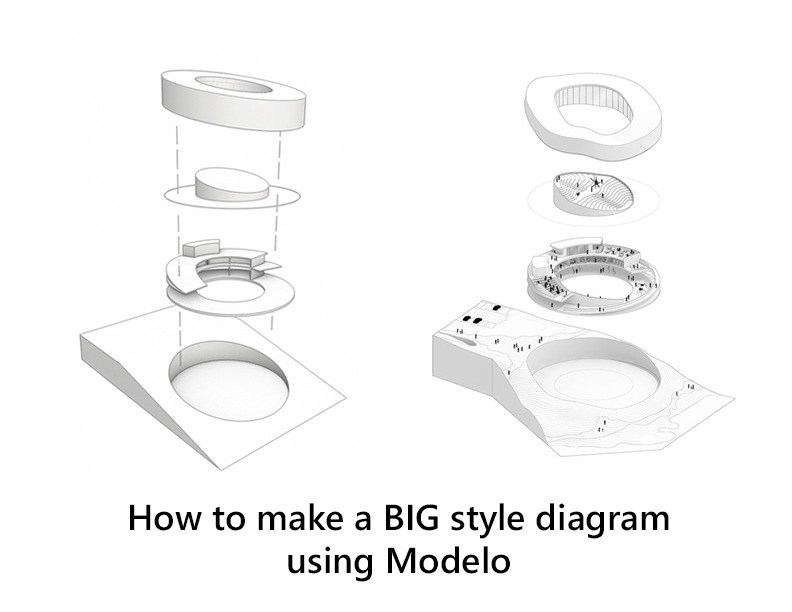
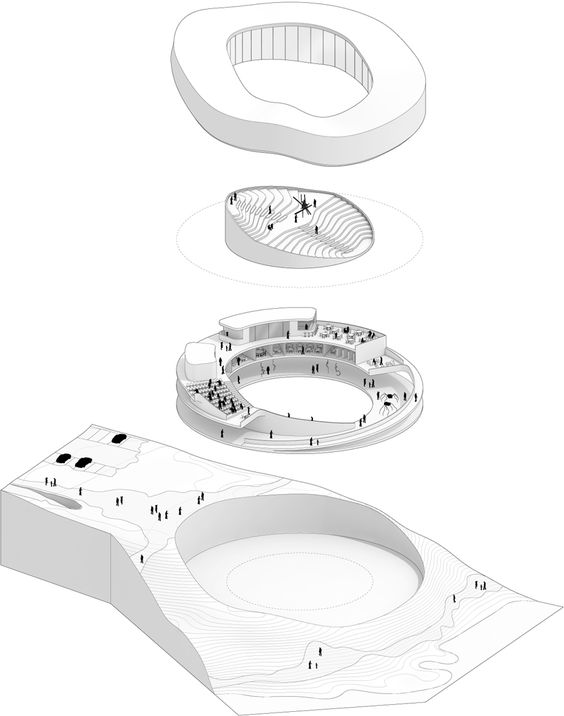
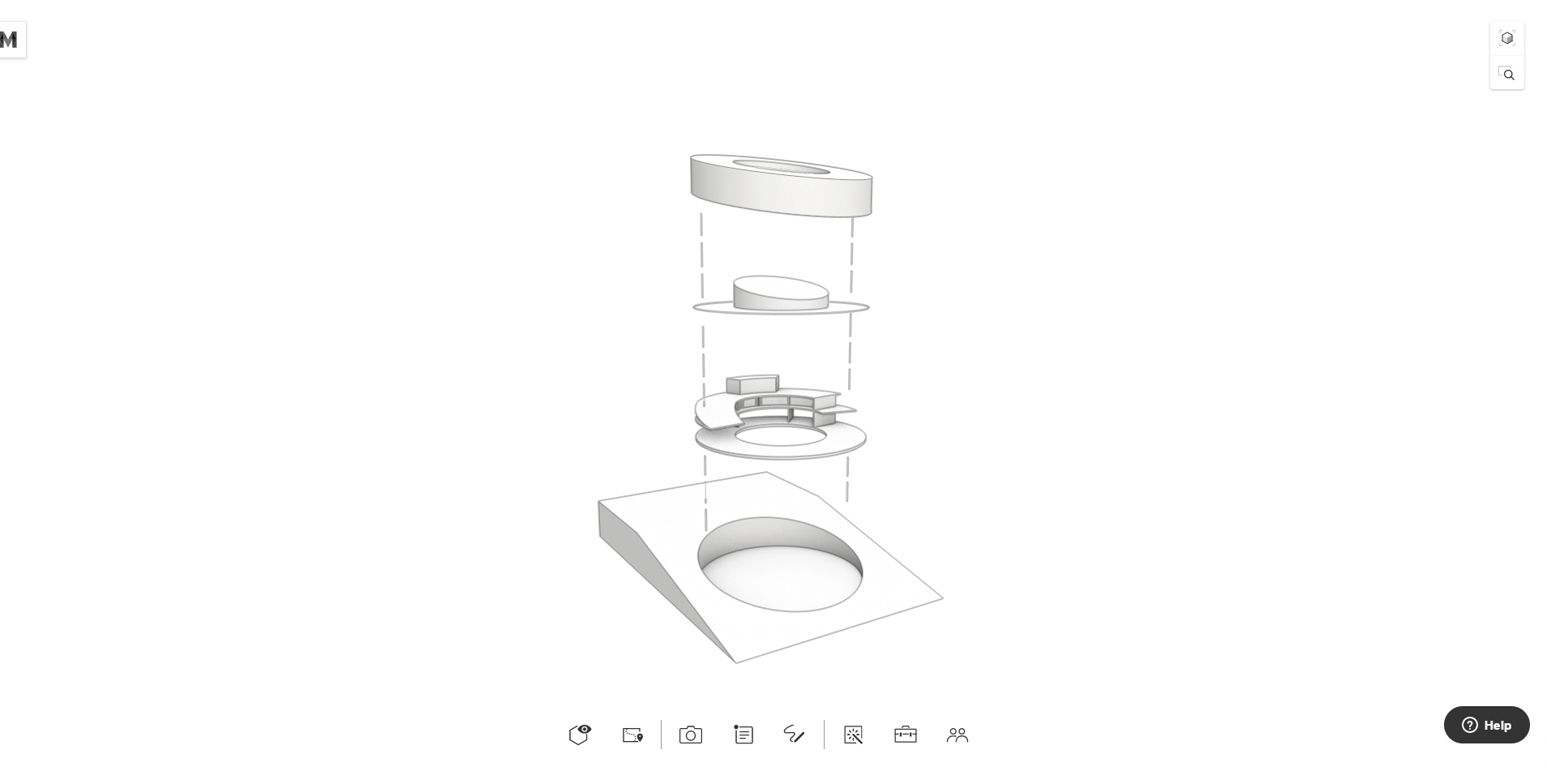
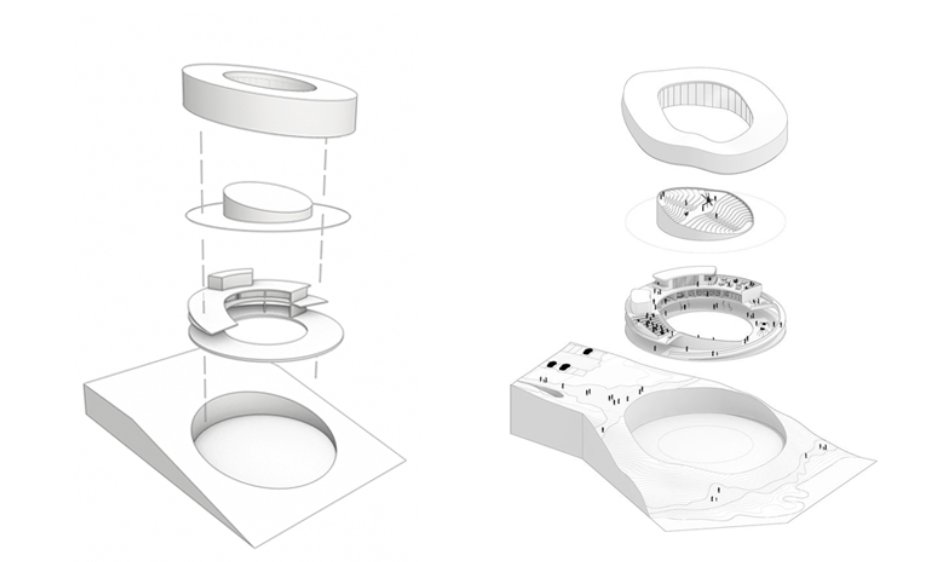
As a former architectural designer myself, it’s common to always get attracted to these “we-don’t-know-what-to-call-them” style diagrams. One of the firms that produces such drawings is BIG (Bjarke Ingels Group). Below is an example of how you can create BIG style drawings in Modelo:
Here is the diagram animated in Modelo
Part of the reason my Co-founder and I founded Modelo is that we wanted to save the time involved to generate these time-consuming renderings, drawings, and diagrams. I remember I used to spend hours back and forth between Rhino+Vray and Illustrator to achieve such visual effects. Thus, we started to rethink about what we can do to establish a standard visual style that’s appealing enough to be used in presentations and design reviews and easy enough so that we can focus on design, not overlay Make2D lines on top of a white Vray renderings in Illustrator. Introducing ArchitectEffect. (We’ve put together a Pinterest board for such drawings, if you are interested in contributing to this board, please contact us).
In this post, I will show you how to easily create BIG inspired diagrams in Modelo.
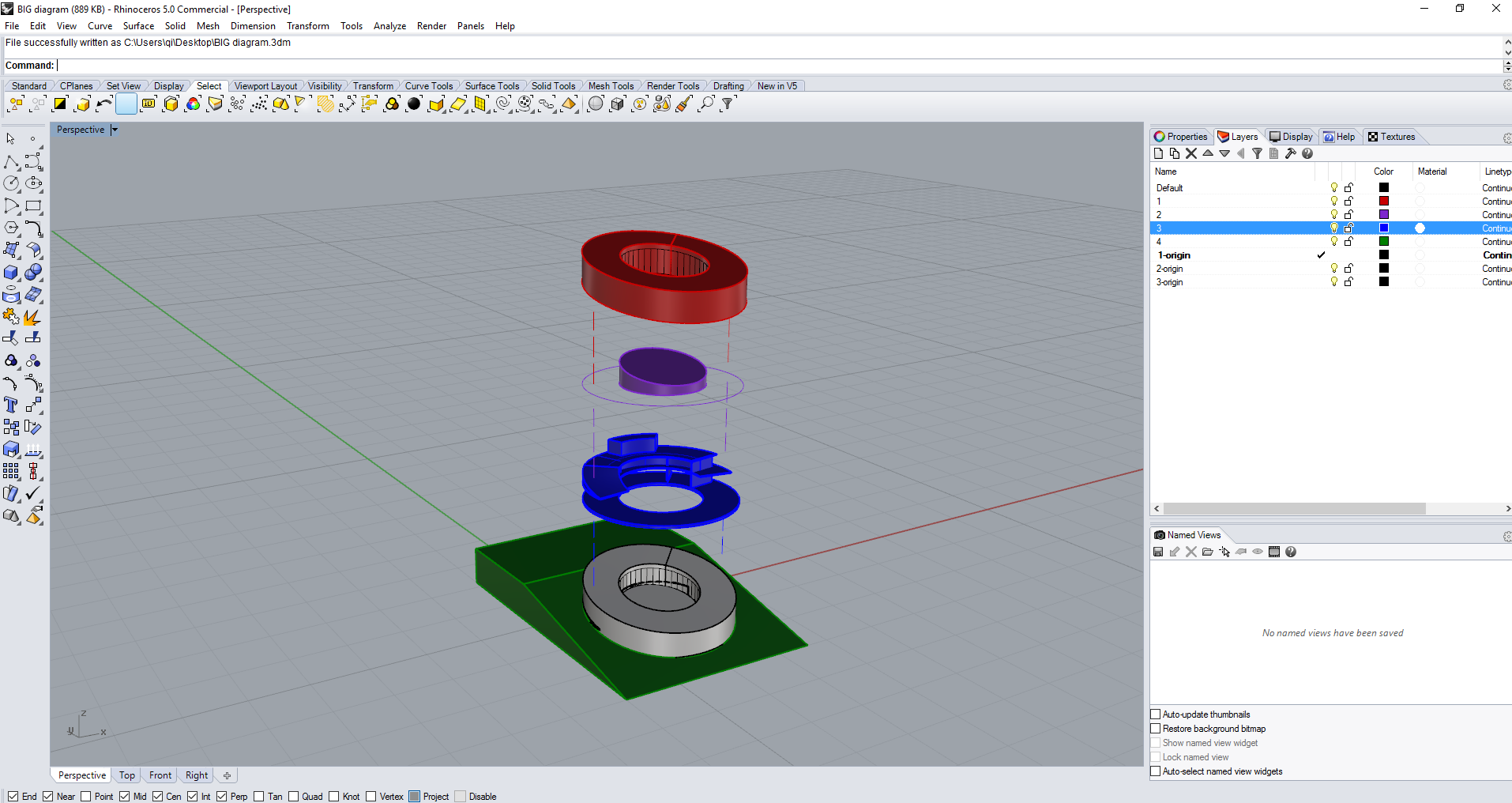
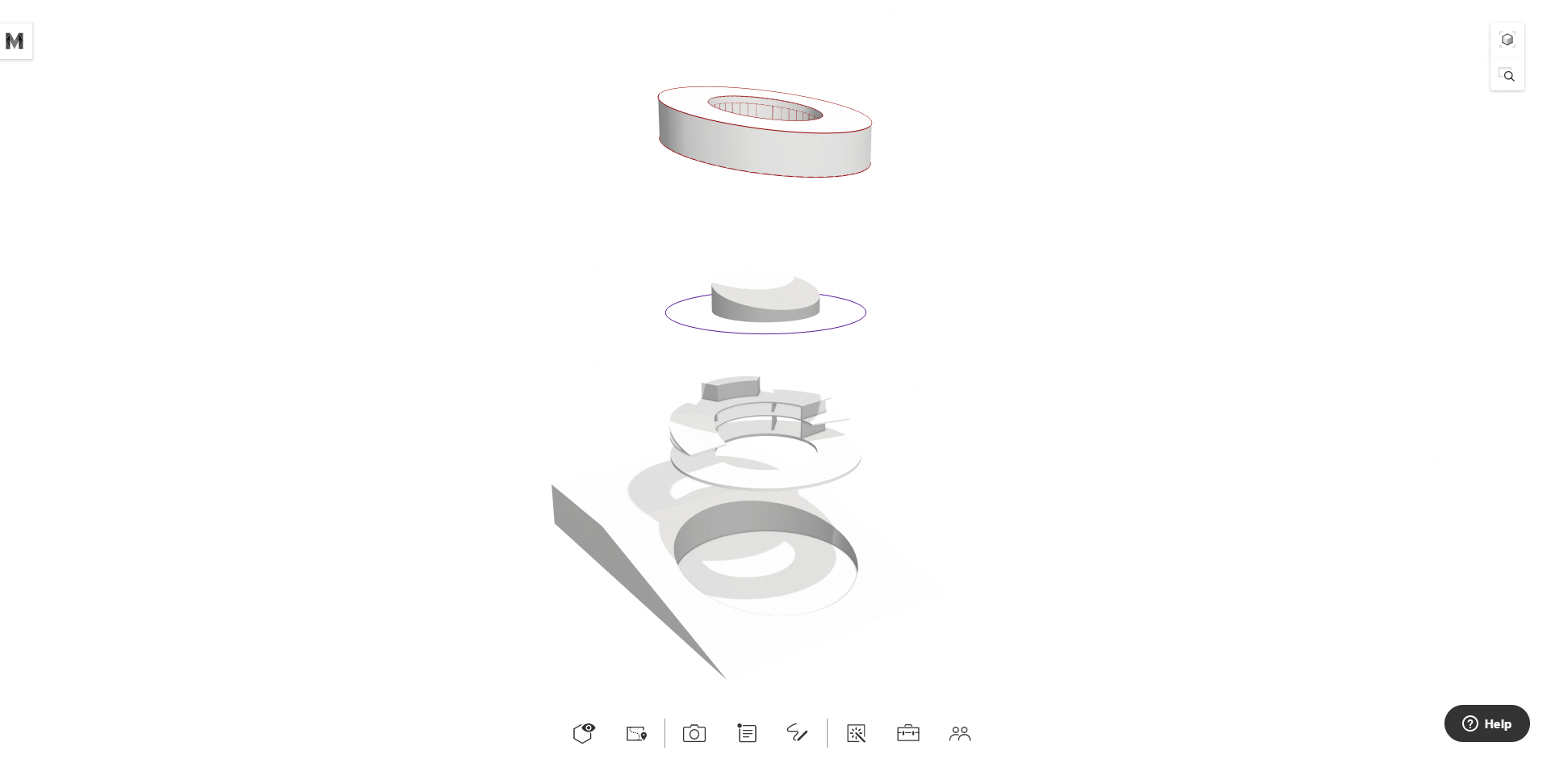
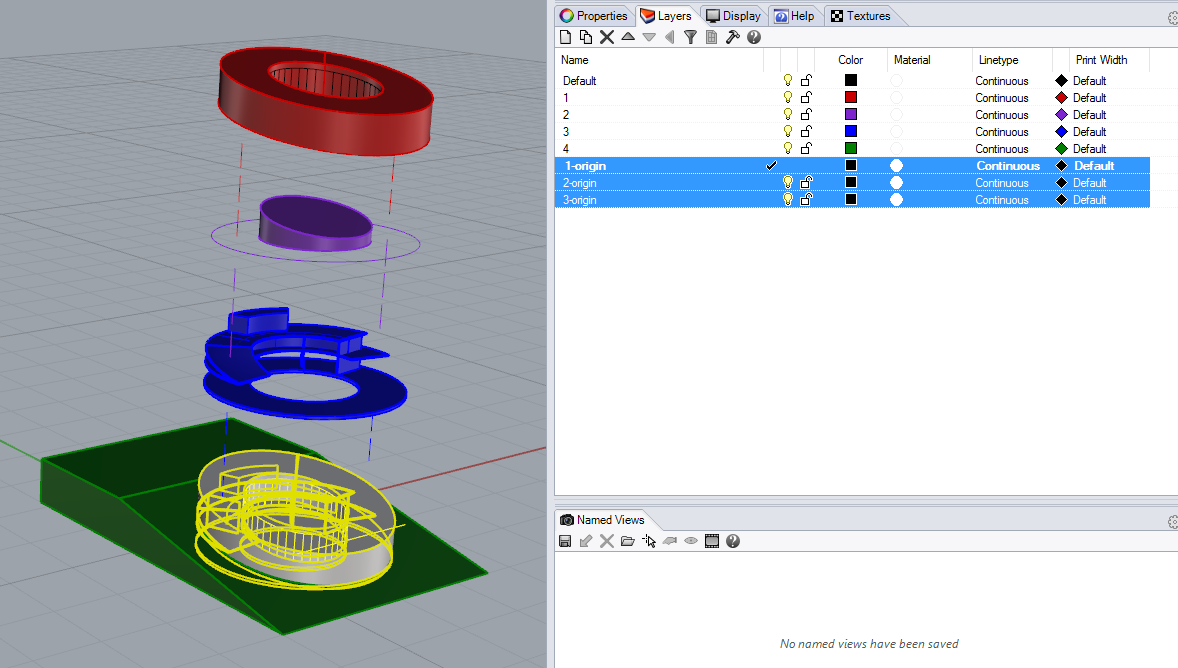
First, because I don’t have the model of this diagram, I created a simplified version of it. Below is how it looks in Rhino. I separated the four different components (site-4, building body-3, inner courtyard-2 and building envelope-1) and put each of them into a unique layer so that we can easily turn them on and off in Modelo.
Now if we upload this BIG inspired model to Modelo, it looks like this:
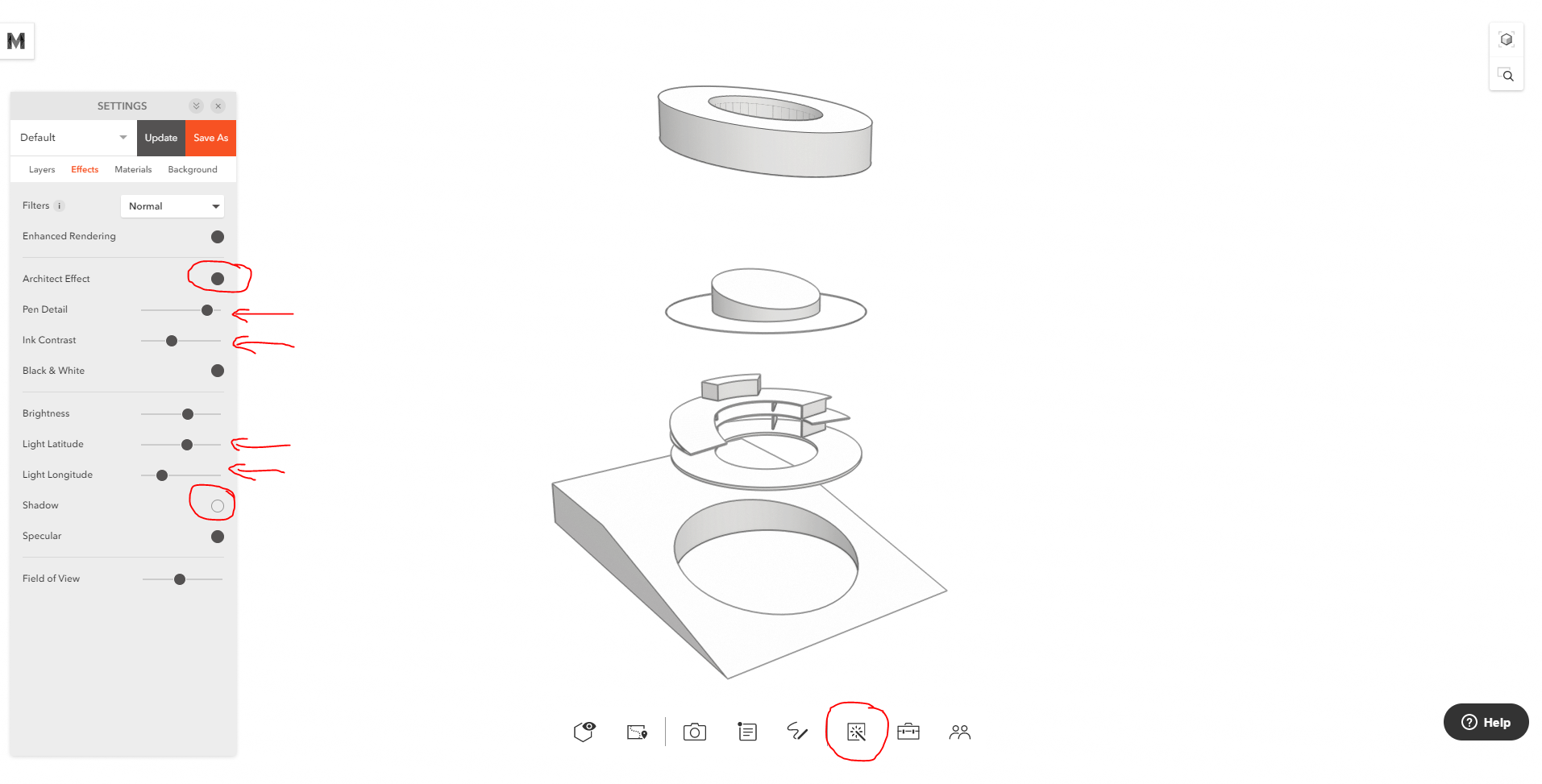
From here, you want to open up the setting panel, turn on the ArchitectEffect, adjust the Pen Detail which controls the amount of outline that gets rendered in the scene. Adjust the Ink Contrast so that all curves have a unified color. Then turn off the shadow (since there is no shadow in the example diagram, but you can keep them on depending upon your needs) and adjust the lighting direction. After all the adjustments, click Update to save this setting as the default.
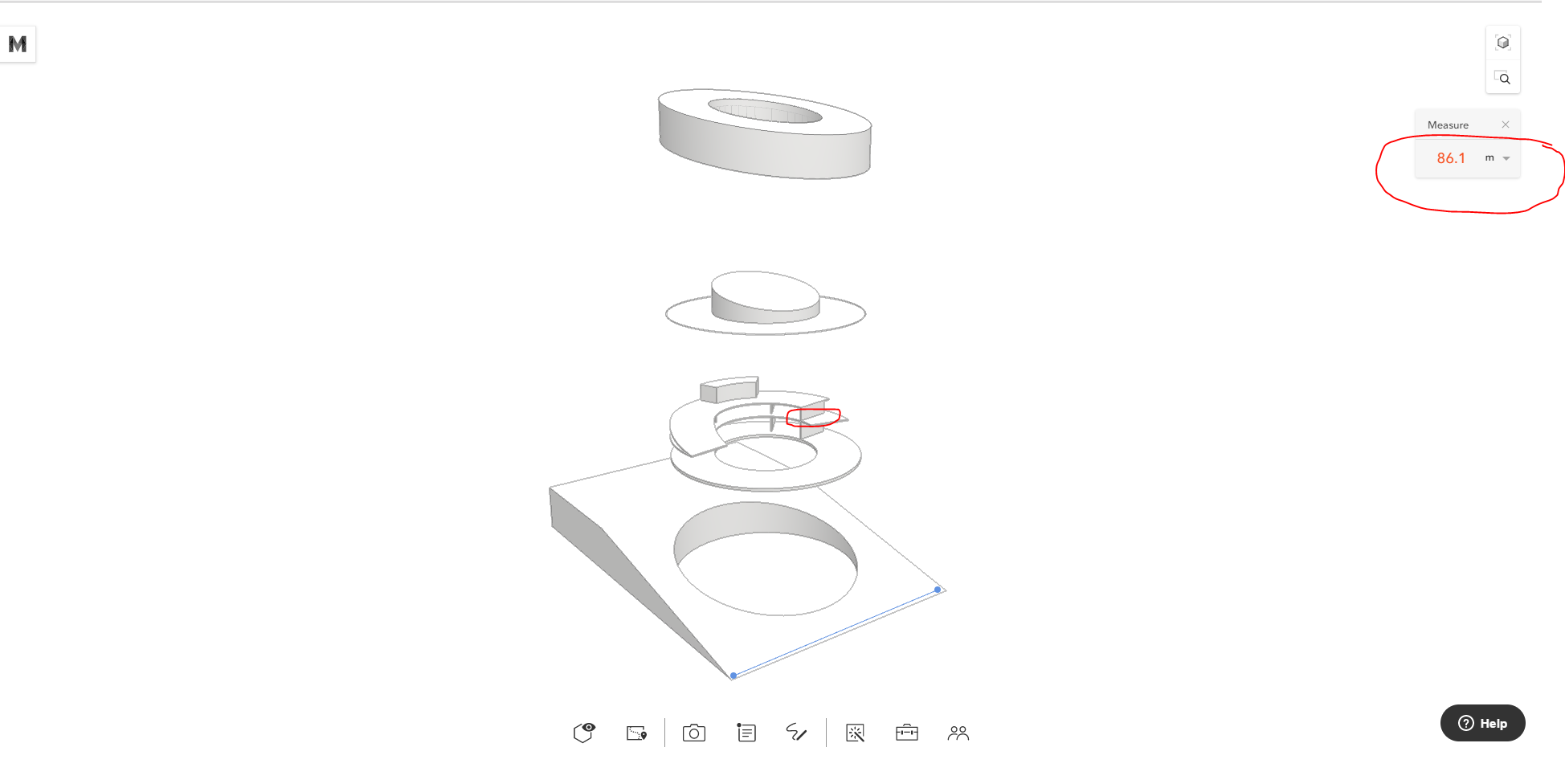
Now if we take a look at this model, it gets the outlines and some ambient occlusion, but not as apparent as that in the example diagram.
The issue is I made this model based on my assumption of the scale of a museum, as you can see from above, the sites’s width is around 90 meters. However, because the model is oversimplified, it doesn’t have the same level of geometrical complexity as BIG’s model does. And since our ambient occlusion is calculated based on real units, this model is basically too big for the AO to show up nicely. So I scaled the model down by 90%. Here is the result:
You can tell the areas around the intersection of geometries are darker, and it’s pretty close to what the BIG diagram looks like. Note, the AO will look even nicer with a more detailed model. Here is a side by side comparison with BIG’s diagram, not bad, huh?
Now you know how to use Modelo’s ArchitectEffect to generate a BIG inspired diagram drawing. In addition, since everything in Modelo is interactive, we can explore further options. I went back to Rhino and created several more layers, like this:
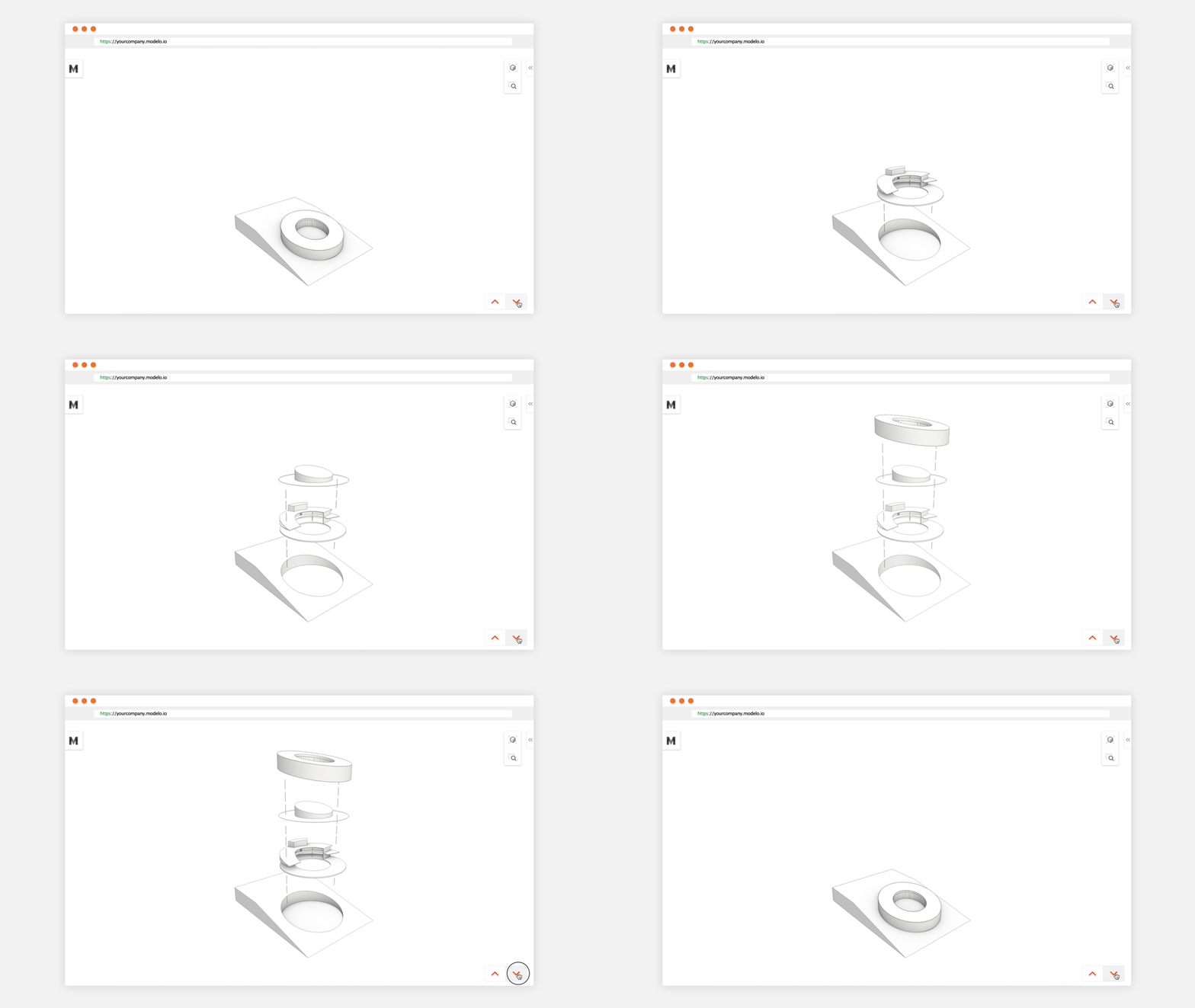
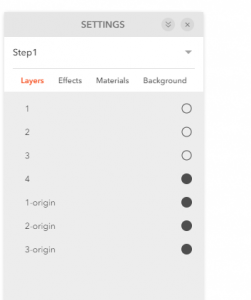
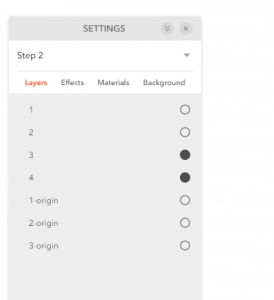
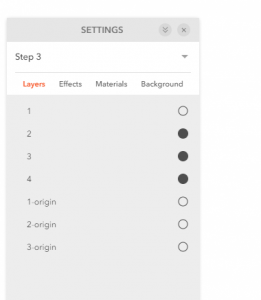
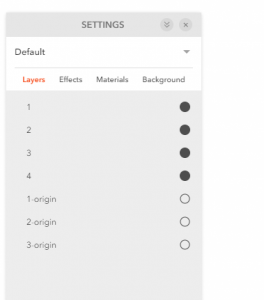
These new layers have the identical geometries from layer 1, 2 and 3. But are located where the building components are supposed to be. Now with this setup, after I upload the model to Modelo, I will have more layer configuration options. So I did a quick four-step setup in Modelo:
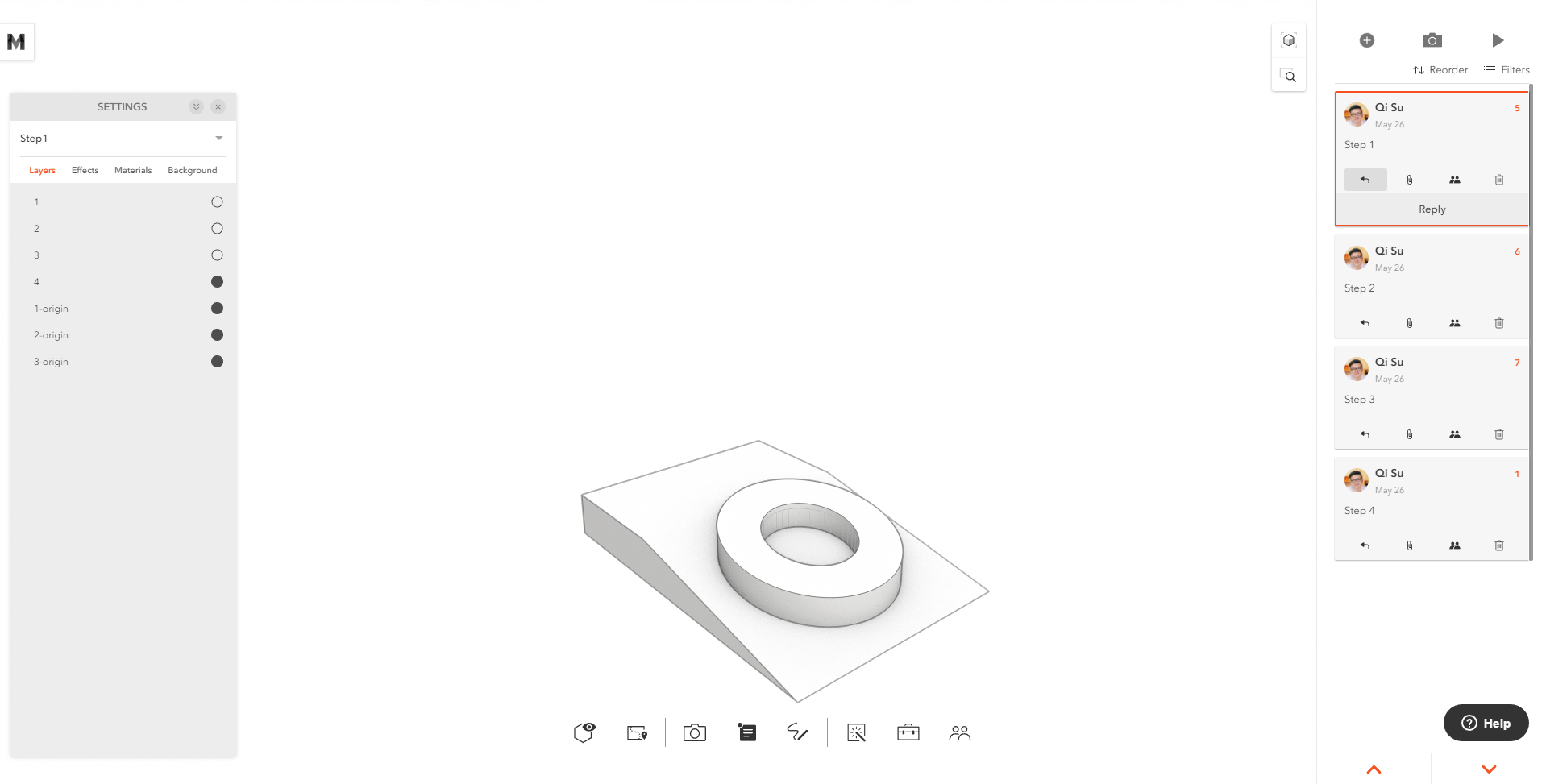
Then I selected a right camera view of my model and under each setting, I added a new 3D view:
With all these set up, I can then simply use the present option to achieve an animated diagram by circling through these four comment cards.
Below is how it looks in Modelo, try spinning the model around or zooming in.
CAD today isn’t about design | Modelo Modelo wants to change that.
Since I’m an architect by training, I think people construct this stereotypical image of me using pens and paper to design magnificent, detailed buildings. Although I’d like this vision to be true, it is not. Instead, we architects intensively use computer software every day for creation. One type of software in particular is CAD (computer aided design), which you’ve probably heard of if you pursue 3D design — whether it be architecture, mechanical engineering, or industrial design.
CAD software has become a giant industry driven by design demand. But don’t get confused — even though the software is for designers, the CAD industry isn’t really about design at all. Today’s leading CAD design software was likely proposed by managers and built by software engineers. All of the necessary tools are there for designers to use, but the way in which they’re presented simply isn’t up to par with the modern aesthetic and interface. The clunky software with an overwhelming breadth of options is then sold to visually-driven designers. CAD is still widely used, but the fact is the people who are building the software are disconnected from those who are using it.
So what’s happening?
In the last several years, Sketch and InVision have developed and designed tools for graphic and web designers. Both stand out because they diverge from the old way of thinking about making software; they instead focus on producing design technology for designers. Their efforts are rooted in understanding what designers really want, what they care about, and how they work every day.
Compared to software engineers, designers pay more attention to visual details, spending hours tweaking design elements. We work with a variety of media — Moleskine notebooks, Pilot razor pens, Adobe Suite, Rhino — to give life to our ideas. We mostly prefer iOS to Android for its user experience. Our favorite colors are of the neutral orientation. We designers are fundamentally a different group of people from software engineers, so we have tremendously different work habits.
The reason is simple: designers don’t know how to build their own software, engineers do. And very few of them can share insights about design. Not to mention, understanding 3D design presents a whole new level of complexity to people not practiced in design thinking.
CAD started with Mr. Ivan Sutherland, who created “SketchPad” as he pursued his doctoral degree at MIT. His work became foundational to the formation of computer graphics, leading to the development of graphical user interface (GUI) and object-oriented programming. In his doctoral thesis, he states:
“It is our intent with this example to show what the computer can do to help us draw…”
He intended to have the machine help people, not regulate them. But the programs that grew out of Sutherland’s preliminary work often feature tools that hinder, rather than help, the design flow.
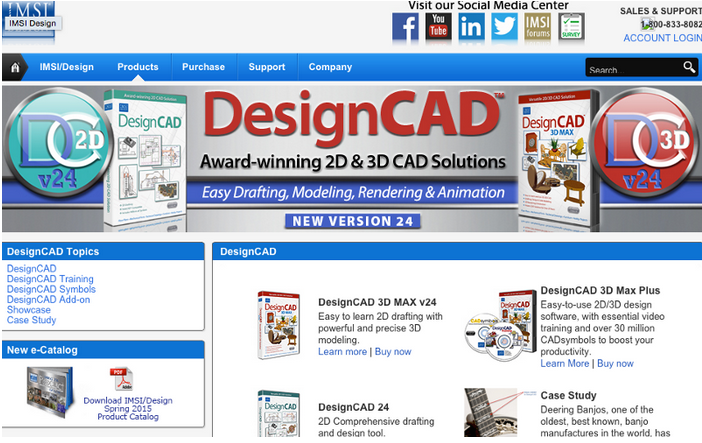
Programs like AutoCAD, Rhino, Maya are strong from the software development perspective. But these programs’ UI/UX environment is a visual catastrophe. Compare Sketch’s future-forward user experience, above, with AutoCAD’s 3D design interface.
Not that great, huh? Why does it seem like these tools don’t support designers? Well for starters, they’re overcrowded, confusing, and clunky. Only the most seasoned users can call themselves experts, priding themselves on learning to wade through the murky interface, memorizing each button and command.
How Can We Make A Change?
Making change in a well-established industry is going to be difficult. All businesses in the 3D design world depend on hefty software subscriptions, which is why the CAD software development industry is in constant demand. They are dealing with complicated users from the oldest industries, like architecture and manufacturing. There isn’t much initiative for the large 3D software developers to make great change. Once they are in the game, they will stay there and expand the breadth of their capabilities (take a look at this list of Autodesk acquisitions). Hyper-simplification of the tool is not exactly in the business model.
Yet, the ecosystem is changing. We’ve experienced so much new tech coming into the market — 3D printing, portable 3D scanning, democratized VR/AR. This is not the era when your 3D software will sell because it’s the first of its kind. The world is full of software and users are tired of choosing and switching. People need both a tool and a team of designers that really care about their needs, their workflow, and their feelings.
This attention to the work-style of designers was our primary motive when we started Modelo. The goal was to leverage design in order to express the urgent needs of our fellow 3D designers. We trust that the rise of web applications and 3D technology will bring us joy while we work together. At the end of the day, it isn’t about CAD. It’s about design, and it always will be.
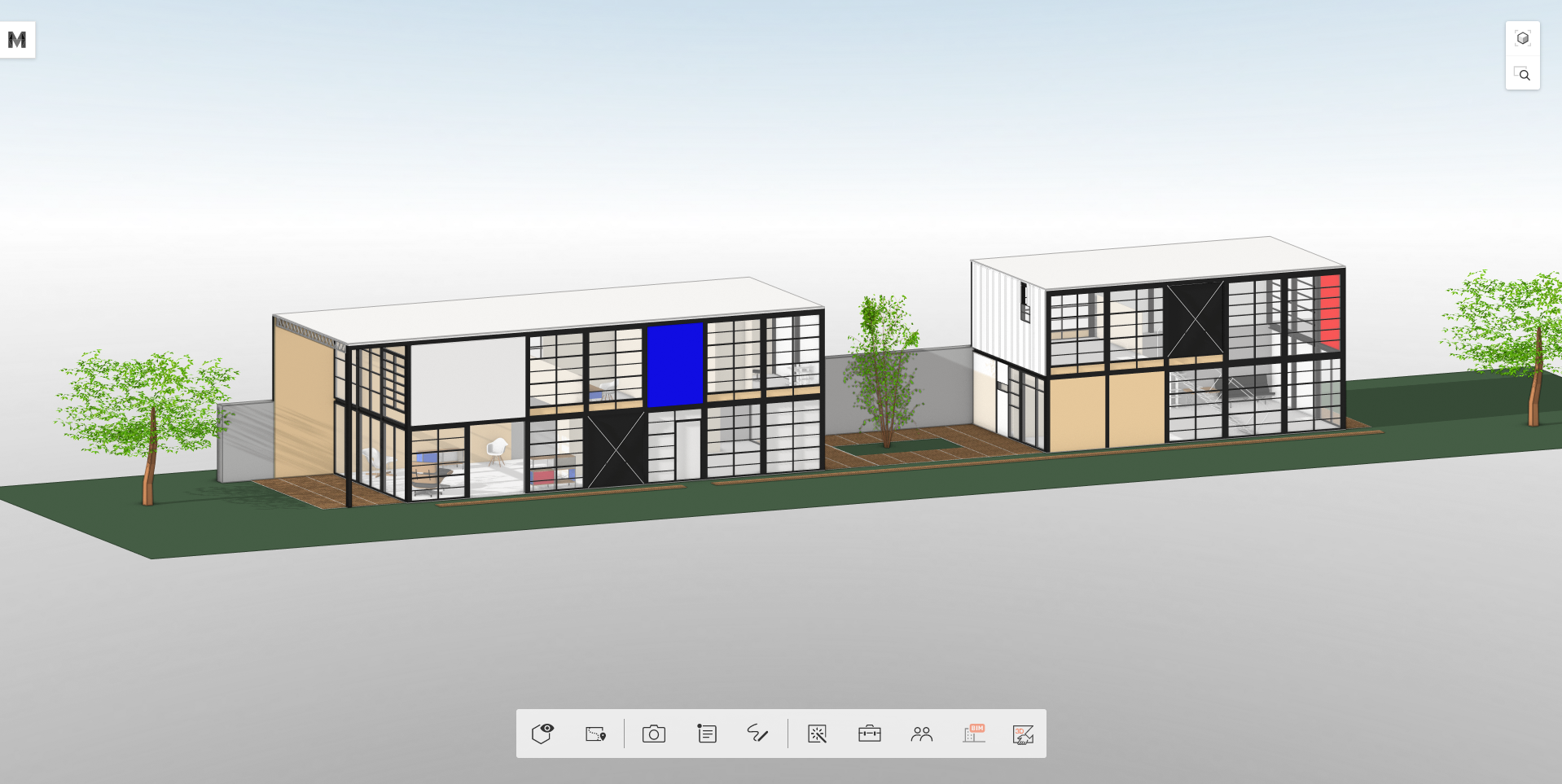
So you want to show off your 3D modeling skills… Well, we want to help you! Embedding your 3D Revit, Rhino, SketchUp, 3DS Max or Vectorworks model into your blog or portfolio website using a small piece of code we provide through Modelo. This small snippet of code creates what is called an “iframe” (an inline frame of html, embedded within a website). If the blogging tool you use supports iframes, then you should be in luck. Now onto the embedding!
1. View your Model in the 3D viewer
Once you upload your model, navigate to the 3D view page, which looks like the screenshot above.
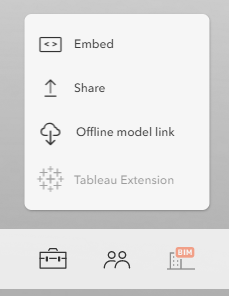
2. Click the Share icon and select “Embed”
From here it’s easy. Click the share icon at the far right of the toolbar and select the “Embed” option. This will open an Embed Options popup, which provides you with your html code for the iframe.
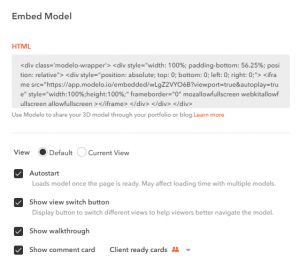
3. Choose your Embed options
Let’s look at each of the elements in the image above individually:
Embed code: This is the text you will copy and paste into your blog or website’s HTML. Click the text once to select it, copy it, then paste it into your site. (We’ve included some helpful links to iframe how-to for some of the most popular blogging sites below)
Size: This sets the size of the embedded model. The default is 640 x 360 – experiment with this to find the best fit for your purposes and the format of your website’s content. Pro-tip: you can adjust the width to 100% in order to have an adaptive window.
View: Default / Current View allows you to set the angle or perspective of the model when it loads on your site. Selecting Default will display the model in your embedded viewer as you see it when you first open it in Modelo. If you have a particular angle you want the model to be displayed at when it loads, cancel the Embed, rotate the model to your preferred position, and then select Embed and toggle to “Current View”
Autostart: Automatically loads the model on your site so that a user can immediately begin it. Keeping Autostart turned off will display a preview of your model with a Play button superimposed on top. If you are planning to embed a number of models on a single page, you should consider keeping Autostart turned off, otherwise, the load times could slow down significantly.
Autospin: The embedded model rotates slowly around the center when the model starts to display. If you drag to view the model, the autospin will pause a few seconds. Then it will continue when the users stop operating.
Show view switch button: In the top right corner, a small cube is displayed. Hovering over this cube pops out three different perspective views that allow your visitors to quickly change angles of view between: Top/Bottom, Front/Back, Left/Right and Default.
Hide Tools: When clicked this option, the toolbox will not show in the embedded models. Pro tips: if you don’t want customers to see the dimensions and the model inside. You prefer to check this box.
Show comment card: 3D comment card is another powerful feature of Modelo, you could use them to organize and showcase different design options, layer configurations, camera angles, as well as annotating in 3D. Check this tutorial out for more information:
Show walkthrough: You could easily create a walkthrough in Modelo interface, so when your website’s visitors see the model, they could simply click the play button to experience your 3D space like they are in it. The walkthrough option will only show when the ” Show comment card ” is clicked. Check this tutorial out for more information:
Show comment card: 3D comment card is another powerful feature of Modelo, you could use them to organize and showcase different design options, layer configurations, camera angles, as well as annotating in 3D. Check this tutorial out for more information:
4. Copy and Paste your Embed iframe html
With your Embed settings selected from Step 3 copy the iframe text (which will change slightly based on your preferred settings). Switch to the page in your blog or website in which you want to embed, select the embed option and paste!
Here’s what it would like in Squarespace (for example):
First add a block and select the “Embed” option outlined here in red, then paste your copied iframe html code into the box.
Keep in mind: You will probably need to play around with the settings a bit and explore the embed support options within your own publishing platform.
Here are some links to helpful support pages for a few different publication platforms:
WordPress – WordPress is a bit more complex, if you are familiar with working in html-mode adding the embeddable iframe should be easy. If not, you may need to do a bit more exploration. WordPress’s Embed Codex page might be a good place to start or the Embed Plugins page.
Next tip: learn how to customize your settings in Modelo before you share with clients or colleagues here.
Modelo’s Academic Program Modelo for Students & Professors!
Modelo offers academic accounts for students and educators of accredited courses.
If you’re a student or educator in an architectural or 3D design program, you will be eligible to access to the Academic version of Modelo using your “.edu” email address. This means students and educators working with 3D modeling software like Rhino, Revit, SketchUp, Vectorworks and others will be able to present their designs, share feedback, manage projects and transfer files all from a single web-based platform (works on phones and tablets too).
Did we also mention Modelo is the fastest real-time 3D rendering platform in the industry?
Why Free for Student and Academics?
Modelo was conceived as a thesis project by founder and CEO Qi Su during his studies at Harvard University’s Graduate School of Design. After experiencing his own difficulties sharing and presenting 3D models in both class and professionally he decided to develop a prototype to represent student projects in real-time. After a lot of hard work, we have transformed that prototype into a fully fledged software company providing 3D presentation and communication solutions to some of the world’s most renowned international architecture firms.
For a project born in the academy, we feel it’s only right to provide the service to digital-native students to help them communicate and present their designs and prepare for the professional world.
Why Now?
During the fall semester of 2015 and spring semester of 2016, Modelo was piloted with a few select academic programs. Our users found considerable success with a number of the platform’s key capabilities. Being able to communicate directly through 3D models in a browser-based environment was a big change for the professors and lecturers using the tool. For the students too, Modelo proved to be an invaluable tool.
Since that time, Modelo has come a long way. We’ve support for new formats, created new administrative user types, improved our mobile experiences, added VR with Google Cardboard, added a ton of 3D Viewer control enhancements and a whole bunch of other awesome stuff. The time is right to open the gates and see how students can use Modelo in new and experimental ways to represent their 3D designs.
Get Started
If you’re interested and would like to learn more, please reach out to Modelo’s Customer Success Manager, Phoebe Zhang at ypzhang@modelo.io using your .edu address and provide your full name, educational institution, and proof of enrollment. More information below:
1. Send your syllabus or proof of enrollment to Phoebe Zhang at ypzhang@modelo.io
2. Professors: send your class size and course start date and end date
3. Register for a free account first with your .edu email, then your account will be upgraded
4. Students will receive a 1 year, individual license. If you like to access Modelo’s sharing and collaboration functionality, please ask your professor to reach out to Phoebe Zhang at ypzhang@modelo.io.
5. Professors: you can set up access for your whole class, which includes access to Modelo’s collaboration and sharing functionality. Please email Phoebe Zhang at ypzhang@modelo.io to set up a time to discuss your needs.
Only those with complete information will be answered; incomplete inquires will be ignored. We will then respond with your Modelo login credentials within 5 business days.
5 technologies that save architects time with Modelo | Technology for architects.
Time is a precious commodity, particularly when you are up against a deadline. Make every minute count by employing these 5 great features of Modelo.
1. INSTANT VR
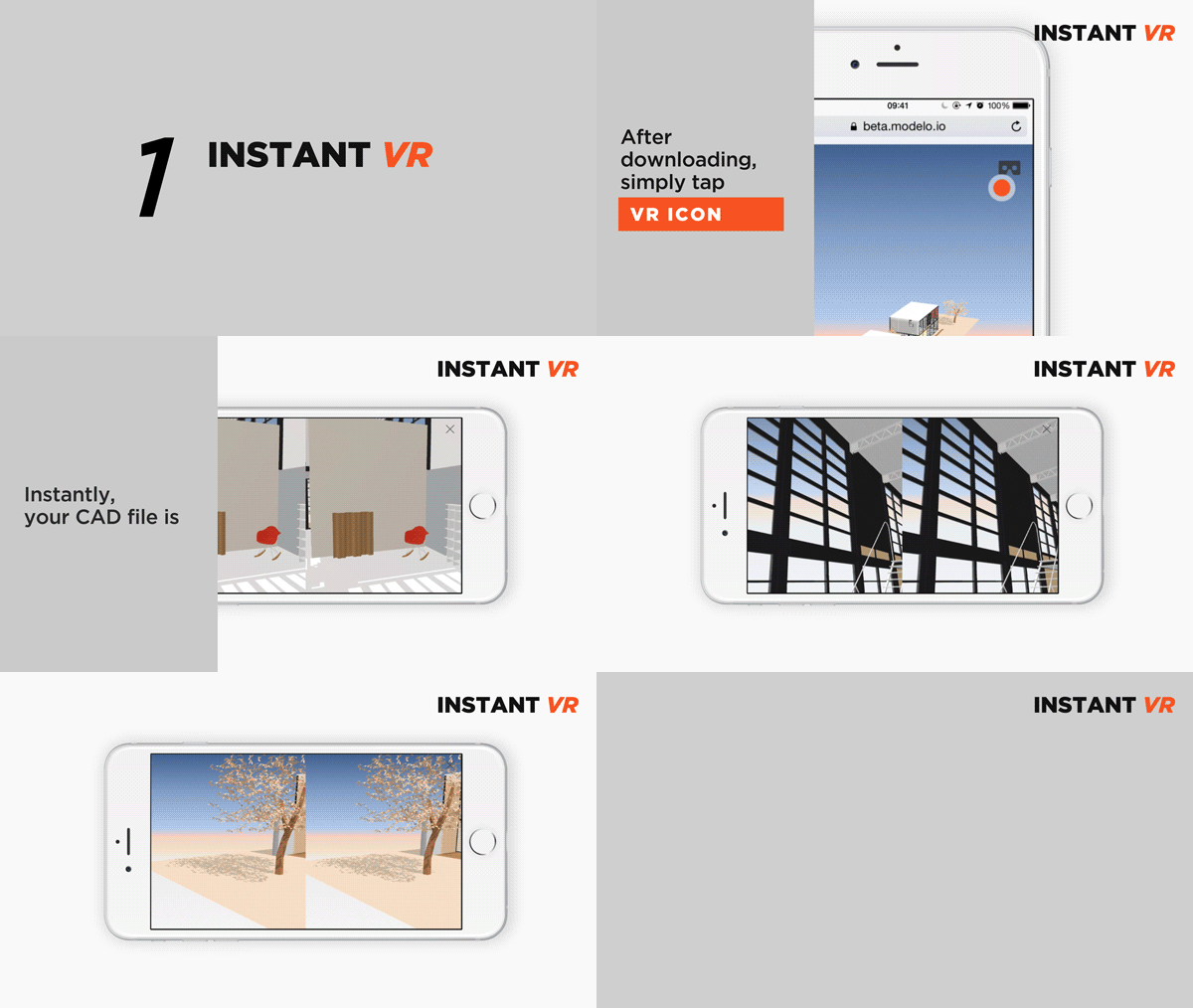
Without additional and complicated preparation, simply upload your CAD models to Modelo, access them from the iOS or Android apps, and then simply tap the VR icon. Immediately you are in VR mode! Put on a Google cardboard and instantly you are inside of your model.
If you set up some comment cards on Modelo, you can immerse yourself on a 3D tour of your design. (check here for “creating 3d comments” tutorial)
2. WALKTHROUGH
Walkthrough is one of the most innovative and intuitive features of Modelo by far. We’ve fundamentally re-thought about the process, so you can create walkthrough effortlessly in your browser.
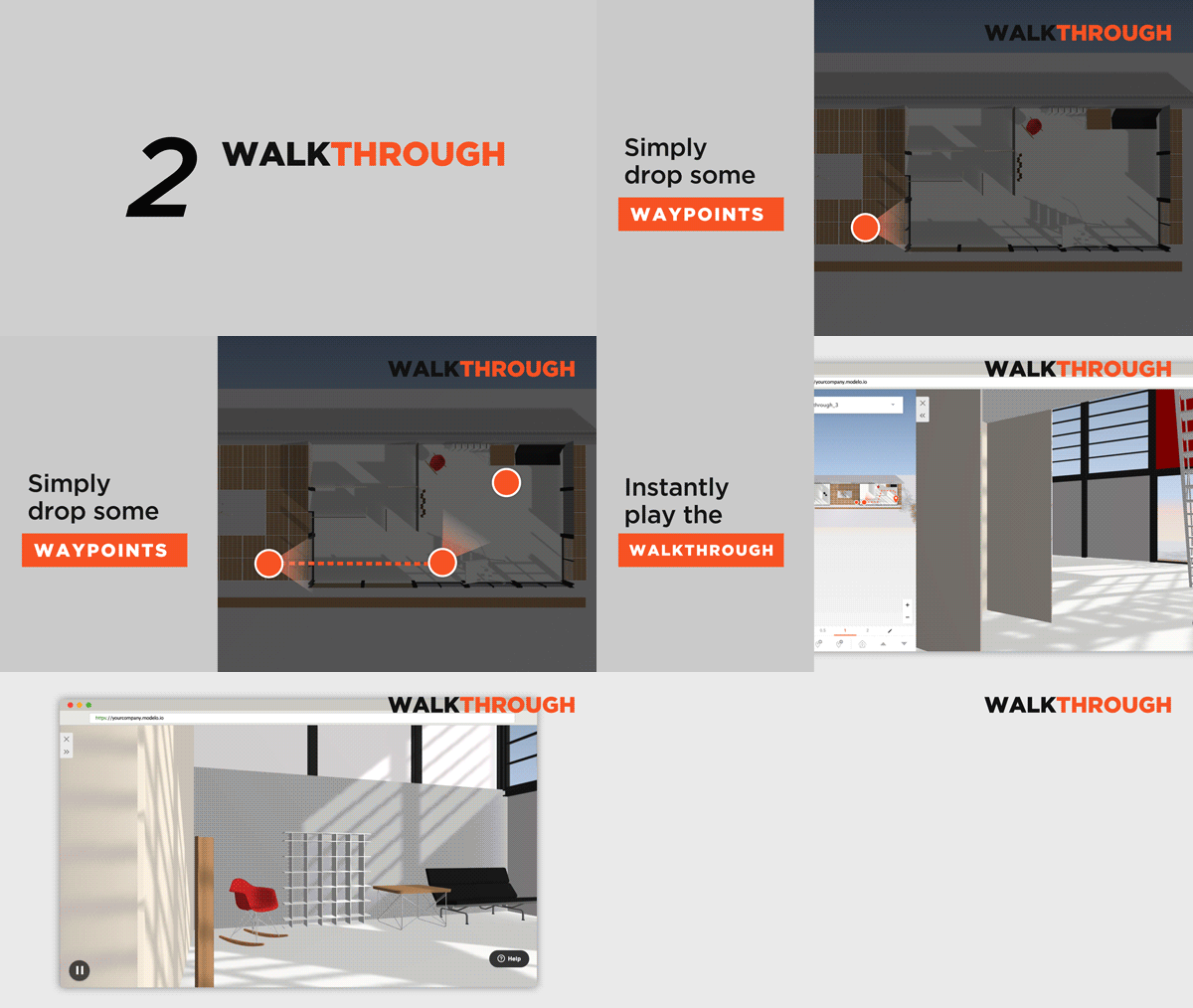
Simply just drop some waypoints on the floor plan and automatically a walkthrough will be generated! If your design has more than one floor, you can now travel up the stairs seamlessly. (Check out the tutorial here)
3. RENDER SPEED
Our proprietary rendering and compression engine enables complex models to be visualized directly in internet browsers. Modelo is the fastest 3D rendering platform in the world, with spin speeds up to 50x faster than native CAD software.
4. 3D COMMENTS
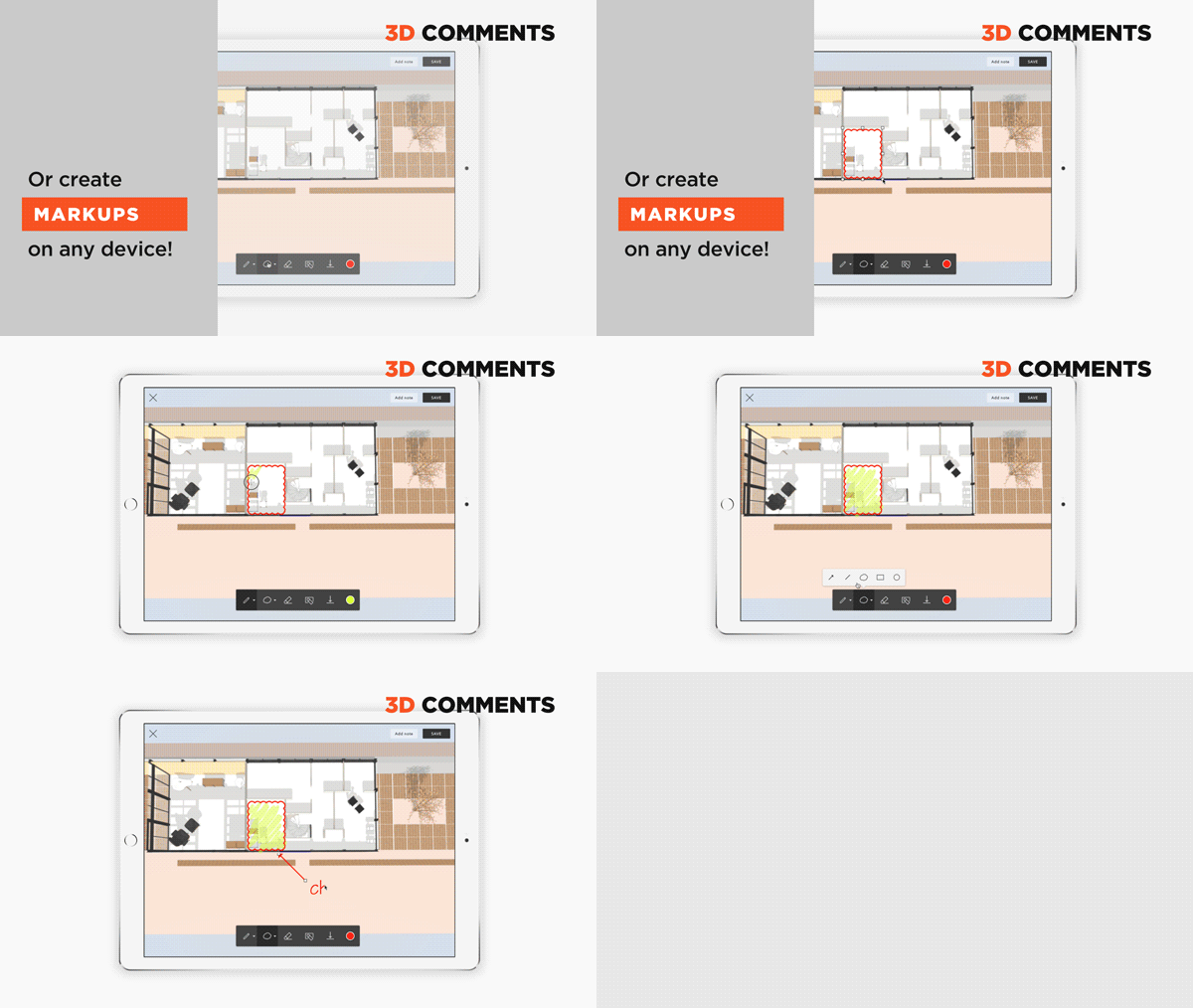
With the 3D comments feature, you can give specific feedback on targeted areas of your model. Your team members can access all the comments instantly and accurately. And they can also reply on your comments directly on Modelo and mention anyone on your team to join the conversation using “@”.
Also you can use our professional MARKUP tool, coupled with SECTION tool, to share the feedback instantly to help improving the design.
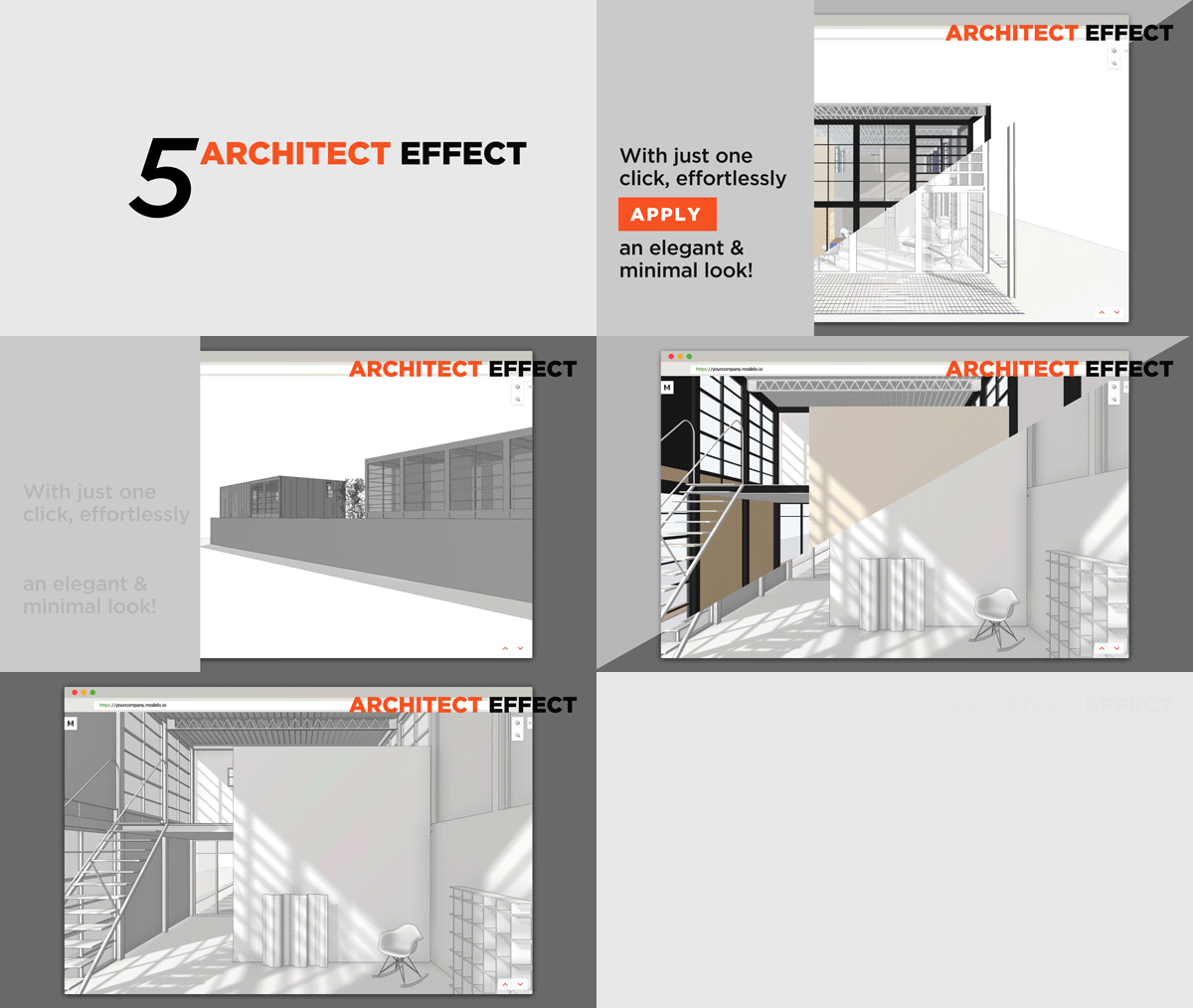
5. Architect Effect.
Tired of using Make2D and Illustrator to get your desired effect? With #ArchitectEffect, it only takes one click, to transfer your model into this elegant and minimal drawing style in one second!
Design Manifestos: Raegan Porter of FGM Architects
Raegan Porter (Photograph courtesy of FGM Architects)
Raegan Porter is a Registered Interior Designer with a diverse background in recreation, municipal, educational and contract design. She is the Municipal Interior Design Leader for FGM Architectslocated in Oak Brook, Illinois. Raegan has a unique ability to understand her client’s needs and incorporate them into creative, functional space plans. Through space planning, materials, furniture, lighting and art work, she brings her clients vision to life. Her goal for clients is to create an overall experience for the communities using her spaces. She states, “I often judge a space on how it makes me feel. I want to create exciting spaces that make people feel good.” Modelo spent some time learning about what inspires Raegan and about her current role at FGM Architects.
On becoming an interior designer
My mother and grandmother were a big influence on my love of art and design and my decision to become an Interior designer.
My mother had intended to go to Art school in Atlanta in the 1960’s but, due to the rioting happening at that time, her family decided it was best she didn’t go. But she still had a love of the arts and always encouraged my creative side!
My grandmother was a painter and creative in every sense of the word. My cousin and I, who are very close in age and in spirit, spent many hours with our grandmother playing games that involved creative thinking and design. The three of us would dream up designs for our future homes and weddings. Both my cousin and I decided at that young age that we would be designers. And there was no turning back!
I feel very lucky that I knew so early in my life that Interior Design was my calling!
On discovering her voice as a designer
Since I can remember I have had a LOVE for color. Some of that comes from my mother and aunt who also have a love for color and art. Being immersed in that from an early age has most definitely contributed to my love for color and dramatic environments.
For a while I freelanced at a firm that did more commercial interiors and was introduced to this idea of branding environments, this idea was fascinating to me. After some research I found it was a concept that made so much sense to me. It can help increase the client’s bottom line, so why wouldn’t they want to use their environment for marketing? Designing a space to embody the client’s brand is something that I am always trying to achieve. It is in my nature to want to help, so if I can help a client have a competitive edge or help the impression of a client to the public I am happy.
I also believe that all the adventures that I encounter in life have an influence in different ways whether it’s dance, fitness, painting, teaching self-defense or my passion for giving back. All of these have an effect on who I am which I know in some form shapes how I design.
McHenry Recreation Center (Images courtesy of FGM Architects)
On joining FGM Architects
I started with FGM right out of college. My lighting professor in college put me in touch with a gentleman who did a critique in our class. He was a project manager at FGM and that’s how I got connected to interview.
In the early days I learned functional and durable design as well as how to be creative on a budget. We learned fundamentals in school but the early years of working are where you really learn. A majority of the buildings that we work on are public facilities that will be around for a long time, not to mention the abuse of a 24/7 facility. The functionality and durability are critical. Budget is key so it is critical to find durable inexpensive materials or reinvent standard materials. It’s easy to find really interesting materials when you have a large budget but when you are forced to reinvent materials on a tight budget the real creativity happens. That’s a talent I have learned at FGM that I wouldn’t give back for the world.
With the down turn in the economy I was laid off after about two and a half years. I went on to work for a furniture dealership and had my own company doing design. In 2014 I knew FGM was looking for someone to head the Interior Design for the municipal practice area so I reached out and interviewed.
Coming back and working the second time around I am truly grateful for all that I learned while I was away. There are talents and lessons I have learned I may not have had otherwise. Those are invaluable tools that I got to bring to back to FGM with me, making me a better designer for FGM and our clients. To this day I am still learning from the amazing team of people that I get to work with every day and continuing to evolve in my approach.
On specific principles she strives to adhere to
In each project I try to create an overall great experience for those using or visiting the building. We spend so much of our lives now stressed and busy. I try to create environments that welcome you in and give you a “WOW” moment.
Designing the clients’ space to embody their Brand.
Designing healthy functional environments for the client.
On her role at FGM Architects
My role as the head Interior Designer of the municipal practice is multi-faceted. One day it could be…who am I kidding one hour it could be marketing then project management, design or drawing. It just depends.
I work hand and hand with our Head Design Architect Louise to come up with the design direction on each project. Then for the interiors I work with our team giving design direction for them to implement. However, I must say it is a team effort! The whole municipal team is very collaborative on all aspects of a project.
Chevy Chase Country Club (Images courtesy of FGM Architects)
On recent projects that represent the firm’s unique approach
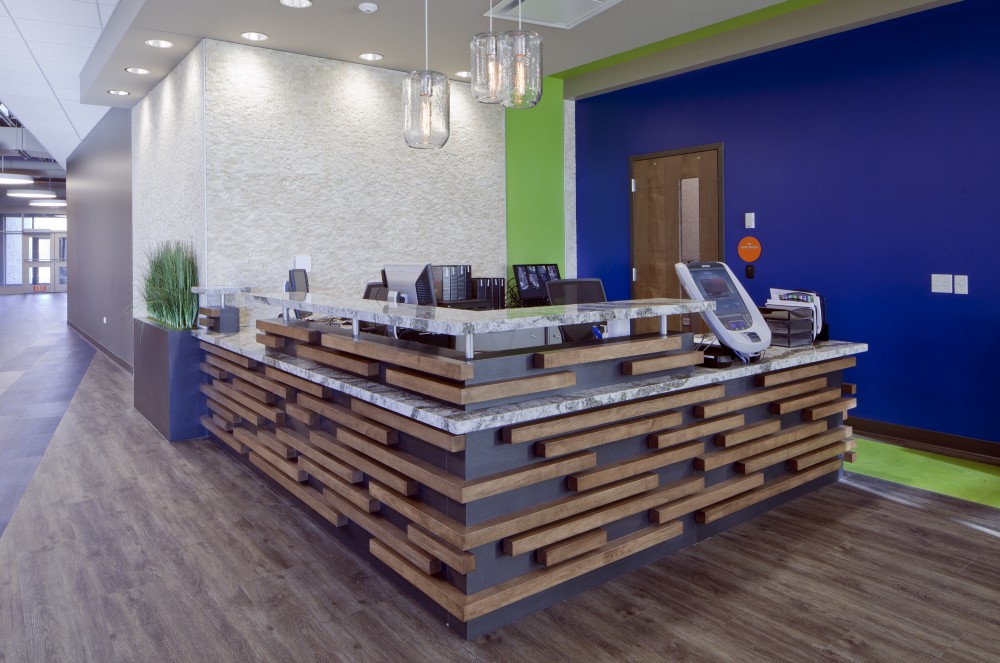
We breathe energy and life into our built environments that can’t be duplicated. A great example of this is a project that was just finished a year ago, McHenry Parks and Recreation. The use of natural materials with vibrant colors gives you this great warm energy right as you walk in the door. Many of the community members have been quoted saying “wow I wasn’t expecting that” with a smile on their face and eager to see what the rest of the facility looks like.
We have an understanding of our client’s profession which allows us to help when planning and listening to their needs. Another project that is a great example of this is Chevy Chase Country Club in Wheeling, Illinois. It was an addition renovation. After listening to their needs and studying the space, it was clear that the traffic flow needed to be more efficient. We added an event room for weddings and corporate events that seats around 200 people as well as a new pre-function and sales office. Moving the pro shop off of the gable room so that golf is separate from the event spaces helped tremendously. This is also a great example of how an interior renovation of a space can affect your bottom line. The new space has been open for only a year and bookings are already up. Currently we are compiling the data for a case study and it is looking very positive.
On her design toolkit
FGM is a firm that is standardized on Revit which has taken designing to a new level. It is always a struggle to be able to provide 3D modeling to help clients visualize while keeping cost down in order to meet budgets. Revit allows us to provide a 3D of the space while part of that time is still working on the construction documents.
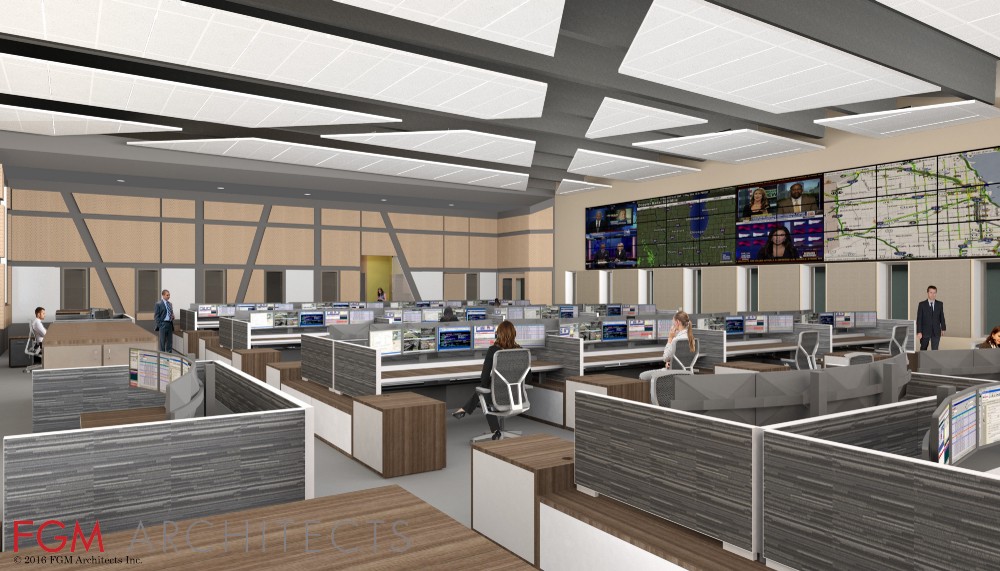
A great example of this is a project that is currently under construction for Addison Consolidated Dispatch Center in Addison, Illinois. The space is designed to reduce stress for the employees taking into account the way light is used and sound levels. There are a lot of natural materials used with accents of blue and green. Revit allow us to show the client what there space will look like and the ability to tweak things before even building the space.
Addison Consolidated Dispatch Center (Rendering courtesy of FGM Architects)
On the state of design software today
There is a plethora of design software to choose from. It amazes me how far we have come in the past ten years, it makes it so much easier to convey a design or space to a client that may not be able to envision the creation.
On the future of the design industry
Designers are always pushing the limits and that is something that will always continue. Where we need to spend more time is really educating the general public on what we do and the benefits of our profession. We don’t just pick materials and colors. Although I love that it’s really is only about 5% of what we do.
Honestly I don’t know how our industry will evolve moving forward. We have seen so much change in the past ten years with the recession, inventions in technology and political climate. I do believe it will be positive change filled with its own exciting puzzles to solve.
On advice she would give her younger self
I would say to myself: network, network, and network! You never know where something will lead.
Design Manifestos: Trace Jacques of ESG Architects | Modelo
Trace Jacques (Photograph courtesy of ESG Architects)
Trace Jacques, AIA, CID is a Partner at ESG Architects in Minneapolis, Minnesota. Even though Trace is a senior design principal involved in every area of ESG’s expertise, he remains a hands-on leader. Trace is keenly aware of the ways in which new buildings can transform the character and livability of a neighborhood. Always working within budget, Trace creates refined, context-sensitive projects that fulfill client objectives for functionality. At the same time, his projects “tell a story about place, and how design is bettering the lives of people who live in our buildings and who pass by them on a regular basis.”
On becoming an architect
As a child growing up (surrounded by perpetual construction) in the suburbs of Chicago, Illinois, I was captivated whenever we got close enough to see the silhouette of the downtown skyline in the distance. I would see construction progress on the Sears Tower and Standard Oil Building and compare them to “Big John” — The sheer scale of those towers was awe inspiring to me. I loved them so much that I started building scale models of them and collecting any information that I could find in an almost obsessive way.
On pursuing the profession
Making architectural models starting at age eight, began my exploration and education in architecture. Even early on, those models explored the fundamentals of each building’s design (i.e. Form, color, composition, and eventually contextual urban fabric). Building models brought attention my way and having an uncle who was an architect (the only professional in a very large extended family) also played an unquestionable role in determining my direction in life.
Junction Flat (Photograph by Trammel Crow and Farm Kid Studios courtesy of ESG Architects)
On discovering his voice as a designer
Looking back, it was from the immense amount of model building done in my youth (which evolved to building designs from my own imagination) where my confidence grew. With the support of a few key art teachers who allowed me to display my work, my voice began to be heard. That voice was quite naive to say the least until my eyes were opened in college art history classes and more importantly as an architecture student at the College of Architecture at the University of Minnesota during the 1980’s.
Professional influences: I would list Leonard Parker first as my early mentor and Mark Swenson as my most important mentor (as well as partner today). I have always been a consumer of great design — firms and designers such as: KPF, Rafael Moneo, SOM, HOK, Perkins & Will, SHoP, NBBJ to name a few have steadily fed my appetite for high quality design.
Educational influences: The University of Minnesota College of Architecture in the 1980s was marked by the recent retirement of long-time head Ralph Rapson with its intense practical approach to design and was transitioning and experimenting with bold new academic based studios so I experienced quite a range of differing design approaches and it helped me to be able to sift through and see which approaches truly fit my own sensibilities.
Personal influences: I am a person of many passions. I have a passion for aviation, skyscrapers, ocean liners, navy ships, and stadiums to name a few. My other passions are with family (especially my wife and children) and my Catholic faith.
Latitude 45 (Photograph by Farm Kid Studios courtesy of ESG Architects)
On joining ESG Architects
I joined ESG after working eleven years for The Leonard Parker Associates and I needed a change and was given an opportunity to be a lead designer and the joy ride hasn’t stopped. Unlike TLPA, ESG was a younger firm that focused on private sector work which meant faster, seat-of- your-pants work and a lot more opportunity for hands on design experiences.
On how his approach has changed since joining ESG Architects
Because of the fast pace and the sheer number of projects and the variety of clientele, efficiency and flexibility have been the keys to success. I am a modeler by nature and able to self-teach when I have a need to possess a certain skill set. Interns also help that process of learning new skills. That drive has steered me into designing much more hands-on with the aid of computer modeling software like Sketch-up and V-Ray.
NIC on Fifth (Photograph by Farm Kid Studios courtesy of ESG Architects)
On specific principles he strives to adhere to
As cliché as it sounds, a customized, creative, client driven approach that reinforces the value of design excellence by enhancing the residential and guest experience all the while contributing to the design awareness and expectation level of the general public as they experience and engage our designs on the community level.
On his role as Vice President & Design Principal at ESG Architects
My role is still very “hands-on,” meaning creating the overall baseline design vision as well as refining that vision for many higher profile projects at ESG in all categories of project types. I am a designer at heart and see every new project as a fresh opportunity to explore the ways a design can be approached and executed. In that role, I hope to lead and mentor (by example and engaging) the younger staff as well as the more seasoned staff regarding not just how I think, but how they can think about (and execute) quality design and what that means.
On recent projects that represent the firm’s unique approach
As stated earlier, ESG is very creative and very well versed in blending our specialties in mixed use, multi-family residential (of all kinds), commercial, office, and hospitality. Mix in a very creative interiors group, and it is a great environment to try things out and make people happy.
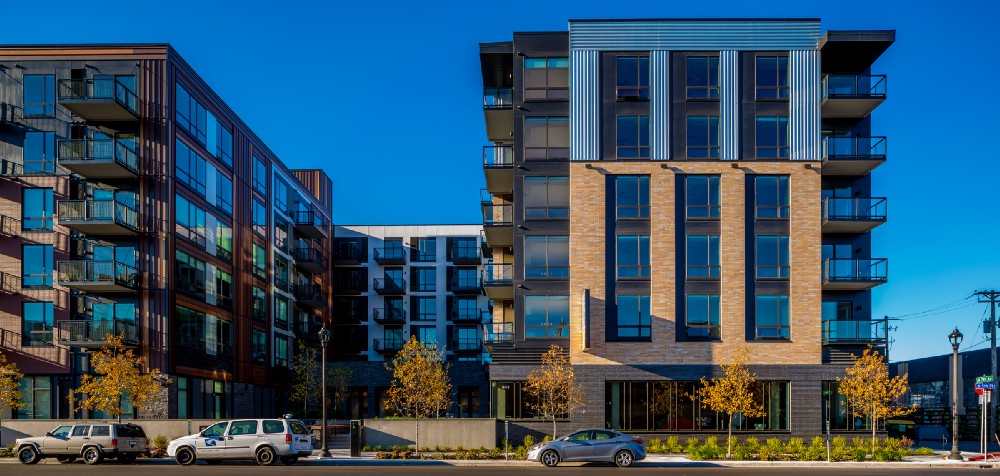
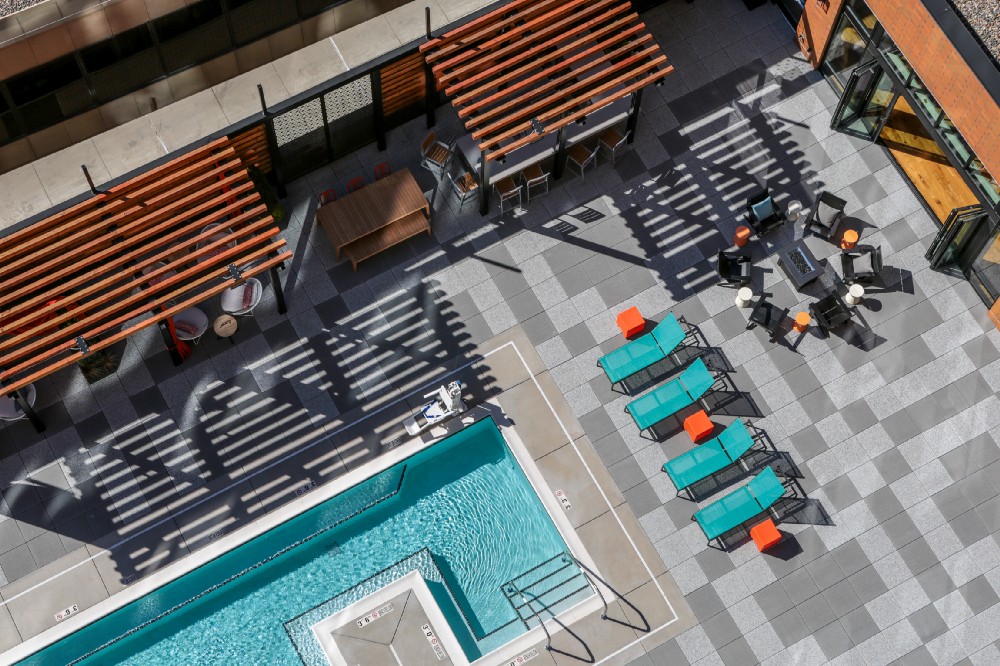
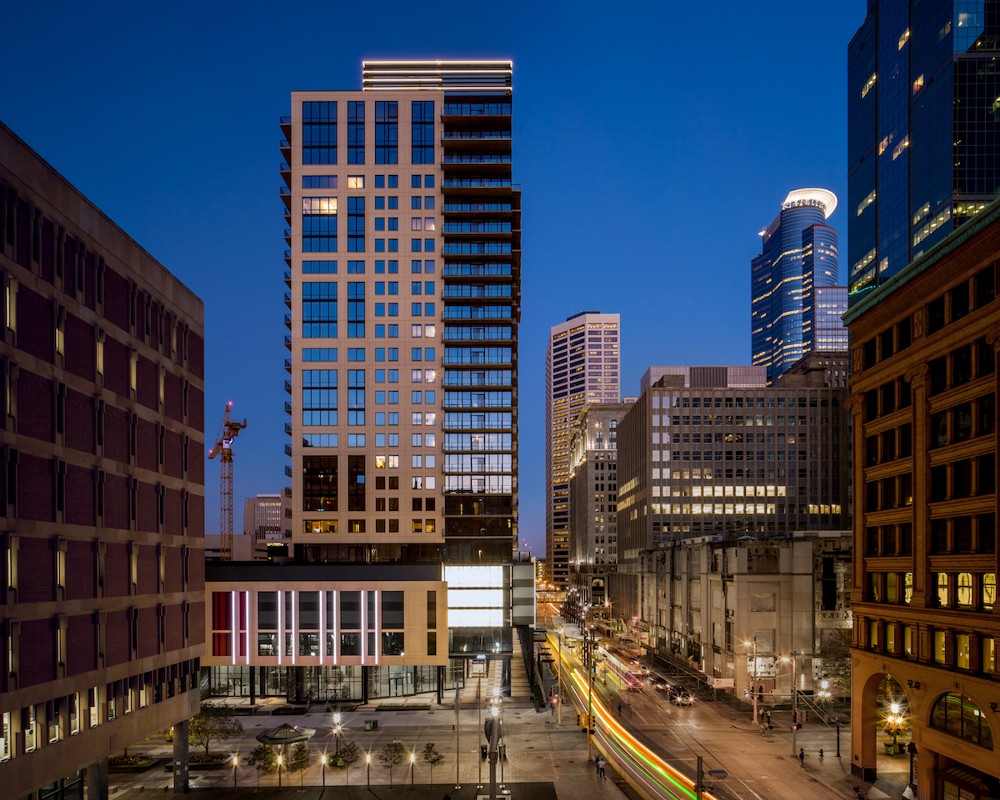
I have many favorite projects so it is really hard to single out just 3–5 but if I have too, they would be:
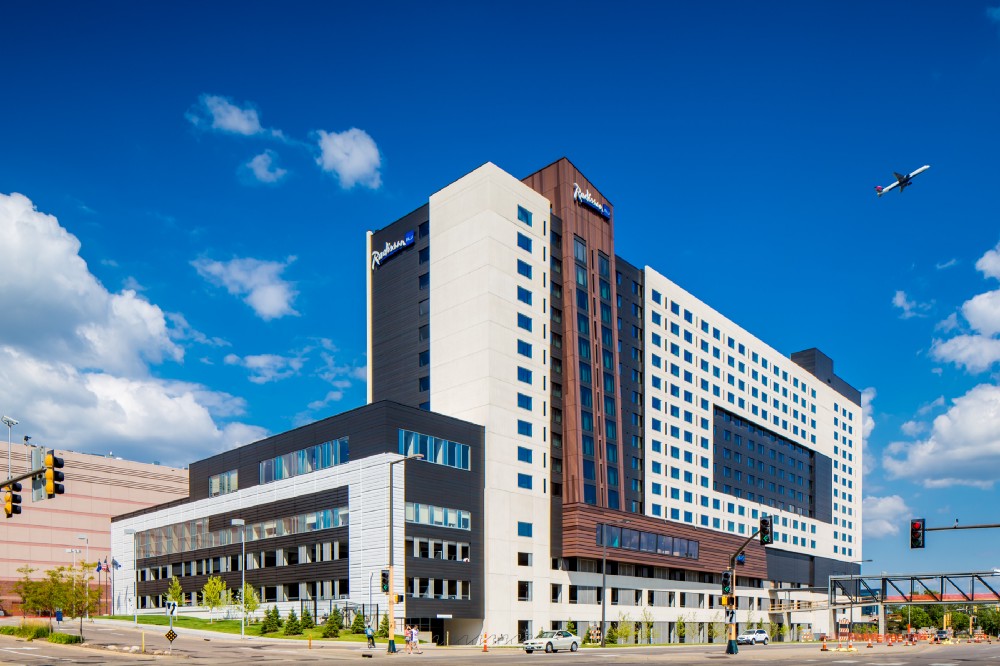
Radisson Blu MOA
Latitude 45
Nic of 5th
Junction Flats
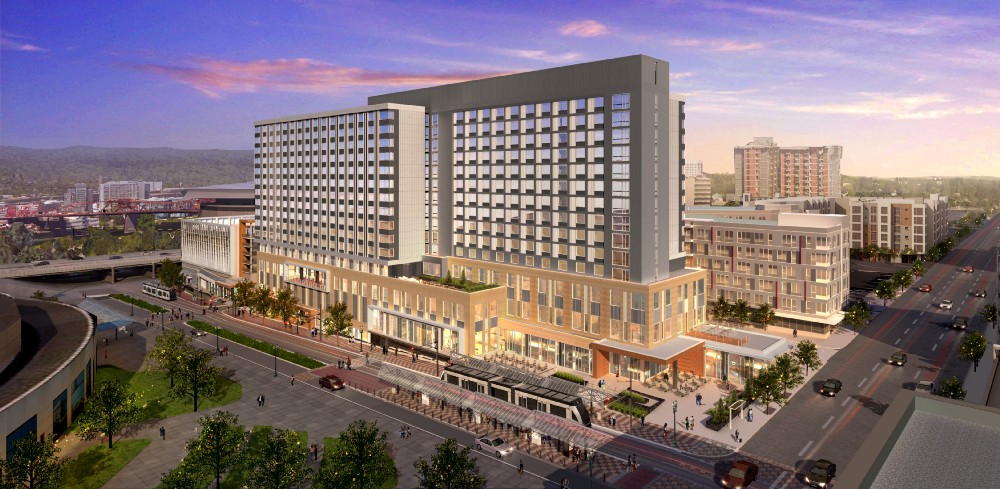
Oregon Convention Center Hotel (Hyatt Regency Portland)
Oregon Convention Center Hotel at the Hyatt Regency Portland (Rendering courtesy of ESG Architects & Leo Mao)
On his design toolkit
I try to immerse myself in the built context and history of site, as well as the end client, operator, and user. I believe, that successful design has a purpose and should exceed people’s needs, it should tell a story and enlighten people about place and quality design. As stated earlier I am a modeler through and through so I start sculpting and shaping from the get-go using mostly SketchUp. I use a lot of V-Ray and Photoshop as well to communicate design intent and vision.
On the state of design software today
A lot of it is very good today, but the expectation bar rises by the day on our end as well as with our clients so in my ideal world, there is an even more intuitive, simple software that renders and animates much more quickly and has access to current materials and objects with up-to-date information to help aid in selection, pricing etc.
On the future of architecture
I feel architecture is evolving beautifully and should continue pushing boundaries naturally and exploring and adapting as it has…
Radisson Blu MOA (Photograph by Farm Kid Studios courtesy of ESG Architects)
On how the industry will change in 5–10 years
Smarter, faster, more flexible, and more interactive during design.
On the future of ESG in the next 5–10 years
At ESG, you always feel like you are in the front of the pack on a very fast race track of design opportunity and success means embracing that feeling because that is how we have flourished — I don’t see that changing, I only see it propelling us to even greater opportunities.
On advice he would give his younger self
I am a firm believer that we live out God’s plan for our lives and not so much our own so, as much as I would like to say that some wisdom of today would have put me in a better place, I don’t think it would have. Passion has always been there for me and I found the perfect partner in my wife and that has made all the difference for me, if there is anything moving forward, it would be to experience more with her before it’s too late!
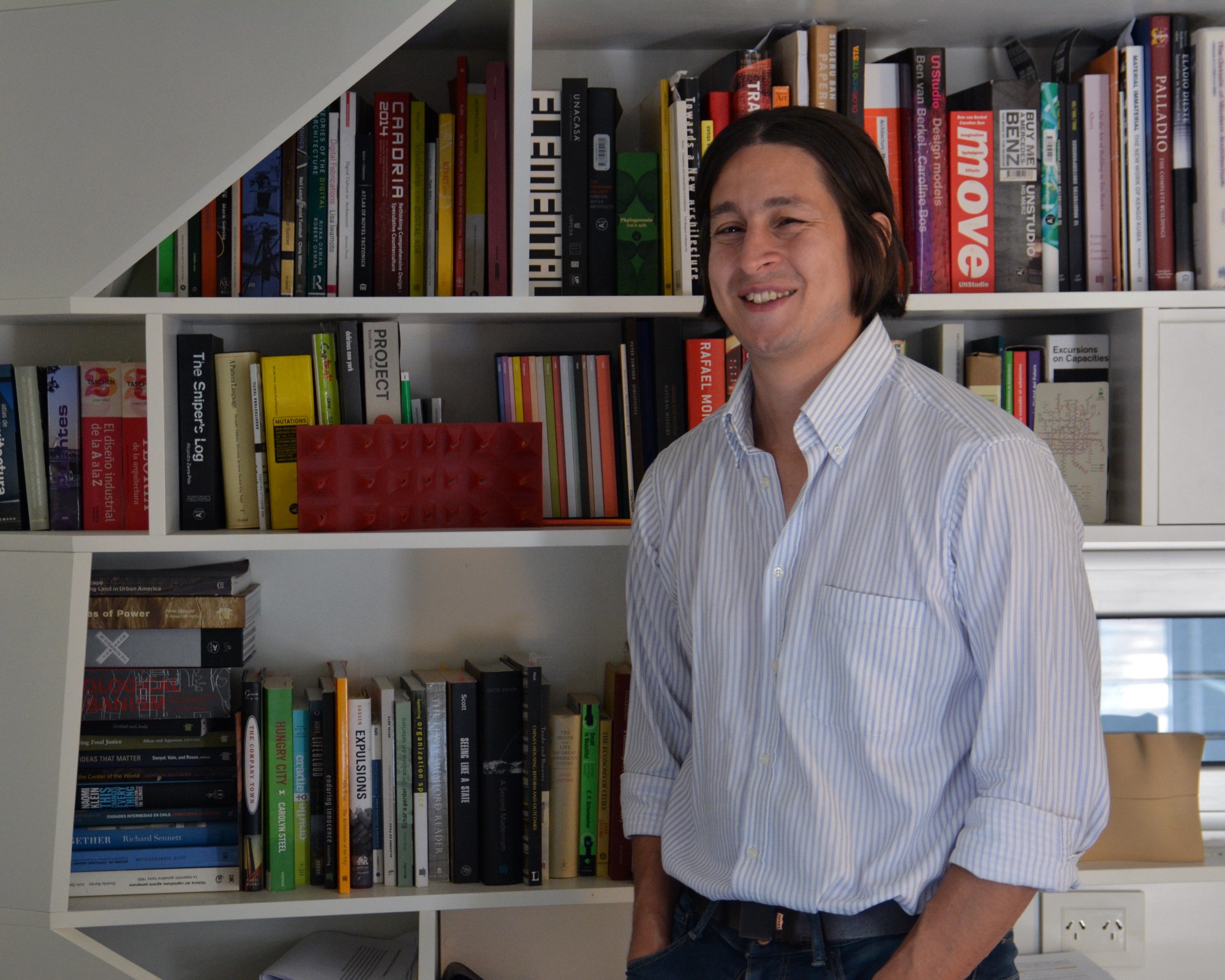
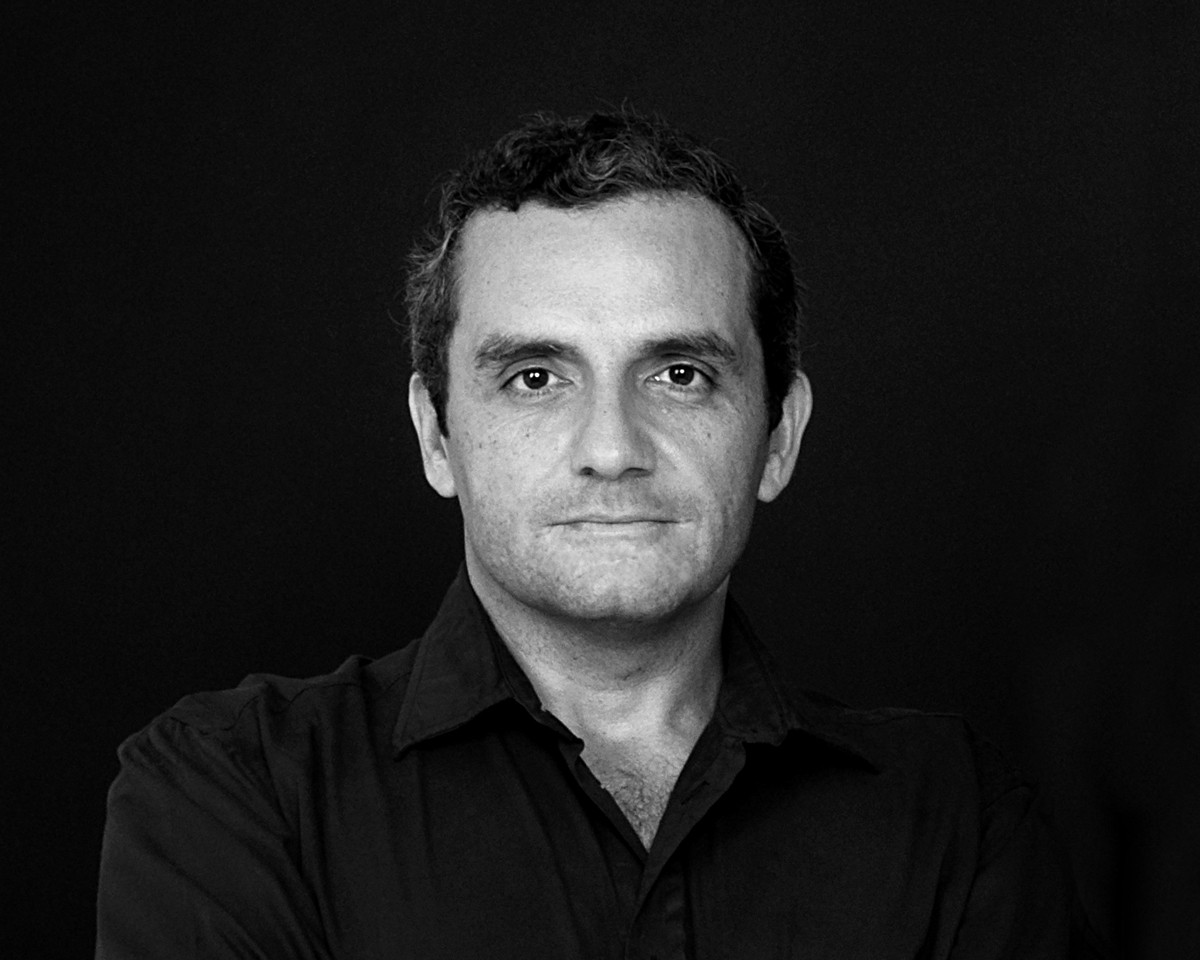
Matías Imbern obtained his Master in Design and Technology with honors from the Graduate School of Design at Harvard University (GSD). His research is focused on the strategic interaction between digital technologies and material systems applied to architecture. He currently serves as Tenure Professor at the National University of Rosario, where he previously obtained his degree in Architecture with gold medal. He is also a Professor Fellow at the School of Architecture and Urban Studies at the Universidad Torcuato Di Tella. having lectured and participated as a visiting professor at several universities and schools. Matías leads his firm I+GC [ar], based in Argentina, where he also directs the research group Lab.Id. His production is focused on housing, competitions and research projects. Modelo spent some time learning about what led Matías to pursue a career in architecture and about what continues to inspire him today.
On becoming an architect
Design has always been my passion since I was a child. Beautiful buildings and big infrastructures have always attracted me, so to study architecture was almost an involuntary decision.
On discovering his voice as a designer
I studied at the School of Architecture in Rosario, Argentina. The great advantage there is that, once you get your diploma, you have access to construction very easily. However, the school is not updated on some key issues, which makes it kind of isolated.
While studying, I met some professors who encouraged me to continue my education abroad. So I decided to apply to Harvard GSD in Massachusetts in order to understand how contemporary architecture was evolving. The rapid and sustained development of new technological processes emerged as a pivotal design concern, motivated by the synthesis of two worlds that seem opposites: digital and material. That was the beginning of my design research.
Guggenheim Helsinki (Rendering courtesy of I+GC [ar])
On founding his firm
After finishing school I had a couple of housing commissions, so I decided to start a young firm, a common situation in Argentina. I used those houses to apply the concepts I learned while studying, but also to learn how to lead and how to put a building together.
Then, Harvard GSD was a life-changing institution not only regarding education but also influences and vision. When I decided to come back to Argentina to develop my firm, the architecture we practice evolved towards a more systemic approach, based on digital design tools. Apart from that, the scale of projects we are building have changed, mostly housing/mixed-use developments.
Our studio was conceived with the philosophy of stimulating constant interaction between academia and the professional scenario, between research and practice. This design research is what feeds our role as university professors, as well as the importance given to postgraduate studies as a source of experimentation and continuous feedback. Additionally, I decided to create a research branch called Lab.Id as a tool to work mostly on competitions, able to speculate and test concepts more freely. Lab.Id aims to promote a permanent debate about the development of contemporary architecture, trying to understand where to position our architecture. We give a persuasive value to utopia, understood not as an impossible achievement but as something that has not been developed or materialized yet.
On specific principles he strives to adhere to
As a general design principle, we share the idea of generating a contemporary architecture that addresses its time and place, as a way of contributing to the cultural progress of society.
SnJ Building (Rendering courtesy of I+GC [ar])
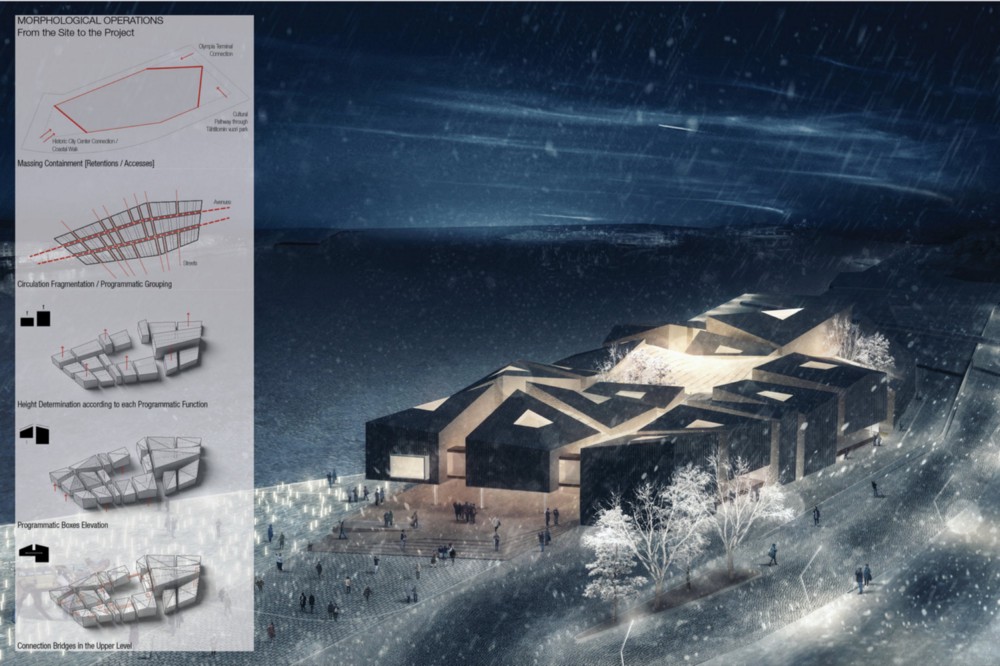
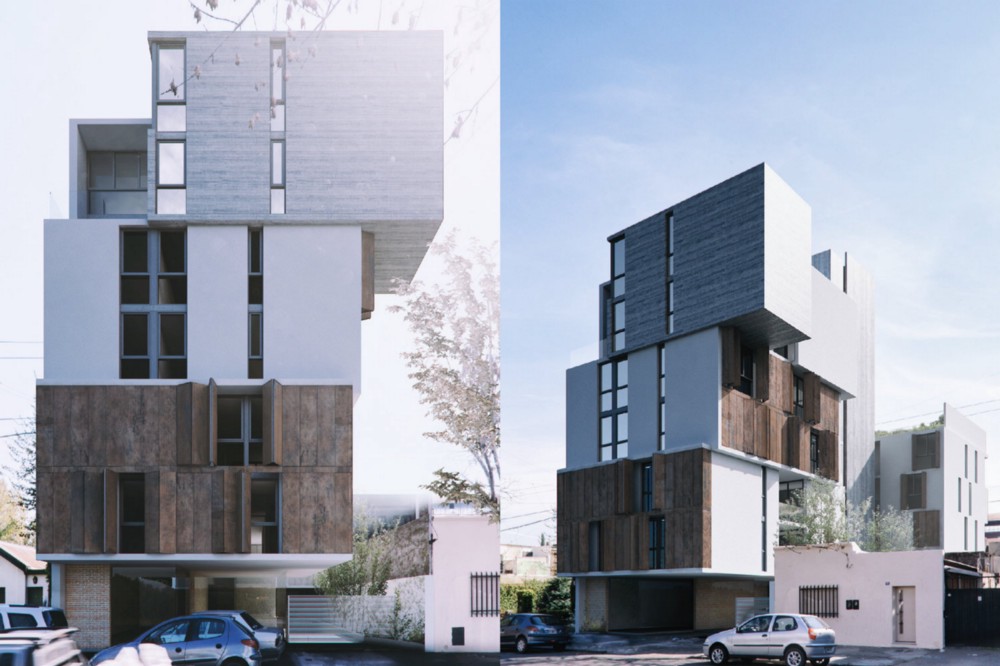
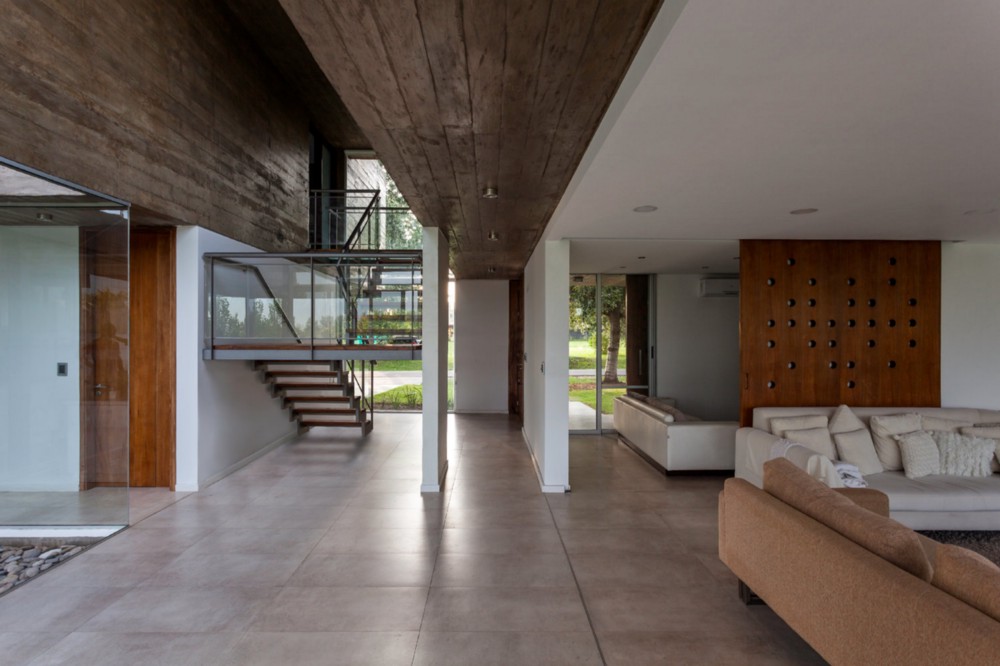
As a specific design principle, we always use a systemic approach, based on the use digital tools, but we tend to define simple systems that can be easily applied with local technology. For example, in the 17×17 House we used a system of folded concrete planes to define form and interior space while accommodating programmatic functions For SnJ Building, the strategy was to use a sequence of stacked boxes that follow programmatic functions, defining, at the same time, the building´s materiality.
We believe in diagrams as a powerful design and communicational tool, to share our design concepts with clients, colleagues and most importantly with ourselves, to understand and substantiate our design procedure.
Architectural design is understood as a system of symbiotic relationships, becoming a hybrid between intuition and systemic thinking. Being more emphatic on processes rather than forms.
On his role at the firm
I think my role as Principal is divided in two tasks. On the one hand it is essential to impart a strong design philosophy to the design team, and be able to convince clients and contractors to believe in that philosophy. On the other hand, leadership becomes crucial in order to organize the tasks, to increase productivity and to get things done. Additionally, there is another role, which runs in parallel to daily activity: constantly thinking in perspective about the future that the firm should pursue in terms of design. A critical thinking to create a feedback loop with daily activity, otherwise you can get lost in daily routine.
María Elena Walsh Educational Complex (Rendering courtesy of I+GC [ar])
On recent projects that represent the firm’s approach
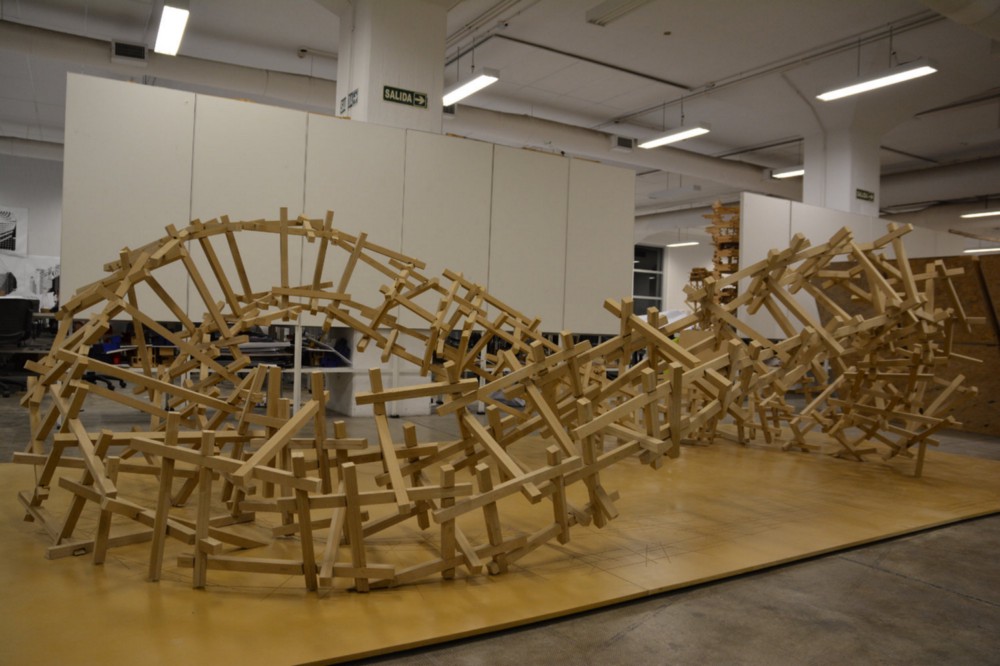
I do not think we have a unique design yet. We still have to work harder in pursuing and clarifying our interest, being able to hack the use of digital systems in a low-tech environment as Argentina. I try to use my teaching experience in Torcuato Di Tella University as an experimentation lab. Last year we finished a Pavilion called Ditebius Torus, an investigation that combines reciprocal structures, timber wood, and the use of digital tools for design and manufacture. The geometry of the pavilion responds to a generic three-dimensional form called ‘moebius torus’, used as proof of concept of the versatility of the system. Afterwards, the real challenge is to be able to express those academic concerns into architectural design process.
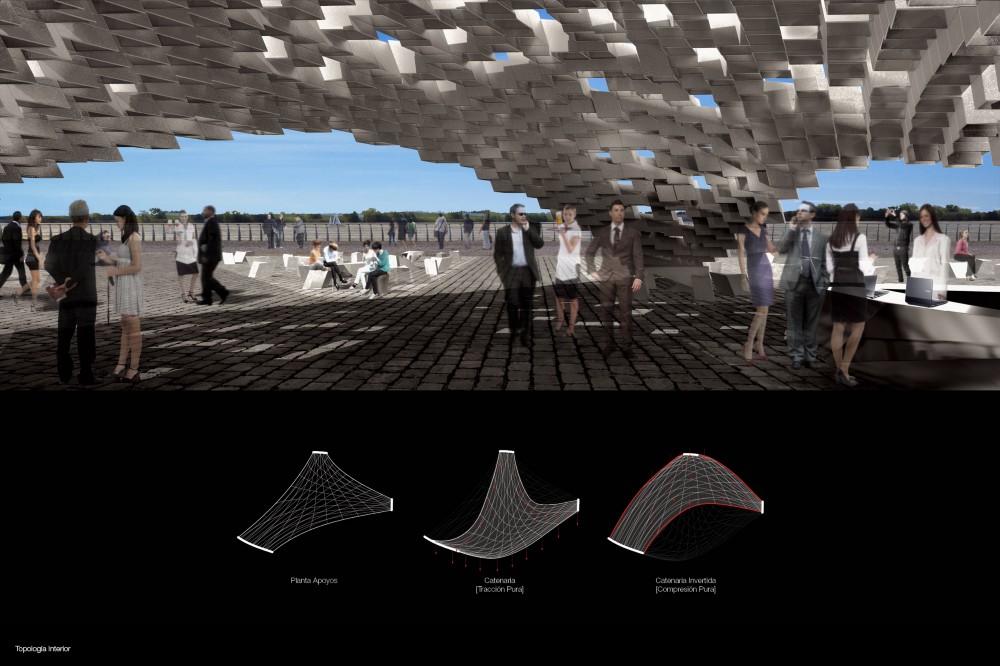
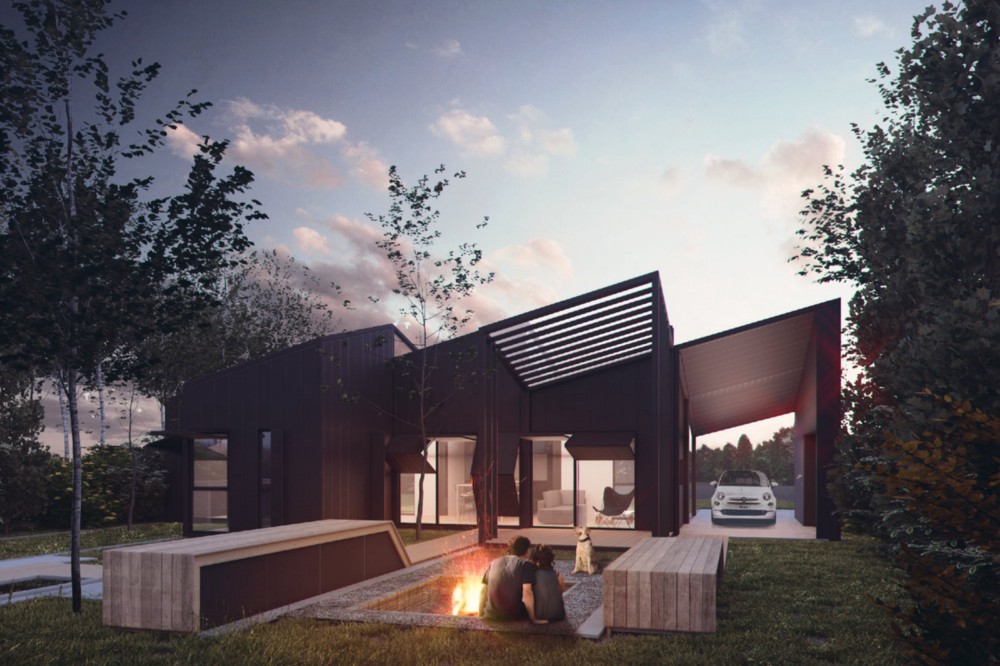
The Disseminable Pavilion is one of the most convincing projects we created following that challenge. As a strategy for our the low-budget proposal required by the Iberoamerican Biennial of Architecture and Urbanism, we submitted a pavilion made y steel benches that can be installed in several parks and squares of the city, after the event is over. A Pavilion that articulates Architecture and Urbanism, and remain imprinted on the collective memory of the citizens. The result is a pure compression dome populated by benches, structurally optimized by finite element analysis software.
Disseminable Pavilion (Rendering courtesy of I+GC [ar])
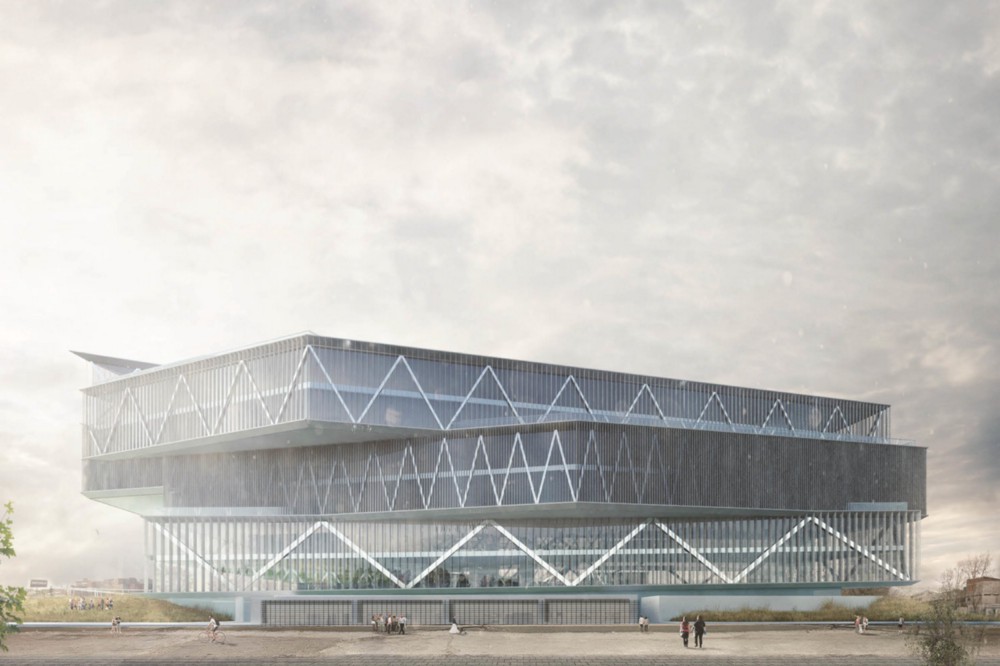
Increasing the scale of the project, another interesting proposal came up for the Guggenheim Helsinki competition. Morphological and material strategies were carefully designed in order to merge with the existing architecture of the city, respecting its historical tradition. The fragmentation of the program reduces the visual impact of the building and gives independence to the exhibitions, being able of re-arranging them in many possible ways. Each programmatic unit has a steel egg-crate structure with a cladding façade of brick panels. The exterior panels use digital technology to create a pattern from a traditional Finnish forest. Additionally, the robotic fabrication of the panels allow making them off-site during the winter (when the harsh weather complicates the construction on-site) and setting them together during the summer, reducing construction time and cost.
Finally, at the urban scale, we got a prize with our proposal for the newest country in Europe, Liberland, besides the Danube River. The critical challenge of the project is how to create a city within a flooding forest. The Danube river dynamics generate lateral migration according to the geometry of the meanders, shaping the landscape of Liberland. In order not to interfere with the natural ecosystem, the project develops two superimposed strategies at different levels. It creates a floating city capable of coexisting with the flooding forest, allowing nature to flow underneath. Scripting was essential to replicate the forest pattern (created by the affectation of meanders), and arrange the city grid accordingly, developing a symbiotic relation with the existing landscape.
17×17 House (Image courtesy of Walter Salcedo and I+GC [ar])
On his design toolkit
Incorporating digital systems allows us to reliably engage design and manufacturing, providing new opportunities even with traditional materials. Rhino and sometimes Grasshopper are present during the whole process, from design to fabrication. They are used to develop initial concepts, to understand space complexity and to study building details.
Projects as the Maria Elena Walsh Educational Complex, the last competition we have submitted, would have been impossible to develop without the use of digital tools. The project has a huge open-office space that was conceived as a helicoidally continuous ramp. The resulting complex space and its reciprocal Vierendeel-girder structure, were impossible to solve without 3D modeling.
On the state of design software today
I think there is a lot of powerful design software. In the last ten years I have noticed an important diversification in the software industry, and the appearance of more specific software to work on different design topics. I remember while being at school, knowing four or five software was enough. However, nowadays, architects need to handle a complete set of tools in order to use the computer as the as a powerful design tool. In the near future, architects will be required to use these tools and to be able to create their own tools, using scripting or similar methods, to be considered literate.
Another software branch is the design of apps for smartphones, popular as an interface between designers and clients. For example, in our submission for the competition One House (an innovative pre-fabricated housing system), we proposed the use of an app, so clients could choose and test their houses preferences, seeing results in seconds. By doing so, clients act as designers, into a controlled environment developed by architects.
One House (Image courtesy of I+GC [ar])
On the future of architecture in the next 5–10 years
I still notice some resistance in the use of digital technology for envisioning architecture. Although digital technology is pervasively around us, we still have so much to learn regarding not only design and fabrication, but also augmented spaces where technology behaves as a surrounding interface.
Of course that technology will continue developing; however, as it happened since the Renaissance, there is always a need of and architectural way of thinking in order to produce innovative buildings conceived according these new set of technological systems. Nonetheless, the challenge as architects is to be able to use technology as a tool to address not only formal/spatial issues but also crucial social problems.
I think robotics and new smart-materials still need to keep expanding to affect all layers of industry. We live in a world in which robots can perform complex surgeries. They are making a strong impact in different areas of our society. Architecture, as discipline and as industry, should reflect these social changes. There are a lot of research prototypes in academia and some few examples in architecture as a practice, but robotics and smart-materials still have a major role to play.
Ditebius Torus Pavilion (Images courtesy of I+GC [ar])
On the evolution of his firm
My firm is based in Argentina, a developing country, so regarding advanced technology we are always one step behind. However, Internet, social networks, smartphones and so on, are tools that keep us informed and connected with the rest of the world. We try to use competitions as research projects in which we can speculate about contemporary technology.
Eventually, as a firm, we will try to expand globally, to be more in touch with these fabrication technologies, and actually use them to construct, not only in competitions.
On advice he would give himself
Dream big, trust your instincts, be perseverant, and never give up.
We’re excited to announce that Modelo now supports VR! Using just your mobile device and the very affordable Google Cardboard (or a similar handset-based headset) you can jump directly into a VR experience of your 3D models uploaded to Modelo.
We think you’re going to find the file preparation process simple, straight forward and incredibly fast. In fact, in early demos a number of users have told us it’s the fastest file-on-my-desktop-to-VR preparation process they’ve ever seen. This is in large part, because there is very little preparation required.
VR in Modelo is driven by your 3D comment cards. To create a set of 3D views to immerse your audience into, simply follow the same steps that you would to create a curated share link presentation for a client.
The Steps to VR
Create a series of 3D comment cards you want your audience to use to navigate your model and set them to “Client-Ready”
Open “Share” in Modelo’s tool bar and set the sharing options to “Only Client Ready” and toggle “Restricted Views” to on.
Copy and paste the share link into an email and share with colleagues, consultants or clients.Upon opening the link from your mobile device the browser will direct you to the 3D model view. In the top right corner of the screen there will be a small 3D headset / Google Cardboard icon (see below). Tap the icon and turn your phone sideways (you’ll also see instructions to do this).
Slip your phone into the Google Cardboard. Snap the flap closed and you’re in!
Each of the 3D comments have become views that you can toggle between using the built in button in the Cardboard.
Pro Tips
You don’t need to go through the share link process to access a VR view. Once your model is prepared with the comments you want you can just navigate to Modelo through your mobile device’s browser, select the project and then model you want to view and finally select the VR view. However, this means that you will see all of the comment cards that we were created since you aren’t using the share link, which allows curation of the cards.
We’ve added a numbered transition slide between each of your 3D comment views (1, 2, 3, etc). If you add text into the note field for a comment this will also be displayed. This is a great way to provide your viewer with additional context before they transition into the next view.
Think about where you are in the space within or around your model when you create the 3D comment cards that become the VR views. The viewer cannot move forward or backward in the VR-mode, but they can spin around. So if you create a view directly next to a wall instead of in the middle of a room, a large portion of what the user can see in VR may be the wall they’re next to instead of a full 360° experience of the room.
Experiment! Please let us know what works best for you. We’re excited to see what you do!
Tutorial Videos are now up. 80 seconds flat for Rhino and Sketchup to VR and 120 seconds from Revit to VR. Pretty fast if you ask us. Check out the videos below:
Design Manifestos: Paulo Martins-Barata of PROMONTORIO | Modelo
Paulo Martins-Barata (Image courtesy of PROMONTORIO)
Paulo Martins-Barata is a Partner of Lisbon-based PROMONTORIO. He was born in Lisbon in 1965, studied architecture under Fernando Távora at Porto School of Architecture (1983) and holds a MArch from the Technical University of Lisbon (1988), an MBA from Edinburgh University (1991) and a PhD from the ETH in Zurich.
In 1990, he co-founded PROMONTORIO as an experimental studio which consistently grew into a practice of fifty architects, planners, landscape architects, interior designers and graphic designers. PROMONTORIO has accomplished projects worldwide, among others, in Angola, Croatia, Dubai, Germany, Mozambique, Oman, Portugal, Qatar, Saudi Arabia, Serbia, Spain, Switzerland, USA and Vietnam.
The work of PROMONTORIO has been widely published in A10, Abbitare, Area, Architectural Review, Arquitectura Viva, A+T, Detail, 2G, Domus, Prototypo, Lotus, Techniques & Architecture, The Plan, etc, and was exhibited, among others, at the 9th Venice Architecture Biennial, La Triennale di Milano, Arc-en-rêve, Cornell University, Aedes Gallery and more recently at the Boston Society of Architects. Recently, Modelo had the opportunity to meet with Paulo and learn more about the studio’s collaborative approach to design.
On becoming an architect
I come from a family of three consecutive generations of artists, architects, movie directors and designers, so ever since I can remember I was surrounded by visual arts and culture. So the decision to enroll in the architecture school was not something I pondered a lot. It came as a natural choice. However, a few years later, I had a moment of serious doubt and hesitated in changing for painting. I regained my interest for architecture on a long and solitary trip to Scandinavia where I was exposed to the work of Aalto, and perhaps even more, of Lewerentz and Asplund. On my return to Lisbon, I stayed for some time in Germany and was fascinated by the classics Von Klenze in Munich, and Schinkel in Berlin. It was also the time of IBA (Internationale Bauausstellung Berlin) and the whole Europe was vibrating with ideas and debates.
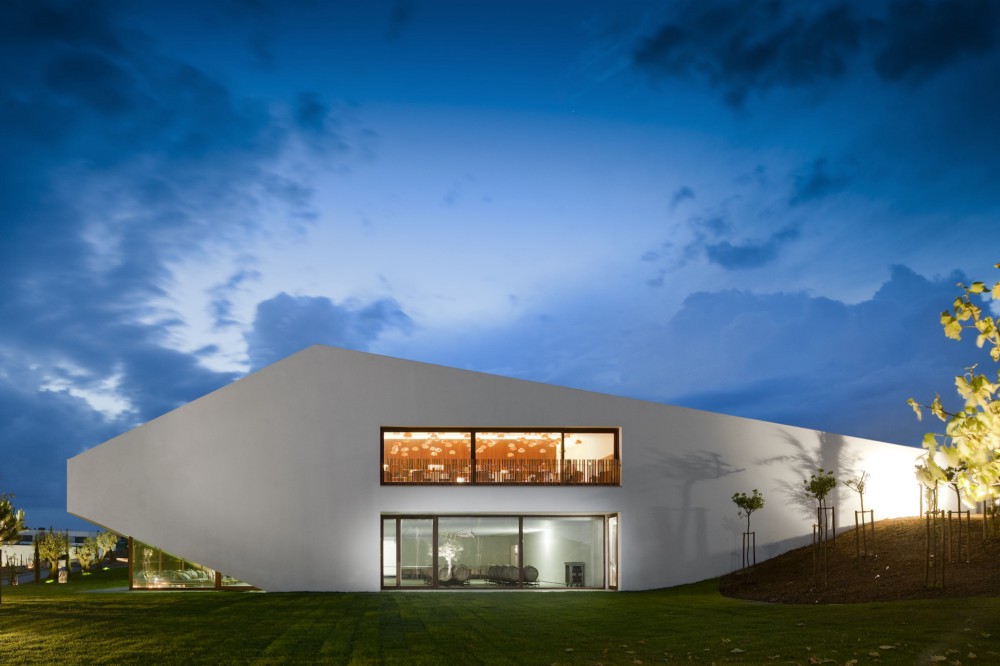
L’And Vineyards Hotel FG+SG/ Fernando Guerra (Image courtesy of PROMONTORIO)
On finding his voice as a designer
I am a great admirer of the French master August Perret who once said: “He who, without betraying modern materials or programs, produces a work that seems always to have existed may consider himself satisfied.” In my opinion, this remark encapsulates the greatest virtue of the architectural profession, which is to create vessels for peoples’ lives to unfold with gentleness and simplicity, with grace and tolerance. The conceited and self-absorbed excitement placed on the uniqueness of the architectural object seems vague and ephemeral and bears little interest to us. I would like to think that it is much more interesting to design buildings that withstand time both culturally and physically, buildings that weather gently and blend with our experience of the quotidian as part of something inherently sustainable.
GS1: FG+SG/ Fernando Guerra (Image courtesy of PROMONTORIO)
On the experience of starting his own firm
We were started our firm in fresh out of school as 4 partners who had studied together in Porto and Lisbon. It was a great time in Portugal; the country had just joined the European Community and there was great optimism. Still, at the beginning work was scarce, and we survived in part working as architect-of-record on construction documents and site supervision of international offices that needed support in Portugal.
Meanwhile, Alvaro Siza and Souto de Moura work started to receive world recognition, and this indirectly brought momentum to Portuguese architecture in general. Through competitions, interviews and presentations we slowly began working in Spain; later in the Middle East and Southeast Asia, and now finally we are starting to have work in the US. As an open partnership, we have a very cohesive and interactive design culture which ends up involving all stakeholders. It is a dynamic process that fosters collaboration above all and enables us to deal with large and complex projects both in terms of design and program sometimes facing incredibly tight schedules.
Latitude: (Image courtesy of PROMONTORIO and Carlos Mendes)
On principles he strives to adhere to
Over the years, we have consolidated a set of principles in our design approach, that do not wish to impose, but we tend to value the projects which include them:
I. Design buildings to last
We believe buildings should be solid and durable. Places are realized in history through the preservation of memory and the buildings that withstand time are the ones that determine the identity of a place. Architecture should bear the normal wearing of everyday life. Moreover, and given that the land is a scarce resource, buildings that last are an ecological response to the energetic waste that extemporaneous demolishing or refurbishing implies.
II. Produce exceptions, respect conventions
In an urban context, we believe that the formal autonomy generated by dramatic and spectacular buildings can only be justified by the exception of a notable civic status or an innovative program. If the latter are conventional, we prefer that buildings blend gently in the urban fabric or, given a larger scale, create a context that is able to accommodate, without stridency or gratuity, the flow of the quotidian.
III. Encourage mixed-use program
Diversity, multiplicity and adaptability are attributes inherent to the very idea of the city and, having this in mind, we try to avoid designing mono-functional urban systems. Ideally, we incorporate the three main functional spheres of life in the city —housing, offices and commerce— allowing for a continuous inhabitation of ensembles across the day.
IV. Discriminate the use of technology
For the most part, buildings should not depend on technological systems and materials that are predictably obsolete in the short run. On the other hand, there are new materials and innovative applications that can be valuable and interesting, given that these are previously tested and carefully balanced.
V. Understanding market conditions
With the general decline of the welfare state, the bulk of the city is increasingly built by the private sector. In this context, we believe that, even without exceptional programs or large budgets, architectural dignity must be achieved; we believe fine buildings can be produced with the market conditions of private developers. Moreover, we believe in moving a step further and gradually changing the habits of the industry by fostering quality in design and construction.
VI. Incorporate ideas from artists
Historically, art and architecture are aesthetic disciplines that complement each other. Working with artists can bring powerful new insights and ideas to architecture, and vice-versa. The unrestrained freedom of art can challenge the boundaries of architecture without any of them having to loose their core disciplinary character and métier.
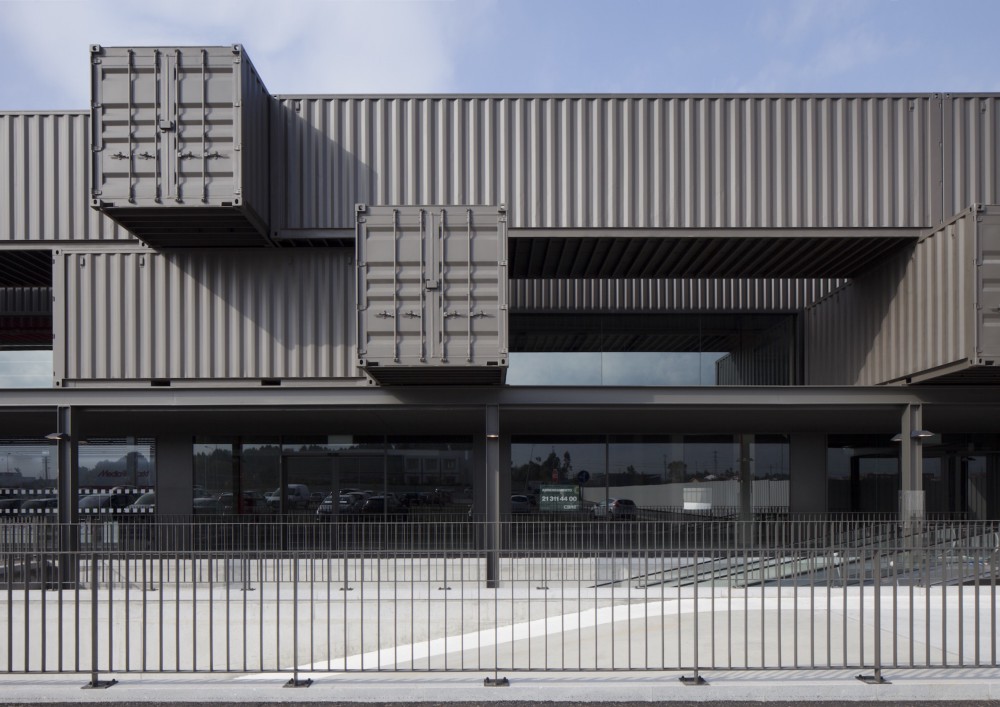
Matosinhos Retail Park: Tiago Casanova (Image courtesy of PROMONTORIO)
On his role
My key role, like with any other partner, is to get jobs and manage clients. We do not live in an imaginary bubble where projects fall into our lap, so effectively partners have to search for opportunities and make them happen. Having said this, it doesn’t mean that we do not focus on design. This means being at the onset of creation and following very closely the production and development of design together as a team.
On his approach
“Unique” seems to me a worn out marketing phrase for such a time-honored profession as architecture. We do not aim to uniqueness per se; we aim to create great architecture that answers to programs, weathers beautifully and makes peoples’ lives better; as simple as that…
I would like to highlight two recent projects, namely, Lubango Centre and GS1 Offices, designed and build for entirely different contexts.
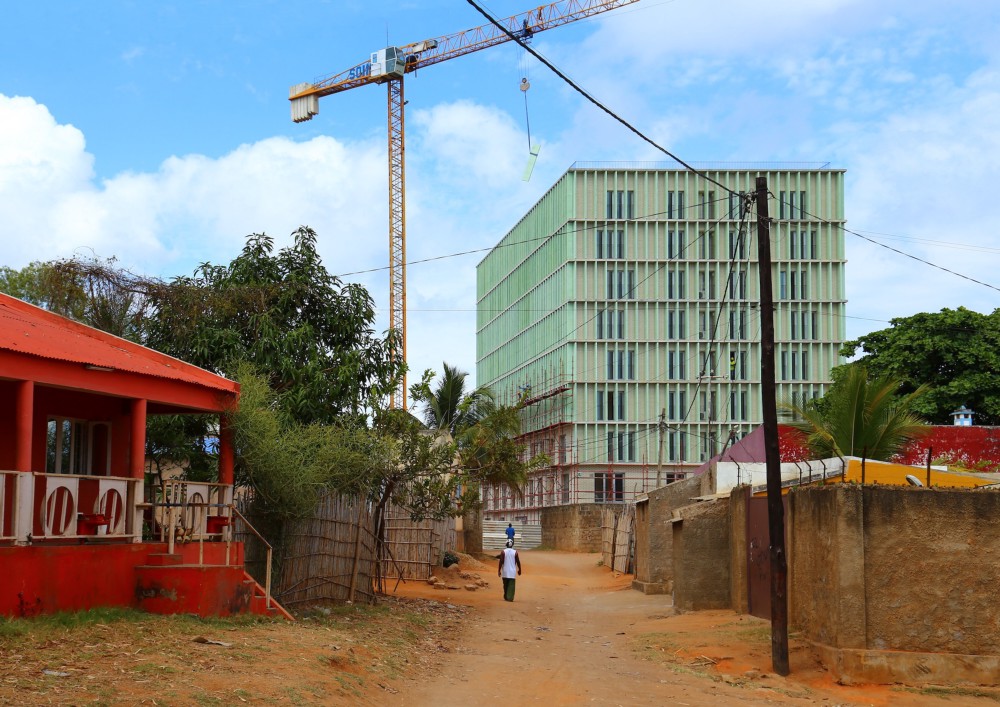
Lubango Centre is a mixed-use program, build in the hinterland of Angola, in one of the poorest regions in the world. It’s now in peace after 20 years of devastation and conflict. The building is inspiring on many levels, but the fact that we were able to design and build —with comparable quality to European standards— an elegant, middle-class, non-fenced building in the center of the city, makes us truly believe that there is hope for Africa. Not everything needs to be about extreme poverty or super wealth, and an urban middle class can rise with dignity and sustain a post-colonial economy.
Lubango Centre: FG+SG/ Fernando Guerra (Image courtesy of PROMONTORIO)
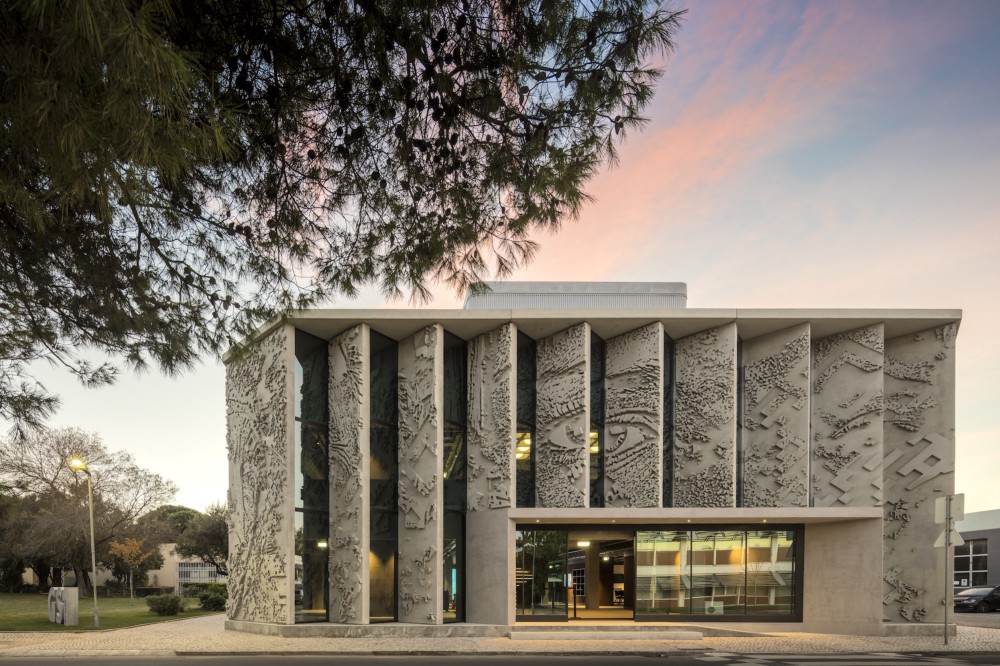
GS1 is a small office building in Portugal for the international barcode association. We re-used an existing structure in a science and technology park and re-clad the building with bas-relief concrete panels working together with young artist VHILS, who usually works in anonymous large scale street graffiti murals in abandoned places —much like his friend Banksy. By positioning the panels at a 45º angle we created a kinetic view that changes from different perspectives until one reaches the corner and sees it complete, when all fragments come together and finally seem to make sense. Inside we used a combination of rough materials, like beton-brut and sprayed plaster, with warm and ecological materials like cork and textiles.
On his design toolkit
We have a kind of schizophrenic design system wherein 3D takes a large messy role. We produce sketches, cardboard models, mixed with basic and ever-changing computer renderings in search of the form we want. It is an a crazy and “ugly” system until we stabilize the built form and pass it on to our rendering affiliates. From there on they produce the magic, with us following it up closely.
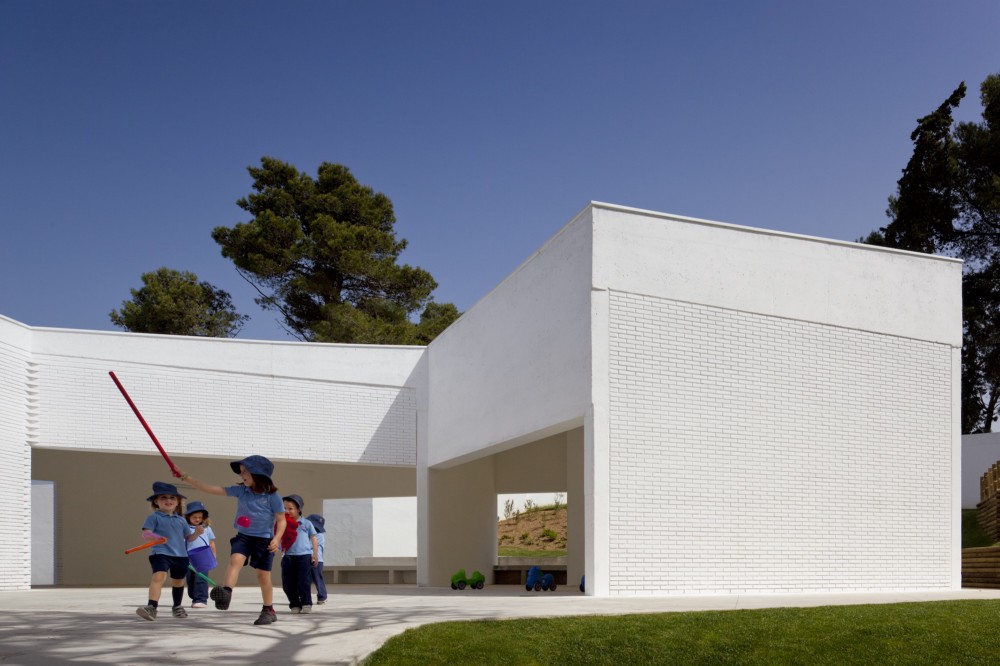
Parque Kindergarten: FG+SG/ Fernando Guerra (Image courtesy of PROMONTORIO)
On the state of design software today
I am not in production. I am that annoying partner that sits next to the collaborator and asks: “Do you think you could make it smaller/ wider/ larger /darker…?” I guess you’d all be familiar with this persona. When all said and done, I am happy with the capabilities I get out of the system and I have no criticism, regrets or longings. Time is too short for that.
On the future of architecture in the next 5–10 years
I do not see the fundamentals of architecture going through major changes. In the 1990s parametrics frenzy, many people believed that construction would became quasi-elastic and the industry would be robotized to a point which would make all forms possible and affordable. Evidently, that didn’t happen and architecture remains a discipline eminently tectonic at its physical core.
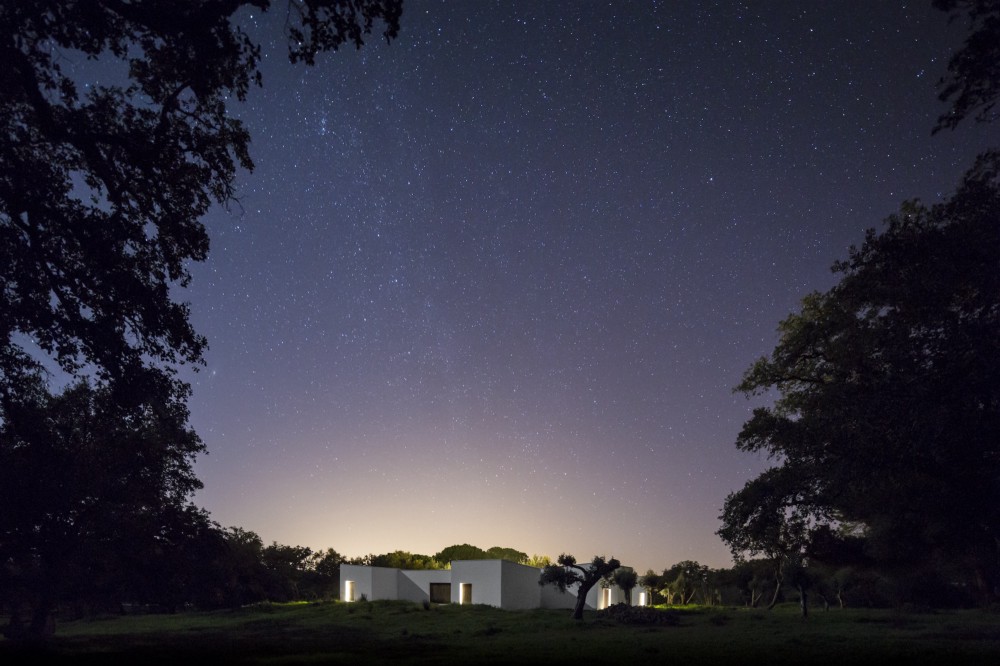
Patio House: FG+SG/ Fernando Guerra (Image courtesy of PROMONTORIO)
On firm evolving in the next 5-10 years
We have become a truly international firm able to respond to complex RFPs (Request for Proposal) from a wide range of countries and continents. We have a team of amazing people who can design a skyscraper in Saudi Arabia, a small school in the hinterland of Africa or a boutique hotel in Boston. The bottom line is to create great architecture—that is to leave a legacy of hope, of freedom and good will to all.
On advice he would give himself when first starting
I would advise patience and resilience together with integrity and passion.